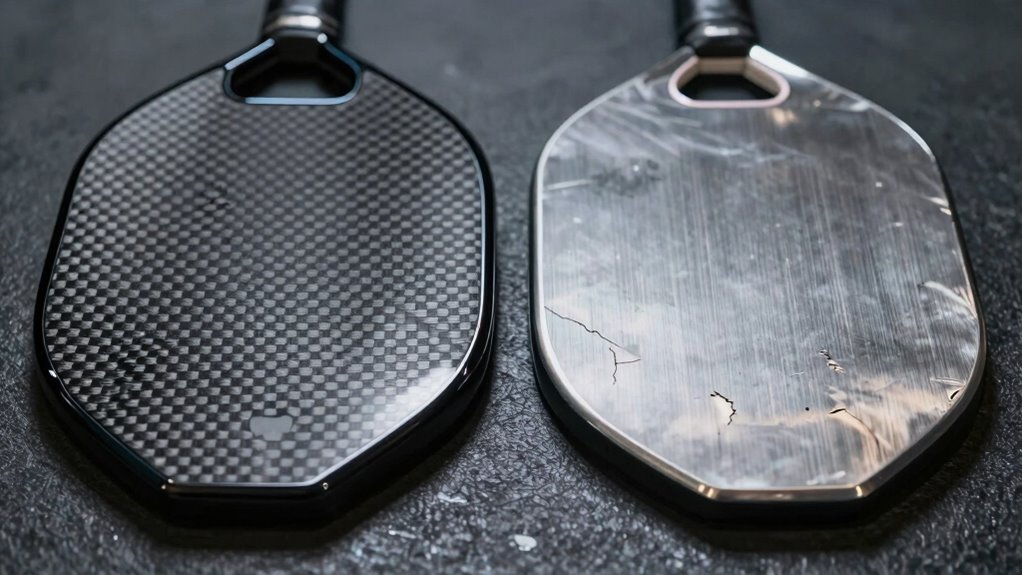

In just 10 minutes, you can feel the difference between a carbon and an aluminum paddle by testing their flexibility, weight, and comfort. Hold each paddle firmly and simulate paddling motions, noting how each responds under pressure. Carbon paddles typically feel lighter, more rigid, and easier on your fatigue, while aluminum ones are heavier and may cause more strain. Keep exploring to discover how these quick tests can help you pick the right paddle for your needs.
Key Takeaways
- Carbon paddles feel lighter and require less effort during quick fatigue tests, indicating better endurance.
- Aluminum paddles often cause more fatigue and discomfort due to their heavier weight and rigidity.
- Flexing or feeling looseness in the paddle during a 10-minute test signals potential durability issues.
- Repeated pressure during the test reveals how well the paddle maintains rigidity without signs of fatigue or deformation.
- Overall, carbon paddles tend to sustain performance longer with less fatigue compared to aluminum counterparts.
What Makes Carbon and Aluminum Paddles Different?
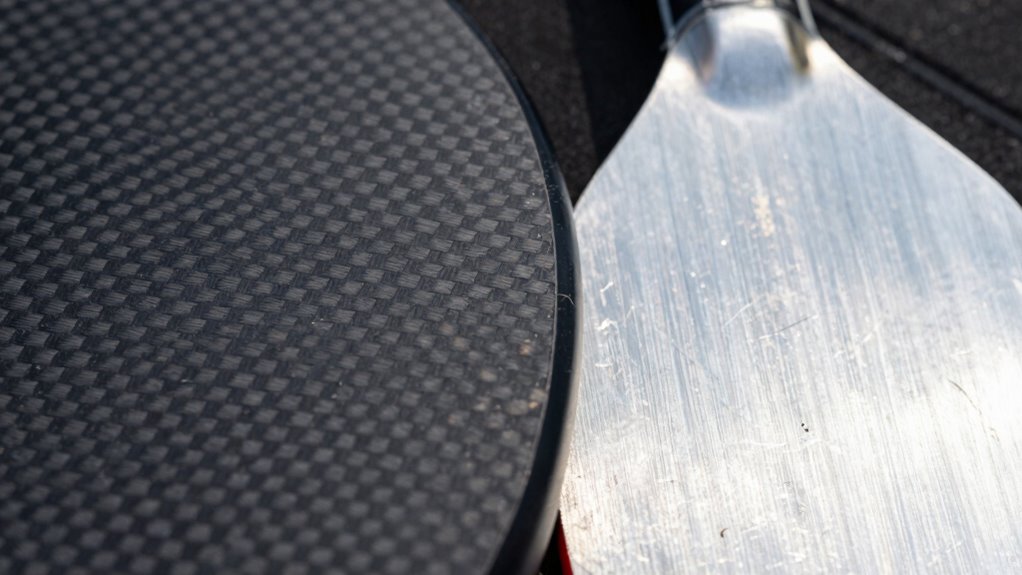
Carbon and aluminum paddles differ mainly in weight, strength, and flexibility. These differences stem from their material properties and manufacturing techniques. Carbon paddles are typically lighter because carbon fiber is a strong yet lightweight material, allowing for thinner, more efficient designs. The manufacturing process involves layering carbon fibers with resin, creating a rigid, durable paddle. Aluminum paddles, on the other hand, are heavier due to the metal’s density. Their manufacturing involves machining or casting, resulting in a sturdy but less flexible paddle. The material properties of aluminum make it resistant to impact but less forgiving under stress. Overall, the manufacturing techniques and inherent material properties shape each paddle’s performance, influencing how they feel and perform during your paddling sessions.
How Paddlers Can Feel the Difference in Paddle Durability
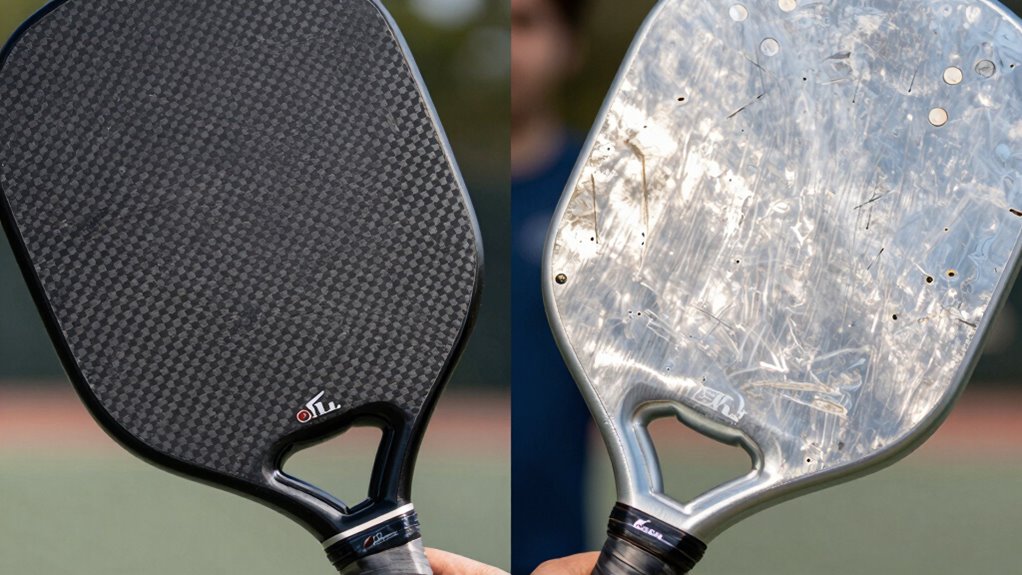
You can often tell how durable a paddle is by paying attention to how it responds during use and handling. Feel how the paddle’s ergonomic grip holds up after repeated strokes—an uncomfortable or loose grip signals lower durability. Notice the paddle’s weight and how it feels in your hands; a lighter paddle with a solid feel suggests strong construction, often found in carbon paddles, while aluminum paddles tend to be heavier and less refined. As you paddle, observe if the material flexes or shows signs of fatigue. A durable paddle maintains its rigidity and comfort over time. Your ability to detect these subtle differences in response and handling helps you choose a paddle that will last longer and perform reliably during your paddling adventures.
Testing Paddle Durability in Minutes: A Quick Fatigue Check
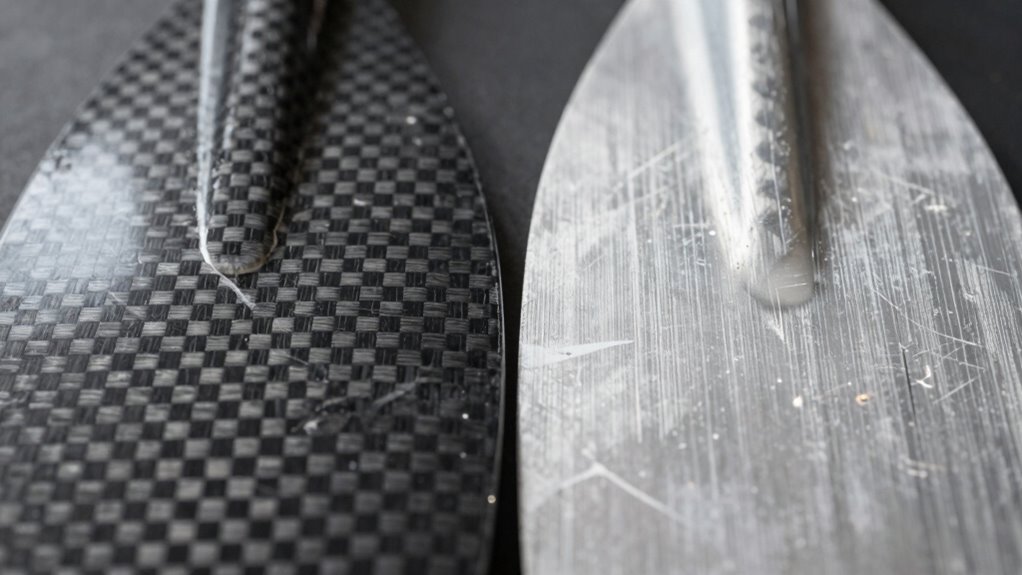
To quickly assess a paddle’s durability, perform a simple fatigue test that reveals how well it holds up under repeated stress. Grab your paddle and simulate 10 minutes of paddling by repeatedly applying pressure. Feel for any flex or looseness. A durable paddle maintains grip comfort and stability despite the stress. Visualize this with the following:
| Material | Weight | Grip Comfort |
|---|---|---|
| Carbon | Light | Firm, comfortable |
| Aluminum | Heavier | Slightly less comfortable |
| Composite | Moderate | Balanced |
In this quick test, the lighter carbon paddle often feels easier to handle, while aluminum might feel tougher but more tiring. This method helps you gauge endurance without long-term commitment.
What Factors Affect Paddle Longevity and Fatigue?
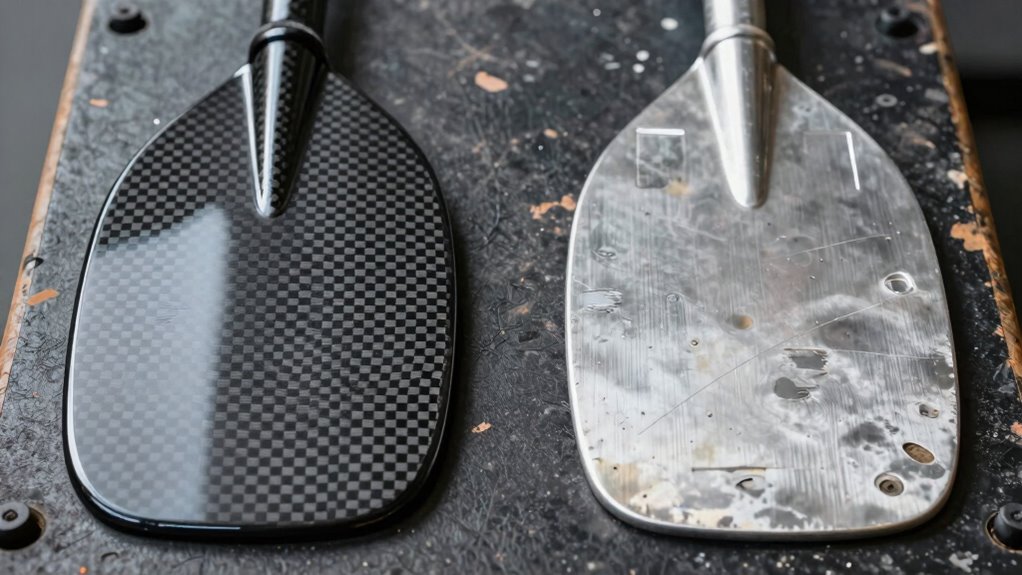
Several factors influence how long a paddle lasts and how quickly it experiences fatigue. Material properties play a significant role; durable materials like carbon fiber offer high strength and stiffness, reducing early wear, while aluminum may bend or fatigue faster under stress. Your technique also matters—using proper form, avoiding excessive force, and maintaining consistent strokes help minimize stress on the paddle. Overloading or hitting rocks and debris increases wear and accelerates fatigue regardless of material. Regular inspection for cracks, chips, or deformation can catch issues early. Ultimately, understanding how material properties interact with your paddling style helps you choose a paddle that lasts longer and resists fatigue, ensuring a more enjoyable experience on the water.
Choosing the Best Paddle for Your Needs: Insights From Feel and Tests

Choosing the right paddle ultimately comes down to how it feels in your hands and how it performs during tests. Your paddle’s weight influences fatigue—lighter options reduce strain, while heavier paddles provide more power. Grip comfort is equally essential; a comfortable grip prevents blisters and improves control. To find your ideal match, consider testing different paddles and noting their feel. Use this quick comparison:
| Feature | Consideration |
|---|---|
| Paddle weight | Lighter for endurance, heavier for power |
| Grip comfort | Soft, non-slip grip reduces fatigue |
Try holding paddles of various weights and grips, and see which feels best for your style. Feel and performance during tests reveal what truly works for you.
Frequently Asked Questions
How Does Paddle Material Impact Overall Paddling Performance?
Your paddle material considerably impacts your paddling performance through material stiffness and weight efficiency. A stiffer material like carbon offers better energy transfer and responsiveness, helping you paddle more effectively. Aluminum paddles tend to be heavier and less stiff, which can cause fatigue and reduce efficiency over time. Choosing the right material allows you to maximize your strength and endurance, making each stroke smoother and more powerful.
Can Paddle Fatigue Be Accurately Predicted Without Extensive Testing?
You can’t accurately predict paddle fatigue without extensive testing, as material fatigue varies with usage and conditions. Testing accuracy depends on factors like material properties and stress cycles, which are hard to gauge beforehand. While quick assessments give some clues, they don’t replace detailed fatigue tests. To truly understand your paddle’s durability, thorough testing remains essential, ensuring you avoid unexpected failure during paddling.
Are There Specific Paddling Styles Better Suited for Carbon or Aluminum Paddles?
You’ll find that paddling styles influence whether carbon or aluminum paddles suit you best. If you prefer a more precise paddle grip and focus on stroke efficiency, a carbon paddle offers responsiveness and lightness. For relaxed, steady strokes with less emphasis on finesse, aluminum paddles provide durability and a solid feel. Adjust your technique based on your style, and choose the paddle material that enhances your comfort and efficiency on the water.
What Maintenance Routines Extend Paddle Lifespan Regardless of Material?
To extend your paddle’s lifespan, regularly clean it with fresh water after each use to prevent salt and dirt buildup. Store it properly in a dry, shaded area, avoiding direct sunlight and extreme temperatures. Use padded racks or wall mounts for storage solutions that prevent warping or damage. These routines help maintain your paddle’s integrity, whether it’s carbon or aluminum, ensuring it stays strong and reliable for seasons to come.
How Do Environmental Conditions Influence Paddle Fatigue and Durability?
Ever wondered how environmental conditions wear down your paddle? UV degradation weakens materials over time, especially with prolonged sun exposure, reducing durability. Corrosion resistance becomes essential when paddling in saltwater or humid environments, preventing rust and structural fatigue. You can extend your paddle’s lifespan by rinsing it after use and storing it properly. Recognizing these factors helps you choose the right paddle and maintain its strength longer.
Conclusion
So, next time you’re out paddling, don’t just trust the fancy materials or promises—they can crack under pressure faster than you think. Ironically, the paddle that feels the toughest might not last as long as the lighter, more durable one. Sometimes, your gut feeling isn’t enough; a quick fatigue test reveals the real story. In the end, choosing a paddle is about feeling confident, but remember, even the strongest can fall apart in just minutes.