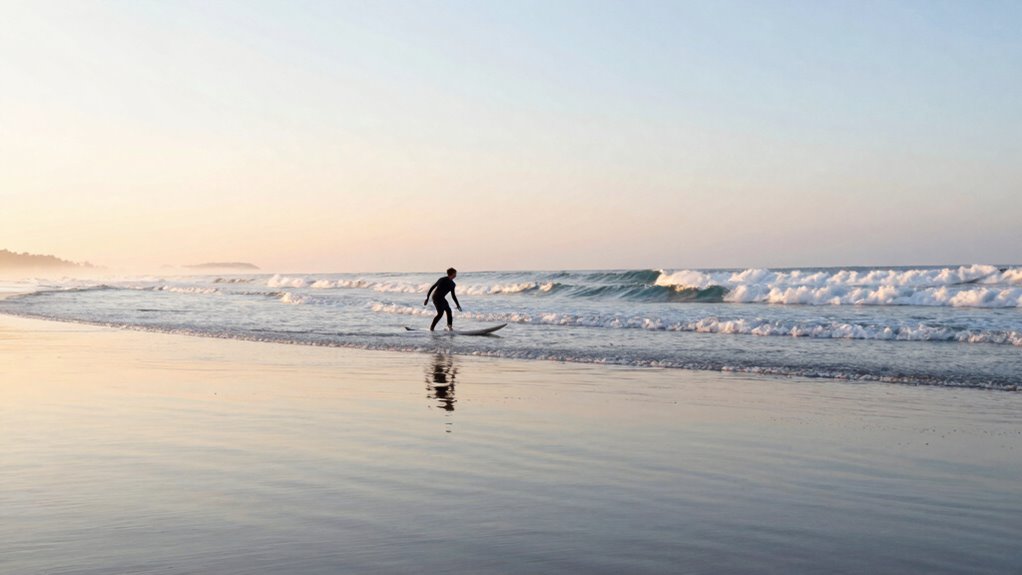

To build a safe progression from calm water to small surf, start in calm conditions to gain confidence and learn your equipment. Focus on understanding wave patterns and ocean behavior, practicing paddling and quick pop-ups. Use stable boards like soft-tops and wear safety gear. Gradually move to larger waves as your skills improve, always prioritizing safety and respecting local etiquette. Staying patient and consistent helps you develop the skills needed for more challenging surf, and if you keep exploring, you’ll become a more confident surfer.

Get pool and patio gear delivered free — and shop member deals
- Fast, free delivery on millions of items
- Access to Prime Big Deal Days deals on October 6–7
- Prime Video, Amazon Music and more included
Key Takeaways
- Start in calm, flat water to develop basic paddling, balancing, and wave reading skills confidently.
- Use stable, buoyant boards like soft-tops to ensure safety and ease of paddling.
- Gradually progress to small, manageable surf while continuously practicing water awareness and safety.
- Learn local ocean conditions, tides, and etiquette to navigate waves safely and make informed decisions.
- Prioritize patience, gradual challenges, and safety to build skills and confidence step-by-step.
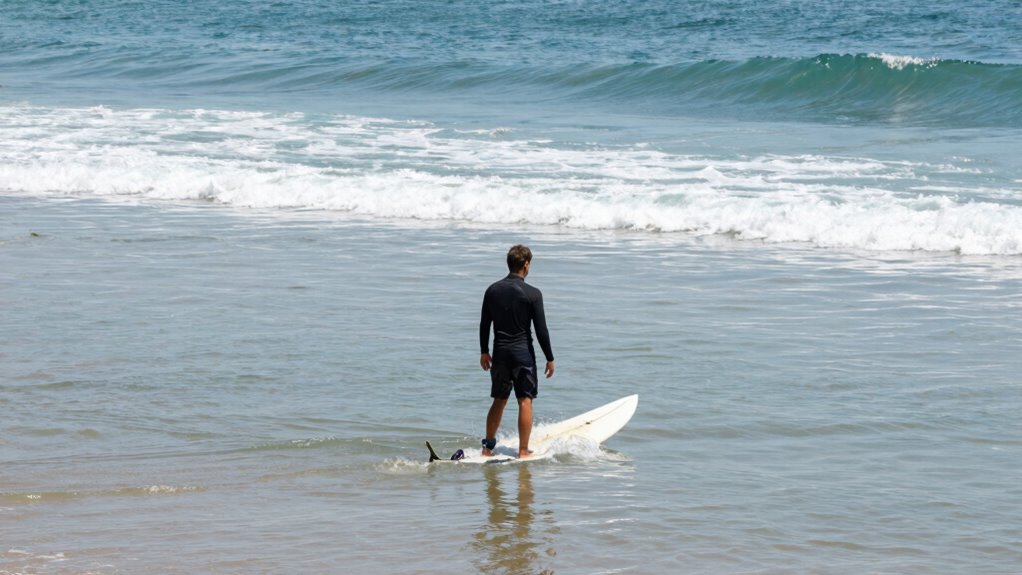
Starting with calm water is the best way to build your confidence and skills before tackling small surf. When you’re just beginning, it’s essential to focus on understanding the ocean and how your equipment interacts with it. Wave reading becomes your foundation; learn to observe how waves form, where they break, and how they move. Watch for patterns in the water, noting the size, shape, and timing of the swells. This skill helps you pick the right moments to paddle out and catch waves, reducing the risk of getting caught in unexpected or dangerous situations. As you become more comfortable with wave reading, you’ll start to anticipate how the surf will behave, allowing you to position yourself better and make smarter decisions.
Start in calm water, learn wave patterns, and build confidence before surfing small surf.
Equipment selection is equally important in building a safe progression. Start with a larger, more stable board designed for beginners—such as a soft-top longboard or a foam board. These boards provide extra buoyancy and balance, making it easier to paddle and stand up. Ensure your leash is secure and in good condition, so you won’t lose your board if you fall. Wearing appropriate gear like a wetsuit can also improve your comfort and confidence in the water, especially in cooler conditions. As your skills improve, you can gradually switch to smaller, more maneuverable boards suited for small surf, but always start with equipment that offers stability and forgiveness. Developing a good understanding of ocean conditions is essential for safe progression in surfing. Additionally, learning about local surf etiquette can help you navigate crowded beaches and ensure a safer experience for everyone. Gaining knowledge about wave formation can further enhance your ability to read the water and choose the best waves to ride. Recognizing tidal influences is also key, as tides significantly affect wave behavior and safety considerations. Furthermore, being aware of weather patterns can help you better anticipate changing conditions that impact surf safety.
When you paddle out, keep your movements smooth and deliberate. Focus on your wave reading skills to identify suitable waves, and position yourself accordingly. Don’t rush or paddle aggressively into the surf; instead, wait patiently for the right wave, and then paddle with purpose to catch it. As you catch your first waves, practice popping up quickly and maintaining your balance. Remember, the goal is to stay relaxed and in control, not to ride the wave perfectly on your first try.
Progression should be gradual. Once you’re comfortable catching small waves in gentle conditions, gradually increase the challenge by trying slightly larger surf or more complex wave patterns. Always prioritize safety—never push beyond your current skill level, and respect the ocean’s power. With patience, consistent practice, and a focus on wave reading and equipment selection, you’ll build a solid foundation that prepares you to enjoy small surf confidently and safely.
As an affiliate, we earn on qualifying purchases.
Frequently Asked Questions
What Type of Surfboard Is Best for Beginners?
As a beginner, you should start with a soft-top surfboard, which offers stability and buoyancy. This type of equipment helps you learn basic skills and build confidence before exploring advanced techniques. Over time, consider equipment upgrades like a slightly smaller board or one with a more streamlined shape to improve maneuverability. Selecting the right beginner surfboard guarantees a safe, enjoyable learning process while gradually progressing toward more challenging surf conditions.
How Do I Recognize When I’M Ready to Try Small Surf?
Think of your skills as a ladder, each rung representing your confidence and wave awareness. When you’re consistently catching small, manageable waves and feeling comfortable paddling out, it’s time to try small surf. You should feel confident in your ability to read the waves and stay balanced. If you’re not yet confident in these areas, it’s best to keep practicing on smaller, calmer waters until you build that essential wave awareness and trust in your abilities.
What Safety Equipment Should I Always Wear?
You should always wear essential safety gear like a well-fitted helmet, a wetsuit or protective clothing, and a leash to keep your board close. Consider additional protective gear such as rash guards and impact vests for extra safety. These items help prevent injuries and keep you comfortable while surfing small surf. Always check your equipment before heading out, and prioritize safety gear to guarantee a safe and enjoyable experience in the water.
How Can I Improve My Paddling Technique?
Imagine your paddle is an extension of yourself, guiding you smoothly through the water. To improve your paddling technique, focus on proper paddle positioning, keeping it vertical and aligned with your body. Prioritize stroke efficiency by engaging your core and rotating your torso with each stroke. Practicing deliberate, controlled movements helps you conserve energy and increase speed, making your paddling more effective and enjoyable—turning every stroke into a dance with the waves.
What Are Common Mistakes to Avoid During Progression?
You should avoid rushing your progression, as it can lead to risky situations and hinder your confidence building. Be mindful of risk management by sticking to your comfort zone and gradually increasing difficulty. Don’t neglect proper paddling technique or underestimate ocean conditions. Keep practicing consistently, listen to experienced surfers, and stay attentive to your limits. This approach guarantees safety, minimizes mistakes, and helps you develop confidence smoothly as you advance into small surf.
Conclusion
As you navigate from calm waters to small surf, think of it as climbing a gentle hill toward brighter horizons. Each step builds your confidence like bricks in a sturdy wall, shielding you from the storm. Embrace patience, trust your growing skills, and let the ocean’s rhythm guide you. Soon, you’ll find yourself riding waves with the grace of a bird in flight, soaring safely into the thrill of surf’s embrace.
Fall Picks
fall essentials
As an affiliate, we earn on qualifying purchases.