To prevent your floating dock from drifting overnight, make certain you use the right anchors suited to your water conditions, like screw-in or deadweight anchors, and secure them deep into the seabed. Attach sturdy chains or cables with minimal slack to dock cleats, and add cable weights or mooring buoys for extra stability. Regular inspections and seasonal adjustments help maintain security, so you can keep your dock stable no matter the weather—learn more to guarantee long-term peace of mind.
Key Takeaways
- Select appropriate anchors based on water depth, bottom type, and dock size for secure holding.
- Use sturdy, corrosion-resistant chains and secure them tightly to dock cleats with minimal slack.
- Incorporate cable weights or mooring buoys to increase stability during high water or strong currents.
- Regularly inspect and adjust mooring lines and anchors to maintain proper tension and prevent slack.
- Reposition or reset anchors seasonally to accommodate water level changes and evolving water conditions.
Why Your Floating Dock Might Drift Away and How to Prevent It
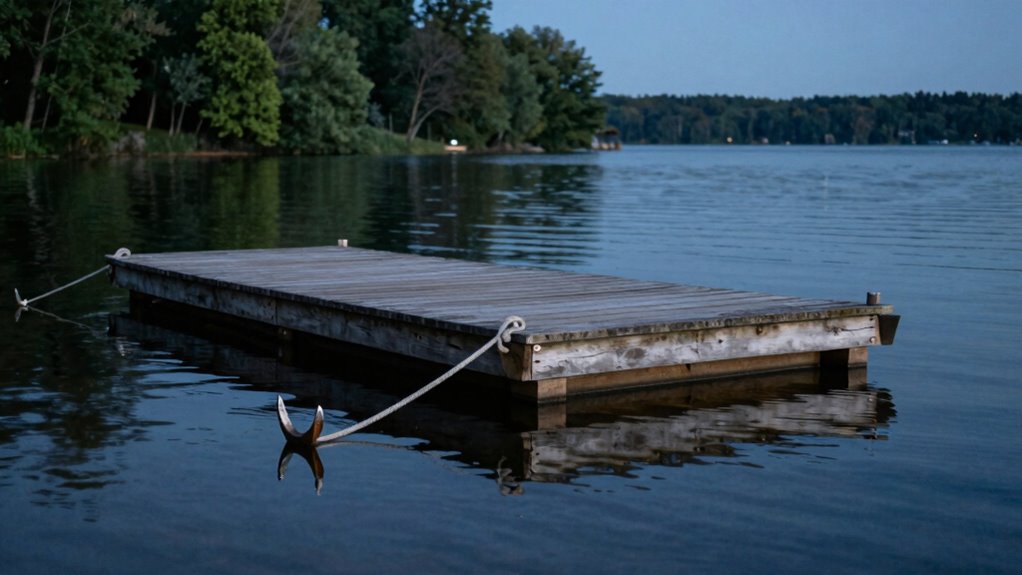
Floating docks can drift away if they aren’t properly anchored, especially during storms or strong currents. Changes in water level can cause the dock to move unexpectedly, making it harder to keep it in place. If your dock has a boat lift, it’s crucial to ensure it’s securely attached, as a loose lift can contribute to instability. Fluctuations in water level, whether from tides or weather, can cause the dock to rise or fall, increasing the risk of drifting. Without proper anchoring, these movements can push or pull your dock away from the desired position. To prevent this, use reliable anchors suited for your water conditions and regularly inspect the stability of your boat lift and connections, keeping your floating dock secure no matter the water level.
How to Assess Water Depth, Currents, and Wind Before Anchoring
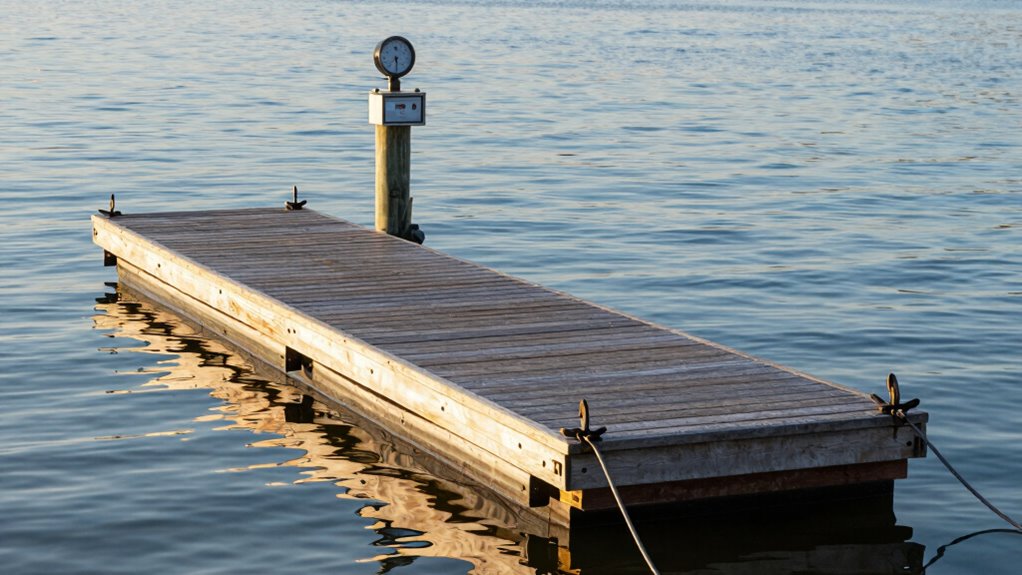
Before anchoring your dock, it’s essential to evaluate the water depth, currents, and wind conditions to guarantee stability. Start with a thorough water depth assessment to ensure your anchors reach solid ground or firm substrate. Next, perform a water flow analysis to understand how currents move around your dock, which impacts anchor choice and placement. Finally, check the wind conditions, as strong gusts can shift or loosen your dock if not properly accounted for. To stay on track:
Assess water depth, currents, and wind to ensure your dock stays secure overnight.
- Measure water depth at multiple points around your dock site.
- Observe current direction and speed over several hours.
- Note prevalent wind patterns and strength forecasts.
These steps help you select the right anchoring method and ensure your floating dock stays put overnight.
Choosing the Best Anchors for Your Floating Dock and Water Conditions

Selecting the right anchors is crucial to guarantee your floating dock remains secure in various water conditions. Your dock design influences the type of anchors you need, as different shapes and sizes offer better stability depending on the waterway’s characteristics. For example, heavier or more specialized anchors are essential in areas with strong currents or high wind. Always consider waterway regulations, which often specify acceptable anchoring methods and equipment to protect the environment and navigation. Choosing anchors suited to your water conditions ensures your dock stays in place without causing damage. It’s important to match your anchor type—such as screw-in, deadweight, or fluke—with the specific demands of your location to maintain safety and compliance.
Step-by-Step Guide to Installing Anchors Safely and Effectively
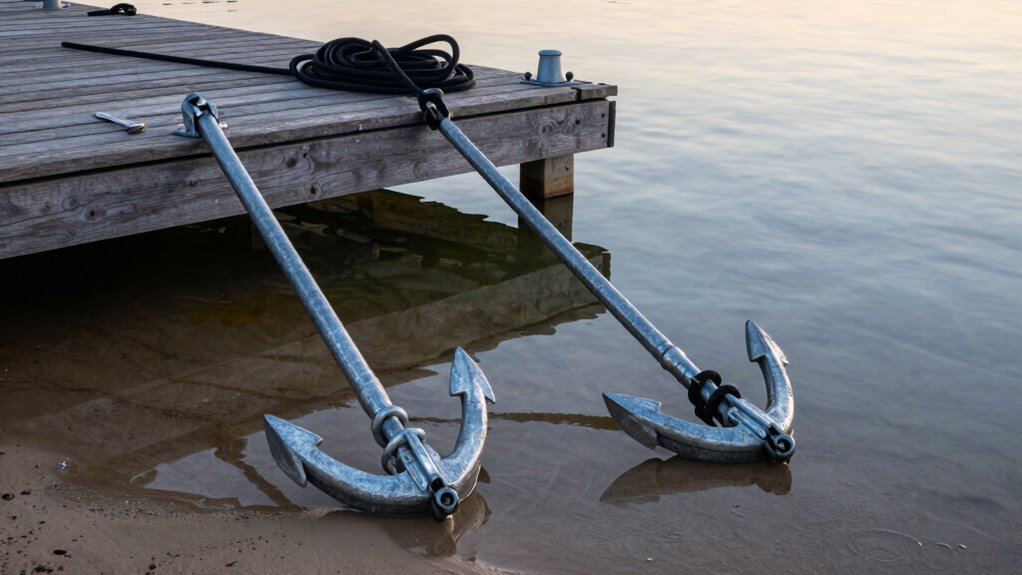
To install your anchors safely and effectively, you need to select the right type for your water conditions and dock design. Make sure you follow proper installation techniques to guarantee stability and durability. Careful attention to these steps will help your floating dock stay secure over time.
Choosing Proper Anchor Types
Choosing the right type of anchor is essential for ensuring your floating dock stays secure and stable. You need to evaluate different types of anchor points and the available anchor material options to suit your specific needs. Here are three key points to help you decide:
- Types of anchor points: Choose from fluke, screw, or block anchors, depending on your seabed conditions and water depth.
- Anchor material options: Consider galvanized steel, concrete, or synthetic materials for durability and corrosion resistance.
- Application suitability: Match the anchor type and material with your dock’s size, weight, and local water conditions to maximize stability.
Installing Anchors Correctly
Properly installing your anchors is essential to keep your floating dock stable and secure. Begin with a shoreline assessment to determine the best anchor placement, considering water depth, bottom composition, and current. Select the appropriate anchor materials—galvanized steel, concrete, or synthetic options—based on your assessment. When installing, ensure the anchors are embedded deeply enough to withstand weather and water movement. Use the following guide:
| Step | Action | Tip |
|---|---|---|
| 1 | Analyze shoreline terrain | Avoid rocky or unstable ground |
| 2 | Choose suitable anchor material | Match material to bottom type |
| 3 | Dig or deploy anchors | Ensure firm, secure placement |
| 4 | Connect to dock using chains or ropes | Keep slack minimal but flexible |
| 5 | Test stability | Adjust if movement occurs |
This process guarantees your dock stays put through storms and tides.
How to Use Chains, Cables, and Other Weight-Based Anchors
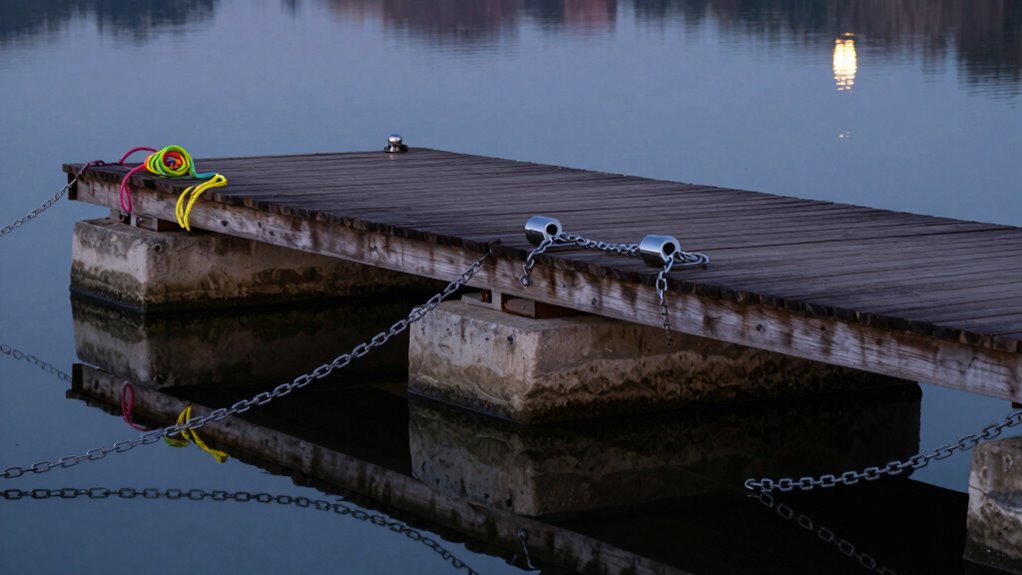
Using chains, cables, and other weight-based anchors involves securing your floating dock with sturdy materials that resist shifting caused by waves and currents. To do this effectively, consider these steps:
Secure your floating dock with sturdy chains and cables to prevent drifting caused by waves and currents.
- Attach an anchor chain to the dock’s cleats, ensuring it’s long enough to reach the seabed and provide stability.
- Use a cable weight at the bottom of the cable to add extra holding power, especially in strong currents.
- Regularly check the tension of your chain and cable, adjusting as needed to prevent slack that can cause drifting.
How to Secure Your Dock With Mooring Buoys and Piling Anchors
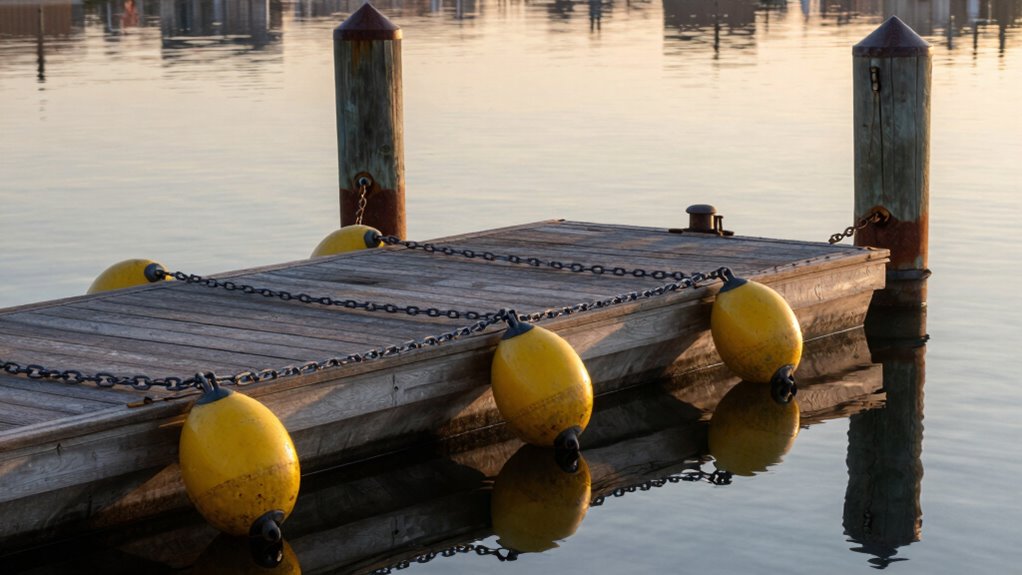
After securing your dock with chains and cables, adding mooring buoys and piling anchors can provide additional stability. Mooring buoys keep your dock in place, especially in areas with strong currents or shifting water levels, reducing the need for frequent dock maintenance. Piling anchors, driven into the lakebed or riverbed, offer a sturdy point of attachment, preventing drifting during storms or high water. Properly installing and inspecting these anchors ensures your dock stays secure, promoting water safety for everyone. Regular maintenance checks will help identify wear or damage early, preserving their effectiveness. Using mooring buoys and piling anchors not only enhances stability but also minimizes environmental impact, making your dock more reliable and safer for all water activities.
Tips for Securing Your Floating Dock During Storms and High Water
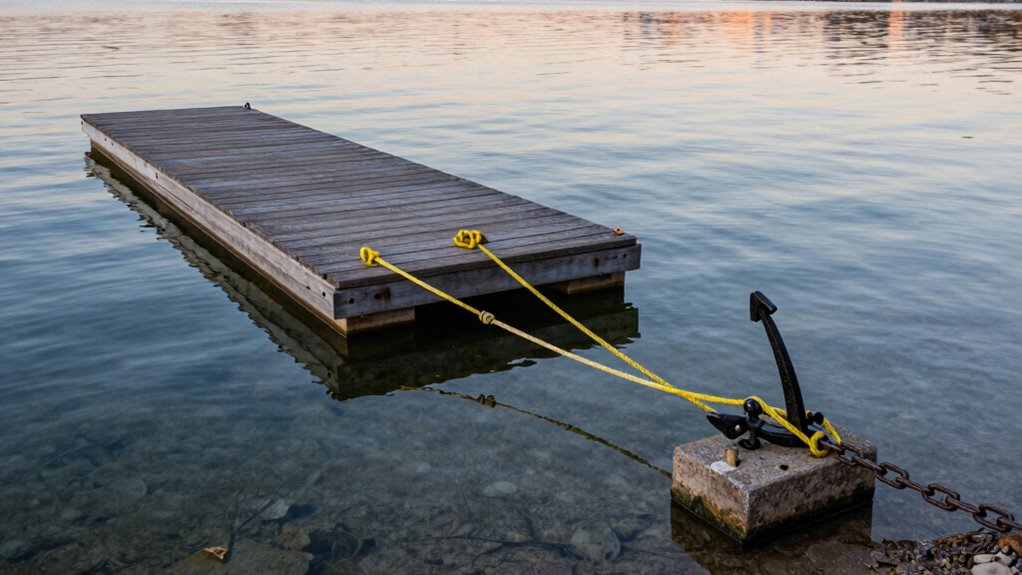
When storms or high water threaten, securing your floating dock becomes essential to prevent damage and guarantee safety. Sudden water level rises can cause significant movement, so take proactive steps. First, ensure your dock is painted with water-resistant dock paint to withstand the elements and reduce surface wear. Second, use additional anchors or tie-downs to stabilize the dock, especially during high water periods. Third, monitor weather forecasts closely and be ready to adjust or remove any loose items. Regularly inspecting and adjusting your dock’s mooring lines during storms helps prevent drift. Remember, high water levels can shift your dock unexpectedly, so staying vigilant and prepared is key to avoiding costly damage and ensuring safe, secure docking during storms.
How to Maintain and Inspect Your Anchors for Long-Term Security
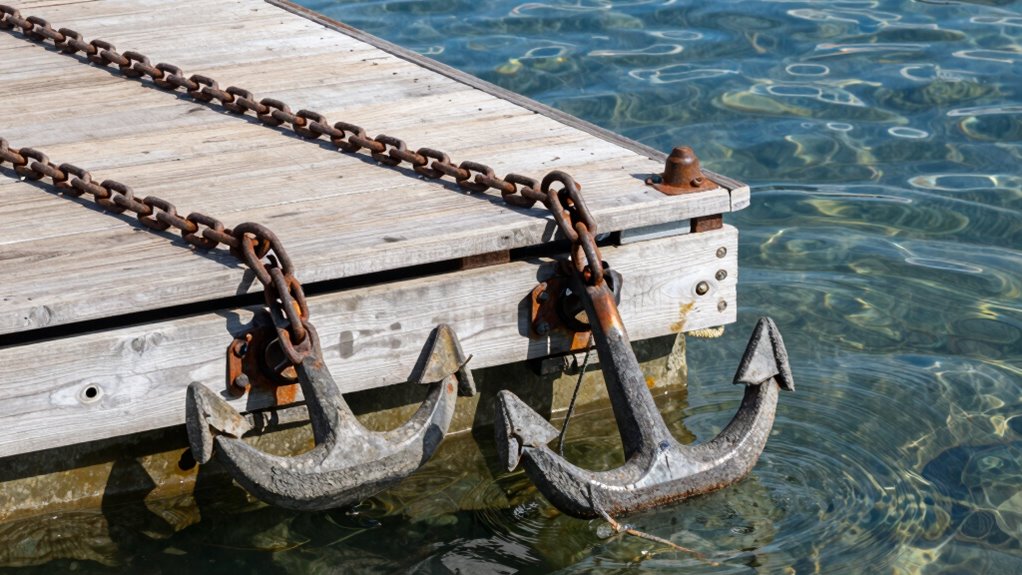
Regularly inspecting and maintaining your anchors is key to keeping your floating dock secure over the long term. Effective anchor maintenance involves checking for rust, corrosion, or damage that can weaken the holding power. Follow consistent inspection routines, such as examining the anchor chain or rope for wear and ensuring the anchor is firmly planted in the seabed. Look out for any shifts or signs of movement, which may indicate the need for repositioning or replacing parts. Clean and lubricate moving components to prevent rust buildup. Regular inspections help you catch issues early, prolonging the life of your anchors and ensuring your dock remains secure. Staying proactive with anchor maintenance is essential for long-lasting stability and peace of mind.
Troubleshooting Common Dock Anchoring Problems
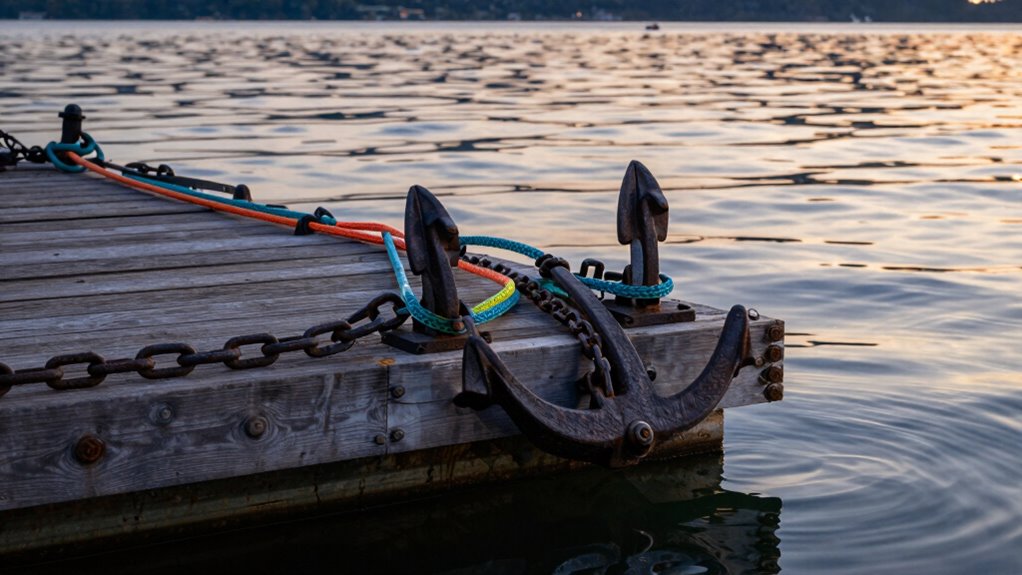
Troubleshooting common dock anchoring problems starts with identifying the root causes of instability or movement. If your dock shifts unexpectedly, it can compromise dock safety and hinder water navigation. To fix this, check these key issues:
- Inadequate or worn anchors – Ensure anchors are properly rated and in good condition; replace if necessary.
- Improper anchoring technique – Use appropriate scope and angles to improve stability.
- Changing water conditions – Monitor water levels and currents that can cause drifting.
Additional Tips to Keep Your Floating Dock Secure Year-Round
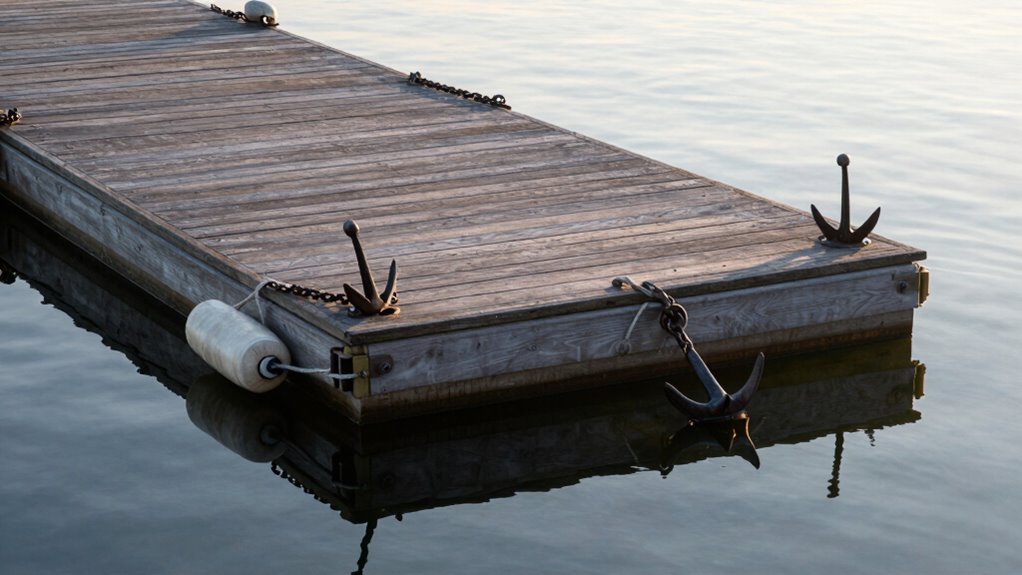
To keep your floating dock secure all year, you should use proper mooring techniques and guarantee your components are in good condition. Regular inspections help catch early signs of wear or damage, preventing bigger issues later. Additionally, adjusting your anchors seasonally can account for changing water levels and conditions, maintaining stability year-round.
Use Proper Mooring Techniques
Using proper mooring techniques is essential to keep your floating dock secure throughout the year. Good mooring prevents drifting caused by changing weather conditions and reduces ongoing dock maintenance. To achieve this, focus on these key steps:
- Use high-quality, corrosion-resistant hardware suited for your environment.
- Attach mooring lines at an angle to distribute tension evenly and prevent sway.
- Adjust tension seasonally to account for weather considerations like storms or high winds.
Regularly inspect and replace worn lines or hardware to maintain security. Proper mooring not only keeps your dock in place but also minimizes damage during severe weather. Consistent maintenance and mindful adjustments ensure your floating dock stays steady, safe, and durable year-round.
Regularly Inspect Dock Components
Regularly inspecting your dock components helps catch issues early before they cause bigger problems. Conduct routine dock maintenance by checking for corrosion, loose bolts, and damaged boards. Ensure that the flotation devices are secure and in good condition. Weather monitoring is essential; high winds, storms, or freezing temperatures can weaken or shift components. After storms or heavy weather, inspect for any signs of movement or damage. Look for cracks, warped planks, or rusted hardware that could compromise stability. Address problems immediately to prevent more costly repairs later. Staying proactive with your inspection routine keeps your floating dock secure and functional year-round. Regular maintenance not only extends the life of your dock but also guarantees safety for everyone using it.
Adjust Anchors Seasonally
Seasons change, and so do the forces acting on your floating dock’s anchors. As water levels fluctuate seasonally, you need to adjust your anchoring strategy to keep your dock secure. Here are three tips:
- Monitor the seasonal water level regularly to identify significant changes.
- Reposition anchors as needed to accommodate rising or falling water levels, ensuring they remain effective.
- Tighten or loosen anchor lines to prevent slack or strain, especially during seasonal shifts.
Frequently Asked Questions
How Often Should I Check My Dock’s Anchoring System?
You should check your dock’s anchoring system at least once a month, especially during seasonal changes or after severe weather. Regular dock maintenance guarantees the anchors stay secure and prevents drifting. Keep an eye on weather monitoring reports, as storms or high winds can loosen or shift anchors. Frequent inspections help you catch issues early, maintaining safety and stability for your floating dock.
Can I Anchor My Dock in Ice-Covered Waters?
You can anchor your dock in ice-covered waters, but you need to prioritize ice safety and winter anchoring techniques. Use sturdy chains or cables secured to the lakebed, and consider ice anchors or weights designed for cold conditions. Be prepared for changing ice conditions, and check your setup frequently. Think of it as taming a wild beast—your dock needs strong, reliable anchoring to stay put through winter’s worst.
What Is the Best Way to Remove an Old or Damaged Anchor?
To remove an old or damaged anchor, start by attaching a strong line or chain to it. Use a boat or winch to gently pull and loosen the anchor from the seabed, avoiding excessive force that could cause further damage. If the anchor is heavily damaged, consider repair options like replacing broken parts or consulting a professional for anchor repair. Always verify safety and proper handling during anchor removal.
How Does Boat Traffic Affect My Dock’s Stability?
When boat traffic increases, your dock becomes more vulnerable to the hustle and bustle, like a sitting duck. Boat congestion creates navigational hazards that can cause collisions or sway your dock unexpectedly. To keep your floating dock steady, make certain it’s securely anchored and positioned away from busy channels. Staying vigilant and adjusting your mooring as needed helps prevent your dock from drifting, even amid lively boat traffic.
Are There Eco-Friendly Anchoring Options Available?
Yes, eco-friendly options are available for anchoring your floating dock. You can choose biodegradable anchors made from natural materials like hemp or biodegradable polymers that break down safely over time. These eco-friendly materials minimize environmental impact and protect aquatic ecosystems. Using biodegradable anchors reduces pollution and preserves water quality, making your dock safer for wildlife. Switching to these sustainable options helps you maintain stability while caring for the environment.
Conclusion
With proper planning and regular care, your floating dock can remain a steadfast part of your waterfront experience. By understanding water conditions, choosing the right anchors, and staying vigilant through inspections, you’ll create a secure haven that withstands nature’s gentle reminders. Remember, a little effort today guarantees many peaceful, worry-free moments tomorrow—allowing you to enjoy your lakeside retreat with confidence and peace of mind.