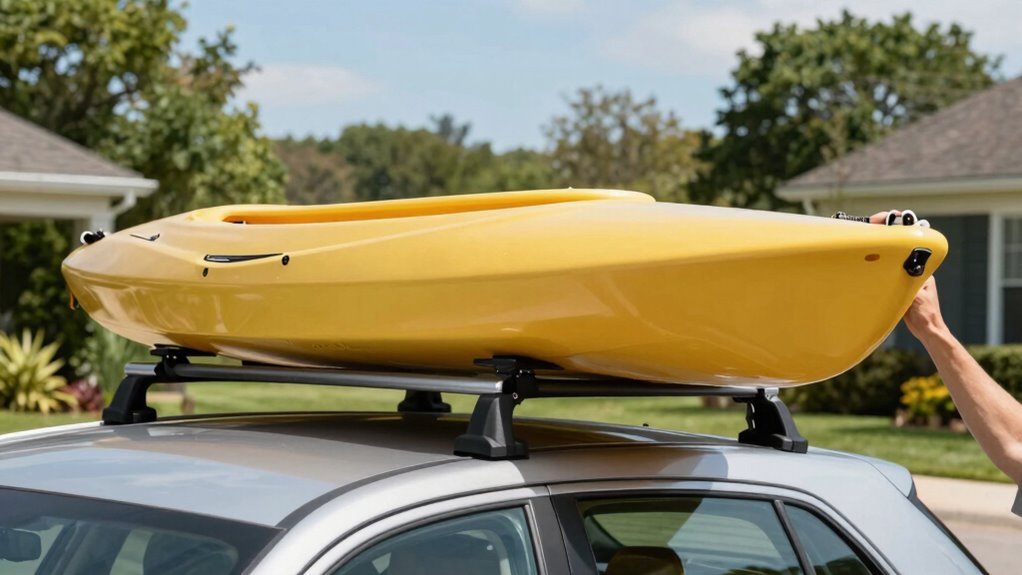
To load a kayak solo without scratching your car, start by protecting your vehicle with foam padding or a blanket to prevent scratches. Use foam blocks or a cushioned roof rack to hold the kayak steady, and slide it gently onto the roof while keeping your back straight and knees bent. Secure the kayak with soft straps, ensuring even weight distribution. For more tips on smooth, safe loading, keep exploring options that make the process easier.
Key Takeaways
- Use foam padding or blankets on your car’s roof to prevent scratches during loading and sliding.
- Employ foam blocks or soft straps to secure the kayak without damaging the paint or finish.
- Slide the kayak gently onto the roof, supporting it with your hands or a paddle to minimize contact with the car.
- Maintain a steady, controlled movement, keeping the kayak level and close to the vehicle to avoid scratches.
- Check that straps are snug and that the kayak is properly supported to prevent shifting and potential damage during transit.
Why Solo Kayak Loading Can Be Challenging and How to Overcome It
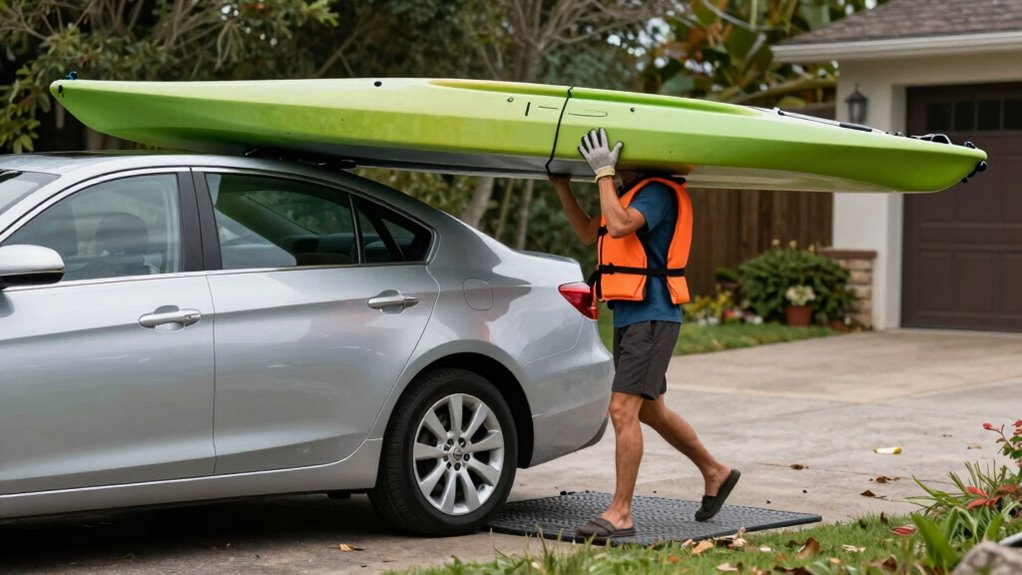
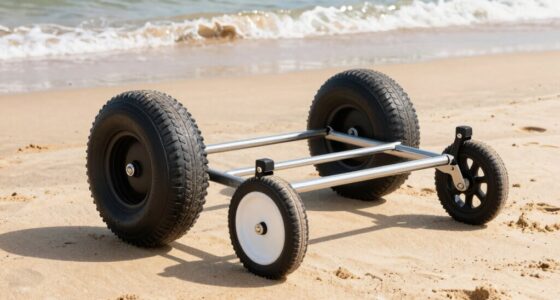
Loading a kayak alone can be tricky because you don’t have a partner to help lift or stabilize the boat. One major challenge is balancing the kayak during loading, which requires careful positioning and steady control. Without support, it’s easy for the kayak to shift or tip, risking damage to your vehicle or the boat itself. Overcoming these balancing challenges starts with proper equipment selection. Use accessories like foam blocks, straps, or wheel dollies designed for solo loading. These tools help stabilize the kayak and make handling easier. Choosing the right gear ensures you can control the load without slipping or scratching your car’s surface. With the right equipment, you’ll find solo loading much more manageable, increasing safety and reducing frustration during the process.
Essential Gear to Protect Your Car When Loading a Kayak Solo
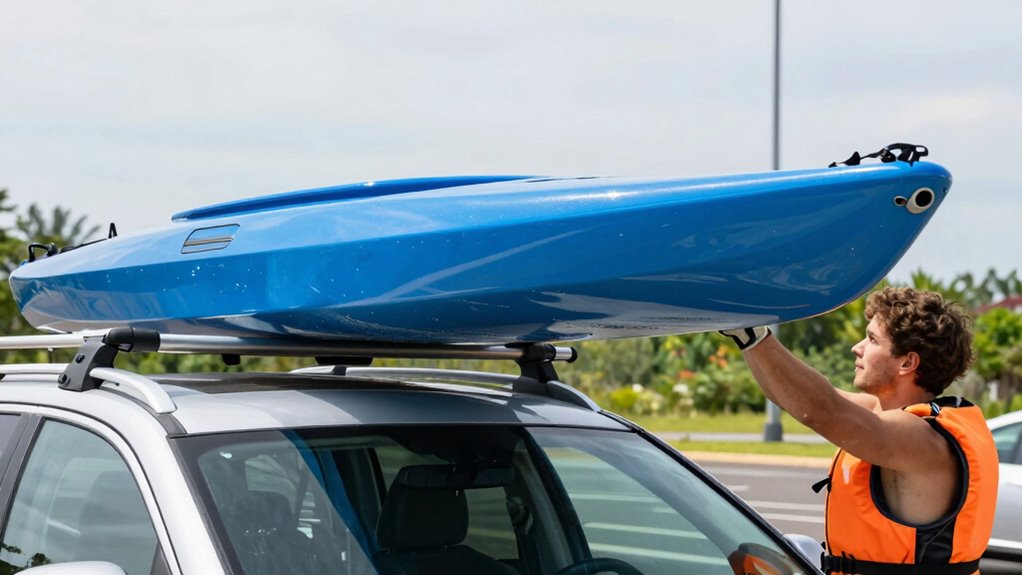
To protect your car from scratches, dents, and other damage during solo kayak loading, having the right gear is a must. Using proper kayak accessories can make a significant difference, safeguarding both your vehicle and kayak. Consider padding, such as foam blocks or kayak saddle pads, to cushion contact points. A durable tarp or blanket provides a barrier against scratches during sliding or lifting. Regular vehicle maintenance, like checking roof rack stability, ensures safe loading. Here’s a quick overview:
| Gear | Purpose | Benefits |
|---|---|---|
| Foam Padding | Protects roof and kayak contact points | Absorbs impact, reduces scratches |
| Tarp or Blanket | Acts as a sliding surface or barrier | Prevents abrasions |
| Roof Rack | Securely holds kayak in place | Ensures stability and safety |
| Tie-Down Straps | Keeps kayak firmly attached | Prevents shifting during transit |
Step-by-Step Techniques for Lifting and Sliding Your Kayak Safely
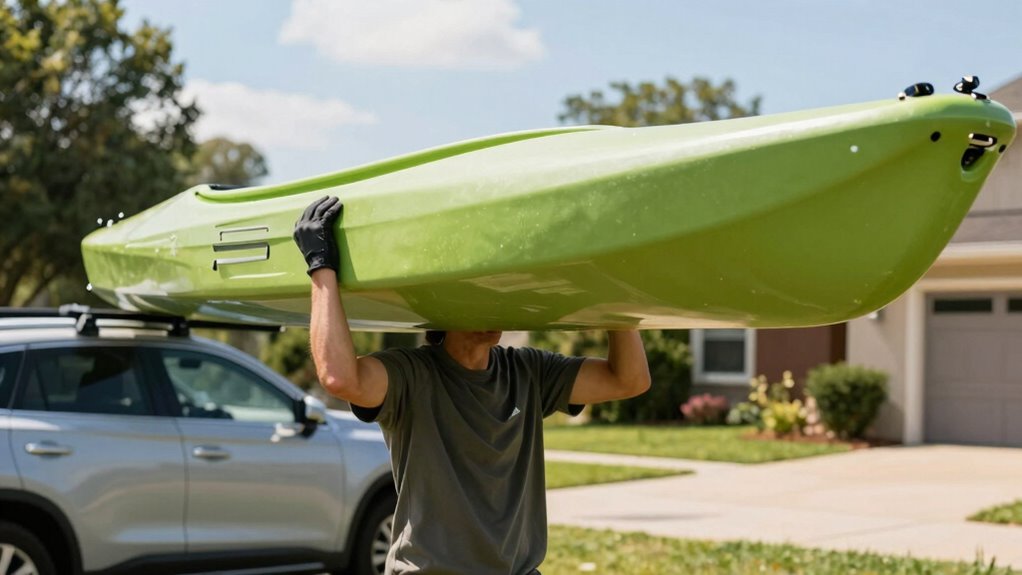
Before you lift or slide your kayak, it’s essential to plan your movements carefully to prevent injury and damage. Use proper lifting and sliding techniques to protect your kayak and your vehicle during kayak storage or launching. Keep your back straight, bend at the knees, and grip the kayak firmly. To avoid scratches, place a padded blanket or foam padding on your car roof before sliding the kayak on. Visualize each step: lifting with your legs, balancing the kayak, and smoothly sliding it onto the roof rack. Maintain a steady pace, communicate clearly if others assist, and ensure the kayak remains level during the process. Thoughtful techniques like these make solo loading safer and help you avoid unnecessary scratches or damage.
How to Secure Your Kayak on the Roof Without Scratches or Damage
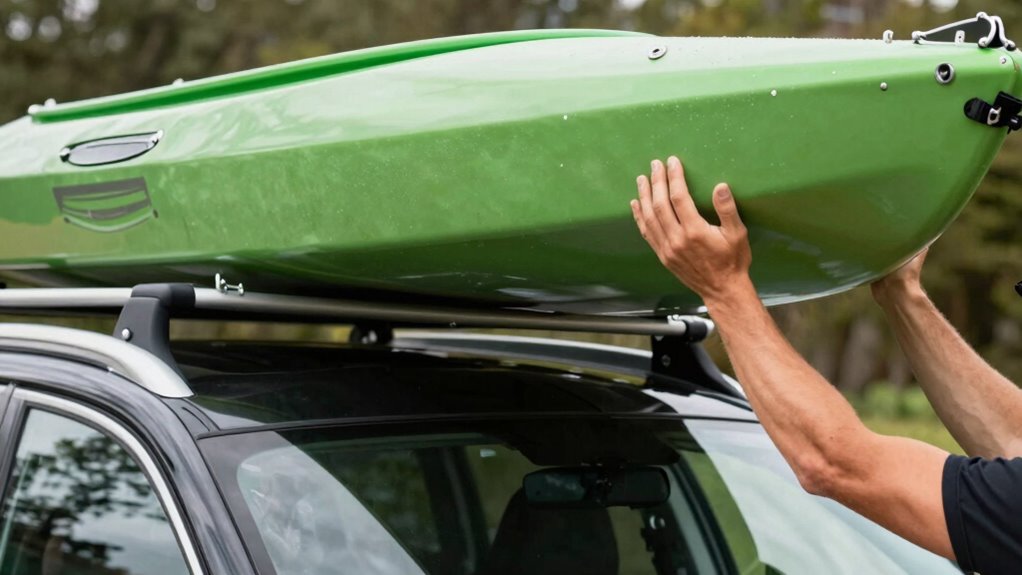
Ensuring your kayak stays scratch-free and undamaged while securing it on the roof requires careful attention. Use soft straps or foam padding to protect your kayak from scratches during kayak storage. Choose the right roof rack options, such as foam blocks, J-cradles, or saddle racks, that support your kayak gently. Always secure the kayak tightly to prevent shifting, but avoid overtightening, which can cause damage. Position the kayak evenly to distribute weight and prevent stress on your vehicle. Use this table to compare popular roof rack options:
| Roof Rack Option | Benefits |
|---|---|
| Foam Blocks | Lightweight, gentle on kayak |
| J-Cradles | Easy to load, stable |
| Saddle Racks | Secure, supports kayak evenly |
| Roof Padds | Protects kayak and vehicle |
| Crossbars | Versatile, supports various racks |
Properly securing your kayak safeguards your gear and vehicle.
Tips for Long-Distance Transport: Keeping Your Kayak Safe and Secure
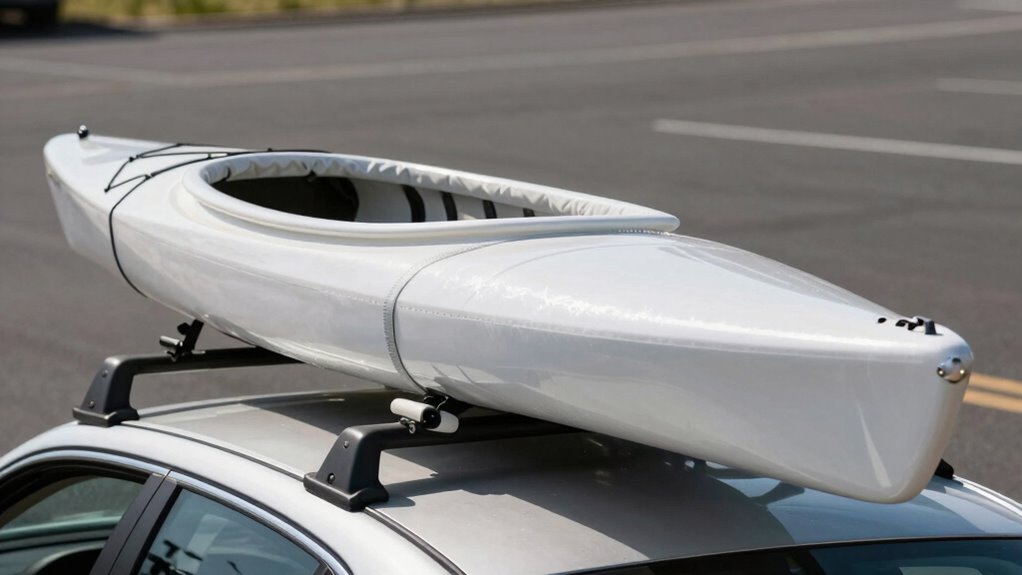
When preparing to transport your kayak over long distances, proper securing becomes even more vital to prevent damage and guarantee safety. Ensuring your kayak stays in place protects it during transit and preserves your car’s condition. Use high-quality straps and padding to stabilize the kayak and avoid shifting. Remember to check your kayak storage setup regularly for tension and security. Keep your vehicle’s roof racks in good car maintenance shape, inspecting for corrosion or loose parts before each trip. Visualize your setup:
- Straps tightly securing the kayak without over-tightening
- Soft padding preventing scratches on your car’s paint
- Clear, visible knots for quick inspection
- Properly balanced weight distribution across the roof
- A clean, dry kayak ready for transport
Following these tips helps keep your kayak safe and your car in top condition.
Common Mistakes to Avoid When Loading a Kayak Solo
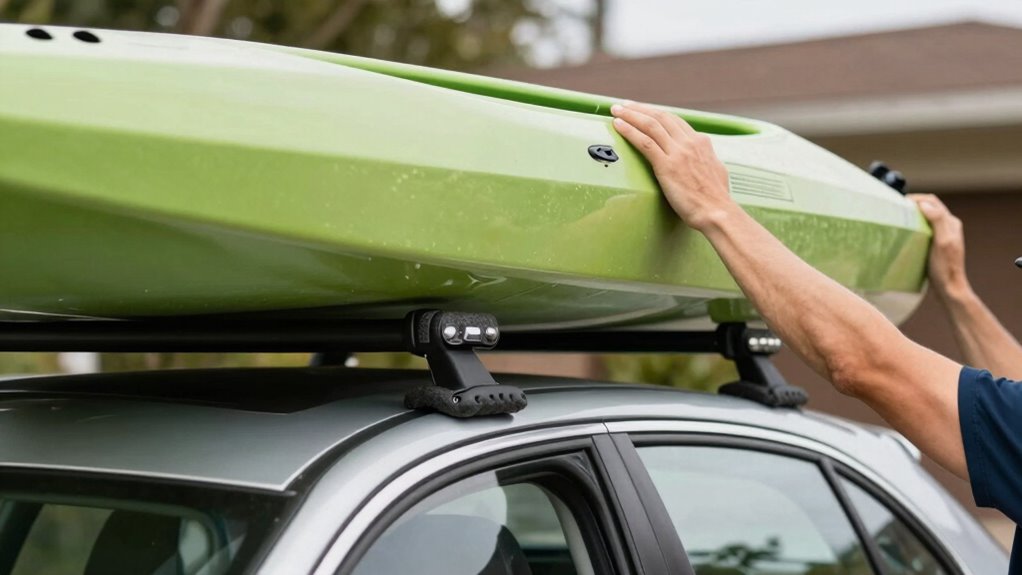
Loading a kayak solo can be tricky, and many people make simple mistakes that compromise safety and damage their gear. One common error is neglecting proper kayak storage during loading, which can scratch your car’s paint. Another mistake is rushing, causing you to overlook securing straps or balance, risking gear falling or car damage. To avoid this, plan your load carefully and use padded supports to protect your vehicle’s surface. Additionally, ignoring car maintenance—like checking roof racks—can lead to accidents. Here’s a quick guide:
| Mistake | Consequence | Solution |
|---|---|---|
| Skipping kayak storage prep | Scratches, damage | Use padding and proper supports |
| Rushing the process | Dropped gear, instability | Take your time, plan steps |
| Neglecting car maintenance | Rack failure, accidents | Inspect racks regularly |
| Forgetting to secure gear | Loss during transport | Double-check straps and ties |
Frequently Asked Questions
What Are the Best Times of Day to Load a Kayak Solo?
You should load your kayak during the early morning or late afternoon when there’s plenty of loading momentum, making the process smoother and safer. These times often have softer sunlight, reducing glare and helping you see clearly without rushing. Avoid peak sunlight hours, like midday, when heat and glare can make handling difficult. Choosing these times guarantees you can load your kayak efficiently while protecting your car’s paint.
Can I Use Household Items to Assist With Kayak Loading?
Sure, you can use household items as DIY solutions to help load your kayak. Household tools like blankets or towels act as buffers to prevent scratches, while a broomstick or long PVC pipe can serve as a makeshift roller or lever. It’s almost poetic how ordinary household items become your kayak-loading heroes, transforming everyday objects into clever gear. Just be cautious—after all, your car deserves more than a makeshift solution.
How Do Weather Conditions Affect Solo Kayak Loading Safety?
Weather conditions greatly impact your solo kayak loading safety. Weather hazards like rain, strong winds, or lightning can make the process dangerous, so always check the forecast first. Wind considerations are especially important; gusts can push your kayak or cause loss of control. Stay cautious, secure your kayak with straps, and avoid loading in adverse weather to prevent accidents or damage to your vehicle and kayak.
Is It Better to Load From the Driver’s or Passenger’s Side?
Loading techniques are easier when you load from the passenger’s side because of better car accessibility, especially if you park close to the curb. This side often offers more space and less risk of scratching your car. Use proper lifting techniques to avoid damage and scratches. If parking on the driver’s side, ensure your car is accessible and clear of obstacles. Always balance the kayak during loading for safety and to prevent scratches.
How Often Should I Inspect My Roof Rack for Damage After Loading?
You should inspect your roof rack for damage after every loading session. Regular rack maintenance helps catch issues early and prevents damage during transit. Check for loose straps, cracked components, or corrosion, especially if you’ve just loaded a kayak or heavy gear. By doing this, you guarantee damage prevention and prolong your rack’s lifespan, keeping your vehicle and gear safe on every trip.
Conclusion
Loading a kayak solo doesn’t have to be stressful or damaging to your car. With the right techniques and gear, you can safely lift, slide, and secure your kayak without scratches. Did you know that over 60% of kayak owners experience damage during loading? By following these tips, you’ll protect your vehicle and enjoy your adventures worry-free. Happy paddling—and confident that your kayak is safely in place every time!