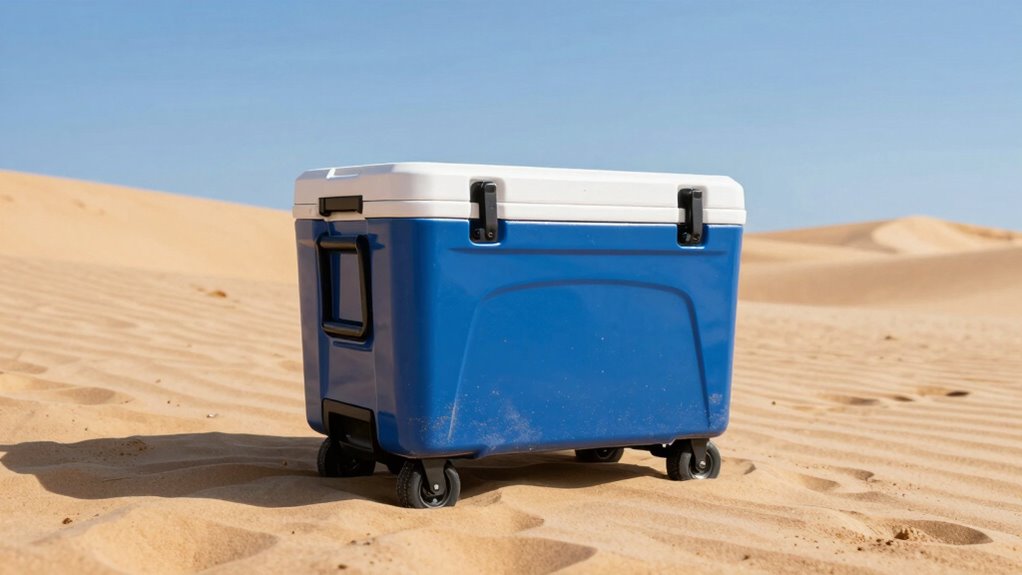

When you roll a cooler on sand, physics plays a key role. Larger wheels with deeper treads spread weight, reducing sinking and friction. Proper alignment and lower tire pressure increase the contact patch, making movement smoother. Heavier coolers and softer sand create more resistance, so choosing the right wheels helps. By understanding how weight, friction, and terrain interact, you can make beach trips easier—keep going to discover how to optimize your cooler for any sandy terrain.

Get pool and patio gear delivered free — and shop member deals
- Fast, free delivery on millions of items
- Access to Prime Big Deal Days deals on October 6–7
- Prime Video, Amazon Music and more included
Key Takeaways
- Larger, wider wheels increase surface area, improving floatation and reducing sinking in sandy terrain.
- Deep-tread, knobby tires enhance traction, preventing slipping and aiding smoother rolling on loose sand.
- Proper wheel alignment and lower tire pressure distribute weight evenly, minimizing resistance and sinking.
- Heavier coolers or improper weight distribution increase friction, making rolling more difficult.
- The grain size and moisture content of sand affect resistance; moist, compact sand offers better support for wheels.
As an affiliate, we earn on qualifying purchases.
How Does Rolling Make Moving Your Cooler Easier on Sand?
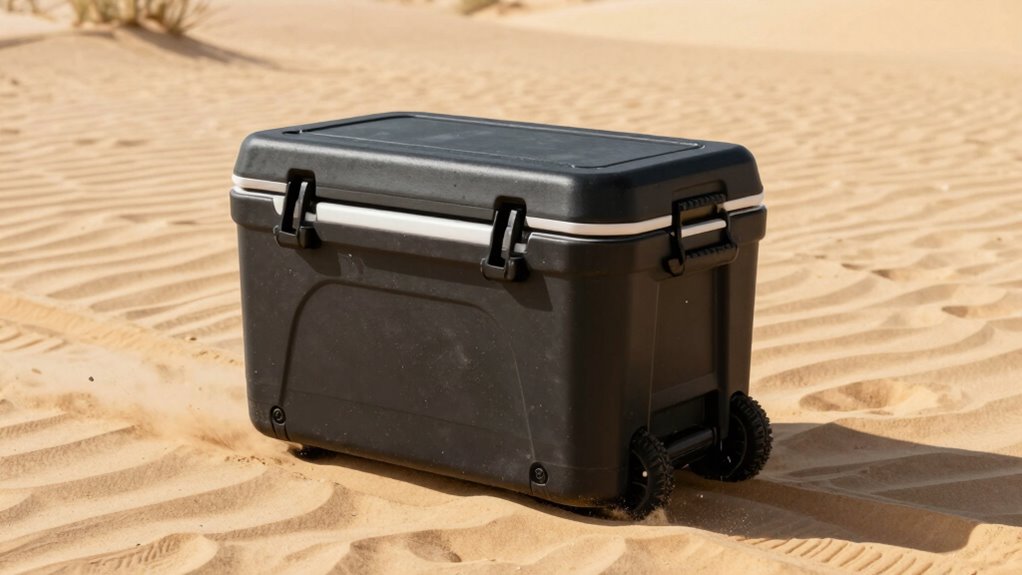
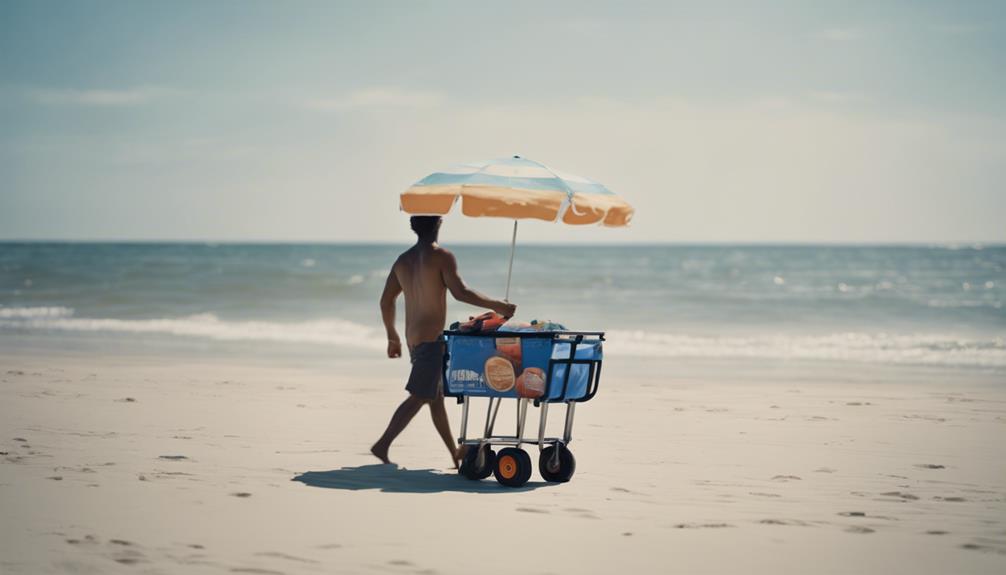
Have you ever tried carrying a heavy cooler across soft sand and wondered if there’s a better way? Rolling your cooler makes this much easier because it reduces the effort needed to move it. When you use a cooler with good insulation, it already feels heavier, so rolling minimizes the strain on your arms. Plus, positioning a beach umbrella nearby helps create shade, keeping you and your cooler cooler and more manageable. Rolling distributes the weight evenly across the wheels, preventing you from sinking or struggling through the sand. This simple physics principle means less friction and less energy expenditure. Instead of lifting and carrying, rolling transforms a tiring task into a swift, effortless glide, making your beach day more relaxing and enjoyable.
Why Wheel Size and Tread Design Matter for Sand Conditions

Choosing the right wheel size makes a big difference when moving your cooler on sand, as larger wheels spread out the weight and reduce sinking. Tread design also plays a vital role, helping you gain traction and maintain control. Together, these factors determine how easily you can roll over soft, loose surfaces.
Larger Wheels Distribute Weight
Larger wheels are vital for maneuvering a cooler over sand because they spread out the weight more effectively. When wheels are bigger, they reduce the pressure exerted on the sand, making it easier to roll without sinking. Proper tire pressure is essential—lowering it increases the contact patch, further decreasing the downward force on the sand. Additionally, maintaining correct wheel alignment ensures that weight is evenly distributed across the wheels, preventing unnecessary drag or uneven sinking. Bigger wheels, combined with proper tire pressure and alignment, allow you to move your cooler smoothly over loose sand. This setup minimizes the effort needed to push or pull, making your trip more comfortable. Ultimately, larger wheels help you navigate sand terrain with less struggle, saving you time and energy.
Tread Design Affects Traction
While bigger wheels help reduce sinking in sand, the tread pattern on those wheels also plays a key role in maintaining traction. A well-designed tread pattern helps grip loose sand by channeling material away and increasing surface contact. Deep tread depth provides better bite, preventing slipping and ensuring your cooler stays on course. Shallow treads may spin easily, especially in soft conditions, reducing control. Look for tires with a knobby or aggressive tread pattern to improve grip. The spacing between tread blocks also matters; wider gaps prevent sand buildup that can cause slipping. Ultimately, choosing wheels with the right tread design and sufficient tread depth helps you navigate sand more effectively and keeps your cooler rolling smoothly.
How Cooler Weight Affects Your Beach Trek
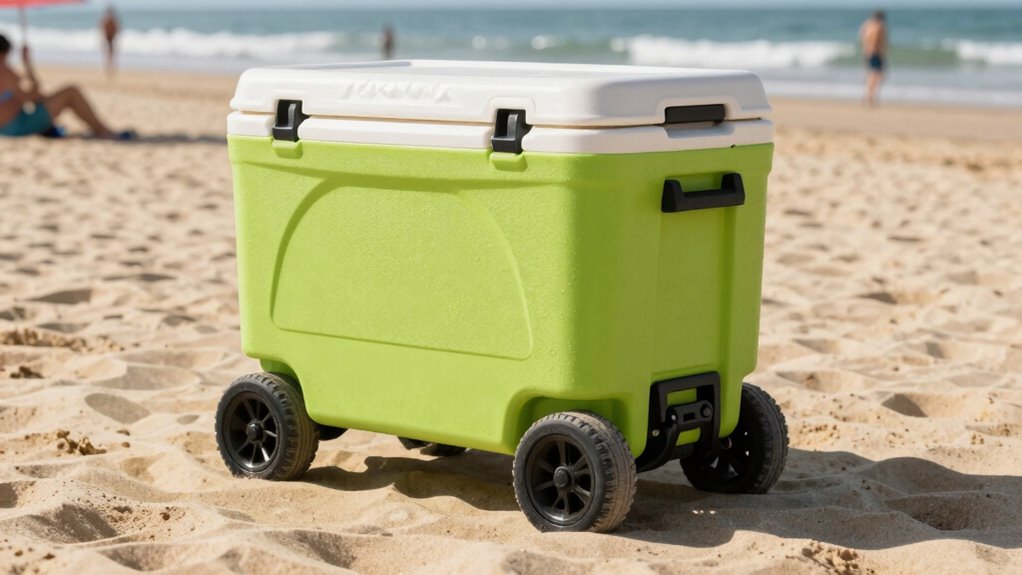
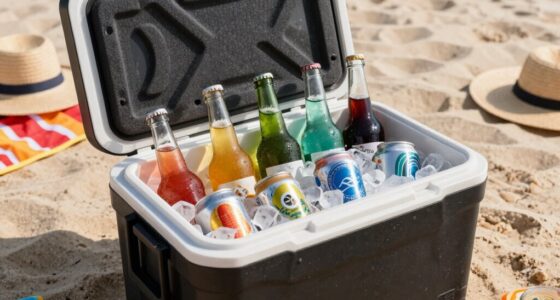
The weight of your cooler directly impacts how easily you can roll it across sandy terrain. Heavier coolers require more effort to move, especially on soft sand, because they increase the force needed to overcome friction and inertia. A well-insulated cooler adds weight but keeps your drinks cold longer, which is a key beach accessory. To understand how weight influences rolling, consider this:
| Cooler Weight | Ease of Rolling | Best For |
|---|---|---|
| Light | Easy | Short trips, soft sand |
| Moderate | Manageable | Regular beach use |
| Heavy | Difficult | Long treks, hard sand |
Choosing the right cooler weight balances insulation needs with your ability to maneuver on different sand types.
How Different Sand Types Impact Rolling Ease

Different types of sand can considerably affect how easily you can roll a cooler across the beach. Fine, moist sand offers better sand stability, making it easier for wheels to grip and roll smoothly. On the other hand, loose, dry sand tends to shift under the wheels, increasing resistance and making your task harder. The type of sand also impacts wheel durability; rough or coarse sand can wear down wheels faster, especially if they’re not designed for such terrain. Compact, firm sand provides a more solid surface, reducing strain on your cooler’s wheels and improving overall ease. Knowing the sand type helps you choose the right wheels and plan your route, ensuring a smoother, less exhausting trek across different beach conditions.
How Friction Between Wheels and Sand Affects Your Load
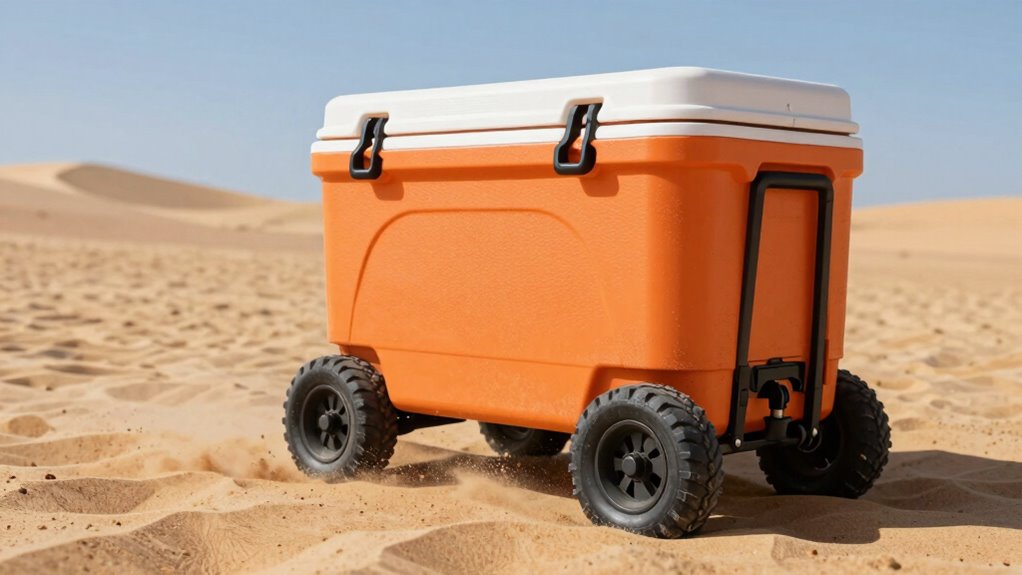
The friction between your wheels and the sand directly influences how much effort it takes to move your cooler. Wheel material, sand grain size, and how much pressure you apply all play pivotal roles in this interaction. Understanding these factors helps you choose the best setup to ease your load on different sands.
Wheel Material Impact
Choosing wheel material plays a crucial role in how easily your cooler moves across sandy terrain. The right material guarantees good wheel durability, meaning it withstands rough conditions without cracking or wearing down quickly. Material resistance also affects how well the wheels resist sand-induced damage and deformation. Harder materials like rubber or plastic often reduce friction, making movement smoother, but they might wear faster on rough sand. Softer materials, such as foam or specialized rubber compounds, can grip the sand better but may generate more resistance, requiring more effort to roll. Selecting a wheel with an ideal balance of durability and resistance helps you minimize effort and avoid frequent replacements, ensuring your cooler moves efficiently and reliably across various sandy surfaces.
Sand Grain Size Effects
Have you ever wondered how the size of sand grains influences how easily your cooler wheels move? Smaller grains tend to pack tightly, increasing particle cohesion and creating more resistance. This means your wheels will face more friction, making it harder to push your cooler across fine sand. Larger grains, on the other hand, don’t stick as much; they allow for easier movement because there’s less particle cohesion and open spaces for the wheels to roll through. The grain size directly impacts how much force is needed to move your cooler. If you’re dealing with fine sand, expect more effort, while coarser sand offers less resistance. Understanding this helps you choose the right terrain or adjust your approach for a smoother roll.
Wheel Pressure Dynamics
Ever wondered how the pressure you apply to your cooler wheels influences how easily it moves through sand? Proper tire inflation spreads your weight, reducing wheel pressure and minimizing sinking. Overinflated tires create high pressure points, digging into the sand and increasing resistance. Conversely, underinflated tires distribute weight more evenly, lowering friction. Wheel alignment also plays a role; misaligned wheels can cause uneven pressure, dragging or slipping. To optimize your cooler’s movement, keep tires at the recommended pressure for sandy terrain and ensure wheels are aligned correctly. Here’s a quick comparison:
| Tire Inflation | Wheel Alignment | Friction with Sand |
|---|---|---|
| Low pressure | Proper alignment | Reduced friction |
| High pressure | Misaligned wheels | Increased friction |
| Balanced pressure | Correct setup | Easier to roll |
| Over/underinflated | Misalignment issues | Resistance increase |
Choosing the Best Wheels for Soft or Dry Sand

When maneuvering soft or dry sand, selecting the right wheels can make all the difference in ease and mobility. You want wheels that distribute weight effectively, minimizing sinking. Wide, flat-tread tires are ideal because they provide a larger surface area, reducing pressure on the sand. Adjusting tire pressure is vital—lowering it increases the contact patch, helping the wheels stay afloat. Proper wheel alignment also matters; misaligned wheels can cause uneven weight distribution and extra effort. Make certain your wheels are aligned correctly for smooth rolling and even wear. By choosing wide, flat tires, lowering tire pressure appropriately, and maintaining proper wheel alignment, you’ll improve your cooler’s mobility on sandy surfaces, making your journey easier and less exhausting.
Tips to Make Rolling on Sand Easier and Less Effort
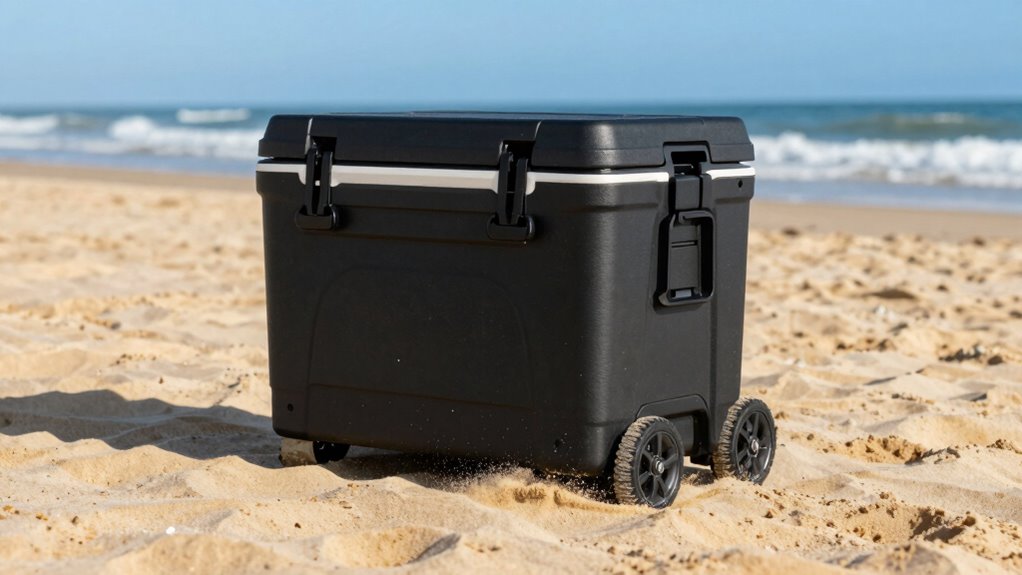
To make rolling your cooler on sand easier, focus on reducing resistance and distributing weight more effectively. Proper cooler insulation helps maintain temperature without needing frequent openings, reducing overall effort. Additionally, selecting wheels designed for beach accessibility minimizes drag. To further ease your task:
- Use larger, wider wheels to navigate soft sand more smoothly.
- Distribute weight by placing heavier items at the center or low inside the cooler.
- Keep the cooler’s surface clean from sand buildup to prevent added resistance.
- Opt for a lightweight cooler frame to reduce the force needed for movement.
How to Evaluate Your Cooler and Wheels Before Heading to the Beach
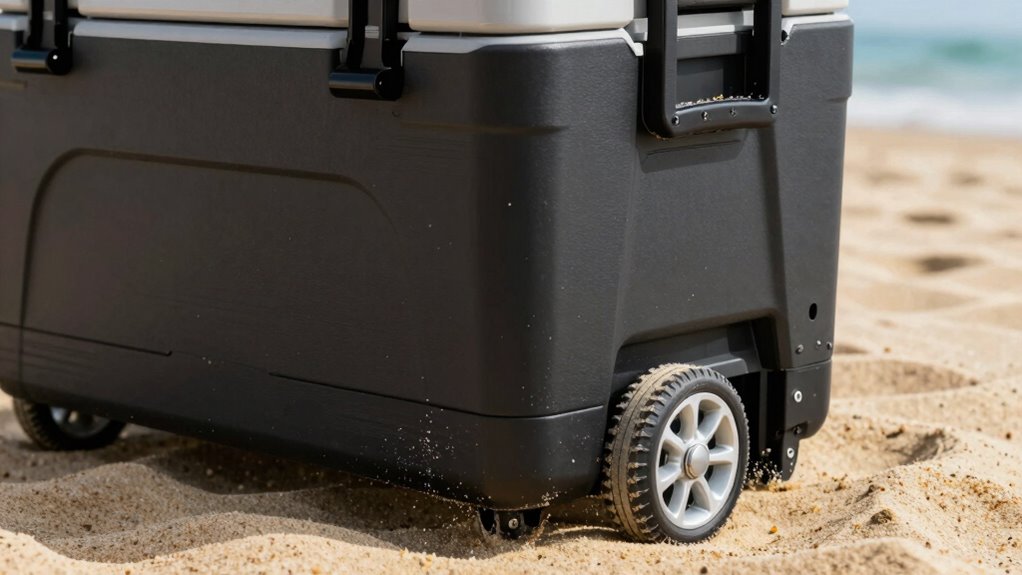
Before heading to the beach, it’s important to evaluate your cooler and its wheels to guarantee a smooth and effortless experience on the sand. Check the cooler’s insulation quality—better insulation keeps items cold longer, reducing the need for multiple trips. Examine the wheels: are they sturdy, wide, and designed for uneven terrain? Larger, rubberized wheels typically handle sand better. Also, consider the handle design; a comfortable, ergonomic handle makes pulling your cooler easier, especially over soft surfaces. Test the wheels and handle beforehand to ensure they move smoothly and feel secure. If the wheels are small or flimsy, consider upgrading or replacing them. A well-chosen cooler and properly evaluated wheels can substantially reduce effort and frustration on the beach.
Common Mistakes That Make Rolling a Cooler on Sand Harder

One common mistake that makes rolling a cooler on sand harder is using a model with small, narrow wheels. These wheels sink into the sand, increasing effort and decreasing stability. To avoid this, consider these factors:
- Ignoring the cooler’s insulation quality, which affects weight and ease of movement.
- Choosing beach accessories that aren’t designed for sand terrain, like lightweight or narrow wheels.
- Overlooking wheel size—larger, wider wheels distribute weight better and roll more smoothly.
- Forgetting to check if the wheels are durable enough to handle rough, sandy surfaces.
Frequently Asked Questions
Can Adding More Wheels Improve Cooler Mobility on Sand?
Adding more wheels can improve your cooler’s mobility on sand, especially if you choose larger wheel size. Larger wheels help distribute the cooler’s weight better, making it easier to roll across soft surfaces. Keep in mind, a heavier cooler may require even bigger wheels or more wheels to move smoothly. So, optimizing wheel size and managing the cooler weight are key to effortless mobility on sand.
How Does Wheel Material Influence Rolling Efficiency on Different Sand Types?
You’ll find that wheel material greatly impacts rolling efficiency on different sand types. Durable wheels made from tough materials like rubber or polyurethane maintain better traction and resist wear on coarse, dry sand. Softer materials provide more grip on loose or wet sand, but may wear faster. Choosing the right material enhances durability and traction surface, making it easier to roll your cooler smoothly across various sand conditions.
What Are the Best Techniques to Maintain Momentum When Rolling on Loose Sand?
To maintain momentum when rolling on loose sand, focus on proper weight distribution and tire pressure. Keep the cooler centered over the wheels to reduce resistance, and lower your tire pressure to increase surface contact, which improves traction and stability. Avoid sudden turns or stops, and aim for steady, consistent effort. These techniques help you conserve energy and keep your cooler rolling smoothly across the sand.
Do Cooler Handles or Straps Affect Ease of Rolling on Sand?
Yes, cooler handles and straps impact how easily you can roll on sand. A handle with a good grip makes steering easier, especially when the cooler is heavy, since you can maintain better control. Straps can help you pull more efficiently, reducing strain on your arms. Keep in mind, a lighter cooler or one with ergonomic handles will make rolling over loose sand much smoother, saving you energy and frustration.
How Does the Incline of the Terrain Impact Rolling Performance?
The terrain slope and incline angle considerably impact your rolling performance. When you face a steeper incline, your cooler needs more force to overcome gravity, making rolling harder. A gentle slope allows smoother movement, while a sharp incline can cause the cooler to tip or get stuck. To maintain ease, choose flatter terrain whenever possible, or prepare for extra effort on steeper inclines by adjusting your grip and pace.
Conclusion
By understanding the physics behind rolling on sand, you’ll turn your cooler into a well-oiled machine instead of a stubborn obstacle. Choosing the right wheels, considering weight, and mastering smart techniques can make your beach trip feel like gliding on smooth water rather than trudging through rough seas. Think of it as revealing a secret passage—small adjustments can transform a grueling trek into a breeze, letting you enjoy more time relaxing, not struggling.
Halloween Picks
halloween
As an affiliate, we earn on qualifying purchases.