When choosing between balloon and all-terrain tires for soft sand, consider the terrain’s conditions. Balloon tires, with their low pressure and large surface area, excel on firm or mildly soft sand, offering a smooth ride and stability. All-terrain tires, with knobby treads, provide better traction in deep, loose sand, helping you navigate challenging beach terrain. To optimize your beach wagon’s performance and safety, exploring the differences further can be beneficial.
Key Takeaways
- Soft, deep sand favors all-terrain tires with knobby treads for better traction; firm sand benefits from balloon tires for smooth rides.
- Balloon tires have larger volume and low pressure, providing flotation and stability on soft sand; all-terrain tires offer grip on challenging terrains.
- Proper tire pressure adjustment is essential: lower pressure improves traction, but too little can cause sinking; match to beach conditions.
- All-terrain tires are more rugged and durable, suitable for varied beach terrains; balloon tires excel in soft, loose sand for flotation.
- Choosing the right tire type and maintaining correct inflation ensures safety, performance, and ease of navigation on soft beach sand.
Why Soft Sand Challenges Wagon Tires and What You Need to Know
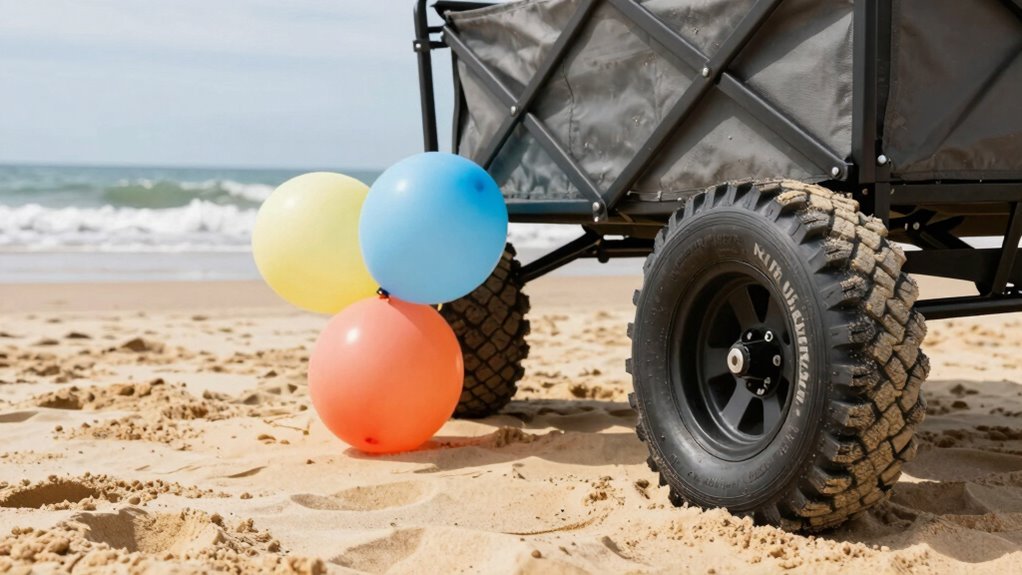
Soft sand presents a unique challenge for wagon tires because it reduces traction and increases resistance, making it harder to move your wagon smoothly. On beach terrain, tire pressure plays a vital role; lower pressure helps your tires spread out, providing a larger contact patch that improves grip. However, too little pressure can cause the tire to sink or become unstable. Maintaining the right tire pressure is essential to navigate soft sand effectively. The loose nature of beach terrain means your wagon tires need to be optimized for traction, preventing you from getting stuck or exerting extra effort. Understanding how tire pressure interacts with soft sand will help you choose the best approach for easier, more efficient travel across the beach.
What Are Balloon Tires, and How Do They Handle Soft Sand?
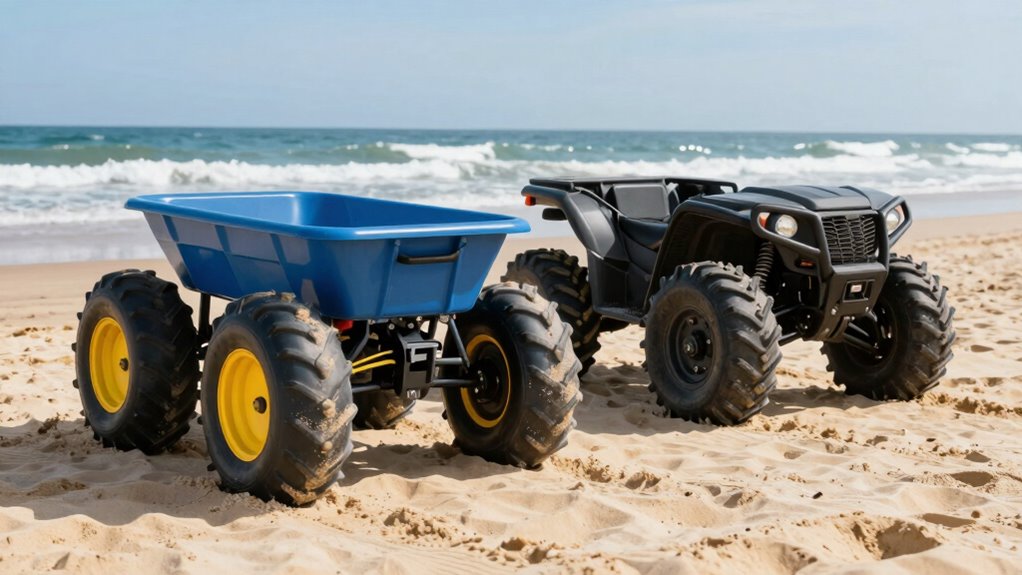
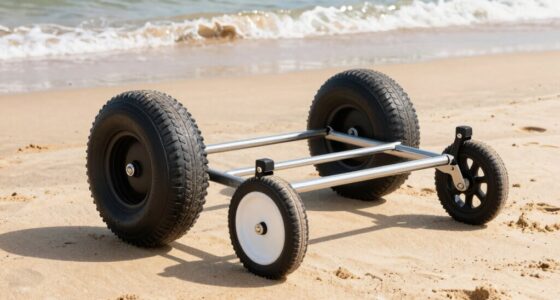
Balloon tires are designed with a larger volume and lower pressure, giving them a unique construction that helps you navigate soft sand more easily. Their design distributes weight better and absorbs shocks, improving performance in challenging conditions. Understanding their construction and how they handle soft terrain guarantees you choose the right tires for your beach adventures.
Tire Construction and Design
Understanding tire construction is essential for maneuvering soft sand effectively. Balloon tires typically feature a large, low-pressure design that distributes weight evenly, reducing sinking. Their wide, smooth tread pattern minimizes resistance and helps glide over loose surfaces. Proper tire pressure is vital; maintaining a low PSI increases surface contact, enhancing flotation. The tire’s sidewall construction offers flexibility, absorbing shocks and adapting to uneven terrain. Additionally, the overall design prioritizes a large footprint to prevent digging in. Key aspects include:
- Low tire pressure for better flotation
- Wide, smooth tread pattern for soft sand
- Flexible sidewalls for shock absorption
- Large contact patch for stability
- Lightweight construction to reduce sinking
These features work together to optimize balloon tires’ soft sand handling.
Performance in Soft Sand
When maneuvering loose sand, the unique design of balloon tires makes a significant difference. Their large, wide surface area distributes weight better, reducing sinkage and making soft sand easier to navigate. Maintaining proper tire pressure is vital—lower pressure increases footprint size, enhancing traction and beach safety. Here’s how balloon tires perform:
| Tire Type | Soft Sand Handling | Tire Pressure Effect |
|---|---|---|
| Balloon Tires | Excellent flotation, minimal sinkage | Lower pressure improves grip |
| All-Terrain | Moderate performance, sinks more | Too low can cause bead damage |
| Regular Tires | Poor, often gets stuck | Higher pressure increases risk |
Choosing the right tire and tire pressure ensures smoother rides and safer beach outings.
Benefits of All-Terrain Tires for Beach and Soft Sand
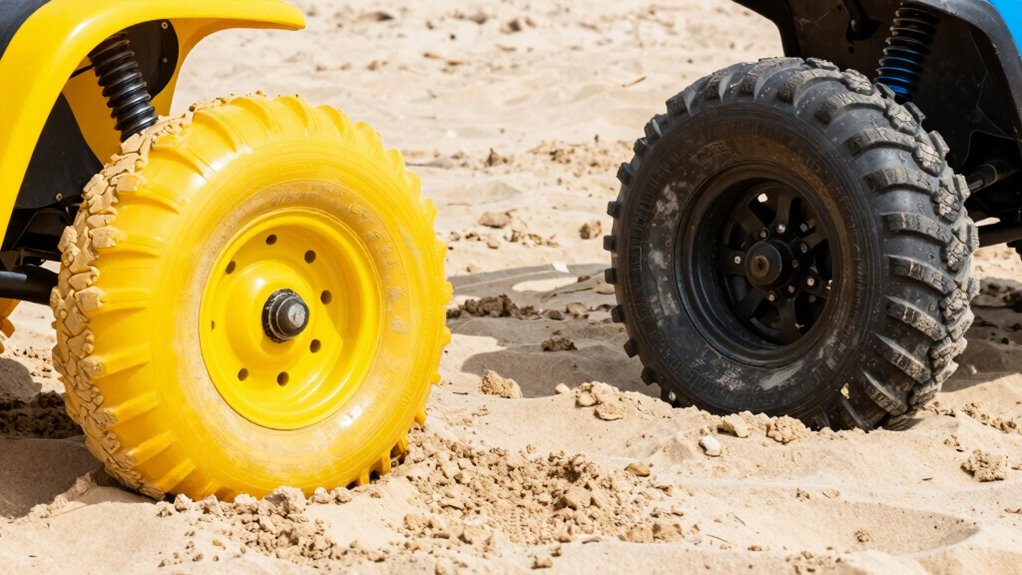
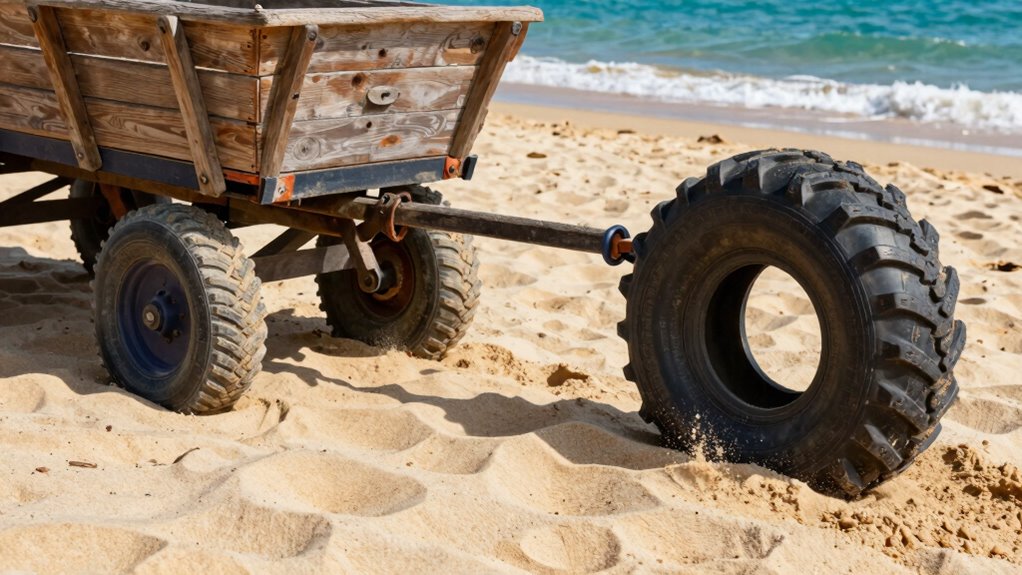
All-terrain tires are specifically designed to handle challenging surfaces like beach sand and soft terrain, providing you with better traction and stability. They allow you to maintain optimal tire pressure, which is crucial for beach safety and preventing getting stuck. These tires distribute weight more evenly, reducing sinking and improving control. Their rugged tread patterns enhance grip on uneven surfaces, giving you confidence off-road. Benefits include:
- Improved traction in loose sand and soft terrain
- Enhanced stability and control during beach excursions
- Reduced risk of tire punctures or damage
- Greater versatility for varied terrains
- Better tire pressure management for safety and performance
Choosing all-terrain tires means you’ll enjoy a safer, more reliable beach experience, especially when navigating soft sand where stability and tire pressure are key.
Traction Comparison: Balloon vs. All-Terrain Tires on Soft Sand
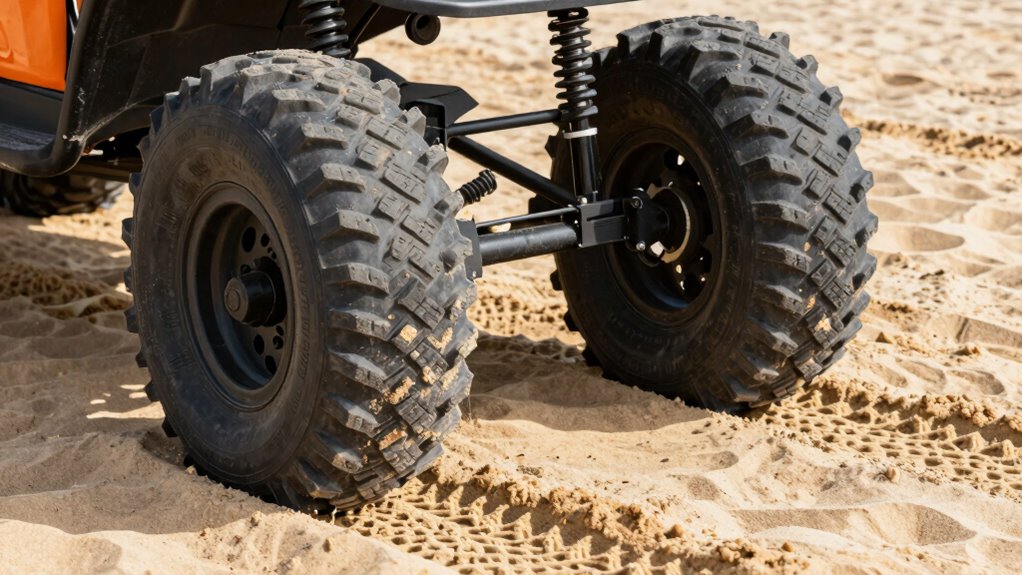
Balloon tires are often favored for soft sand because their large, low-pressure design increases surface area, helping them float better and reduce sinking. This lower tire pressure allows the tires to distribute weight more evenly, improving traction on loose surfaces. The tread pattern also plays a vital role; balloon tires typically have smooth or minimal tread, which minimizes digging into the sand and maintains steady contact. In contrast, all-terrain tires often have more aggressive tread patterns that can bite into the sand, but their higher tire pressure can reduce floatation. Overall, for soft sand, balloon tires excel because their combination of low tire pressure and simple tread pattern offers superior traction, preventing your wagon from getting stuck.
How Easy Is It to Install and Maintain These Tires?
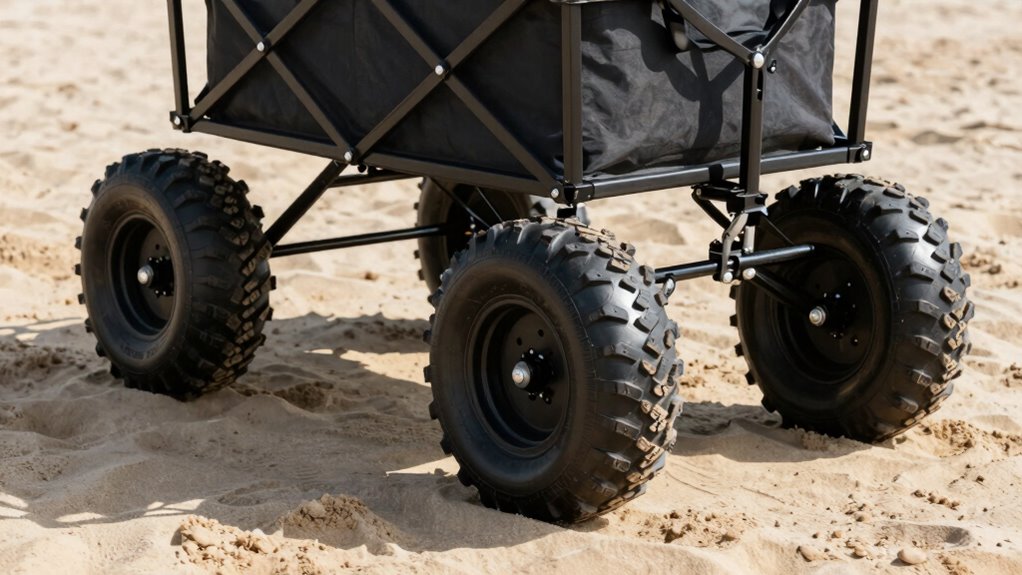
Installing and maintaining beach wagon tires varies in complexity, depending on the type you choose. You’ll need different tools and skills based on the tire’s design and mounting process. Let’s explore what’s involved to keep your tires in top shape with minimal hassle.
Installation Complexity Levels
When it comes to installing beach wagon tires, the process can vary from straightforward to somewhat challenging, depending on the tire design and your experience. Balloon tires typically require minimal effort, mainly focusing on proper tire inflation and ensuring wheel alignment. All-terrain tires might involve more steps, like adjusting the wheel fit and balancing for peak performance. You’ll want to check that the tires are properly seated on the rim and aligned correctly to avoid uneven wear. Some tires demand tools or professional help, especially if removing or installing heavy-duty wheels. Keep in mind, maintaining correct tire pressure and regular wheel alignment ensures smooth rides on soft sand and helps prolong tire life. Overall, installation complexity depends largely on the tire type and your familiarity with basic maintenance tasks.
Maintenance Requirements Overview
Maintaining beach wagon tires varies in ease depending on their type and your familiarity with basic upkeep. For balloon tires, you’ll need to regularly check and adjust tire pressure to guarantee optimal performance on soft sand. Proper tire pressure helps prevent flats and improves traction. All-terrain tires require less frequent pressure adjustments but still benefit from monitoring to avoid under- or over-inflation. Tread depth is also vital; for balloon tires, inspect the tread for signs of wear to prevent slipping or uneven wear. All-terrain tires tend to have more durable treads, but regular checks are still essential. Overall, both types are relatively low-maintenance, but consistent attention to tire pressure and tread depth will keep your beach wagon running smoothly and efficiently.
Tool and Skill Needs
Fortunately, most beach wagon tires are designed for straightforward installation and routine maintenance, making them accessible even for those with minimal experience. Installing and maintaining these tires primarily involves basic tools and attention to detail. You’ll want to regularly check tire pressure to guarantee peak performance and comfort. Proper wheel alignment is also key to preventing uneven wear and maintaining ease of movement. Installing balloon tires or all-terrain tires typically requires a standard tire pump, a wrench for removal, and sometimes a valve core tool. Routine tasks include inspecting for punctures, adjusting tire pressure, and ensuring secure fitment. With these simple steps, you can keep your tires in top shape, ensuring smooth rides over soft sand.
Choosing the Right Tire for Different Beach Conditions
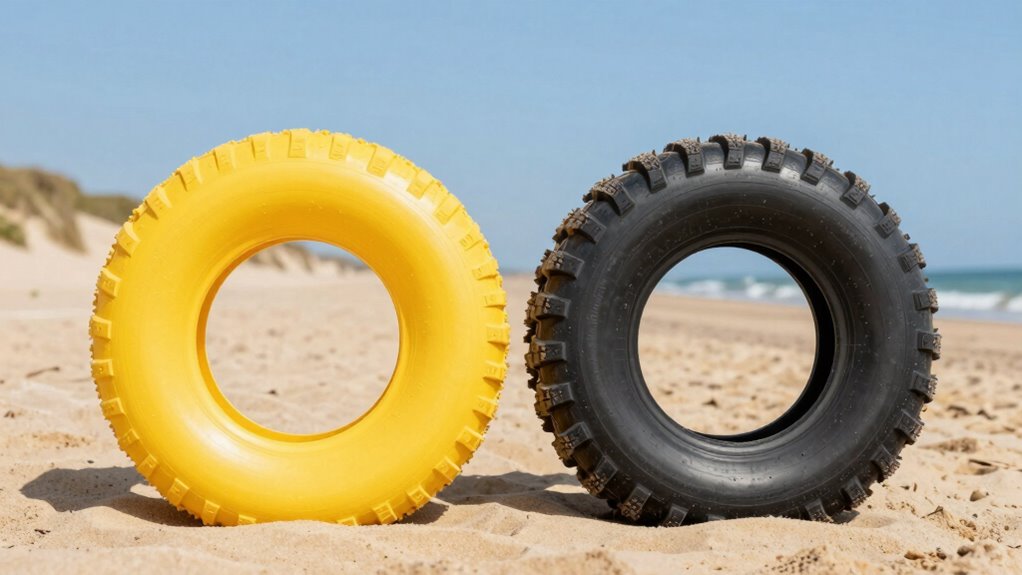
Choosing the right tire for different beach conditions is essential to make sure smooth navigation and prevent getting stuck. When the sand is soft and deep, all-terrain tires with larger, knobby treads provide better traction, helping you move easily without sinking. For firmer, compacted sand, balloon tires can offer a smoother ride and improved stability. Considering beach safety, select tires that prevent slipping and ensure control, especially near water or crowded areas. If you plan to do sandcastle building or other activities, opt for tires that won’t damage delicate surfaces or disturb the environment. Matching your tires to the specific beach conditions guarantees a safer, more enjoyable experience. Proper tire choice helps you explore confidently while protecting the beach’s natural beauty.
Cost, Durability, and Longevity of Wagon Tires: Which Is the Best Investment?
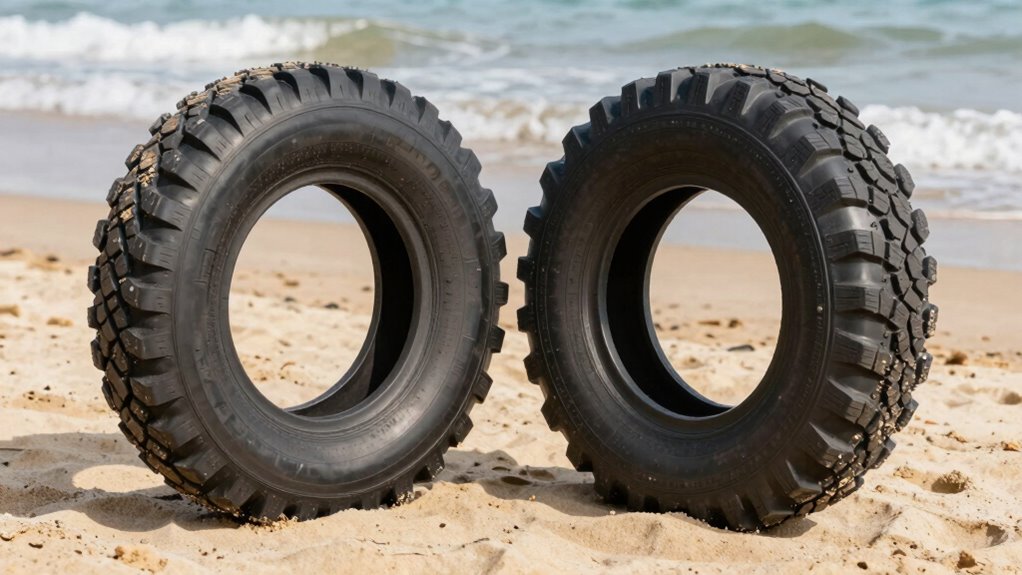
When selecting wagon tires for your beach adventures, considering their cost, durability, and longevity helps guarantee you’re making a smart investment. Quality tires may cost more upfront but often offer better tire inflation stability, reducing the risk of flats and enhancing beach safety. Durability depends on the material and construction, impacting how long your tires last under frequent use. Longevity is also tied to proper maintenance and choosing tires suited for soft sand.
Investing in quality wagon tires ensures durability, stability, and long-lasting performance on soft beach sands.
Consider these factors:
- Initial purchase price versus long-term value
- Resistance to punctures and wear
- Ease of tire inflation and deflation
- Material quality for harsh beach conditions
- Overall contribution to beach safety and reliable performance
Tips for Installing and Using Wagon Tires to Conquer Soft Sand
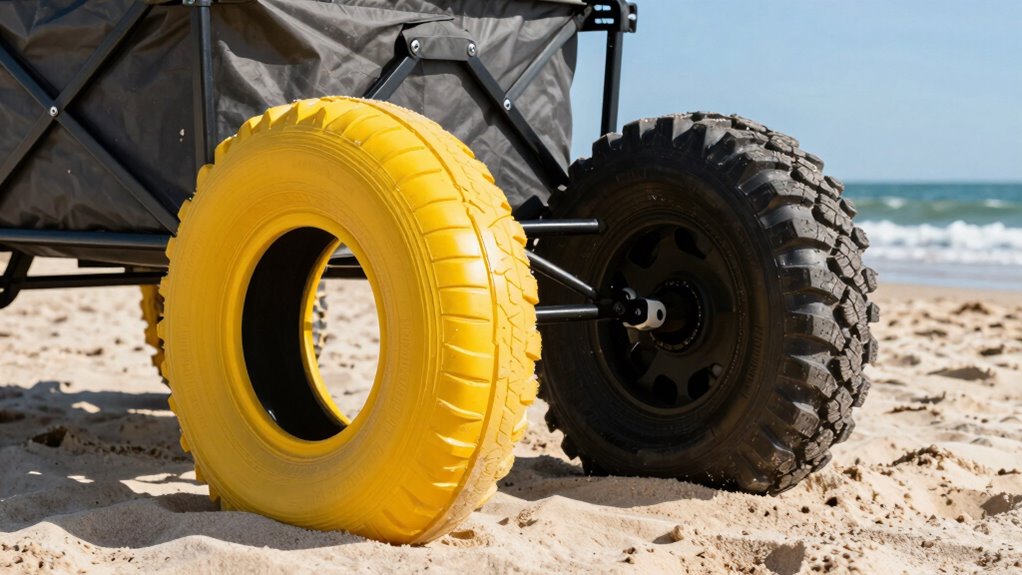
To effectively install and use wagon tires on soft sand, start by lowering the tire pressure to increase their surface area and improve traction. Proper tire inflation allows the tires to flatten slightly, reducing sinkage and making it easier to move through the sand. Before installation, check wheel compatibility to ensure your wagon can accommodate the new tires. Use this guide:
| Tire Type | Best for Soft Sand |
|---|---|
| Balloon Tires | Lower tire pressure for better grip |
| All‑Terrain | Versatile but may need more adjustment |
Adjusting tire inflation based on terrain is key. Proper wheel compatibility ensures safety and prevents damage, helping you conquer the sand smoothly and efficiently.
Frequently Asked Questions
How Do Balloon and All-Terrain Tires Affect Wagon Stability on Soft Sand?
Balloon tires improve wagon stability on soft sand by offering larger volume and lower pressure, which helps distribute weight evenly. All-terrain tires, with their aggressive tire tread patterns, provide better grip but can be less smooth on soft surfaces. Consider wheel size too; bigger wheels enhance floatation and stability. By choosing balloon tires with appropriate wheel size, you’ll enjoy a steadier ride, even in challenging soft sand conditions.
Can I Switch Between Balloon and All-Terrain Tires Easily for Different Beach Conditions?
You can switch between balloon and all-terrain tires easily, thanks to their tire compatibility with most beach wagons. While some models may require basic tools, many designs feature quick-release mechanisms for easy switchability. Picture adjusting your tires to match soft sand or firmer surfaces without hassle—making your beach trips more adaptable and enjoyable. Just check your wagon’s specifications first to guarantee a smooth, effortless transition.
What Safety Precautions Should I Take When Using Wagon Tires on Soft Sand?
When using wagon tires on soft sand, you should prioritize safety by checking your tires for damage and practicing proper sand navigation. Carry a tire repair kit just in case of punctures, and avoid overloading your wagon to prevent accidents. Keep your speed moderate, steer smoothly, and stay alert for soft or shifting sand. These precautions help you stay safe and ensure smooth rides across varying beach terrains.
Are There Specific Brands or Models Recommended for Soft Sand Terrain?
You’ll find that brands like Kenda and Maxxis stand out for soft sand, with models like Kenda K-Rad and Maxxis Creepy Crawler excelling. These tires offer better flotation and traction, making your beach trips smoother. When comparing models, look for wider, balloon-style tires that distribute weight evenly. It’s no coincidence that seasoned beachgoers swear by these brands—they’re proven to handle soft sand terrain, ensuring your wagon stays steady and reliable.
How Do Tire Pressure Adjustments Influence Performance and Safety on Soft Sand?
Adjust your tire pressure to improve sand traction and guarantee safety on soft sand. Lowering tire pressure increases the tire’s surface area, helping you float better and avoid getting stuck. You should reduce it gradually—typically to around 10-15 PSI—while avoiding too low pressure that can cause tire damage. Regularly check your tire pressure, as proper adjustments optimize performance and keep you safe during beach adventures.
Conclusion
Choosing the right wagon tire makes all the difference on soft sand. Balloon tires excel in flotation, while all-terrain tires offer better traction and durability. Did you know that balloon tires can increase your floatation area by up to 30%, making beach adventures smoother? So, consider your beach conditions and budget carefully. With the right tire, you’ll enjoy easier travel, less frustration, and more fun in the sun!