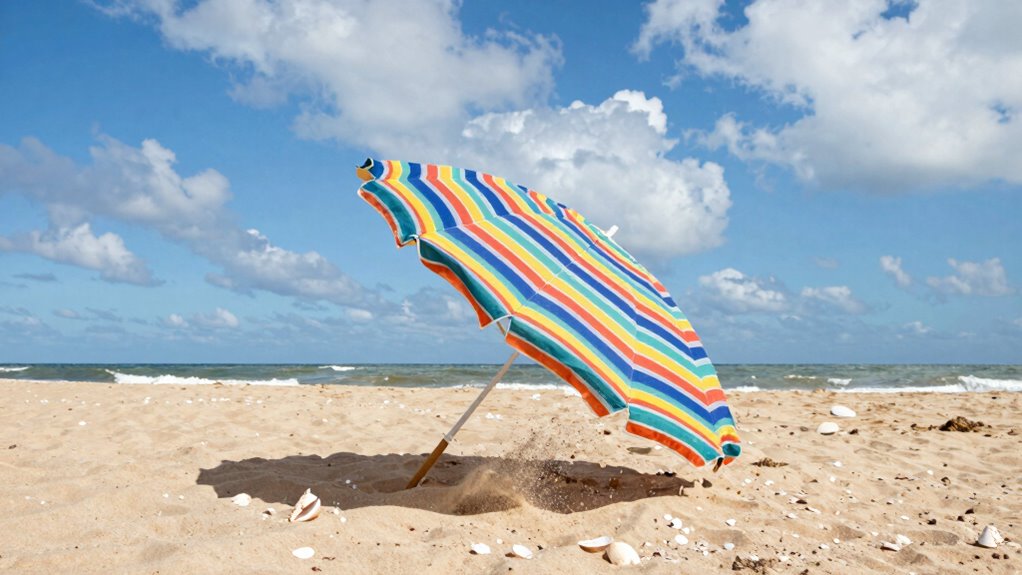

Your beach umbrella flips in the wind because it may have a low wind resistance rating or poor setup. Fabrics that tear or weak frames make it even more vulnerable. To prevent this, choose an umbrella with a higher wind rating, secure it with sandbags, and angle it into the wind. Proper anchoring and accessories like clamps and vents also help. Keep these tips in mind to stay stable—and learn more to keep your umbrella secure during breezy days.
Key Takeaways
- Low wind resistance ratings indicate umbrellas are more likely to flip in gusty conditions.
- Proper anchoring, such as deep sandbags and screw-in anchors, prevents flipping during strong winds.
- Ventilated canopies and wider, curved edges help distribute wind pressure evenly.
- Regular inspection and maintenance ensure fabric integrity and anchoring stability to avoid flips.
- Matching umbrella wind ratings to your local conditions reduces the risk of flipping.
Why Do Beach Umbrellas Flip in the Wind: and How Can You Stop It?
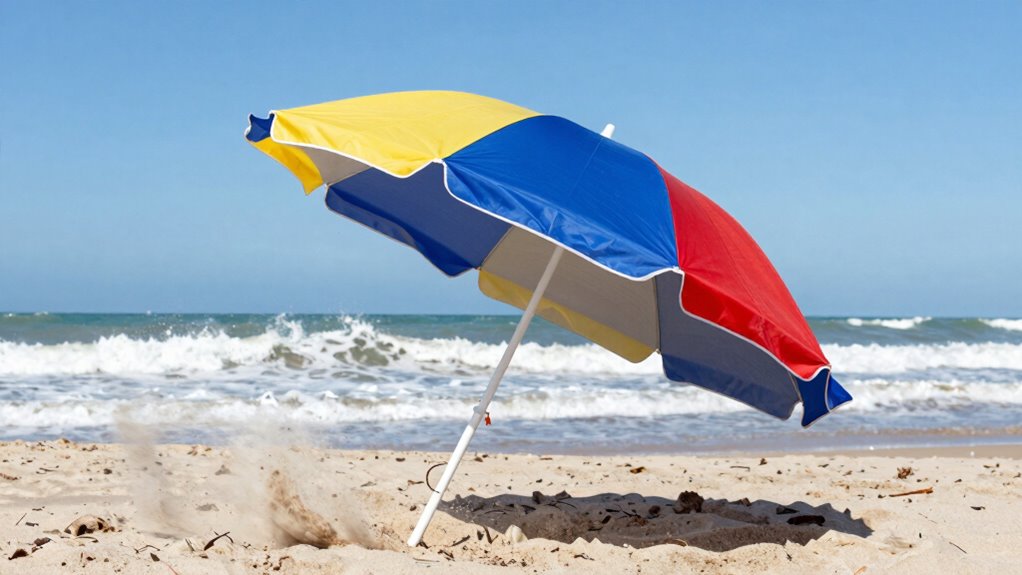
Have you ever wondered why beach umbrellas often flip over in the wind? The answer lies in fabric durability and umbrella design. When the fabric isn’t sturdy enough, it tears or weakens quickly, making the umbrella less stable. A well-designed umbrella features vented canopies that release wind pressure, preventing it from catching and flipping over. The shape and structure also matter; wider, curved edges help distribute wind forces more evenly. If your umbrella uses lightweight or flimsy fabric, it’s more vulnerable during gusts. Choosing a model with resilient materials and a thoughtful design can considerably reduce the risk of flipping. Proper maintenance, like checking for tears or loose fittings, also ensures your umbrella stays grounded, even when the breeze picks up.
How Do Wind Ratings Help You Choose a Wind-Resistant Umbrella?
Wind resistance ratings tell you how well a beach umbrella can withstand gusts, so you can pick one suited to your location. By understanding these ratings, you avoid choosing an umbrella that might flip or break in stronger winds. Matching the ratings with your local conditions helps guarantee your umbrella stays secure and lasts longer.
Understanding Wind Resistance Ratings
Understanding wind resistance ratings is essential because they give you a clear idea of how well a beach umbrella can withstand gusts. These ratings consider factors like material durability and design features, which directly impact performance in windy conditions. Higher ratings indicate stronger wind resistance, helping you select a suitable umbrella for your environment.
For example:
| Wind Rating | Suitable Conditions | Key Features |
|---|---|---|
| 10-15 mph | Light breezes | Lightweight materials, simple design |
| 15-25 mph | Moderate wind, typical beach | Reinforced fabric, sturdy frame |
| 25+ mph | Strong gusts or storm conditions | Heavy-duty materials, vented canopies |
This table shows how ratings align with features, guiding you to choose an umbrella that resists wind better.
Matching Ratings With Conditions
Matching wind resistance ratings with your local conditions is key to choosing a beach umbrella that will stay put. By understanding how wind rating systems work, you can select an umbrella designed to handle your area’s typical wind speeds. Look for models with ratings that match or exceed your wind conditions. For example, if your beach often experiences strong gusts, choose an umbrella with a higher wind rating to prevent flipping or collapsing. Paying attention to beach umbrella design also helps; features like vented canopies and sturdy poles improve stability. Using wind ratings as a guideline ensures you pick an umbrella built for your environment, reducing the risk of accidents and keeping you comfortable without constant adjustments.
What Causes Umbrella Flips During Windy Days?
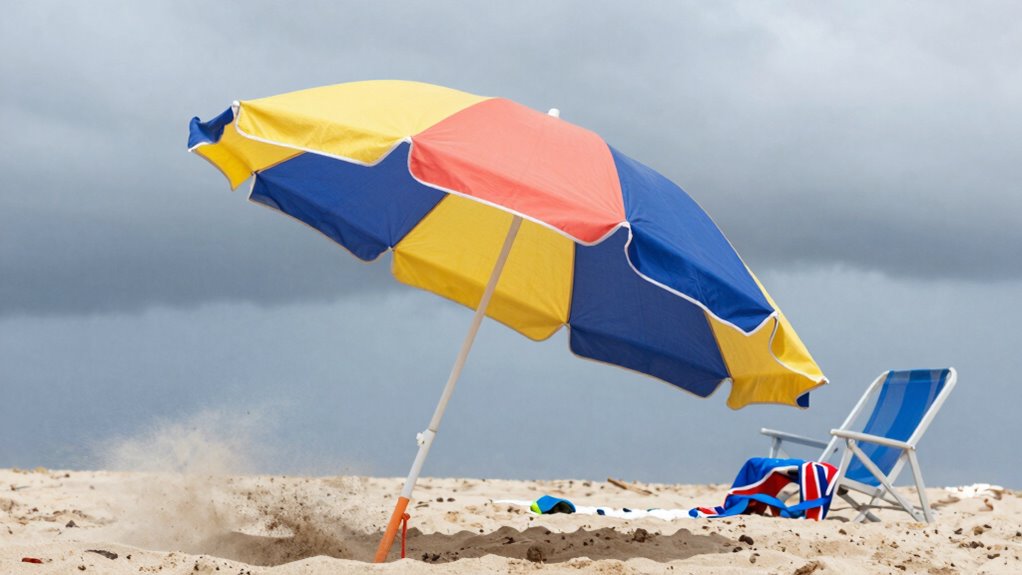
Umbrella flips often happen when the anchor isn’t stable enough to hold against strong gusts. Weak fabric materials can tear or give way, making it easier for the wind to flip the umbrella. Excessive wind force simply overpowers the umbrella’s resistance, leading to a flip.
Poor Anchor Stability
When wind picks up, poorly anchored beach umbrellas are at high risk of flipping over. One key factor is poor anchor stability, often caused by inadequate anchor design. If your anchor isn’t built to withstand strong gusts, it’ll fail. Additionally, manufacturers rely on wind tunnel testing to evaluate anchor performance, but some designs still fall short in real-world conditions. To improve stability, consider these factors:
- Choose anchors with a deep, broad design that resists uplift.
- Verify that the anchor’s material and shape have undergone rigorous wind tunnel testing.
- Ensure proper installation, pushing anchors deep into the sand for maximum grip.
Addressing these points helps prevent your umbrella from flipping, even during gusty days.
Weak Fabric Material
Weak fabric material considerably contributes to umbrellas flipping in strong winds. Poor fabric durability and low material quality make your umbrella less resistant to gusts, increasing the chance of flipping. When the fabric isn’t sturdy enough, it can’t effectively resist wind pressure, causing instability. Imagine this table to visualize the difference:
| High-Quality Fabric | Low-Quality Fabric |
|---|---|
| Durable, resistant to tears | Thin, prone to ripping |
| Maintains shape in wind | Flimsy, easily deforms |
| Supports structural integrity | Weakens quickly |
| Lasts through many seasons | Wears out fast |
Choosing fabric with high durability and quality helps your umbrella withstand windy days, reducing flipping risk and prolonging its lifespan.
Excessive Wind Force
Excessive wind force is a primary cause of umbrella flipping during gusty days. When wind speeds increase, the force exerted on your umbrella surpasses its structural limits, especially if the fabric durability isn’t high enough. Poor umbrella design—such as weak ribs or an inadequate frame—can’t withstand these gusts, leading to flips. To better understand, consider these factors:
- Fabric Durability: Low-quality materials tear easily under strong wind, compromising the umbrella’s stability.
- Umbrella Design: Flimsy or poorly reinforced frames can’t handle sudden gusts, causing the umbrella to invert.
- Wind Speed Threshold: Exceeding the rated wind speed for your umbrella considerably raises the risk of flipping.
Choosing a well-designed umbrella with durable fabric reduces vulnerability to excessive wind force.
How to Pick a Beach Umbrella That Resists Strong Winds
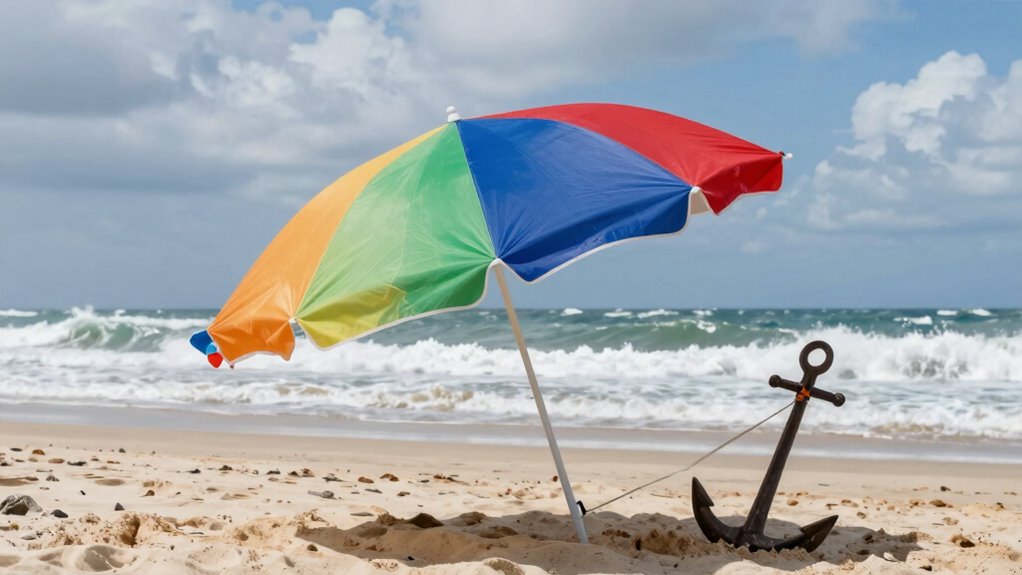
Choosing a beach umbrella that can withstand strong winds starts with understanding its design features. Look for options tested through wind tunnel testing, which simulates real wind conditions. A well-designed beach umbrella often has vented canopies to allow airflow, reducing lift. The frame should be sturdy, with reinforced ribs and a durable pole. Consider the fabric—denser, UV-resistant materials resist tearing. The table below highlights key features:
| Feature | Why It Matters |
|---|---|
| Vented Canopy | Allows airflow, prevents flipping |
| Reinforced Ribs | Adds strength against gusts |
| Durable Pole | Prevents bending or breaking in strong winds |
| Wind Tunnel Testing | Ensures the design performs under real wind stresses |
| Quality Fabric | Resists tearing and UV damage |
Prioritize these features for wind-resistant performance.
How to Set Up Your Beach Umbrella for Wind Resistance
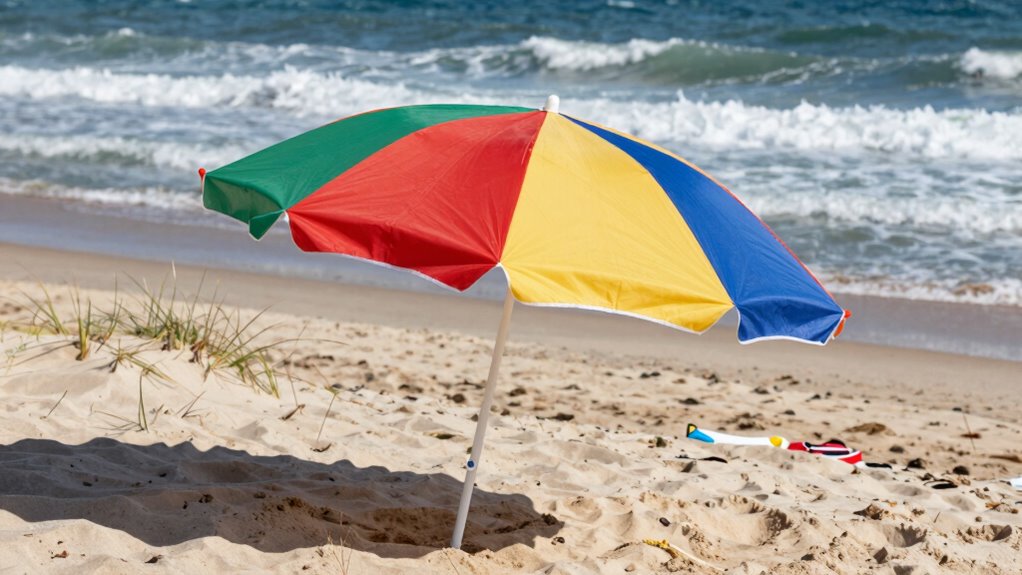
Setting up your beach umbrella correctly can make all the difference in resisting strong winds. Focus on positioning and the umbrella’s design to maximize wind resistance. Choose a beach umbrella with wind resistant fabrics that can withstand gusts without tearing. Proper setup involves:
- Anchoring the pole deeply into the sand, ensuring stability and reducing wobble.
- Angling the umbrella slightly into the wind to reduce uplift forces.
- Using a vented umbrella design, which allows wind to pass through and decreases pressure.
Additionally, opt for umbrellas with a sturdy frame and a wide canopy to distribute wind force evenly. Proper setup combined with the right beach umbrella design and wind resistant fabrics helps prevent flipping and prolongs your shade’s lifespan.
What Are the Best Ways to Secure Your Umbrella With Sandbags and Anchors?
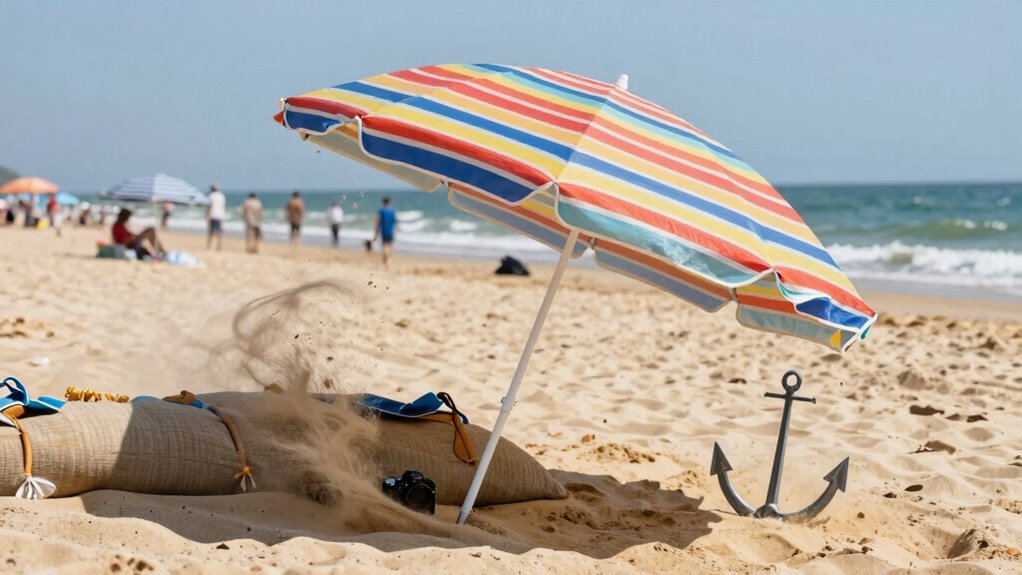
To keep your umbrella steady, you need to use proper sandbag placement techniques that maximize weight and stability. Choosing effective anchor types, like screw-in anchors or weighted bases, can make a big difference in holding your umbrella in place. Remember to regularly check your setup to make sure everything remains secure during windy conditions.
Proper Sandbag Placement Techniques
Proper sandbag placement is essential for keeping your beach umbrella stable in windy conditions. To optimize stability, focus on correct sandbag positioning and weight distribution. First, place the sandbags close to the umbrella pole’s base, ensuring they are evenly distributed on all sides to prevent tilting. Second, position the sandbags slightly outward from the pole to create a broader, more stable foundation. Third, fill the bags adequately—neither too full nor too loose—to maximize weight and grip without shifting. Maintaining proper weight distribution by balancing the sandbags around the pole minimizes the risk of tipping or flipping. This strategic placement keeps your umbrella grounded, even when gusts pick up, ensuring a safer and more secure setup.
Choosing Effective Anchor Types
When securing your beach umbrella, choosing the right anchor types can make a significant difference in stability. The best anchors depend on your umbrella’s material and your beach furniture setup. Heavy-duty sandbags are popular, but consider screw-in anchors or weighted bases for better hold. Here’s a quick comparison:
| Anchor Type | Best For |
|---|---|
| Sandbags | Lightweight umbrellas, soft sand |
| Screw-in anchors | Sturdy umbrella poles, firm sand |
| Clamp anchors | Umbrellas with sturdy poles, beach furniture |
| Weighted bases | Larger umbrellas, heavy beach furniture |
| Tie-down straps | Additional security, windy conditions |
Selecting the right anchor enhances stability and prevents flipping, especially in gusty winds.
Regular Stability Checks
Regularly checking the stability of your beach umbrella guarantees it stays secure throughout your day at the beach. You should inspect the umbrella’s anchoring system, especially after strong gusts or increased wind speed. Make certain the umbrella fabric remains tight and free of tears, which could weaken its structure. To keep everything secure, consider these steps:
- Verify that sandbags are evenly distributed and tightly packed around the umbrella pole.
- Confirm that anchors are firmly embedded in the sand and haven’t loosened.
- Adjust or replace any worn or loose components, especially if wind speed increases or the umbrella fabric shows signs of strain.
Consistent checks prevent surprises, keeping your umbrella stable and safe from flips caused by sudden wind surges.
When Should You Replace Your Beach Umbrella? Signs to Watch For

Over time, signs of wear and damage can compromise your beach umbrella’s stability and safety. If the umbrella material shows tears, fraying, or fading, it’s a clear sign it’s nearing the end of its lifespan. Check the fabric for persistent mold, mildew, or holes—these weaken its structure. Also, inspect the pole and joints for rust, corrosion, or cracks, which can reduce stability. If your umbrella no longer withstands strong gusts or feels loose in its base, it’s time to replace it. Prioritizing beach safety means listening to these warning signs and avoiding risks. An umbrella that’s visibly damaged or unstable won’t provide reliable shade or protection, especially during windy conditions. Replacing your umbrella guarantees safety and peace of mind on your next beach day.
What Accessories and Adjustments Keep Your Umbrella Stable?

To keep your beach umbrella stable and safe during windy days, adding the right accessories and making proper adjustments can make a significant difference. Using weighted bases or sandbags helps anchor your umbrella against gusts, preventing it from flipping. Securing the umbrella fabric with tie-downs or clips reduces flapping, which can weaken the structure. Additionally, choosing sturdy beach decor accessories, like heavy-duty clamps, can provide extra stability. Properly adjusting the tilt and height of your umbrella also distributes wind pressure more evenly. Here are some key items to contemplate:
Secure your umbrella with weighted bases, tie-downs, and sturdy clamps for added stability on windy days.
- Weighted umbrella bases or sandbags
- Tie-downs or clips for umbrella fabric
- Heavy-duty clamps or beach decor accessories
Implementing these tips helps maintain stability and prolongs the life of your umbrella, even on breezy days.
How to Check Local Wind Conditions Before Your Beach Trip
Wondering if the wind will be strong enough to affect your beach day? Check local weather reports and wind forecasts before heading out. Many weather apps provide real-time wind speed and gust information, helping you gauge if conditions are safe for your umbrella and beach activities. Look for sustained wind speeds and avoid days with gusts exceeding your umbrella’s wind rating. Keeping an eye on wind conditions is essential for beach safety and sun protection, ensuring you don’t get caught unprepared. You can also observe nearby flags or trees for a quick visual cue of current wind strength. Taking these steps helps prevent accidents, keeps your umbrella stable, and allows you to enjoy your day without unnecessary worry about sudden gusts or flips.
Troubleshooting: Quick Fixes for Flipped or Instability Issues
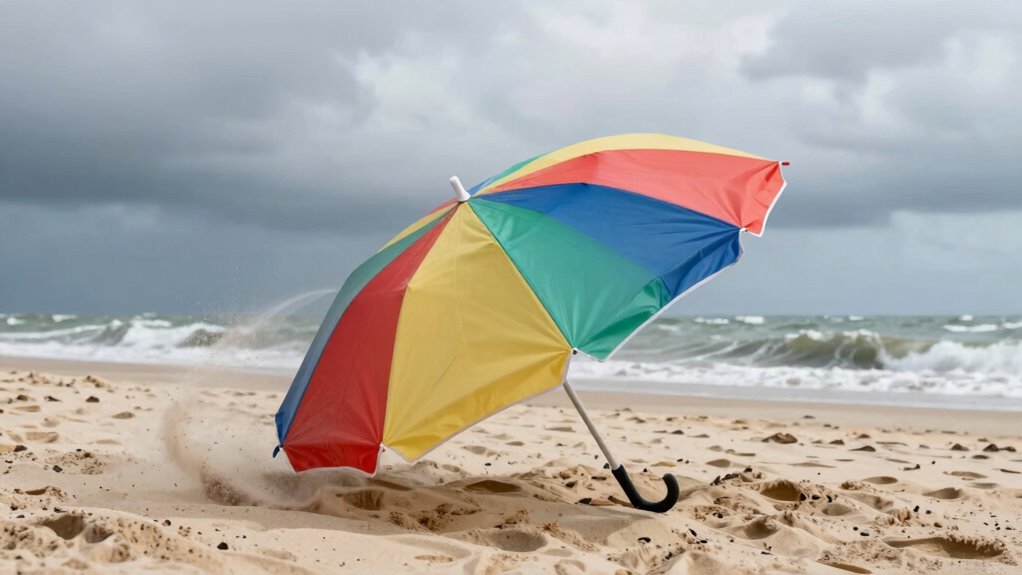
If your beach umbrella flips or feels unstable during gusty conditions, quick fixes can help restore safety and stability. Proper umbrella maintenance is key to preventing wind damage and ensuring longevity. Here are three troubleshooting tips:
Ensure your beach umbrella stays secure with simple fixes like tightening joints, adding weights, and checking for fabric damage.
- Tighten all fittings and joints to prevent wobbling and improve wind resistance.
- Add weight to the base with sand or water-filled weights to increase stability during gusts.
- Check the fabric for tears or loose seams, and repair promptly to maintain integrity and prevent wind damage.
These simple adjustments can enhance your umbrella’s stability and reduce the risk of flipping. Regular umbrella maintenance, including cleaning and inspecting for damage, is essential for wind damage prevention and safe beach outings.
Frequently Asked Questions
Can Umbrella Shape Influence Wind Resistance?
Yes, umbrella shape definitely influences wind resistance. An umbrella with a rounded or vented design promotes better wind flow dynamics, allowing wind to pass through more easily and reducing pressure on the canopy. Conversely, flat or boxy shapes catch more wind, increasing the risk of flipping. Choosing an umbrella with an aerodynamic design helps it withstand gusts, keeping you protected without the hassle of constant flipping.
Are There Specific Materials Better for Windy Conditions?
Ever wondered which materials handle wind better? You’ll want umbrellas made from durable, UV-resistant fabrics like polyester or acrylic, which stand up against strong gusts while offering UV protection. These materials often come in various color options, so you can choose a style that suits you. Opt for sturdy, reinforced frames too, to prevent flipping. Wouldn’t you prefer a beach umbrella that stays put, no matter how windy it gets?
How Does Umbrella Height Affect Stability?
You’ll find that lowering your umbrella’s height improves stability, especially in windy conditions. When you reduce the height, you enhance ground anchoring and weight distribution, making it less likely to flip. Keep the umbrella closer to the ground, and guarantee it’s securely anchored with additional weights if needed. This setup minimizes wind catch and keeps your umbrella stable, so you can enjoy your time without worry.
Do Beach Umbrella Wind Ratings Vary by Brand?
Yes, beach umbrella wind ratings can vary by brand. Some brands prioritize rating reliability and offer more consistent, accurate ratings based on standardized testing, while others may lack this consistency. When choosing an umbrella, look for brands with a reputation for brand consistency in their wind ratings. This way, you can better gauge how well your umbrella will perform in windy conditions and prevent it from flipping.
What Are the Best Storage Tips to Prolong Umbrella Lifespan?
To prolong your umbrella’s lifespan, use proper storage techniques and keep it clean. After each use, rinse off salt or sand and let it dry completely—moisture causes rust and fabric damage. Store it in a cool, dry place away from direct sunlight, preferably in a protective bag or cover. Regular umbrella cleaning prevents dirt buildup, while proper storage shields it from harsh weather, ensuring your umbrella stays durable season after season.
Conclusion
To keep your beach umbrella from flipping like a paper airplane in a hurricane, always check wind ratings and set it up properly. Use sturdy accessories and stay alert to changing conditions. When you follow these tips, your umbrella will stand strong through even the wildest gusts. Don’t let a gust turn your relaxing day into chaos—your perfect beach experience depends on your readiness. Stay vigilant, and enjoy your beach days without worry!