
TL;DR
Homes & Gardens advises gardeners in colder regions to wait until after a light frost and foliage dieback before lifting dahlias and cannas for winter storage. The plants still need to be lifted before a hard frost or frozen ground, which can damage their tubers and rhizomes.
Gardeners in colder regions should wait until after a light frost and until dahlia and canna foliage has died back before lifting the plants for winter storage, according to a Homes & Gardens report. The advice is to act before a hard frost or frozen ground, since freezing can damage the plants’ underground tubers and rhizomes.

Get pool and patio gear delivered free with Prime
- Fast, free delivery on millions of items
- Prime Video, Amazon Music and more included
- Member-only deals all year
The report says a light frost helps signal the end of the growing season, while foliage dieback indicates that the plant has transferred energy to its underground storage structures. Lifting too early may interrupt that process. The guidance differs from advice for some other tender plants, including salvias, pelargoniums and citrus, which may need to be moved under cover before temperatures fall.
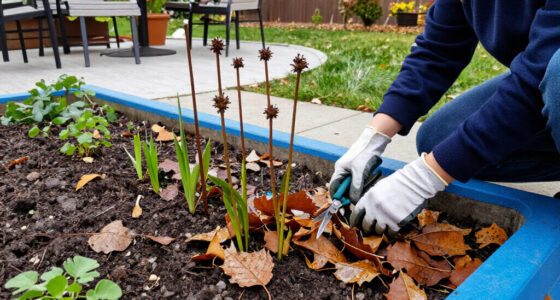
For plants growing in the ground, the report recommends cutting stems back to about 6 inches above the soil once foliage has died. Dig around the plant rather than close to the stems; for established plants, it suggests beginning roughly 12 to 16 inches away to reduce the risk of damaging the rhizomes or tubers. Brush off soil and discard soft or squishy sections, which can indicate rot.
Before storage, let the underground parts dry for about a week in a warm spot out of direct sunlight. The report recommends keeping them in a cool, dry, dark and frost-free place, around 45°F to 55°F, using a breathable box with dry soil, sawdust or vermiculite, or wrapping them in newspaper or hessian. It advises against sealed plastic bags and airtight containers and recommends checking stored plants every few weeks for mold or decay.
Timing Protects Next Year’s Growth
The timing matters because dahlias and cannas are tender perennials: their tubers and rhizomes can be damaged if they freeze. Damage may lead to decay during storage and reduce the chance of healthy growth the following season. Waiting for foliage dieback gives the plant time to move energy below ground, while waiting too long risks exposure to a damaging freeze.
The advice is not a fixed calendar date. Frost timing varies by location, and the report’s guidance is directed especially at gardeners in colder areas where underground parts are unlikely to survive winter in the ground. Watching local forecasts and the condition of the plants is more useful than relying on a single date.
Popular right now

Hisense 43-Inch E6 Cinema Series Hi-QLED 4K UHD Smart Fire TV (43E6QF)

TCL 85-Inch QM64L QD-Mini LED 4K Smart Fire TV

Ninja Air Fryer XL with MaxCrisp, 6.5 Qt, 6-in-1, Dark Grey (AF181)
As an affiliate, we earn on qualifying purchases.
Frost Tolerance Depends on Location
Cannas originate in tropical areas of the Americas, while dahlias are native to Mexico and Central America. The report describes both as tender perennials that struggle in cold conditions. Whether they need to be lifted depends partly on local winter conditions and soil moisture.
According to the report, gardeners in USDA hardiness zones 7 or 8 and warmer may be able to leave them in the ground with mulch, provided the soil is not excessively wet. In colder areas, lifting and indoor overwintering is recommended. Plants growing in pots may instead be cut back after the foliage dies and moved to a cool, frost-free garage or greenhouse; pots can be insulated if their storage area risks freezing.
Local Frost Dates Still Matter
The report does not give a universal date for lifting, because the right window depends on local weather, the plant’s condition and the risk of a hard freeze. It also does not establish that every garden in the named hardiness zones can safely leave these plants in the ground; soil drainage and winter conditions vary. Gardeners should check their local forecast and assess whether foliage has died back before acting.
The source material’s storage guidance also does not specify how long plants can remain in storage or provide a detailed treatment protocol for every type of mold. Its practical advice is to inspect them periodically and remove damaged material; the best response to mold may depend on its extent and the condition of the tuber or rhizome.
Watch Plants and the Forecast
For gardeners preparing for winter, the next steps are to monitor foliage and local frost forecasts, then lift in-ground dahlias and cannas after a light frost and dieback but before hard frost or frozen soil. After drying and packing the plants, check them every few weeks through storage for softness, mold or other signs of decay.
Those unsure whether their plants can stay in the ground should consult local extension services or region-specific gardening guidance, since hardiness-zone labels alone do not account for every site’s soil and winter conditions.
Key Questions
Should dahlias and cannas be lifted before the first frost?
Not necessarily. The Homes & Gardens report advises waiting until after a light frost and until the foliage has died back, then lifting before a hard frost or frozen ground.
Why wait until the foliage dies back?
The report says foliage dieback indicates that the plant has transferred energy to its underground tuber or rhizome for the next growing season. A light frost also signals that the growing season is ending.
Can dahlias and cannas stay in the ground over winter?
Some gardeners in USDA hardiness zones 7 or 8 and warmer may be able to leave them in the ground with mulch if the soil is not too wet. In colder areas, the report recommends lifting them for storage.
How should lifted tubers and rhizomes be stored?
Dry them for about a week out of direct sunlight, then store them in a cool, dry, dark, frost-free place, ideally around 45°F to 55°F. Use breathable materials rather than airtight containers or sealed plastic bags, and inspect the plants every few weeks.
Source: rss