TL;DR

Get pool and patio gear delivered free with Prime
- Fast, free delivery on millions of items
- Prime Video, Amazon Music and more included
- Member-only deals all year
Grow Organic has published a nine-step guide to growing larger garlic bulbs, focusing on variety choice, healthy planting cloves, spacing, soil and seasonal care. It says results depend on climate, soil and variety, and does not promise a particular bulb size.
Grow Organic has published a nine-step guide to growing larger garlic bulbs, advising gardeners to select varieties suited to their climate, plant healthy cloves with adequate spacing and manage water and feeding through the season. The guide says outcomes vary with climate, soil and variety; its recommendations are growing advice, not a guarantee of giant bulbs.
Grow Organic recommends starting with firm, large cloves from healthy bulbs, rejecting cloves that are soft, damaged or moldy. The guide says fall planting gives roots time to develop before strong spring growth and notes that many fall-planted crops take about eight to nine months to mature. It says spring planting can work, but often produces smaller bulbs. For planting schedules, the guide advises checking local recommendations because conditions differ by region.
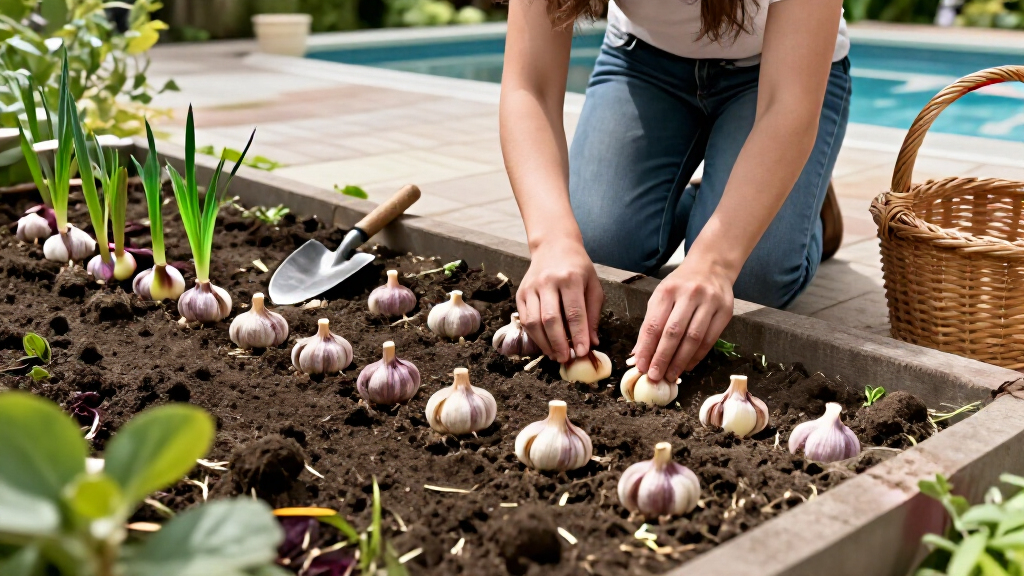
For planting, Grow Organic suggests setting cloves with the pointed end up and using about six inches of spacing as a starting point for larger bulbs. On depth, it cites Minnesota Extension guidance to place the clove base two to three inches deep, while emphasizing that depth varies by climate and measurement method and that gardeners should follow local recommendations. The guide also recommends a sunny, well-drained bed and soil testing before adding amendments.
For spring care, the guide recommends feeding to support leaf growth when soil conditions call for it, keeping moisture steady without waterlogging, and controlling weeds. It cautions that extra nitrogen late in the growing season can delay bulb development. Grow Organic advises cutting curling flower stalks, or scapes, from hardneck garlic while leaving the leaves intact. As plants approach maturity, the guide says to taper watering and check bulbs as lower leaves brown. It recommends lifting harvested bulbs carefully and curing them in shade with good airflow.
Choices That Shape Bulb Size
Grow Organic’s advice emphasizes that bulb size is influenced by decisions made well before harvest, rather than by a last-minute fertilizer boost. The guide identifies spacing, planting stock and leaf growth as factors that affect bulb development. It cautions that crowding can restrict growth and that weak or unsuitable planting cloves may limit results from the start.
The guide also stresses matching growing practices to local conditions. It describes hardneck garlic as often performing well where winters are cold and producing scapes; softneck types generally suit milder climates, produce more cloves and tend to store longer. These are broad tendencies, not guarantees for every variety or garden. Grow Organic’s central practical point is that consistent care and local fit matter more than simply adding more fertilizer.
As an affiliate, we earn on qualifying purchases.
Garlic Types and Growing Calendar
Grow Organic describes two main types of true garlic, Allium sativum. In its guide, hardneck garlic is described as forming a central flower stalk, while softneck garlic is commonly associated with milder climates and longer storage. The source notes that performance varies by variety and growing conditions, and advises gardeners to check local guidance rather than rely on a type label alone.
The article also distinguishes elephant garlic from true garlic. Grow Organic says elephant garlic can produce very large bulbs but is related to leeks and has a milder flavor. For ordinary garlic, the guide describes a growing cycle that often begins with fall planting and continues through spring care to a summer harvest, while noting that exact dates depend on region. It recommends using local Extension advice for timing, depth and other region-specific decisions.
What Affects the Final Bulb
Grow Organic does not provide controlled trial results, a measured increase in bulb size or a single method it says works across climates. The guide explicitly says results depend on soil, climate and garlic variety. Its recommendations are general cultivation advice; exact planting dates, depth, fertilizer needs and irrigation schedules vary by location.
The supplied material gives no publication date, named expert interview or independent evaluation of the recommendations. It does not specify what size qualifies as “giant,” and Grow Organic presents six-inch spacing as a starting point rather than a universal rule. The guide advises gardeners to use soil-test results and local agricultural guidance to determine amendments and timing.
Check Plants Before Harvest
Grow Organic advises gardeners to apply its recommendations to local conditions and monitor plants as the season progresses. The guide says to check bulbs when lower leaves have browned while several upper leaves remain green. It suggests lifting a sample to see whether cloves are full and their wrappers remain intact. The guide cautions that harvesting too early can limit size, while waiting too long may allow wrappers to split.
After lifting, the guide recommends curing bulbs in a shaded, well-ventilated place until their necks and wrappers are dry. It also suggests recording planting dates, spacing, variety, watering and harvest conditions to compare results in later seasons. Grow Organic does not promise a particular outcome or identify a further news milestone beyond these seasonal steps.
Key Questions
How far apart should garlic cloves be planted for larger bulbs?
Grow Organic suggests about six inches between cloves as a starting point. The guide notes that spacing needs can vary with variety and local advice.
When should garlic be planted?
Grow Organic says fall planting gives roots time to establish before spring growth, but dates vary by region. The guide recommends checking local Extension guidance; it says spring planting may work but often yields smaller bulbs.
Should gardeners fertilize garlic heavily?
No. Grow Organic advises using a soil test to determine whether nutrients are needed. The guide says nitrogen supports leaf growth, but extra nitrogen late in the season can delay bulb development.
When is garlic ready to harvest?
Grow Organic advises beginning checks when lower leaves brown and several upper leaves remain green. The guide recommends lifting a sample to check that cloves are full and wrappers intact, then curing harvested bulbs in shade with airflow.
Is elephant garlic a type of true garlic?
No. Grow Organic says elephant garlic is related to leeks, not true garlic, though it produces large bulbs and has a milder flavor.
Source: rss
Halloween Picks
halloween
As an affiliate, we earn on qualifying purchases.