
Wireless outdoor audio needs a better layout than indoor sound because outdoor spaces are more complex — sound disperses quickly and unevenly without walls or furniture to contain it. Factors like wind, natural elements, and open areas can distort or drown out audio if your speakers aren’t strategically placed. Proper placement at ear level and in open spaces helps improve clarity and coverage. Keep exploring to discover how to master outdoor sound setup for the best experience.
Key Takeaways
- Outdoor environments lack reflective surfaces, requiring strategic speaker placement to achieve even sound coverage.
- Natural elements like wind and trees interfere with sound transmission, demanding careful layout planning.
- Open spaces cause sound to disperse quickly, making precise positioning essential for clarity and volume.
- External noise sources and environmental factors impact outdoor sound, needing adjustments for optimal audio quality.
- Unlike indoor spaces, outdoor acoustics are complex, requiring ongoing testing and fine-tuning for the best experience.
Are you ready to elevate your outdoor space with seamless sound? When setting up wireless outdoor audio, you can’t just copy your indoor sound layout and expect it to work perfectly outside. Garden acoustics differ significantly from indoor environments, meaning your speaker placement needs to be carefully planned to deliver optimal sound quality and coverage. Unlike inside, where walls and furniture help contain and reflect sound, outdoor spaces are open, making sound disperse quickly and unevenly. If you don’t consider these factors, your music might sound distant or distorted, ruining the ambiance you’re trying to create.
Outdoor sound setups require careful planning to prevent distant or distorted music.
Outdoor environments introduce unique challenges that indoor setups don’t face. Wind, trees, and other natural elements can interfere with sound transmission, so your speaker placement becomes crucial. You need to position your speakers strategically to minimize sound loss and avoid dead zones—areas where music doesn’t reach or sounds muffled. Think about the layout of your garden or patio: high ground, near open spaces, or facing away from noise sources like roads. Proper placement ensures that your audio reaches all corners without overwhelming specific spots or creating echoes. It’s about balancing sound distribution so everyone in your outdoor space can enjoy clear, consistent audio.
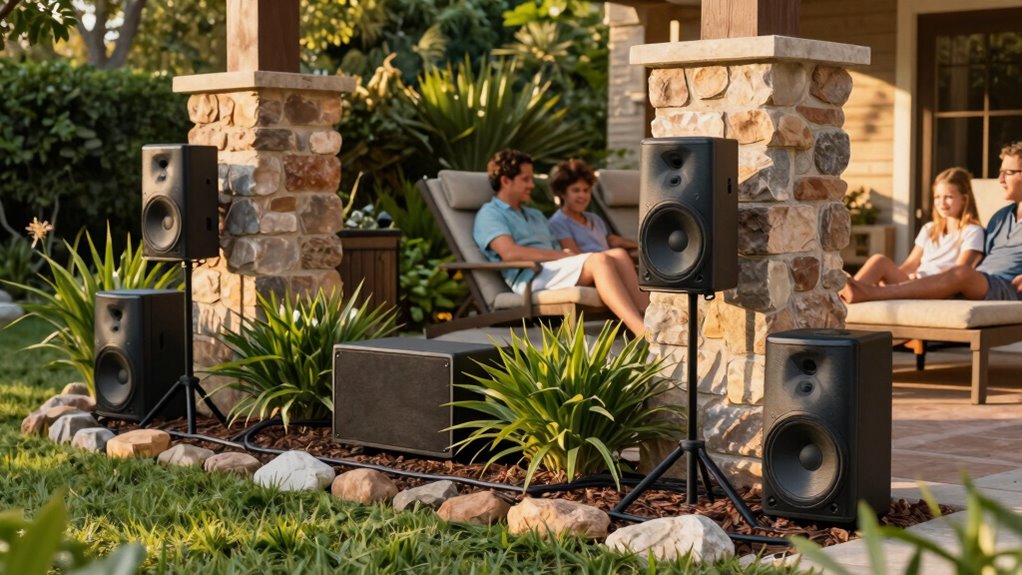
Wireless outdoor audio systems give you flexibility, but that doesn’t mean you should place speakers randomly. Instead, you want to think about your garden’s acoustics—how sound travels across your space—and plan your speaker placement accordingly. Position speakers at ear level for better clarity and avoid placing them too close to reflective surfaces like walls or large objects that could cause unwanted echoes. Spread them out evenly to distribute sound evenly, and consider the natural contours of your yard. This approach prevents hotspots or quiet zones, creating a more immersive listening experience that feels natural and balanced. Additionally, garden acoustics can be complex, so experimenting with different placements is key to achieving the best sound. Understanding outdoor sound dynamics can help you optimize your setup for a richer audio experience. To further enhance your setup, consider using sound testing techniques to identify optimal locations and ensure consistent coverage throughout your outdoor space. Incorporating environmental factors into your planning can also improve sound quality, as it helps you anticipate how weather and landscape features influence audio distribution.
wireless outdoor speaker placement
As an affiliate, we earn on qualifying purchases.
As an affiliate, we earn on qualifying purchases.
Frequently Asked Questions
How Do Weather Conditions Affect Outdoor Audio Equipment?
Weather conditions substantially impact outdoor audio equipment. You need to take into account weatherproofing considerations to protect against rain, snow, and humidity, which can damage electronics. Additionally, signal interference factors like wind, rain, and other environmental elements can disrupt wireless signals, causing audio interruptions. By choosing weather-resistant gear and positioning your equipment strategically, you guarantee clearer sound quality and longer-lasting performance despite changing outdoor weather conditions.
What Is the Best Power Source for Outdoor Audio Systems?
You should choose a reliable power source like rechargeable batteries or solar panels for outdoor audio. Picture your system running smoothly under the sun or after a quick recharge, ensuring continuous sound without interruptions. Consider power options that maximize battery longevity, so your music keeps playing during outdoor gatherings. With durable batteries and eco-friendly solar options, you’ll enjoy seamless sound, no matter where your outdoor adventure takes you.
How Can I Prevent Outdoor Audio From Disturbing Neighbors?
To prevent outdoor audio from disturbing neighbors, you should control neighbor noise by adjusting your system’s volume and tone, especially during late hours. Incorporate sound insulation techniques like outdoor barriers or plants to absorb sound. Position speakers away from property lines and direct sound toward your yard. These steps help contain the noise indoors, ensuring your outdoor music stays enjoyable without bothering neighbors.
What Safety Precautions Are Necessary for Outdoor Audio Installation?
You should prioritize safety by ensuring proper cable management to prevent tripping hazards and damage. Use weatherproof, durable equipment designed for outdoor use to withstand the elements. Secure all cables and equipment properly, avoiding exposed wires or loose connections. Regularly inspect the system for wear and tear, and follow manufacturer guidelines for installation. These precautions help protect both your equipment and everyone around, ensuring a safe and reliable outdoor audio setup.
How Do I Maintain Audio Quality Over Large Outdoor Areas?
Think of your outdoor space as a vast concert hall—you need to guarantee every seat hears clearly. To maintain audio quality, optimize your wireless range by choosing strategic speaker placement, keeping speakers within the transmitter’s reach, and avoiding obstacles that block signals. Regularly test your setup and adjust positions as needed. This way, your sound remains crisp and balanced across the entire area, no matter how expansive.
Conclusion
Think of your outdoor space as a sprawling canvas, where sound paints vivid scenes across every corner. A well-planned wireless audio layout acts like a master artist, seamlessly blending melodies into the breeze and shadows, ensuring no area is left in silence. When you carefully arrange your outdoor speakers, you’re weaving a tapestry of sound that flows like a gentle river, inviting everyone to immerse themselves in a world where music and nature harmoniously dance together.