
To cut congestion fast at outdoor food stations, strategically place them near seating or main gathering areas, away from busy pathways. Use attractive displays with colorful garnishes and groups of similar items to encourage quick self-service. Keep hot foods in chafing dishes and cold items chilled to maintain safety and freshness. Don’t forget to supply napkins and utensils nearby. Want more tips on creating smooth-flowing, eye-catching food setups? Keep going to discover how to make your event seamless.
Key Takeaways
- Strategically position food stations near seating areas, away from main pathways, to minimize guest traffic and congestion.
- Use multiple smaller stations instead of a single large one to distribute guests and improve flow.
- Group similar food items together with clear signage to streamline self-service and reduce lingering.
- Incorporate efficient layout principles, such as angled displays and accessible serving zones, to optimize space and movement.
- Keep stations organized with decorative presentation and proper equipment to encourage quick, self-directed guest access.
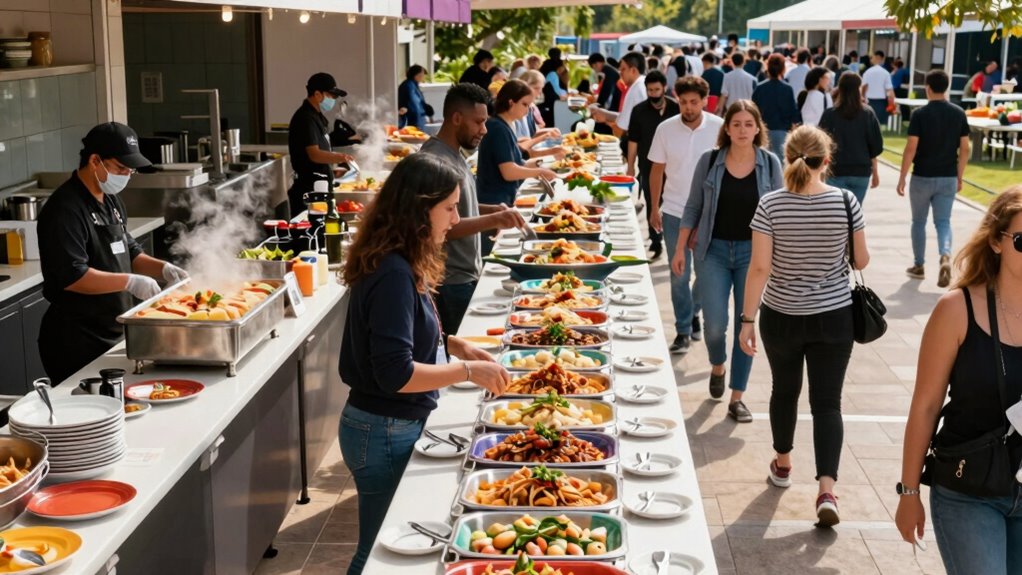
Have you ever wondered how to elevate your outdoor gatherings effortlessly? One effective trick is setting up an outdoor food station that mimics the efficiency of indoor catering. This approach streamlines the flow of guests, prevents bottlenecks, and keeps everyone satisfied without the chaos. When you design your outdoor food station, think about how food presentation can make a difference. Beautifully arranged platters and well-organized displays not only catch the eye but also encourage guests to serve themselves quickly. Using tiered trays, colorful bowls, and clear labels helps guests identify their options at a glance, speeding up the process and reducing congestion.
To make the most of this, position your food station strategically—near the seating area or main gathering spot but away from high-traffic pathways. This way, guests can easily access the food without blocking walkways or creating crowding. Incorporate elements of indoor catering into your setup by ensuring the station has enough space for multiple dishes, utensils, and serving tools. Keep hot foods warm with portable chafing dishes or insulated containers, and use chilled platters or coolers for cold items. This not only keeps the food fresh but also minimizes the need for guests to linger around the station, which can cause congestion. Additionally, proper food presentation can significantly enhance guest experience and efficiency. Paying attention to food safety standards ensures that your outdoor setup remains both appealing and hygienic.
Creating a thoughtful layout that considers both space and flow can further improve the overall experience, making your outdoor event more enjoyable for everyone. Focus on food presentation to make your outdoor station inviting. Use colorful garnishes, decorative trays, and themed signage to draw attention and create an inviting atmosphere. Consider grouping items by type—appetizers, main courses, desserts—so guests can easily navigate their choices. When food looks appealing and is presented thoughtfully, guests tend to serve themselves more efficiently, reducing lines and waiting times. Additionally, placing disposable plates, napkins, and utensils nearby allows guests to serve themselves comfortably without multiple trips or awkward back-and-forths. Incorporating efficient layout principles can also help optimize space and flow in your setup.
portable chafing dishes for outdoor events
As an affiliate, we earn on qualifying purchases.
As an affiliate, we earn on qualifying purchases.
Frequently Asked Questions
How Much Does Setting up the Outdoor Food Station Cost?
Setting up an outdoor food station costs around $200 to $1,000, depending on your menu customization and equipment rental needs. You’ll need to rent or buy essential equipment like chafing dishes, warming trays, and serving utensils. If you customize your menu with specialty items, expect additional costs for ingredients and supplies. Planning ahead guarantees you stay within budget while creating an efficient, crowd-pleasing outdoor food station.
What Types of Food Are Best for Outdoor Stations?
Imagine you’re a culinary pioneer, like a food truck hero from the Wild West. Opt for foods that are easy to serve and eat outdoors, such as grilled skewers, fresh salads, and finger foods. Focus on appealing food presentation and a diverse menu variety to keep guests engaged. These options stay fresh in the open air, reduce mess, and make the outdoor station a hit.
How Do I Ensure Food Safety Outdoors?
To guarantee food safety outdoors, you should practice outdoor sanitation consistently. Keep hot foods hot (above 140°F) and cold foods cold (below 40°F) using appropriate coolers and warming trays. Wash hands frequently with hand sanitizer or soap, and use clean utensils and gloves. Cover foods properly to prevent contamination, and regularly sanitize surfaces. These steps help prevent foodborne illnesses and maintain safe, fresh food for your guests.
Can This Trick Work for Large Events?
You bet it can work for large events, but success depends on careful planning. As the event scales up, you’ll need to think about weather considerations, like rain or wind, which could impact the outdoor food station’s efficiency. Proper setup, additional stations, and staff can help handle increased crowd sizes. Keep a close eye on the weather forecast and be ready to adapt, ensuring everyone stays fed and happy.
How Do I Manage Trash and Cleanup Afterward?
You should set up designated recycling stations with clear signage to encourage proper waste sorting. Use durable trash bags and plan cleanup logistics ahead of time, assigning specific teams to handle trash collection. Keep supplies like gloves and extra bags handy to streamline the process. Regularly monitor the stations to prevent overflow, ensuring a smooth cleanup afterward. Effective recycling strategies and organized logistics make trash management efficient and reduce environmental impact.
Conclusion
By using the outdoor food station trick, you can markedly reduce congestion and speed up service. Implementing this simple change can boost efficiency and improve guest experience. Did you know that outdoor food stations can increase throughput by up to 30%? That’s a game-changer for busy events or venues. So, try this trick next time you want to streamline your service — it’s an easy upgrade with impressive results that everyone will notice.