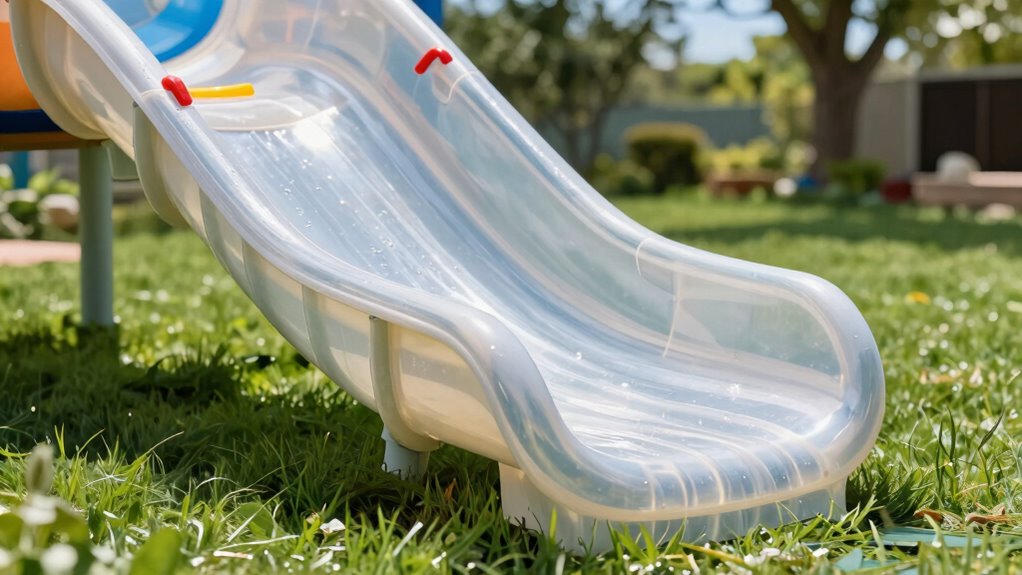

The most critical setup detail for safe backyard water play is proper anchoring and securing of the slide, especially if it’s tall. Make certain the base is on a flat, stable surface and follow the manufacturer’s height guidelines to prevent wobbling or tipping. Using the right materials guarantees durability and safety. Regularly inspecting and maintaining the slide helps catch issues before they become hazards. Keep these tips in mind to protect everyone, and you’ll find even more helpful advice ahead.

Get pool and patio gear delivered free with Prime
- Fast, free delivery on millions of items
- Prime Video, Amazon Music and more included
- Member-only deals all year
Key Takeaways
- Proper anchoring and secure installation prevent wobbling or tipping, especially for taller slides.
- Ensuring the landing area is cushioned and free of hazards minimizes injury risk.
- Following manufacturer height and setup guidelines is critical for safety and stability.
- Regular inspections and maintenance detect wear, damage, or instability early.
- Adequate supervision and adherence to safety guidelines reduce the likelihood of accidents.
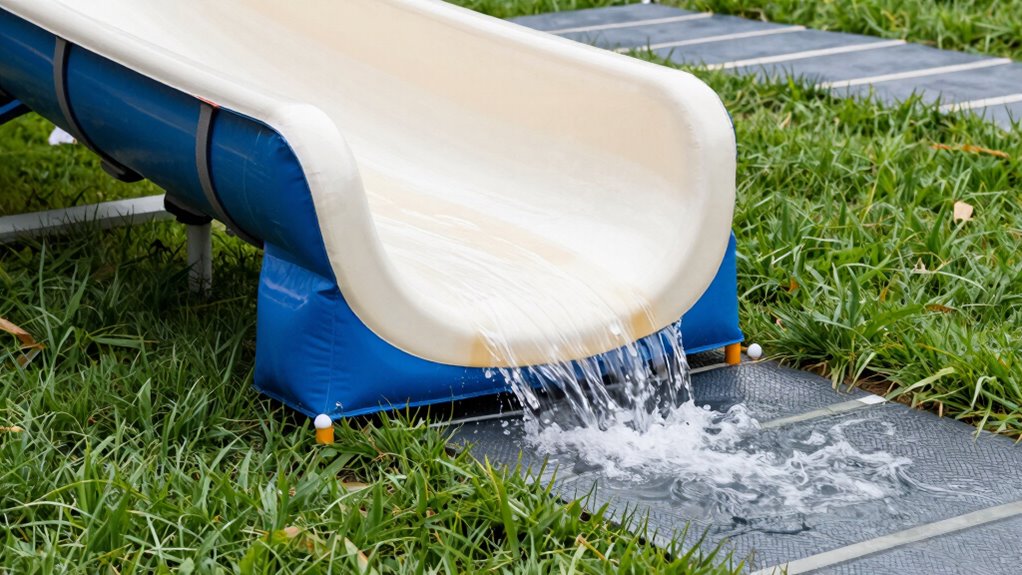
Have you ever wondered if your water slide setup is completely safe? It’s a question many parents and homeowners ask when planning backyard fun. The key factor that often gets overlooked is the water slide’s height and the material durability of the slide itself. Both elements play a pivotal role in guaranteeing everyone’s safety during playtime.
When it comes to water slide height, it’s tempting to choose a taller slide for maximum thrill, but taller doesn’t always mean safer. You need to consider the maximum safe height based on the slide’s design, installation surface, and your space restrictions. A taller water slide increases the risk of falls or injuries if it’s not secured properly or if the landing area isn’t cushioned adequately. Make sure the slide is installed on a flat, stable surface that can support its weight and height. Also, check manufacturer guidelines for maximum recommended height to avoid overextending the slide beyond its safety limits. Proper anchoring is essential to prevent wobbling or tipping, especially for taller models. Remember, safety isn’t about how high the slide is but how well it’s installed and maintained. Additionally, selecting a slide made from appropriate materials is crucial for long-term safety and durability. Ensuring the proper installation can prevent accidents and extend the lifespan of your water slide, making safety a long-term priority. Regular inspections and maintenance further enhance safety by catching potential issues early. Incorporating safety guidelines provided by manufacturers can also greatly reduce risk. Other important factors include adequate supervision and educating children about safe play behaviors.
As an affiliate, we earn on qualifying purchases.
Frequently Asked Questions
How Often Should I Inspect the Water Slide for Damage?
You should inspect your water slide for damage before each use, especially checking slide anchoring and water pressure. Look for loose or missing parts, tears, or cracks in the slide material, and make sure anchors are secure. Regularly inspecting helps you spot issues early and maintain safety. Confirm the water pressure isn’t too high, as excessive pressure can cause damage or accidents. Proper checks keep backyard fun safe for everyone.
What Is the Ideal Ground Surface for Slide Placement?
The ideal ground surface for slide placement is a soft, impact-absorbing material like thick grass, mulch, or rubber mats. Imagine a landing so gentle it could cradle a feather—your backyard can be that safe! You should always guarantee the ground surface is level and free of rocks or debris. Proper slide placement on this cushioned surface helps prevent injuries, making backyard fun both exciting and safe.
Are There Age Restrictions for Water Slide Use?
Yes, there are age restrictions for water slide use. You should check the manufacturer’s guidelines, as water slide age recommendations vary depending on size and design. Safety restrictions often include minimum age limits to prevent injuries. For younger children, opt for slides specifically designed for their age group, ensuring they stay safe and enjoy the fun without risking accidents. Always supervise children closely during water slide play.
How Do I Prevent Mold and Mildew Buildup?
Think of your water slide as a lively garden needing constant care. To prevent mold buildup and control mildew, rinse the slide thoroughly after each use, ensuring no water pools in hidden spots. Use a mild disinfectant or vinegar solution periodically, and let it dry completely between uses. Proper mold prevention keeps your slide safe, vibrant, and ready for endless fun, turning backyard play into a worry-free adventure.
What Are Common Setup Mistakes That Compromise Safety?
You should avoid common setup mistakes like improper slide anchoring and ignoring height restrictions. If you don’t securely anchor the slide, it can tip over or shift during use, risking injury. Also, exceeding height restrictions compromises stability and safety. Always follow manufacturer instructions for anchoring and height guidelines, and double-check all connections before use. Proper setup minimizes accidents and guarantees everyone can enjoy the slide safely.
Conclusion
Remember, setting up your water slide isn’t just about tying a few knots; it’s about building a safe oasis amid a summer oasis. Think of yourself as the captain steering your backyard’s aquatic adventure, where every secure anchor and smooth surface is a guiding star. When you prioritize stability and vigilance, you transform your yard into a sparkling lagoon of laughter and safety. With careful setup, your backyard becomes a splashy sanctuary where memories flow as freely as water.
Fall Picks
fall essentials
As an affiliate, we earn on qualifying purchases.