
As a beginner, relying on brute force and inconsistent paddling techniques can cause unnecessary fatigue on the water. Using too much arm strength and quick, choppy strokes wears you out faster and wastes energy. Instead, focus on engaging your core and maintaining a steady, controlled rhythm. Proper technique and balanced strokes will make paddling feel easier and help you enjoy longer trips. Keep exploring to discover how to improve your efficiency and avoid common pitfalls.
Key Takeaways
- Relying on brute force and inconsistent strokes causes early muscle fatigue.
- Focusing on short, choppy strokes wastes energy and increases strain.
- Ignoring proper technique leads to inefficient paddling and faster exhaustion.
- Overusing arm strength instead of engaging core muscles drains energy quickly.
- Neglecting body positioning and rhythm reduces efficiency and causes unnecessary fatigue.
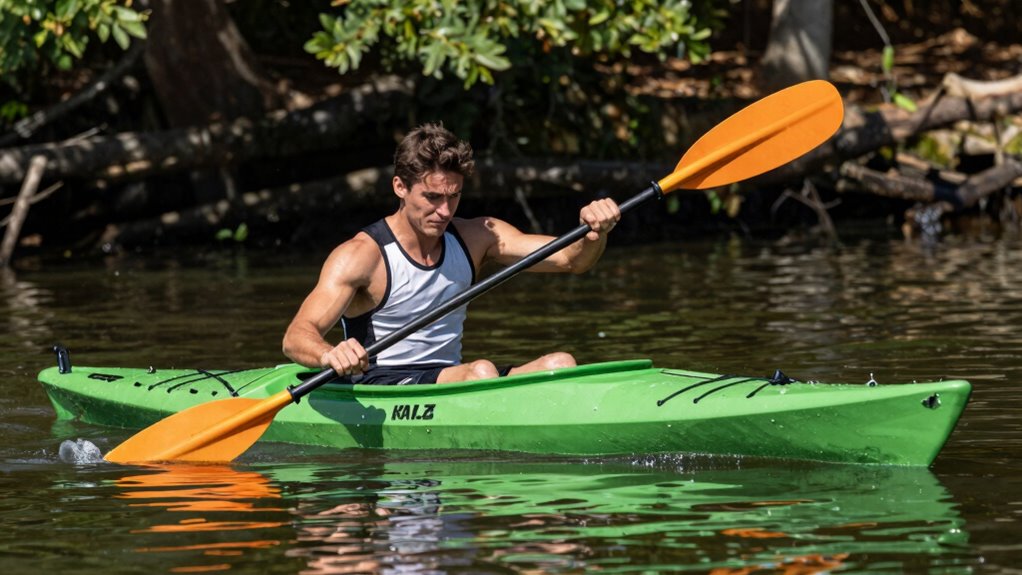
Have you ever heard that the biggest mistake beginners make when kayaking is underestimating the importance of proper safety gear? While safety gear is essential, many newcomers overlook how their technique and equipment choices directly impact their energy levels and overall experience. One of the most common pitfalls is improper paddle strokes, which can quickly lead to unnecessary fatigue. Instead of using efficient, smooth paddling techniques, beginners often rely on brute force or inconsistent strokes, wasting energy that could be conserved for longer trips or more challenging conditions.
Your paddle strokes should be deliberate and efficient, engaging your core rather than just your arms. Many new kayakers make the mistake of paddling with short, choppy strokes, which not only tire you out faster but also increase the risk of muscle strain. Learning proper paddle technique—such as engaging your torso, maintaining a steady rhythm, and applying equal force on each side—can markedly reduce fatigue. It’s tempting to rely on quick, aggressive strokes to propel yourself forward, but this approach quickly exhausts your muscles and leaves you feeling drained after only a short period. Instead, focus on long, controlled strokes that maximize propulsion with minimal effort. Additionally, understanding the importance of proper technique can significantly improve your endurance and enjoyment on the water. Practicing technique drills regularly can further enhance your paddling efficiency and prevent developing bad habits that lead to fatigue. Paying attention to body positioning can also help you maintain balance and reduce unnecessary strain during paddling sessions.
kayak paddle with ergonomic grip
As an affiliate, we earn on qualifying purchases.
As an affiliate, we earn on qualifying purchases.
Frequently Asked Questions
How Can I Improve My Paddling Technique Quickly?
To improve your paddling technique quickly, focus on your paddle grip and stroke rhythm. Keep your hands relaxed but firm on the paddle, ensuring you’re not gripping too tightly. Maintain a steady, smooth stroke rhythm by syncing your arm movements with your torso rotation. Practice consistent, controlled strokes to boost efficiency and reduce fatigue. With time, these adjustments will make your paddling more effective and enjoyable.
What Gear Is Essential for Beginner Kayakers?
You need essential equipment like a life jacket for kayak safety, a paddle, and a whistle for signaling. Consider a waterproof bag for your essentials and a spray skirt if you’re in rough waters. Wearing appropriate clothing and footwear is vital too. Prioritize safety gear to stay protected and confident on the water. Always check your equipment before heading out, ensuring everything’s in good condition for a safe and enjoyable experience.
How Do Weather Conditions Affect Kayaking Safety?
Did you know that nearly 70% of kayaking accidents are weather-related? Weather hazards, like sudden storms or strong winds, can jeopardize your safety on the water. Temperature effects also matter—cold water can cause hypothermia if you fall in, even on warm days. Always check the forecast before heading out, dress appropriately, and be prepared to adapt your plans if weather conditions worsen. Safety should always come first.
What Are Common Signs of Fatigue While Kayaking?
You might notice signs of exhaustion like muscle cramps, heavy limbs, or feeling overly tired. Physical symptoms such as dizziness, headaches, or nausea also indicate fatigue. If you find yourself struggling to paddle, losing focus, or feeling short of breath, it’s a clear sign you need to rest. Recognizing these symptoms early helps prevent overexertion, ensuring you stay safe and enjoy your kayaking experience without unnecessary fatigue.
How Should I Prepare Physically for Kayaking?
Did you know that 60% of kayakers experience fatigue from poor preparation? To avoid this, focus on core strengthening and endurance training before hitting the water. Building your core improves paddling efficiency, while endurance exercises boost stamina. Incorporate activities like planks, squats, and cardio into your routine. Proper physical prep helps you paddle longer, reduces fatigue, and makes your kayaking experience more enjoyable and less exhausting.
Conclusion
Avoiding this common beginner mistake will transform your kayaking experience from a tiring chore into pure joy. When you focus on proper technique and stay relaxed, you’ll glide through the water as effortlessly as a leaf on a breeze. Don’t let fatigue turn your adventure into a nightmare—it’s your journey, after all. Mastering this simple tip can save you from exhaustion that feels like climbing Mount Everest, making every paddle stroke feel like a walk in the park.