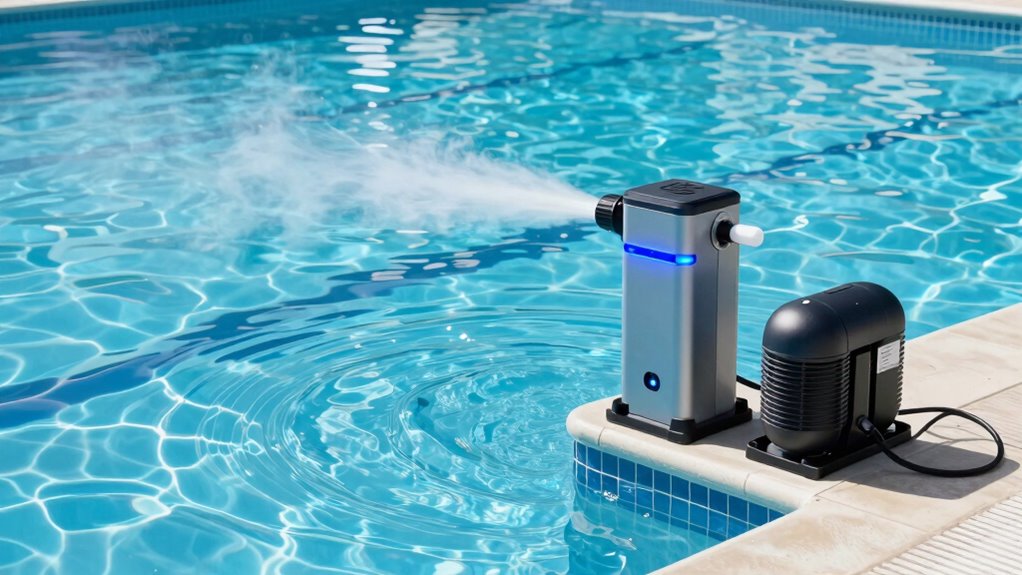

Both UV and ozone systems effectively disinfect pool water without using harsh chemicals. UV light quickly kills bacteria and viruses on contact but doesn’t leave a residual sanitizer, so circulation is key. Ozone destroys organic pollutants and offers a powerful, chemically-free clean, but it’s more sensitive to water quality and needs on-site production. Understanding their differences can help you choose the best fit—keep exploring to learn which might work best for your pool.

Get pool and patio gear delivered free with Prime
- Fast, free delivery on millions of items
- Prime Video, Amazon Music and more included
- Member-only deals all year
Key Takeaways
- UV disinfects water instantly by destroying microorganisms but offers no residual sanitizing effect.
- Ozone is a strong oxidizer that breaks down organic contaminants and improves water clarity.
- Both systems eliminate the need for chlorine but require proper water circulation and maintenance.
- UV bulbs need regular replacement, while ozone generators require consistent servicing for optimal performance.
- Ozone is more sensitive to water quality issues, whereas UV is simple but needs clean, unobstructed chambers.
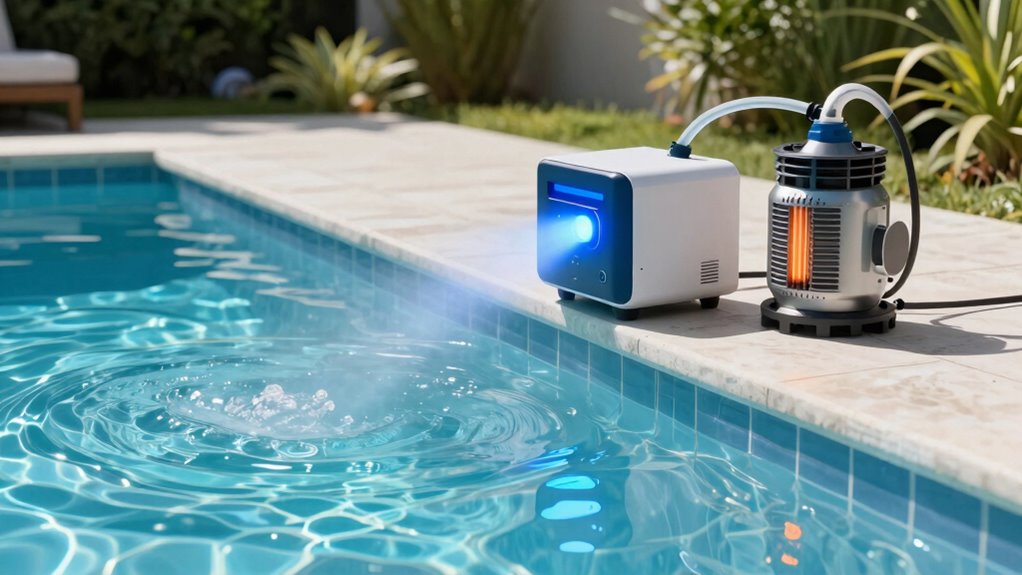
When it comes to keeping your pool clean and safe, the debate between UV and ozone sanitizing systems is gaining popularity. Both options are considered chlorine alternatives, which is great if you’re trying to avoid the strong smell and skin irritation that often come with traditional chlorination. But while they offer cleaner water without harsh chemicals, each has its own set of maintenance challenges you should be aware of.
UV systems use ultraviolet light to kill bacteria, viruses, and algae. When water passes through a UV chamber, the light destroys harmful microorganisms on contact, providing immediate disinfection. The beauty of UV is that it requires very little chemical use afterward, making your pool water softer and less irritating to skin and eyes. However, UV isn’t a complete solution on its own. It doesn’t leave a residual sanitizer in the water, so if you don’t keep up with proper water circulation and filtration, bacteria can still grow. This means you’ll need to regularly check the system and replace UV bulbs as they lose effectiveness over time. The maintenance challenges involve bulb replacement and ensuring the UV unit stays clean and unobstructed for maximum performance. Additionally, understanding the disinfection process can help you better maintain your pool’s water quality.
Ozone systems work differently. They generate ozone gas, a powerful oxidizer that destroys organic contaminants, bacteria, and viruses. Ozone is highly effective at breaking down oils, sweat, and other pollutants, making your pool water clearer and fresher. Like UV, ozone reduces reliance on chlorine, but it also doesn’t leave a residual sanitizer in the water. To compensate, many ozone systems are combined with small doses of other sanitizers or circulate ozone continuously to maintain water quality. The maintenance challenges with ozone are slightly more involved. Ozone generators require regular servicing, and the equipment can be sensitive to water quality and mineral buildup. Plus, ozone is unstable and must be produced on-site, so system components need to be checked frequently to ensure proper operation.
UV pool sanitizer replacement bulbs
As an affiliate, we earn on qualifying purchases.
As an affiliate, we earn on qualifying purchases.
Frequently Asked Questions
How Do UV and Ozone Sanitize Pool Water Differently?
UV and ozone sanitize pool water differently by targeting contaminants through distinct processes. UV light destroys bacteria and viruses quickly, disrupting their DNA, while ozone reacts with organic compounds, neutralizing bacteria and eliminating odors. Both improve pool chemistry, but ozone often works faster. Carbon filtration helps remove residual chemicals and particles after sanitization, ensuring clearer water. You’ll find ozone effective for broader disinfection, but UV offers rapid, chemical-free sanitization.
Are UV and Ozone Systems Safe for All Pool Types?
You can confidently use UV and ozone systems with your pool type, as they’re generally safe and enhance water clarity without relying solely on chlorine. These systems reduce the need for high chlorine levels, making your water safer and more pleasant. However, always check compatibility with your pool’s material and size, since some setups work better with certain pools. Proper maintenance guarantees safety and keeps your water crystal clear.
How Much Do UV and Ozone Pool Systems Cost?
UV and ozone pool systems typically cost between $1,000 and $3,000, depending on the size and features. While they may seem pricey upfront, they serve as effective pool chemical alternatives and can considerably improve water quality. Investing in these systems helps you reduce chemical use, keep your water cleaner, and enjoy healthier swimming conditions, making them a smart choice for long-term water quality improvement.
Do UV or Ozone Systems Require More Maintenance?
UV systems generally require less maintenance than ozone systems, but both need regular checks on pool chemical balance for best performance. UV units mainly need periodic lamp replacements, whereas ozone systems may require more frequent system inspections and parts replacement. When considering system installation, keep in mind that maintaining proper chemical balance helps extend the lifespan of your equipment and guarantees effective sanitization. Regular maintenance keeps your pool safe and sparkling.
Can UV and Ozone Be Used Together for Better Sanitation?
Yes, you can use UV and ozone systems together for better sanitation. Combining these technologies enhances pool aesthetics by providing clearer, more inviting water, while also reducing the need for harsh chemicals. UV disinfects quickly, breaking down contaminants, and ozone adds an extra layer of purification. Together, they improve water quality, minimize chemical use, and create a healthier, more attractive swimming environment for you.
Conclusion
In the end, choosing between UV and ozone is like selecting a guardian for your pool’s soul. UV acts as a vigilant lighthouse, shining bright to ward off unseen threats, while ozone is a fierce dragon, breathing fire to banish impurities. Both stand ready, each with its own magic. Trust your instincts, and remember, the right protector guarantees your pool remains a crystal-clear kingdom of tranquility and joy.
Halloween Picks
halloween
As an affiliate, we earn on qualifying purchases.