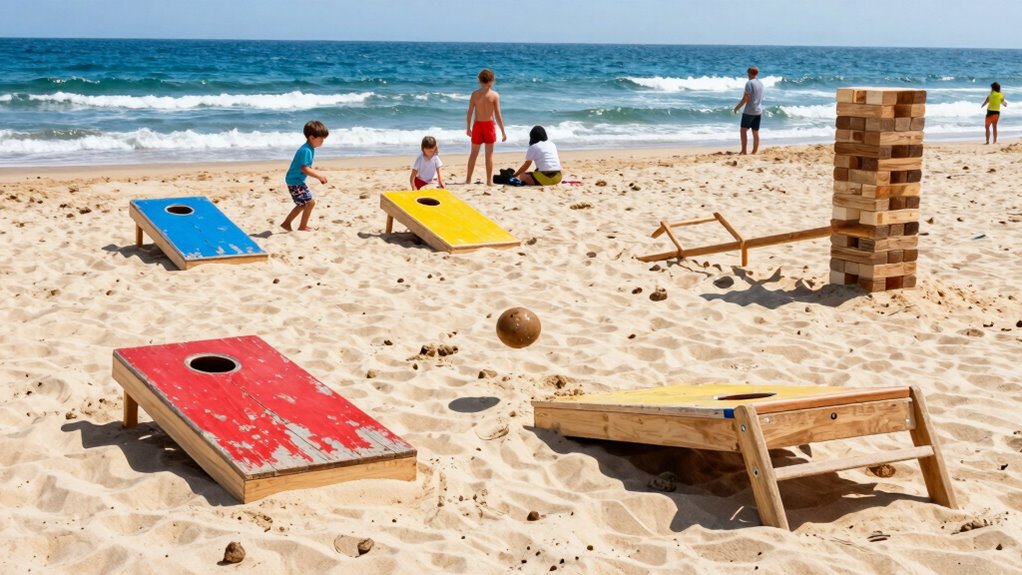

To make classic yard games work on sand, start by preparing a level, compacted playing area with clear boundaries and secure stakes. Use equipment designed for outdoor or beach use, lowering nets if needed and choosing durable balls and tools. Adjust your game strategies by accounting for slower ball speeds and shifting terrain. Proper setup and equipment increase stability and fun. Keep exploring for even more tips on transforming your favorite backyard games into sandy outdoor adventures.

Get pool and patio gear delivered free with Prime
- Fast, free delivery on millions of items
- Prime Video, Amazon Music and more included
- Member-only deals all year
Key Takeaways
- Adjust equipment height and placement to accommodate shifting sand and prevent instability.
- Use durable, outdoor-specific balls and tools designed for sandy conditions.
- Modify game rules to account for slower ball movement and unpredictable terrain.
- Secure boundary lines with stakes or anchors to prevent shifting during play.
- Incorporate creative strategies that leverage sand’s properties for a fun, adaptable experience.
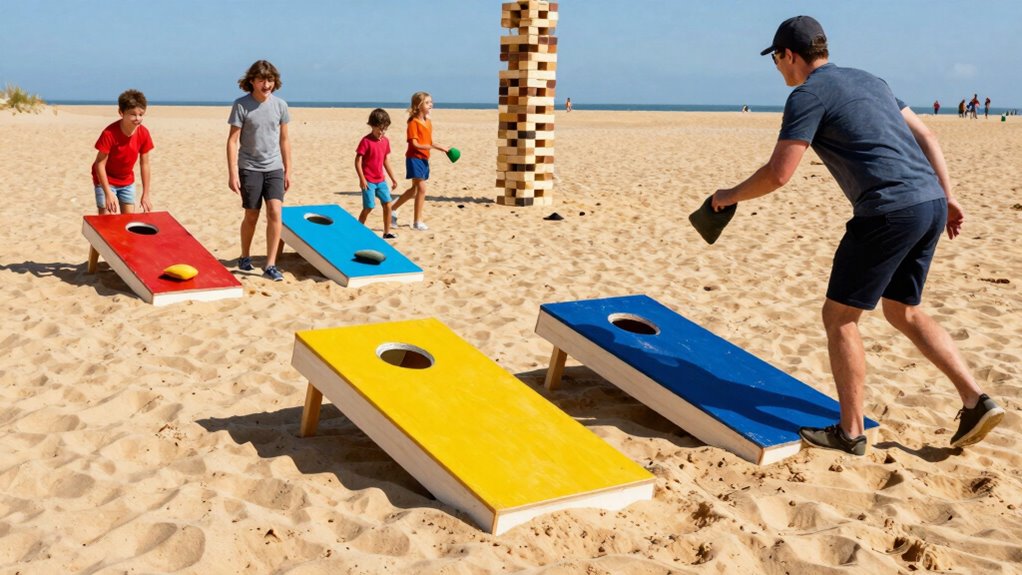
Playing yard games on sand offers a fun and energetic way to enjoy outdoor gatherings, whether at the beach, a sandy backyard, or a park with a sandbox. However, adapting traditional yard games for sandy terrain requires some planning, especially for popular activities like beach volleyball or sandcastle contests. Sand can be unpredictable, so understanding how to modify your game setup is key to ensuring everyone has a great time.
Playing yard games on sand is a fun way to enjoy outdoor gatherings but requires careful planning and adjustments.
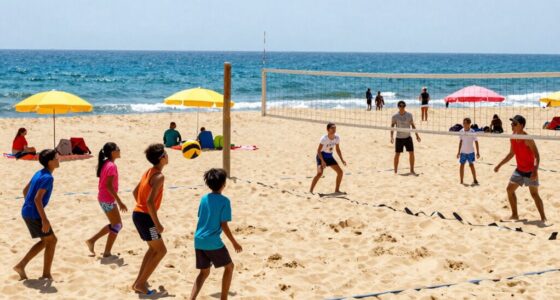
When it comes to beach volleyball, the first step is to create a sturdy, well-marked court. Unlike grass or concrete, sand shifts easily, so you need to dig a level playing surface and secure your boundary lines. Use long stakes or heavy anchors to hold the lines in place, and consider adding a border of compacted sand around the court to prevent slipping or uneven footing. You might also want to lower the net slightly, as sand absorbs some of the impact, making it easier to keep the ball in play. In addition, opt for a volleyball designed for outdoor or beach play, which tends to be more durable and easier to control in windy conditions. Playing on sand naturally slows the ball’s movement, so adjusting your serve and volley strategies helps keep the game lively and fair. Understanding the impact of terrain on gameplay can help you better prepare for a fun match. Additionally, selecting equipment specifically designed for sandy conditions can improve your overall experience.
For sandcastle contests, the key is to prepare your workspace. Bring along plenty of buckets, shovels, and sculpting tools suited for sand. To prevent the sand from collapsing or spreading unevenly, choose a flat, moist area for building. You can also moisten the sand beforehand with a spray bottle or garden hose to improve sculpting and stability. If you’re hosting a contest, set clear boundaries with tape or natural markers so participants know where to build. Encourage creativity by providing different tools or molds, and consider organizing themed categories to add excitement. Since sand can be tricky to work with, remind everyone to take breaks and hydrate, especially on hot days. For larger or more complex sandcastle projects, build a sturdy base foundation and work from the ground up, ensuring each layer is compacted for stability. Moreover, understanding how sand consistency affects sculpting can help participants achieve better results.
Adapting yard games to sand isn’t complicated once you understand how the terrain affects gameplay. With some adjustments, you can turn traditional games into memorable outdoor experiences that everyone will enjoy, whether you’re diving into beach volleyball matches or competing in sandcastle contests. The key is to prepare your space properly, select suitable equipment, and encourage creative strategies tailored for sandy surfaces.
As an affiliate, we earn on qualifying purchases.
Frequently Asked Questions
What Types of Yard Games Work Best on Sandy Surfaces?
You’ll find beach ball and shell toss games work best on sandy surfaces, where the soft ground allows easy movement and fun interaction. Beach balls are lightweight, so they glide smoothly over the sand, making for lively, engaging play. Shell toss is perfect for sandy areas because the shells can be easily buried or retrieved without much hassle. These games adapt well to sand, providing hours of entertainment for all ages.
How Do I Prevent Sand From Interfering With Game Equipment?
To prevent sand from interfering with your game equipment, start with sand stabilization by raking and leveling the surface regularly. Use equipment anchoring techniques like stakes, weights, or sandbags to secure items firmly in place. Consider creating a designated playing area with a barrier or mat to reduce shifting. These steps guarantee your yard games stay stable, safe, and fun, even on loose, sandy surfaces.
Are There Specific Rules for Playing Yard Games on Sand?
Ever notice how beach game adaptations sometimes seem like they were made just for sand terrain challenges? When you play yard games on sand, you should modify the rules for better play—like adjusting scoring or movement guidelines. These tweaks help prevent slips and unfair advantages. By embracing these small rule changes, you make the game more enjoyable, fair, and suited for sandy settings, turning any yard game into a perfect beach activity.
How Can I Make Traditional Yard Games More Sand-Friendly?
To make traditional yard games more sand-friendly, adapt your rules and equipment. For example, use a beach ball instead of a heavier ball for easier handling on sand. Incorporate fun activities like a sandcastle contest to keep everyone engaged. Use lightweight, portable items, and set up boundaries with natural markers like shells or driftwood. These tweaks help guarantee your games are enjoyable and accessible on sandy surfaces.
What Safety Precautions Should I Take on Sandy Terrains?
When playing on sandy terrains, you should prioritize safety by staying aware of local wildlife and practicing wildlife awareness to avoid disturbing animals. Always wear sun protection, like hats and sunscreen, since sandy areas often mean prolonged sun exposure. Keep hydrated and use appropriate footwear to prevent slips and injuries. Being mindful of your surroundings and taking these precautions helps guarantee a safe, enjoyable game experience on sandy surfaces.
Conclusion
Now that you know how to adapt classic yard games for sand, you’re ready to turn your beach or sandbox into a fun-filled playground. Think of it like planting seeds in different soil—what works on grass just needs a little tweaking to thrive in sand. I once watched friends transform a simple cornhole game into a lively competition on the beach, proving that with a few adjustments, your favorite games can flourish anywhere. Just jump right in and enjoy the sunshine!
Halloween Picks
halloween
As an affiliate, we earn on qualifying purchases.