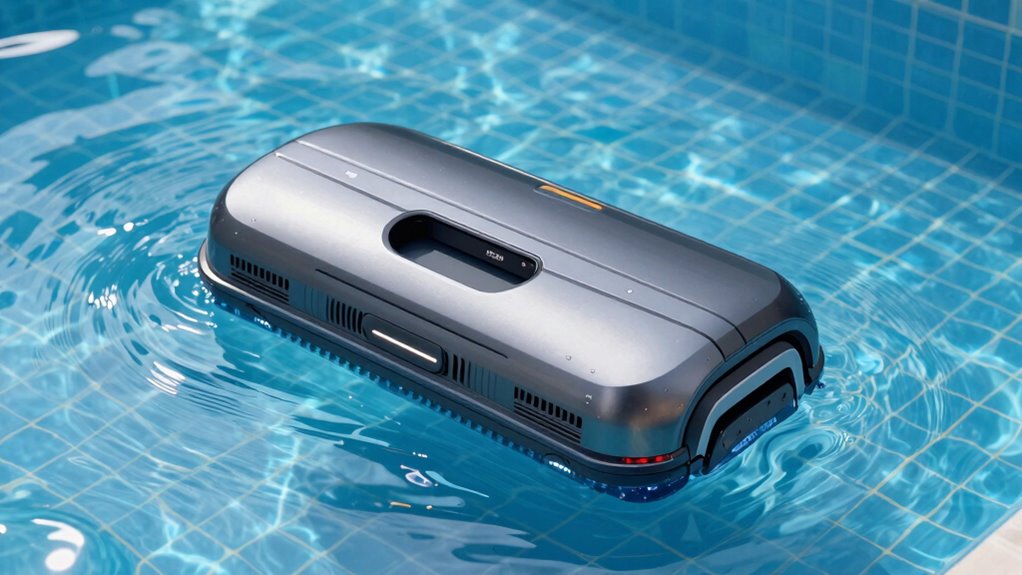
To predict a robotic pool cleaner’s real cleaning performance, focus on its battery life, capacity, and management tech. A longer battery life—typically 90 minutes or more—means it can cover the entire pool without interruptions. Efficient motor design and noise levels also matter, as quieter, well-engineered motors deliver consistent power. If you keep these specs in mind, you’ll better understand a cleaner’s true effectiveness. Want to uncover more essential features that shape cleaning results?
Key Takeaways
- Battery capacity and runtime indicate the device’s ability to cover entire pools without frequent recharging.
- Advanced battery management tech ensures consistent performance and prolongs overall cleaning effectiveness.
- Motor design and noise levels impact operational quietness and cleaning power efficiency.
- Lower noise ratings (below 60 dB) allow for unobtrusive operation during daytime or relaxing periods.
- Overall performance metrics, including battery life and noise levels, directly predict cleaning reliability and user satisfaction.
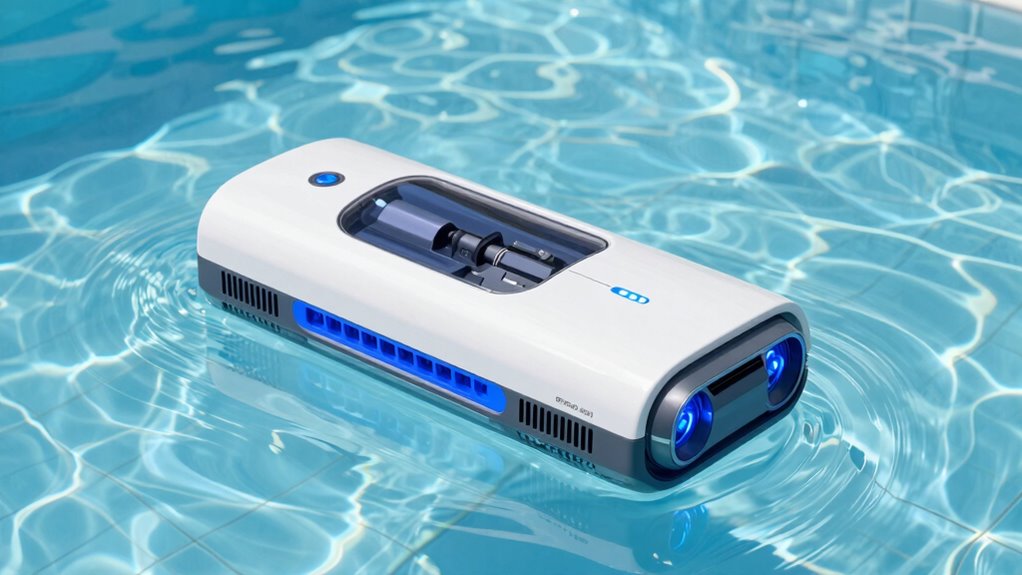
Are you curious about what makes a robotic pool cleaner effective? One of the most vital specs to evaluate is how well it maintains its performance over time, and that comes down to features like battery life and noise levels. When you’re investing in a device that’s meant to keep your pool spotless, understanding these specs can help you gauge its true cleaning potential. A long-lasting battery ensures your cleaner can cover the entire pool without needing to recharge midway through the job. If the battery drains quickly, your cleaner might leave spots untouched or require multiple charging cycles, which can be a hassle. Look for models with high-capacity batteries that offer at least 90 minutes of continuous cleaning. This duration usually provides enough time to thoroughly clean most pools in a single session, saving you time and effort. Additionally, some advanced models come with quick-charging batteries, so you can get back to cleaning faster if needed. But battery life isn’t just about duration; it’s also about how well the cleaner manages power over multiple uses. A high-quality battery retains its capacity over many charge cycles, meaning your device will stay effective longer and won’t need frequent replacements. Moreover, battery longevity is a key factor that influences the overall cost-effectiveness of the device over time, especially when paired with battery management technology that optimizes performance. Properly engineered motor design also plays a crucial role in maintaining consistent performance and minimizing noise, which is essential for a positive user experience. The design of the motor directly affects how quietly the robot operates, making it a significant consideration for those who value a peaceful environment. Additionally, advancements in noise reduction technology are making these devices increasingly quieter without compromising cleaning power. Noise levels are another essential factor that often gets overlooked, but they can markedly impact your experience. A noisy robotic cleaner might be disruptive, especially if you want to run it during the day or when you’re relaxing nearby. When shopping, pay attention to the decibel ratings—models that operate below 60 dB tend to be quieter and less intrusive. Quieter models allow you to run them during the day without disturbing your family or neighbors and even while you’re lounging poolside. Noise levels are influenced by the design of the motor and the materials used, so a well-engineered robot cleaner minimizes sound without sacrificing cleaning power.
In the end, a robotic pool cleaner’s effectiveness hinges on these specs because they directly influence how well and how efficiently it performs. A device with a robust battery life and low noise levels can work longer, more quietly, and more reliably, giving you consistent cleaning results. These specs serve as dependable indicators of real-world performance, helping you choose a model that meets your needs and keeps your pool sparkling with less hassle. By focusing on these key specs, you guarantee your investment delivers the cleaning power you need without unnecessary interruptions or frustrations.
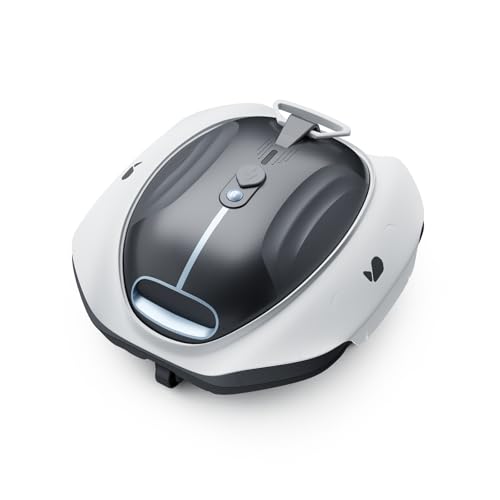
Bubot 300P Above Ground Pool Vcuum, Cordless Robotic Pool Cleaner with Powerful Suction, DirtLock Tech 2.0, Smart Sensor, Double Filtering, Fast Charging, Up to 850 Sq.Ft, Light Grey
- Enhanced Bluehole Suction: Deep cleaning with 2X efficiency
- Powerful Leaf and Debris Collection: 3X stronger leaf pickup, 8X debris removal
- DirtLock Tech 2.0: Secure debris trapping and quick drainage
As an affiliate, we earn on qualifying purchases.
As an affiliate, we earn on qualifying purchases.
Frequently Asked Questions
How Long Does the Battery Typically Last per Cleaning Cycle?
You can expect the battery to last around 1.5 to 2 hours per cleaning cycle, depending on usage and model. Battery longevity is optimized through advanced power efficiency features, ensuring longer runtimes without sacrificing cleaning performance. To get the most out of your robotic pool cleaner, keep the battery well-maintained and follow the manufacturer’s guidelines. This way, you’ll enjoy efficient cleaning sessions with minimal interruptions.
Can the Cleaner Handle Outdoor Debris Like Leaves?
Think of your pool cleaner as a diligent gardener, adept at leaf management and debris capacity. Yes, it handles outdoor debris like leaves efficiently, thanks to its powerful suction and sizable debris bin. I once watched mine tackle a yard’s worth of fallen leaves after a storm, demonstrating its capacity to manage outdoor messes. With this robot, you get reliable outdoor cleaning, even when debris piles up.
Is the Robotic Cleaner Suitable for All Pool Shapes and Sizes?
Yes, this robotic pool cleaner is suitable for all pool shapes and sizes. Its pool shape adaptability guarantees it navigates various designs, from rectangular to freeform pools, effortlessly. Additionally, its size compatibility analysis helps determine if it matches your pool’s dimensions, ensuring thorough cleaning without missing spots. You can confidently rely on it to handle different pool configurations, making maintenance easier regardless of your pool’s unique shape or size.
How Often Should the Filters Be Replaced or Cleaned?
Did you know that neglecting filter maintenance can reduce your robotic pool cleaner’s efficiency by up to 50%? You should clean the filters after every 1-2 uses or when you notice a decrease in cleaning performance. Replace filters every 3-6 months, depending on pool usage and debris levels. Regular cleaning frequency guarantees peak performance, extends your device’s lifespan, and keeps your pool sparkling clean effortlessly.
Does It Include a Mobile App or Remote Control Feature?
Yes, this robotic pool cleaner includes a mobile app with a user interface that’s easy to navigate, allowing you to control it remotely. It features smart navigation, so it automatically adjusts its cleaning path for efficiency. The app provides real-time updates on cleaning status, schedules, and maintenance alerts, making it simple to manage your pool cleaning from anywhere. You can customize cleaning modes to suit your pool’s needs effortlessly.
Conclusion
Now that you understand the specs that predict real cleaning performance, you’re equipped to choose a robotic pool cleaner that truly delivers. Remember, don’t be swayed by flashy features alone—look deeper at the specs that matter. Think of these specs as your guiding stars, leading you to a spotless pool with less hassle. With the right knowledge, you’ll turn the tide in your favor, making pool maintenance a breeze rather than a burden.