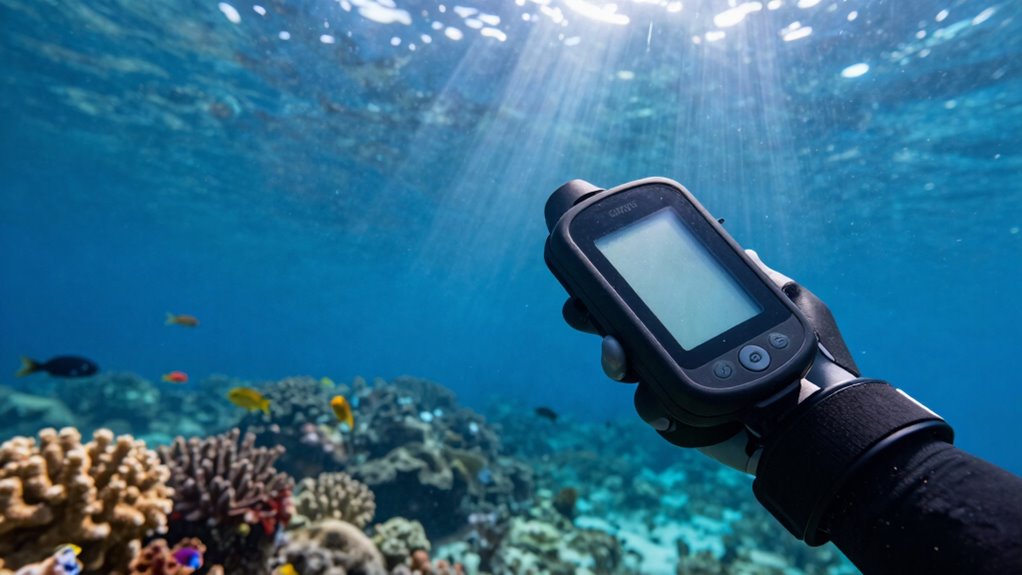

Freediving computers are designed specifically for breath-hold dives, so they focus on real-time depth and dive time, with simple alerts to keep you safe. Unlike scuba models, they don’t track gas mixtures or nitrogen levels, which are key for longer dives. Because of these differences, your expectations should match their purpose: quick, clear data for breath-hold safety—not complex dive planning. Want to understand how these distinctions impact your diving? Keep exploring to learn more.

Get pool and patio gear delivered free with Prime
- Fast, free delivery on millions of items
- Prime Video, Amazon Music and more included
- Member-only deals all year
Key Takeaways
- Freediving computers focus on real-time depth and surface intervals, not gas management or decompression algorithms.
- They prioritize safety parameters specific to breath-hold diving, like oxygen toxicity alerts, unlike scuba models.
- Freediving devices have simpler calibration and fewer sensors, tailored for quick, immediate data feedback.
- Device features are aligned with breath-hold techniques, so expectations differ from the complex data handling in scuba models.
- Understanding their limitations ensures proper use, as freediving computers are not designed for prolonged or gas-intensive dives.
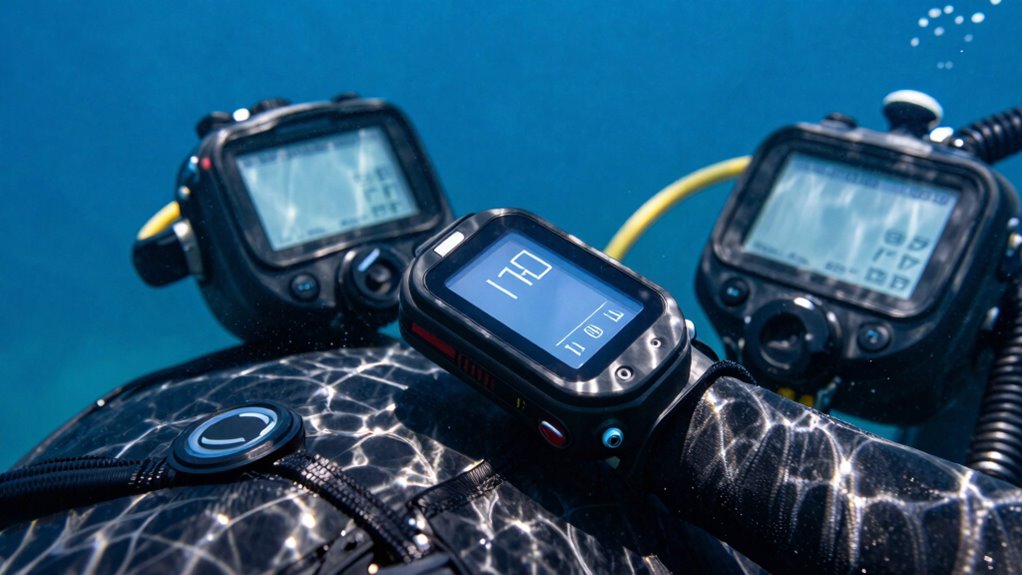
When choosing between freediving computers and scuba models, understanding their distinct features and intended uses is indispensable. Freediving computers are designed to support activities that involve breath-hold diving, while scuba models cater to prolonged underwater exploration with breathing apparatus. This fundamental difference influences how each device tracks your dive data, sets alarms, and manages safety parameters. Freedivers rely heavily on precise timing and awareness of their breath-hold capacity, so their computers prioritize real-time depth and dive time, often with simple, immediate displays. Scuba models, on the other hand, focus on managing gas consumption, nitrogen absorption, and ascent rates over longer periods, requiring more complex algorithms and multiple safety parameters.
Because freediving is all about controlled breathing techniques, your freediving computer must align with your ability to hold your breath comfortably and safely. It won’t need to track gas mixtures or nitrogen levels; instead, it emphasizes depth, dive duration, surface intervals, and oxygen toxicity alerts. This means you should set your expectations accordingly—your freediving computer might be less sophisticated in some ways but more tailored to your immediate breath-hold needs. You’ll want to familiarize yourself with its interface and guarantee you understand how it alerts you when you’re approaching your safe limits. Proper equipment maintenance becomes indispensable here, too. Regularly checking the device’s sensors, battery life, and water resistance ensures it functions correctly during your dives, which is essential for safety.
Your breathing techniques directly impact how well your freediving computer works. Practicing slow, controlled breaths before and during your dive helps optimize oxygen use and can improve your dive times. The computer’s feedback guides your technique, so understanding how to interpret its data is key. Unlike scuba models, freediving computers typically don’t require complex calibration or frequent software updates, but ensuring the device remains clean, free of damage, and properly sealed is necessary for accurate readings. Additionally, understanding the specific safety features of your freediving computer can significantly enhance your confidence and safety during dives. Incorporating proper maintenance routines and understanding the device’s limitations ensures reliable performance and safety during your breath-hold adventures. It’s also helpful to know that the device’s sensor accuracy plays a crucial role in providing reliable data, which is why selecting a reputable model matters.
Furthermore, understanding the differences in device design helps set realistic expectations for what your freediving computer can accomplish compared to scuba models. In essence, your expectations for freediving computers should be realistic about their scope—they’re tools meant to enhance safety during breath-hold dives, not manage gas loads or decompression. Being aware of device capabilities allows you to use your equipment most effectively and avoid relying on features that aren’t relevant to breath-hold diving. Proper equipment maintenance, understanding your breathing techniques, and knowing what data your device provides will help you use it effectively. Recognize that freediving computers are specialized for your particular activity, focusing on simplicity, immediate feedback, and safety in a breath-hold context. This contrasts sharply with scuba models, which are built for extended, gas-managed dives, requiring a different approach to expectations and device management.
freediving computer with oxygen toxicity alerts
As an affiliate, we earn on qualifying purchases.
As an affiliate, we earn on qualifying purchases.
Frequently Asked Questions
How Do Freediving Computer Displays Differ From Scuba Models?
Freediving computer displays prioritize display clarity and a simple user interface, making it easy for you to monitor depth, dive time, and apnea status at a glance. Unlike scuba models, they focus on real-time, intuitive data, often with larger fonts and minimal clutter. This streamlined design guarantees you can quickly interpret essential information underwater, helping you stay safe and comfortable during your freediving sessions.
Are Freediving Computers More Durable Than Scuba Models?
Think of freediving computers as delicate glass sculptures, more vulnerable yet crafted specifically for the depths you explore. They aren’t necessarily more durable than scuba models, as equipment compatibility and training requirements shape their design. Freediving computers prioritize precision and lightweight comfort, which can compromise resilience. You need to treat them with care, understanding their specific purpose, rather than expecting them to withstand the same rough conditions as scuba gear.
Can Freediving Computers Be Used for Scuba Diving?
You can use freediving computers for scuba diving, but you should be cautious about equipment compatibility and training requirements. Freediving computers are designed for breath-hold diving and may lack features needed for scuba, like handling multiple dives or managing gases. If you’re considering it, make sure you’re trained properly and understand how the device’s limitations could impact your safety. Always prioritize proper training and equipment suited for each diving style.
What Safety Features Are Unique to Freediving Computers?
Freediving computers feature safety functions like specialized alarms for breath-hold limits and rapid ascent alerts, tailored for your needs. Their equipment calibration emphasizes accurate depth and time measurements essential for freediving. The user interface design is simplified to guarantee quick readability and easy interaction underwater. These features help you stay safe, manage your dives effectively, and prevent risks associated with breath-hold diving, making freediving computers uniquely suited to your sport.
How Do Battery Life Expectations Vary Between the Two?
Like a candle flickering in the breeze, your freediving computer’s battery longevity is more limited than a scuba model’s. Freediving computers prioritize power management for shorter, intense sessions, so expect shorter battery life. Scuba models, designed for longer dives and extended use, typically have better battery endurance. You should check battery status regularly and carry spares if needed, understanding that freediving devices are optimized for quick, efficient performance rather than prolonged use.
Conclusion
As you explore the depths with your freediving computer, remember it’s built for a different kind of challenge—one that demands precision and trust in its limits. Will you push beyond those boundaries, or listen closely to what it warns? The choice is yours, but the stakes are higher than you think. With each dive, you edge closer to the unknown, where every second counts. Are you ready to face what’s beneath the surface?
Halloween Picks
halloween
As an affiliate, we earn on qualifying purchases.