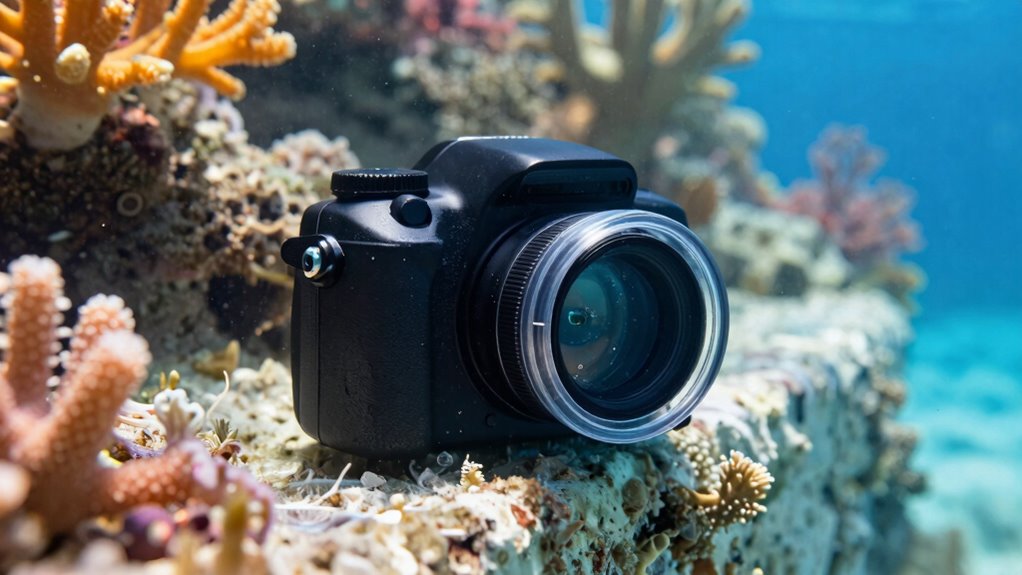

Before diving, one common mistake is neglecting proper camera preparation, like skipping a thorough check of seals, O-rings, and cleanliness. Tiny dust, smudges, or imperfect seal fittings can cause leaks or blurry images even before you get underwater. Using damaged gear or rushing setup may ruin your entire shoot. Ensuring everything is spotless and tightly sealed is essential, but there’s more to maximizing your underwater shots—stay with us to learn the key steps.
Key Takeaways
- Dirty or smudged camera lenses can cause blurry images before diving begins.
- Poorly maintained seals and O-rings increase the risk of leaks during underwater use.
- Incorrectly fitted waterproof housing can compromise water resistance and damage gear.
- Neglecting regular inspection and cleaning of lens and housing leads to image quality issues.
- Failing to perform water tests beforehand may result in unnoticed leaks and equipment failure underwater.
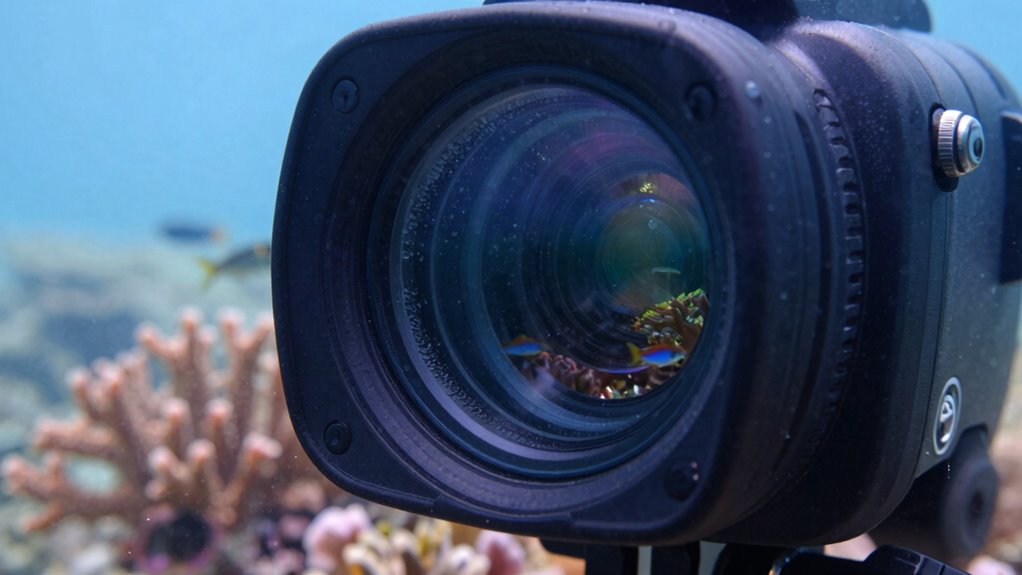
Have you ever faced difficulties with your underwater camera that ruin your diving experience? It’s frustrating when, just as you’re about to capture that perfect moment beneath the waves, your gear lets you down. One of the most overlooked issues starts even before you hit the water—preparing your camera properly. If you skip or mishandle this step, you risk compromising your entire dive. Making sure your camera is ready involves two essential aspects: camera lens maintenance and choosing the right waterproof housing options.
Camera lens maintenance is vital because even tiny dust particles or smudges can ruin your photos and videos. Before each dive, you must carefully clean the lens with a microfiber cloth designed for delicate surfaces. Use a lens cleaning solution if necessary, but avoid harsh chemicals that can damage the coating. Always handle your camera with clean, dry hands, and store it in a dust-free environment when not in use. This prevents residue buildup that could affect image quality underwater. Remember, dirt or fingerprints on the lens will magnify underwater, producing blurry or foggy images. Regularly inspecting the lens for scratches or cracks is equally important, as these imperfections can worsen once submerged, leading to distorted footage or even damage to the camera sensor. Additionally, understanding waterproof housing specifications ensures your equipment remains protected during dives of varying depths. Properly maintaining your gear, including checking seals and O-rings, is crucial for ensuring a leak-free dive. Being aware of how pressure and depth limits can impact your underwater gear helps prevent accidental damage during deeper dives. It’s also helpful to familiarize yourself with the manufacturer’s guidelines for your specific equipment to avoid common pitfalls.
Beyond maintaining the lens, choosing the right waterproof housing options makes a significant difference in your underwater photography experience. Waterproof housings act as a protective shell, safeguarding your camera from water pressure, moisture, and accidental impacts. Selecting a housing that fits your camera model snugly is vital; loose or ill-fitting cases can allow water ingress or cause mechanical issues. Consider the depth rating of the housing—if you plan to dive deep, ensure it’s rated for those conditions. Some housings come with additional features like easy-access ports for changing lenses or mounting accessories. It’s also wise to check the quality of seals and O-rings regularly, as these are your first line of defense against leaks. Properly maintaining these components not only prolongs the lifespan of your gear but also guarantees that you won’t face surprises during your dive. When setting up your camera, double-check all seals, and do a quick water test in a controlled environment before heading out to the ocean. This extra step can save you from a submerged disaster and the heartbreak of lost footage.
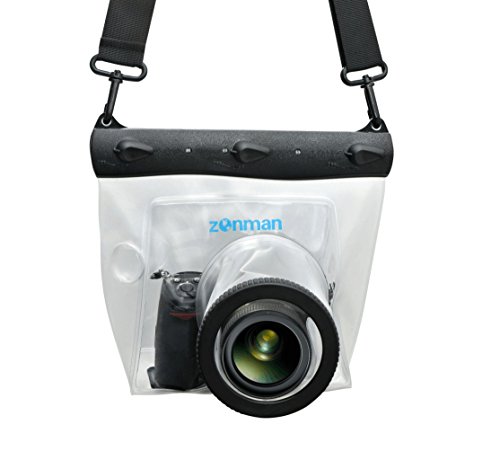
Zonman DSLR Camera Univeral Waterproof Underwater Housing Case Pouch Bag for Canon Nikon Sony Pentax Brand Digital SLR Cameras (Transparent)
- Universal Compatibility: Fits most DSLR camera models
- Easy Access to Controls: Strategic finger holes for operation
- All-Weather Protection: Waterproof, dustproof, and sandproof
As an affiliate, we earn on qualifying purchases.
As an affiliate, we earn on qualifying purchases.
Frequently Asked Questions
How Do I Choose the Right Underwater Camera for Beginners?
To choose the right underwater camera for beginners, focus on ease of use, affordability, and image quality. Look for cameras with simple controls and decent underwater photography features. Consider camera housing options that fit your budget and needs, ensuring protection against water and pressure. Start with an entry-level model, like a compact or waterproof point-and-shoot, which offers great value and straightforward operation for your underwater adventures.
What Are Common Misconceptions About Underwater Camera Durability?
Did you know that over 60% of underwater camera failures are due to misconceptions about durability? Many believe their camera lens and waterproof rating guarantee complete protection, but that’s not always true. You need to check the specific waterproof rating and understand its limits. Even rugged-looking cameras can have vulnerabilities, so don’t assume they’re indestructible—proper maintenance and understanding of specs are key for lasting durability.
How Does Water Pressure Affect Camera Performance?
Water pressure effects your camera by increasing with depth, which can cause lens distortion and compromise internal seals. As pressure builds, it may push against the lens, distorting images and affecting focus. Your camera’s housing needs to withstand these pressure effects to prevent leaks and maintain performance. Using a properly rated underwater housing ensures that pressure doesn’t damage your camera, allowing clear shots even at great depths.
Can Existing Cameras Be Adapted for Underwater Use?
Yes, you can adapt existing cameras for underwater use by adding a camera housing designed for underwater conditions. This housing protects your camera from water pressure and moisture. Additionally, investing in underwater lighting enhances visibility and image quality in dark or murky waters. Properly sealing your camera with a quality housing and using suitable underwater lighting guarantees your gear performs well beneath the surface, capturing sharp, vibrant photos.
What Maintenance Is Required for Underwater Cameras?
Think of your underwater camera as a precious gem needing shelter from the ocean’s whispers. You’ll want to regularly perform camera cleaning to remove salt, sand, and grime that threaten its clarity. Battery care is equally essential; keep it charged and dry when not in use, avoiding leaks. By tending to these details, your camera remains a trusted explorer, capturing vivid moments beneath the waves with ease and clarity.
Conclusion
Before you plunge into the pristine pool or plunge into the deep, don’t forget to face the first flaw: faulty focus. Fixing this fundamental flaw can transform your underwater adventures from frustration to fascination. By balancing your gear and braving the basics, you’ll brave the bubbling beauty beneath the surface. Remember, mastering the mechanics means more mesmerizing moments and less muddled memories. So, prepare properly, and let your underwater escapades effortlessly enchant and excite.