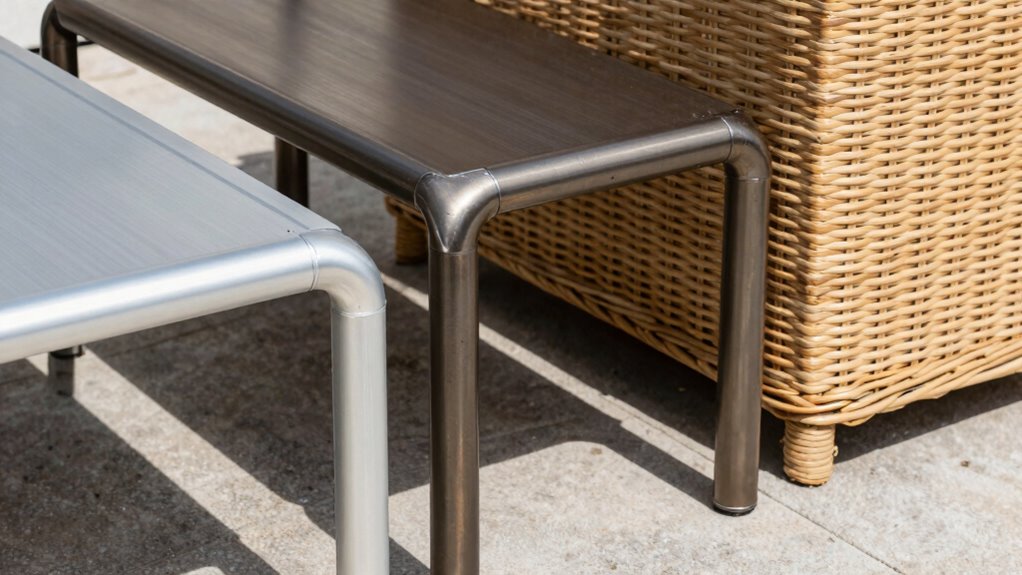
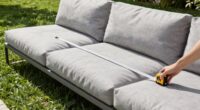
When choosing patio furniture frames, consider durability based on your climate and maintenance preferences. Aluminum resists rust and stays lightweight, making it ideal for humid areas, while steel offers strong stability but requires proper coating to prevent rust. Wicker, especially synthetic, can endure weather but may fade or crack over time. Each material has its pros and cons, so understanding these differences can help you find the best fit for your outdoor space—keep exploring to learn more.
Key Takeaways
- Steel frames offer the highest durability and stability, resisting warping and breaking over time with proper maintenance.
- Aluminum frames are corrosion-resistant, lightweight, and low-maintenance, making them ideal for humid or rainy climates.
- Synthetic wicker provides weather resistance but is less durable than metal, requiring regular care to prevent fading and cracking.
- Natural wicker is less durable, prone to deterioration from moisture and weather, needing frequent protection and maintenance.
- The choice depends on climate, maintenance willingness, and style preference, with steel being most durable and wicker offering a relaxed aesthetic.
As an affiliate, we earn on qualifying purchases.
How Durable Are Aluminum, Steel, and Wicker Patio Frames?
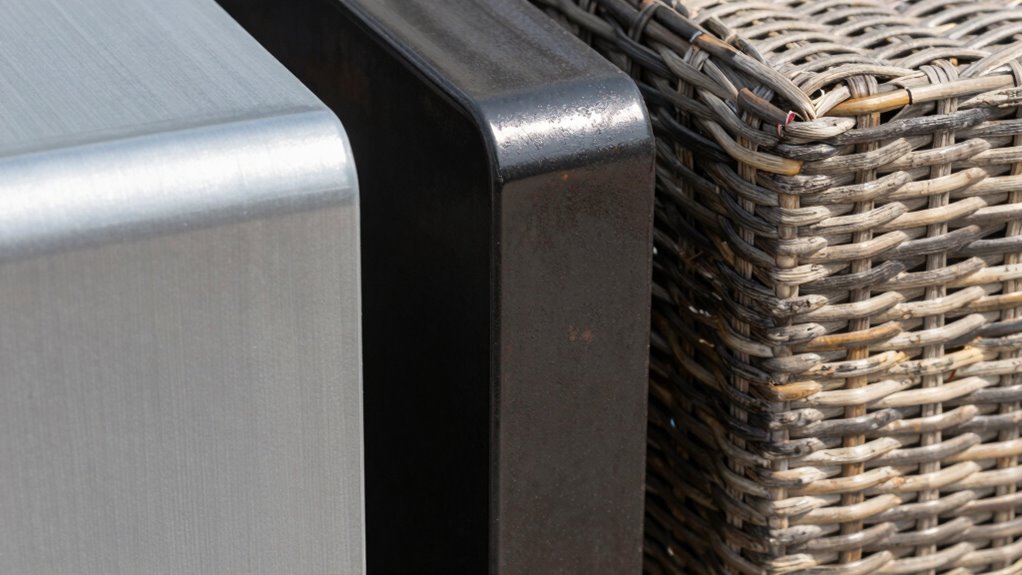
When choosing patio furniture, understanding the durability of different frame materials is essential. Aluminum frames excel in rust resistance, making them ideal for outdoor use in humid or rainy climates. They’re lightweight, so moving and rearranging your furniture is easier without sacrificing strength. Steel frames are much heavier, providing added stability, but they’re prone to rust if not properly coated or maintained. Wicker frames, often made from synthetic resin or natural materials, aren’t as durable as metal options and can deteriorate over time if exposed to harsh weather. While wicker doesn’t rust, it may fade or crack. Weigh your options carefully, considering that aluminum offers a great balance of rust resistance and portability, whereas steel’s weight offers sturdiness at a potential rust risk.
What Are the Pros and Cons of Aluminum Patio Furniture?
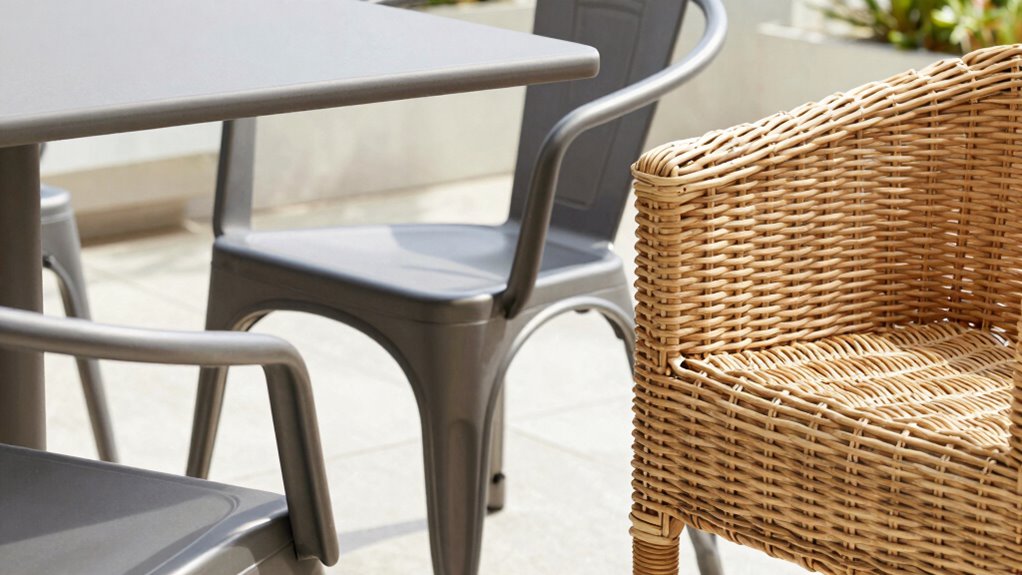
Aluminum patio furniture offers several advantages that make it a popular choice for outdoor spaces. Its aluminum corrosion resistance means it won’t rust or deteriorate when exposed to rain, humidity, or salt air, making it highly durable with minimal maintenance. You’ll appreciate its lightweight nature, which makes moving and rearranging furniture easy. However, aluminum does have some downsides. Unlike steel, it has a low rust potential, but it can still corrode if the protective finish is damaged or exposed to harsh elements. Additionally, aluminum furniture may not be as strong as steel, so it could bend under heavy weight or force. Despite these drawbacks, aluminum’s resistance to rust and overall durability make it a practical, low-maintenance option for many outdoor settings.
Are Steel Frames Strong and Long-Lasting?
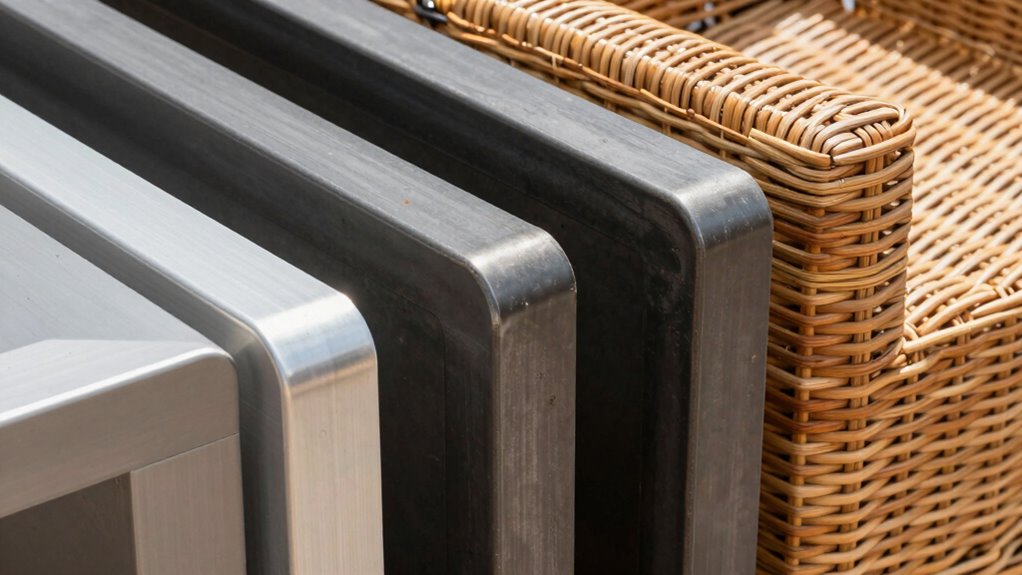
Steel frames are known for their exceptional strength and durability, making them a top choice for outdoor furniture that needs to withstand daily use and harsh weather conditions. Their steel strength guarantees your furniture stays sturdy over time, resisting bending or breaking. Frame longevity is a key benefit, as steel resists warping and rotting unlike other materials. To compare, here’s a quick overview:
| Material | Strength | Longevity |
|---|---|---|
| Steel | High | Long-lasting |
| Aluminum | Moderate | Moderate |
| Wicker | Lower | Variable |
Steel’s robust frame ensures your furniture remains reliable year after year, even with frequent exposure to sun, rain, and wind. It’s an investment in durability you can count on.
Is Wicker Patio Furniture Durable? What You Need to Know

Wicker patio furniture can be durable, but its longevity depends on the materials and construction. Synthetic wicker, made from resin or polyethylene, tends to withstand weather better than natural wicker. Proper wicker care, such as regular cleaning and protecting it from excessive moisture, helps extend its lifespan. Frame maintenance is equally important; ensuring the frame is sturdy and free of rust or damage keeps the furniture stable. Applying protective covers when not in use and avoiding harsh chemicals will preserve its appearance and integrity. Keep in mind that natural wicker may require more upkeep, like periodic sealing or repainting, to prevent deterioration. Overall, with proper wicker care and frame maintenance, your wicker patio furniture can last for many seasons.
Which Frame Material Is Best for Your Climate, Maintenance, and Style?
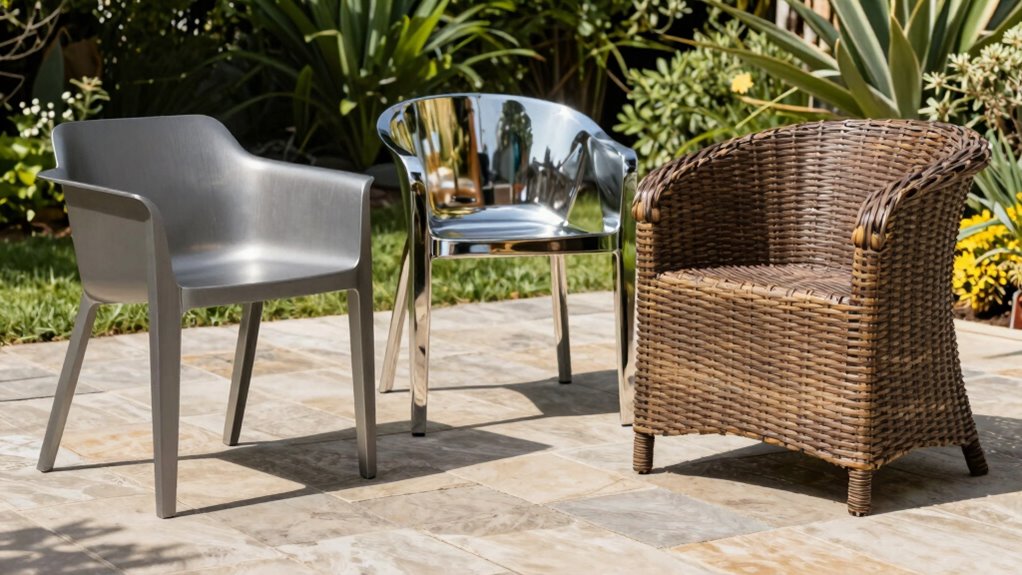
Choosing the right frame material depends on your climate, how much maintenance you’re willing to do, and your style preferences. If you live in a coastal or humid area, aluminum’s corrosion resistance makes it a smart choice, fitting a modern outdoor style with minimal upkeep. Steel offers durability but requires protective coating to prevent rust, making it suitable for cooler or dry climates if maintained properly. Wicker provides a relaxed, natural look, ideal for outdoor styles that emphasize comfort, though it may need occasional cleaning and protection from weather. Budget considerations also play a role: aluminum tends to be more affordable and low-maintenance, while steel and wicker might involve higher initial costs or ongoing care. Match your climate, maintenance willingness, and aesthetic goals to choose the best material for your outdoor space.
Frequently Asked Questions
How Do Frame Materials Affect Patio Furniture Weight and Portability?
Frame materials directly impact patio furniture weight and portability. Aluminum frames are lightweight, making them easy to move and ideal for portability factors. Steel frames are heavier, providing stability but reducing ease of transport. Wicker, often made from synthetic materials, is generally lightweight and easy to carry. Your choice affects how easily you can rearrange or store furniture, so consider weight considerations based on your space and mobility needs.
Can Frame Materials Be Recycled or Eco-Friendly Options?
You can definitely find eco-friendly patio furniture options with high recycling potential. Aluminum is particularly eco-friendly because it’s highly recyclable without losing quality, reducing waste. Steel also offers recycling benefits, though it requires more energy to produce. Wicker, especially synthetic types, can sometimes be made from recycled plastics, making it a sustainable choice. So, when choosing your furniture, look for materials labeled as recycled or eco-friendly to help protect the environment.
How Do Frame Materials Perform in Extreme Weather Conditions?
You’ll find aluminum frames excel in extreme weather because they resist corrosion and handle thermal expansion well, preventing warping or cracking. Steel offers strong durability but may rust if untreated, especially in humid conditions. Wicker, especially synthetic, withstands temperature changes and moisture better than natural options. Consider your climate; aluminum and synthetic wicker are best for harsh conditions, ensuring your patio furniture stays sturdy and looks great longer.
What Are the Cost Differences Among Aluminum, Steel, and Wicker Frames?
You’ll find that aluminum frames tend to be more affordable, thanks to lower material costs and easier manufacturing. Steel frames usually cost a bit more due to their strength and weight, which adds to production expenses. Wicker, being a woven material, has variable pricing depending on whether it’s synthetic or natural, but generally, it can be comparable or slightly more expensive than aluminum. Your choice depends on your budget and durability needs.
Do Different Frame Materials Require Specific Cleaning Methods?
Sure, your precious frame materials have their own cleaning secrets. Aluminum loves gentle soap and water, avoiding harsh abrasives. Steel needs a quick wipe with a damp cloth and occasional rust prevention. Wicker, ever delicate, prefers vacuuming and spot cleaning with mild solutions. Follow these maintenance routines, and your furniture stays fabulous. Ignore these tips, and you’ll be hosting a rusted, dusty disaster in no time. Happy cleaning!
Conclusion
Choosing the right patio furniture frame depends on your climate, style, and maintenance preferences. For example, imagine someone in a humid coastal area opting for aluminum—they enjoy lightweight durability without rust worries. Just like Sarah, who replaced her steel frame with wicker to match her cozy garden retreat, you can find the perfect match for your outdoor space. Ultimately, understanding each material’s strengths helps you create a lasting, beautiful patio you’ll love for years.