Your dive time depends on your tank size and how quickly you use air. To estimate your bottom time, measure your air consumption rate by tracking how much air you use during typical dives. Then, divide your tank’s volume by that rate. Keep in mind, factors like depth, effort, and stress affect your air use. If you want to learn how simple math can help maximize your underwater adventures, keep exploring the details.
Key Takeaways
- Calculate initial bottom time by dividing tank volume by your air consumption rate.
- Adjust calculations for depth, as increased pressure reduces available air volume.
- Monitor actual air use during dives to refine your consumption rate for better planning.
- Subtract safety stops and ascent times from total bottom time to ensure safety margins.
- Proper equipment, maintenance, and professional guidance optimize tank choice and dive safety.

VEVOR Mini Scuba Tank, 1.9L Portable Small Diving Tank for Underwater Breathing, Reusable Lung Diving Cylinder up to 35 Minutes Dive Time, Emergency Rescue Pony Bottle with Backpack for Snorkeling
- Long Dive Duration: Provides 30-35 minutes underwater
- Durable Construction: Made from aviation-grade aluminum
- Reliable Airflow: Features precision pressure regulator and valve
As an affiliate, we earn on qualifying purchases.
As an affiliate, we earn on qualifying purchases.
How Tank Size and Air Consumption Impact Your Dive Time
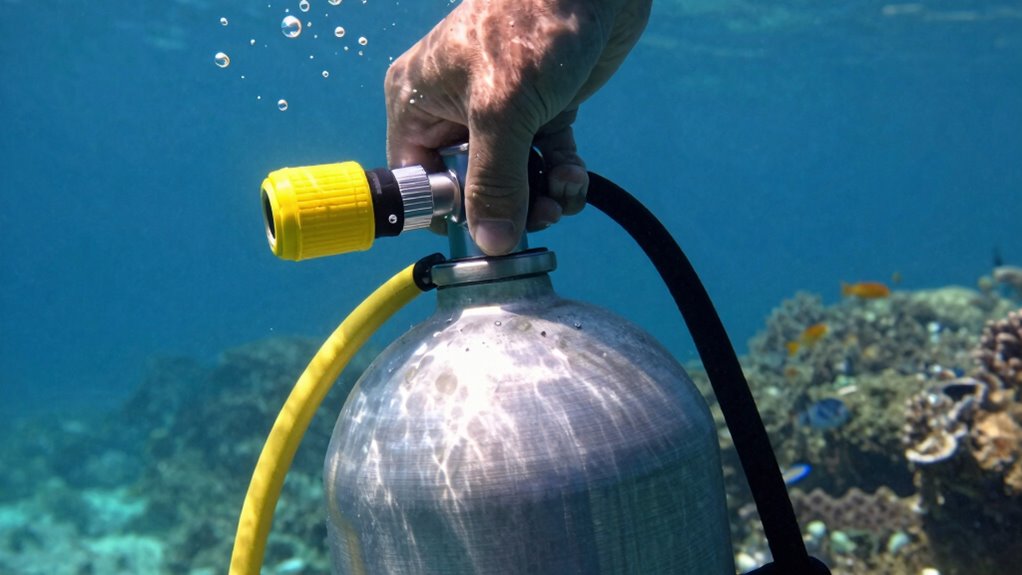
Your dive time largely depends on your tank size and how much air you consume. Larger tanks hold more air, giving you more time underwater, while smaller tanks limit your bottom time. Your air consumption rate varies based on factors like your breathing rate and exertion, but it’s also influenced by the gas mixtures you use. Some divers opt for enriched air or other gas blends to extend their dives. Your dive gear, especially regulator and mask, can affect how efficiently you breathe, impacting your overall air use. Knowing your tank size in liters or cubic feet helps you estimate how long you can stay underwater at a given consumption rate. Proper planning guarantees you don’t run out of air before surfacing safely.
How to Estimate Your Air Consumption Rate

To estimate your air consumption rate, you need to measure how much air you use during a typical underwater activity. Keep track of your dive duration to understand how long your air lasts. Then, calculate your consumption rate by dividing the air used by the dive time to plan your future tank needs accurately.
Measure Your Air Usage
Estimating your air consumption rate is essential for selecting the right tank size and ensuring efficient operation. To do this accurately, consider your typical dive profile, including depth and duration. Use your scuba gear during a dive and note your starting and ending pressure gauges. Monitor how long it takes to use a specific amount of air, such as 100 or 200 psi. If you’re involved in marine biology, you might notice that research dives often differ in air use, so tracking each dive helps refine your estimate. Consistently measuring your air usage allows you to predict bottom time more accurately and avoid running out of air unexpectedly. This practical approach ensures safer dives and better planning for future underwater adventures.
Track Dive Duration
Tracking your dive duration is a straightforward way to estimate how quickly you consume air. By noting your start and end times, you can better understand your air usage rate, especially during different conditions. Efficient underwater navigation reduces unnecessary movements, conserving air and extending bottom time. Regular equipment maintenance ensures your gear functions correctly, preventing unexpected air loss. To help interpret your data, consider this simple table:
| Dive Conditions | Duration (minutes) | Notes |
|---|---|---|
| Calm water | 45 | Smooth navigation |
| Strong currents | 30 | Increased effort |
| Night dive | 40 | Limited visibility |
| Slightly overexerted | 35 | Extended navigation |
Tracking these variables helps you refine your air consumption estimates over time.
Calculate Consumption Rate
Understanding your air consumption rate allows you to plan future dives more effectively. To accurately calculate it, consider these key steps:
- Monitor your gas usage during a dive, noting how much air you consume over a specific period.
- Use consistent tank maintenance practices to make sure of precise measurements, especially when using different gas mixtures.
- Record your tank’s starting and ending pressure to determine total air used, then divide by dive time to get your rate.
Simple Math: Calculating Your Bottom Time
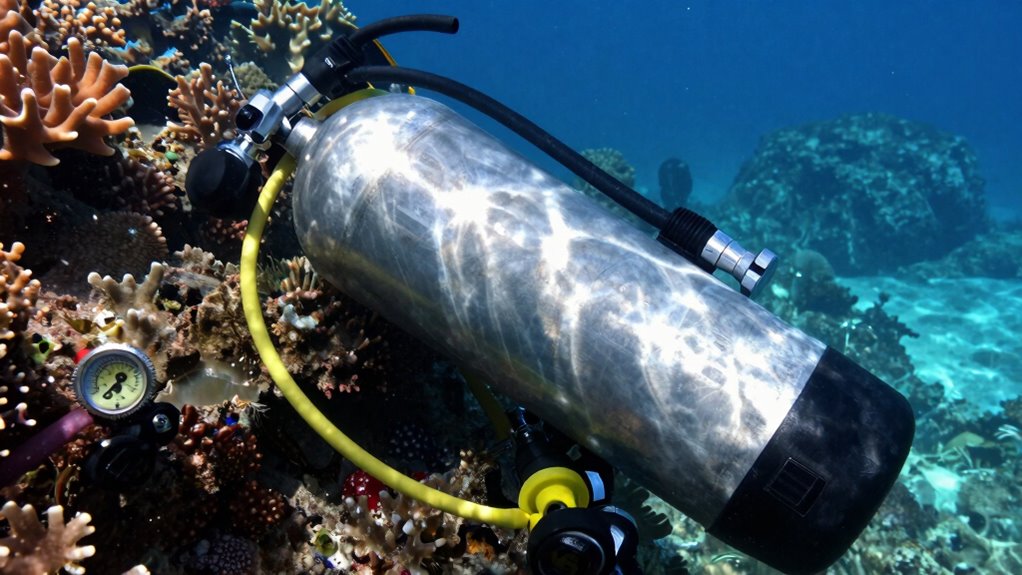
Calculating your bottom time is straightforward when you understand the basic math involved. First, determine your current air consumption rate based on your recent dives, which ties into proper equipment maintenance. Knowing your consumption rate helps you estimate how long your tank will last at a given depth. When dive planning, subtract safety stops and ascent times to find your actual bottom time. Keep in mind that a smaller tank or increased air consumption reduces your bottom time, so plan accordingly. Simple math involves dividing your tank’s volume by your consumption rate, then adjusting for depth and other factors. By mastering this calculation, you ensure safe, enjoyable dives while avoiding surprises underwater. Consistent equipment checks and clear calculations make your dive planning effective and reliable.
Factors That Influence How Long You Can Stay Underwater

Your tank’s size and capacity set the maximum amount of air you have available, but other factors also matter. Your breathing rate can change based on effort and stress, affecting how long your air lasts. Additionally, depth and pressure influence how much air your tank provides, impacting your underwater time.
Tank Size and Capacity
The size of your scuba tank directly determines how long you can stay underwater, as larger tanks hold more compressed air and provide a greater supply for your dives. Several factors influence capacity, including:
- Tank Material: Aluminum or steel tanks affect weight, durability, and buoyancy, impacting how comfortably you carry larger tanks.
- Valve Types: Different valves control airflow and ease of use, influencing how efficiently you access your air supply from various tank sizes.
- Tank Dimensions: Height and diameter determine overall volume, with taller or wider tanks offering increased capacity.
Choosing the right tank material and valve type ensures you maximize your air supply for your planned bottom time, making your dives safer and more enjoyable.
Breathing Rate Variations
Breathing rate varies considerably from diver to diver and can change depending on the situation underwater. Factors like exertion, stress, and water temperature influence your breathing rate, directly affecting gas exchange efficiency. When you’re more active or anxious, your breathing rate increases, meaning you consume air faster. Conversely, relaxing helps slow your breathing, conserving your air supply. A higher breathing rate means more frequent gas exchange, which depletes your tank more quickly. Understanding these variations helps you better predict your bottom time. It’s essential to recognize that even small changes in your breathing rate can profoundly impact how long you can stay underwater. Monitoring your physical response and adjusting your effort accordingly ensures safer, more efficient dives.
Depth and Pressure Effects
As you breathe underwater, increasing depth causes pressure to rise, which considerably impacts how long your gas supply lasts. This depth influence affects your air consumption through pressure effects, meaning your tank’s air volume changes with depth. The deeper you go:
- Gas compresses under higher pressure, reducing the volume of available air at depth.
- Your breathing rate increases due to pressure effects, consuming air faster.
- The pressure effects amplify with depth, making bottom time shorter than expected.
Understanding these factors helps you plan dives better. As pressure effects intensify, your air consumption accelerates, limiting your bottom time. Recognizing the depth influence is important for safety and efficient gas management during your dive.
Choosing the Right Tank Size for Your Diving Needs
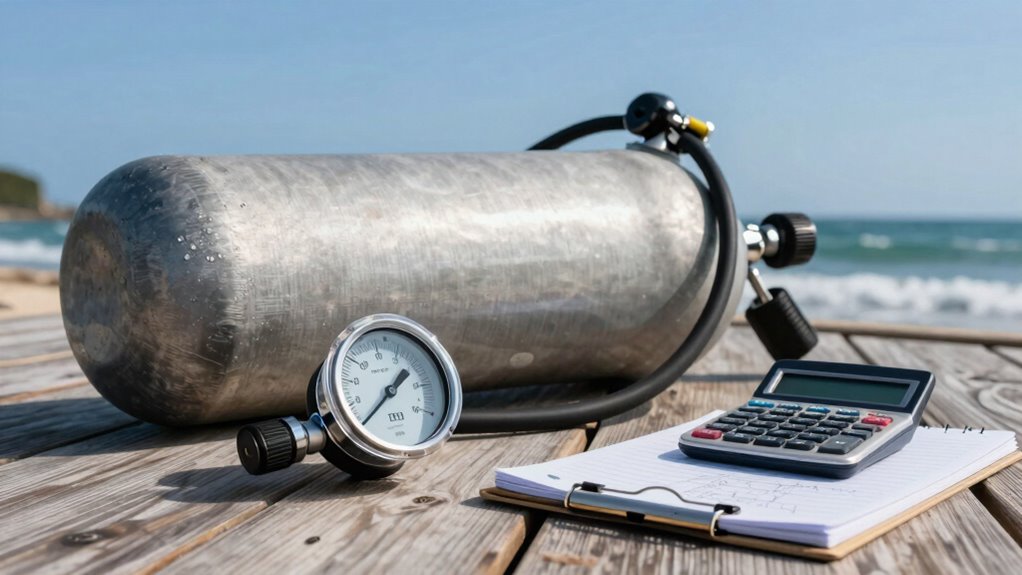
Choosing the right tank size is essential to guarantee you have enough air for your dive without carrying unnecessary weight. Your choice depends on your diver training, experience, and the type of dives you plan to do. If you’re a beginner, a smaller tank may be easier to handle, while advanced divers might prefer larger tanks for extended bottom time. Proper equipment maintenance guarantees your tank and regulator function efficiently, helping you accurately gauge your air consumption. Consider your breathing rate, dive depth, and planned duration when selecting a tank size. Remember, the goal is to balance safety and comfort. Consulting with instructors or dive professionals can help you determine the most suitable tank size for your diving needs, ensuring you enjoy your dives fully and safely.
Tips to Maximize Your Dive Time Safely
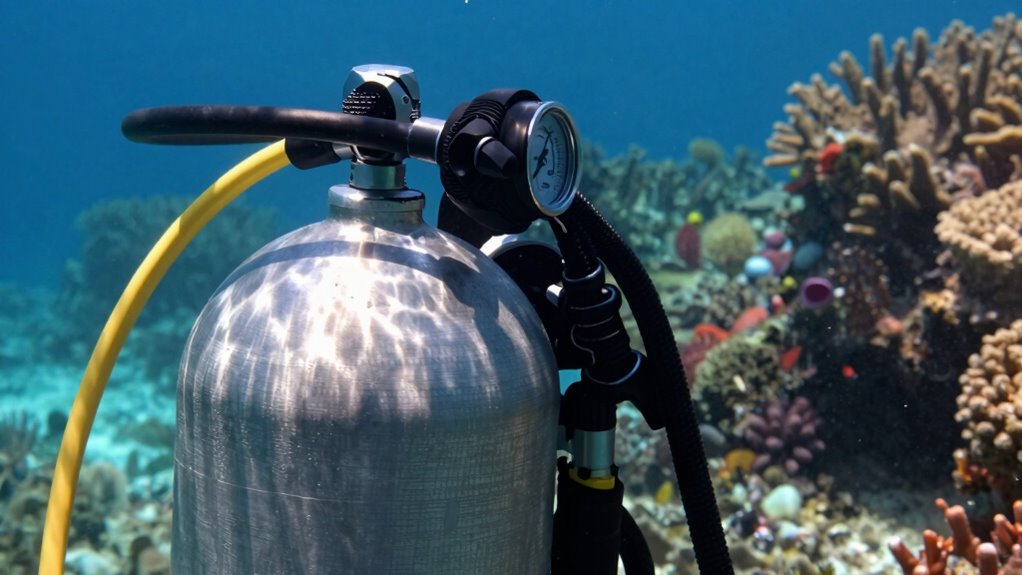
To maximize your dive time safely, focus on managing your air consumption and staying within your limits. Properly conserving air allows you to enjoy marine ecosystems longer while maintaining safety. Here are three tips to help:
- Breathe steadily and deeply to reduce unnecessary air use and improve your bottom time.
- Plan your dives according to your diving certifications and experience, avoiding pushing beyond your comfort zone.
- Monitor your air supply regularly and ascend with a safety margin, preventing overexertion and ensuring safe decompression.
Frequently Asked Questions
How Does Water Temperature Affect Air Consumption Rates?
Water temperature affects your air consumption rates because warmer water decreases gas density, making it easier to breathe, which can extend your bottom time. Conversely, colder water increases gas density, causing you to breathe more effortfully and consume air faster. So, when diving in cold water, stay mindful that your air supply may deplete sooner, while in warmer water, you might enjoy longer dives due to lower gas density.
Can Different Breathing Techniques Extend My Bottom Time?
Think of your breathing patterns as the steady rhythm of a calm heartbeat beneath the waves. Yes, different breathing techniques and relaxation techniques can extend your bottom time by conserving air. By slowing your breaths and maintaining a relaxed state, you reduce air consumption, allowing you to explore the underwater world longer. Mastering these techniques transforms your dives into a harmonious dance with the sea, maximizing your time below.
What Is the Impact of Diver Experience on Air Usage?
Your experience considerably impacts your air usage, as seasoned divers tend to be more efficient with equipment maintenance and dive planning. With practice, you’ll better manage your air consumption, allowing longer bottom times. Staying attentive to equipment checks and planning dives carefully helps conserve air. As you gain experience, you’ll naturally improve your breathing techniques and overall efficiency, making your dives safer and more enjoyable.
How Do Altitude Changes Influence Air Consumption?
Remember, what goes up must come down, but altitude effects on your air consumption can catch you off guard. As you ascend, pressure adjustments cause your tank’s air to seem less dense, which means you’ll breathe faster and use more air. Higher altitudes increase your air consumption, so always plan for altitude effects before diving. Adjust your dive time accordingly and stay safe by monitoring your air supply carefully.
Are There Any Tools to Track Real-Time Air Consumption Underwater?
Yes, there are tools like dive computers and air monitors that help you track real-time air consumption underwater. Dive computers automatically monitor your air usage, depth, and bottom time, providing you with real-time data to manage your air supply effectively. Air monitors are portable devices you can wear or attach to your gear, giving you instant updates on your remaining air, so you can plan your dive and ascent safely.
Conclusion
Understanding your tank size and air consumption is like mastering the gears of a well-oiled machine. When you know how they work together, you can navigate your dive confidently, making every minute underwater count. Keep track of your consumption, plan wisely, and stay within safe limits—your dive experience will run smoothly, much like a finely tuned engine. Remember, proper planning is the key to revealing endless underwater adventures safely.