
As a floater, it’s vital to quickly assess the situation and choose the safest approach to rescue. Use lifesaving equipment like rescue tubes and throw bags confidently, ensuring you support the victim without putting yourself at risk. Maintain calm and communicate clearly to coordinate effectively. Regular practice helps build your confidence and decision-making skills. Staying prepared with proper techniques and gear makes a lifesaving difference—continue exploring to master these essential rescue skills.
Key Takeaways
- Familiarize yourself with rescue equipment like rescue tubes, throw bags, and flotation devices for quick deployment.
- Assess the situation rapidly and approach the swimmer calmly to prevent panic and ensure safety.
- Use proper rescue techniques, such as supporting the victim’s head and body, to avoid further injury.
- Communicate clearly with the victim and other rescue team members for coordinated efforts.
- Regularly practice rescue drills to build confidence, improve decision-making, and ensure readiness in emergencies.
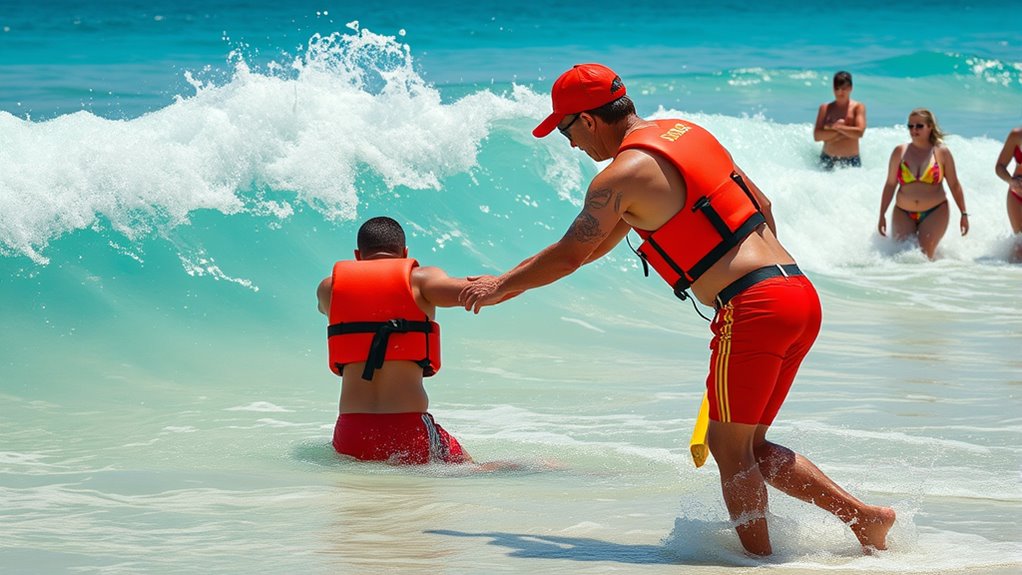
When someone is in danger of drowning at the beach, quick and effective rescue techniques can make all the difference. As a floater or beachgoer, understanding how to use lifesaving equipment and having proper rescue training can save lives. Your immediate response is essential, and knowing what tools to deploy can guarantee you act confidently and efficiently. Lifesaving equipment, such as rescue tubes, throw bags, and flotation devices, are designed to aid in emergency situations. These tools allow you to extend your reach and support a struggling swimmer without putting yourself at unnecessary risk. Familiarity with this equipment through rescue training ensures you know how to use each item correctly under pressure.
Rescue training isn’t just about knowing the right tools; it’s about practicing fundamental techniques that can be the difference between life and death. Training programs teach you how to assess a situation quickly, approach the victim safely, and deliver effective assistance. For instance, a well-trained rescuer understands the importance of reaching the victim with minimal delay, using a rescue tube or throw bag to prevent exhaustion and reduce panic for both parties. They also learn how to position themselves to avoid putting themselves in danger while maintaining control during the rescue. Rescue training emphasizes the importance of calm decision-making, proper communication, and swift action, all of which are essential when seconds count.
Effective rescue techniques rely on quick assessment, safe approach, and calm decision-making.
When you’re equipped with the right lifesaving gear and have undergone proper rescue training, your confidence increases. This confidence allows you to make quick decisions, such as whether to approach the victim directly or deploy a flotation device from a safe distance. It’s important to remember that the goal is to keep both yourself and the victim safe while providing support until professional help arrives. Practicing rescue techniques regularly through drills and training sessions keeps your skills sharp and helps you stay prepared for real emergencies. Additionally, understanding the importance of mental resilience during high-stress situations can significantly improve your effectiveness as a rescuer.
In any beach rescue scenario, your first priority is to prevent the situation from worsening. Using lifesaving equipment effectively and knowing rescue techniques gives you an advantage, turning panic into organized action. No matter your role—whether as a lifeguard, a fellow beachgoer, or a floater—being equipped and trained guarantees you’re ready to respond swiftly and confidently. Your actions can be the difference that saves a life, making the importance of proper rescue training and lifesaving equipment clear for anyone who spends time near the water.

ASA TECHMED Durable Lifeguard Rescue Tube – Heavy Duty Construction, Multiple Sizes, Closed Cell NBR Foam, Waterproof Vinyl, 6-Foot Towline Strap, 40 Inch
- HEAVY DUTY CONSTRUCTION: The ASA TECHMED Lifeguard Rescue…
- MULTIPLE SIZES AVAILABLE: Choose between 40" and 50"…
- VERSATILE APPLICATIONS: Equipped with a 6-foot towline…
As an affiliate, we earn on qualifying purchases.
As an affiliate, we earn on qualifying purchases.
Frequently Asked Questions
How Can Floaters Identify Rip Currents Quickly?
To identify rip currents quickly, focus on surf zone awareness and rip current recognition. Look for areas where the water appears darker, calmer, or has fewer breaking waves, often forming a narrow, channel-like flow. Notice any debris or seaweed moving steadily away from the shore. If you see a gap in the breaking waves or a noticeable rippled surface, stay alert—these are signs of a rip current, so stay calm and swim parallel to the shoreline if caught.
What Are the Signs of a Swimmer in Distress?
Imagine your worst fear—someone struggling for breath in the water. You notice frantic arm movements, loud calls for help, or a person face down. These are clear distress signals, and recognizing them quickly is essential for rescue timing. Keep a close eye for splashing, floating motionless, or waving. Acting swiftly can mean the difference between life and death, so stay alert and respond immediately when you see signs of distress.
How Should Floaters Approach a Drowning Victim Safely?
You should approach a drowning victim cautiously, keeping yourself safe while offering help. Use a reach or throw method rather than entering the water if possible. Once close, support their head and keep their airway above water. Begin rescue breathing if they’re unresponsive and not breathing, and manage shock by keeping them warm and calm. Always call emergency services immediately for professional help and continue rescue efforts until help arrives.
What Equipment Is Best for Rescue Operations?
Imagine you’re back in the 1920s with your trusty rescue equipment. The best rescue gear includes a sturdy rescue tube, a throw bag, and a buoyant life jacket for safety. These tools help you reach and stabilize the victim without putting yourself at risk. Always carry a first aid kit and wear safety gear like gloves and a whistle. Proper rescue equipment guarantees a swift, safe operation, saving lives effectively.
How Can Floaters Prevent Exhaustion During Rescue Efforts?
To prevent exhaustion during rescue efforts, focus on effective breathing techniques and fatigue management. Take deep, steady breaths to maintain oxygen flow and avoid hyperventilation. Switch your efforts with team members to share the workload, and rest when possible to conserve energy. Stay hydrated and keep your movements controlled. By implementing these strategies, you can sustain your strength and improve your chances of a successful rescue without tiring prematurely.
Conclusion
Remember, mastering simple, swift, and strategic rescue techniques can mean the difference between danger and deliverance. Stay alert, act appropriately, and always prioritize safety to save lives effectively. By practicing patience, preparedness, and precision, you’ll become a confident and courageous caretaker of the coast. Keep your knowledge current, remain calm under pressure, and continue to learn and listen. Your quick, calm, and careful response can turn a potential tragedy into a triumph of teamwork and trust.