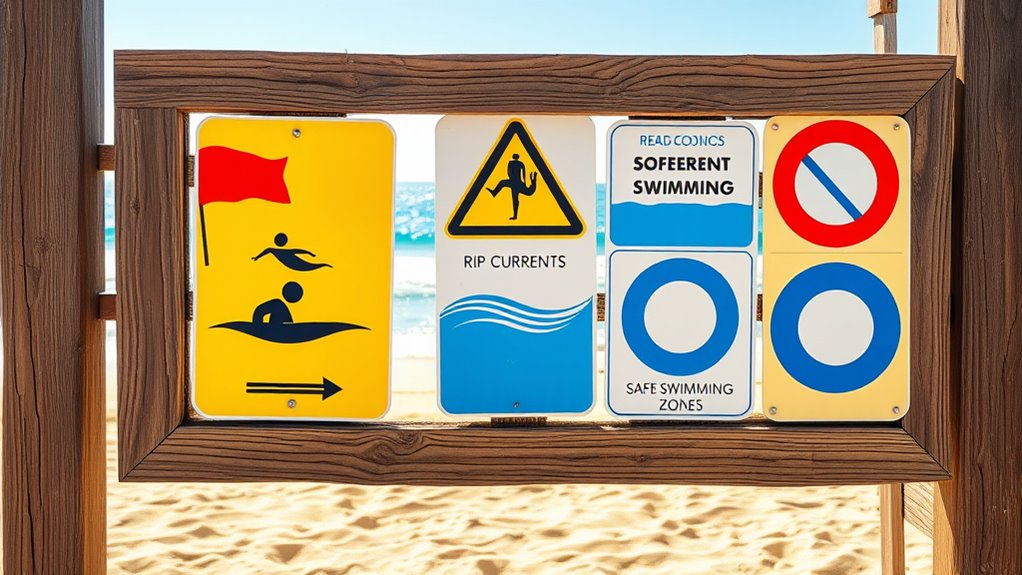

When approaching beach safety bulletins, focus on the symbols, colors, and brief descriptions posted at entrance points. Red flags warn you to stay out due to dangerous conditions like strong currents, while yellow suggests caution, and green indicates safe areas. Pay attention to any hazard symbols, weather updates, or specific risk notices. Staying alert to these signs helps you make informed choices and stay safe. If you continue, you’ll discover more tips to keep you secure while enjoying the beach.
Key Takeaways
- Observe the color of flags or signs: red for danger, yellow/orange for caution, green for safe.
- Identify symbols indicating specific hazards like rip currents, jellyfish, or weather alerts.
- Read brief descriptions accompanying signs to understand the nature and severity of hazards.
- Pay attention to time-sensitive updates or changing conditions posted by lifeguards.
- Follow official guidance and ask lifeguards if you’re unsure about current safety conditions.
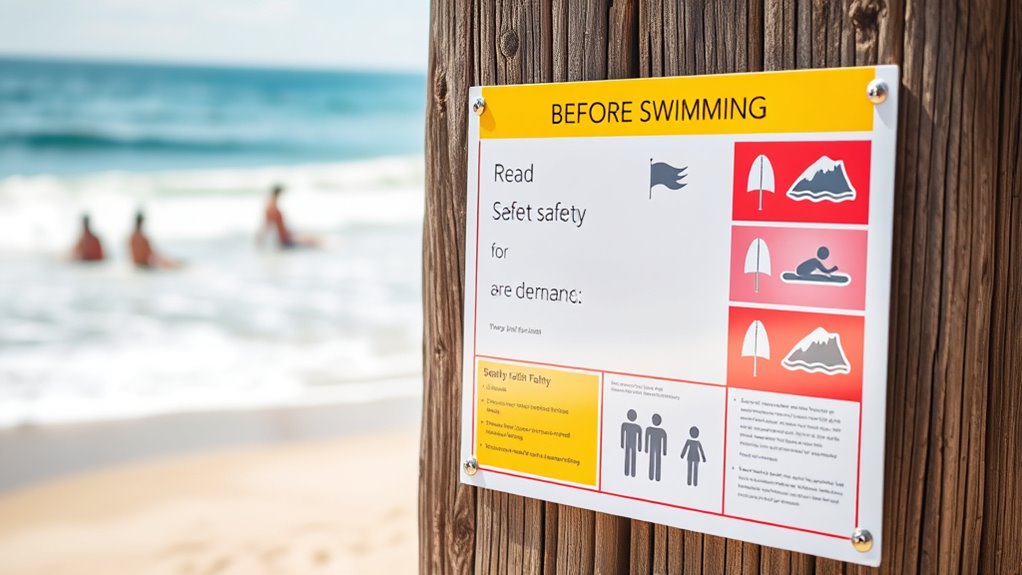
During busy beach days, staying informed about safety conditions can be the difference between a fun outing and a dangerous situation. Before you plunge into the water, it’s essential to understand what safety bulletins are telling you. These bulletins are typically posted at the entrance or key spots along the beach, and they’re designed to keep you aware of current conditions. Paying attention to these signs helps you make smarter decisions about when and where to swim, especially when it comes to understanding beach hazard signs. These signs often feature symbols, colors, and brief descriptions that quickly convey critical information about water safety, rip currents, jellyfish presence, or dangerous weather conditions.
Lifeguard responsibilities play a significant role in the accuracy and clarity of these bulletins. Lifeguards are trained to monitor beach environments constantly and assess risks, which they communicate through posted bulletins. They update these signs regularly based on changing weather, water conditions, or emerging hazards. Recognizing the authority behind these signs helps you trust the information they provide. For example, if you see a sign indicating “High Rip Current Risk,” it’s your cue to stay out of the water or swim only where a lifeguard is actively watching. Ignoring beach hazard signs can lead to dangerous situations, especially if you’re unfamiliar with what each warning means.
When reading beach safety bulletins, focus on the symbols and color codes. Red flags or signs often indicate dangerous conditions like strong currents or poor water quality, advising against swimming altogether. Yellow or orange signs might suggest caution, such as the presence of jellyfish or moderate surf. Green typically signals safe conditions, but always read the accompanying text for specifics. Pay close attention to time-sensitive information, like weather alerts or changing water conditions, which could alter the safety status throughout the day. It’s also wise to listen to official announcements or ask lifeguards if you’re unsure about what a particular sign indicates. Being aware of beach safety bulletins and their importance can help prevent accidents and ensure a safe swimming experience.

Beach Warning Flags Set 12" x 18"
- Durable nylon fabric: Made from high-quality 200 denier nylon
- Reinforced stitching: Extra stitching on fly-ends for wind resistance
- Sturdy hardware: Canvas heading with brass grommets
As an affiliate, we earn on qualifying purchases.
As an affiliate, we earn on qualifying purchases.
Frequently Asked Questions
How Often Are Beach Safety Bulletins Updated?
Beach safety bulletins are typically updated daily or multiple times a day, depending on the beach’s hazard levels. You should check the bulletin update frequency regularly, especially before heading to the beach. Be aware that hazard updates can change quickly due to weather conditions or water activity. Staying informed about beach hazard updates guarantees you’re aware of current dangers, helping you decide whether it’s safe to swim or if you should wait.
Can I Trust Unofficial Sources for Beach Safety Information?
You shouldn’t rely solely on unofficial sources for beach safety info because official sources offer better source credibility. While unofficial sites might provide useful tips, they can be outdated or inaccurate, putting you at risk. Always check the latest updates from official beach safety bulletins or local authorities. Trusting official sources helps guarantee you get accurate, timely information, keeping you safe during your swim.
What Should I Do if a Bulletin Contradicts My Instincts?
When a bulletin contradicts your instincts, trust your risk assessment and prioritize safety. You should stay alert and use effective communication strategies, like asking lifeguards or officials for clarification. Remember, it’s better to be safe than sorry—don’t ignore official warnings just because they don’t match your gut feeling. Always follow the guidance provided; it’s your best line of defense against unexpected hazards.
Are Safety Bulletins Available in Multiple Languages?
Yes, safety bulletins are often available in multiple languages to accommodate diverse visitors. Look for multilingual translations or accessibility options at the beach, such as visual symbols or audio guides, to guarantee you understand crucial safety information. These resources help you stay informed about current conditions, warnings, and advice, making your swim safer. Always check for translated bulletins or assistance if you’re unsure about the safety messages.
How Quickly Are Emergency Alerts Communicated Through Bulletins?
Emergency alerts, including marine warnings and weather alerts, are usually communicated through beach safety bulletins immediately when issued. You should check these bulletins frequently, especially during bad weather or high surf conditions, to stay informed. Authorities prioritize rapid dissemination of critical information so you can decide whether it’s safe to swim or avoid the water altogether. Always stay alert and heed the latest safety updates before heading into the ocean.
Conclusion
Just like a seasoned sailor checks the stars before setting sail, always read beach safety bulletins before diving in. They’re your guiding compass, helping you navigate hidden currents and unexpected dangers. Remember, the ocean’s vast beauty can hide surprises—staying informed keeps you safe and carefree. So, be wise like Odysseus, and trust the signals the beach gives you. Your perfect day at the shore depends on reading those bulletins first.