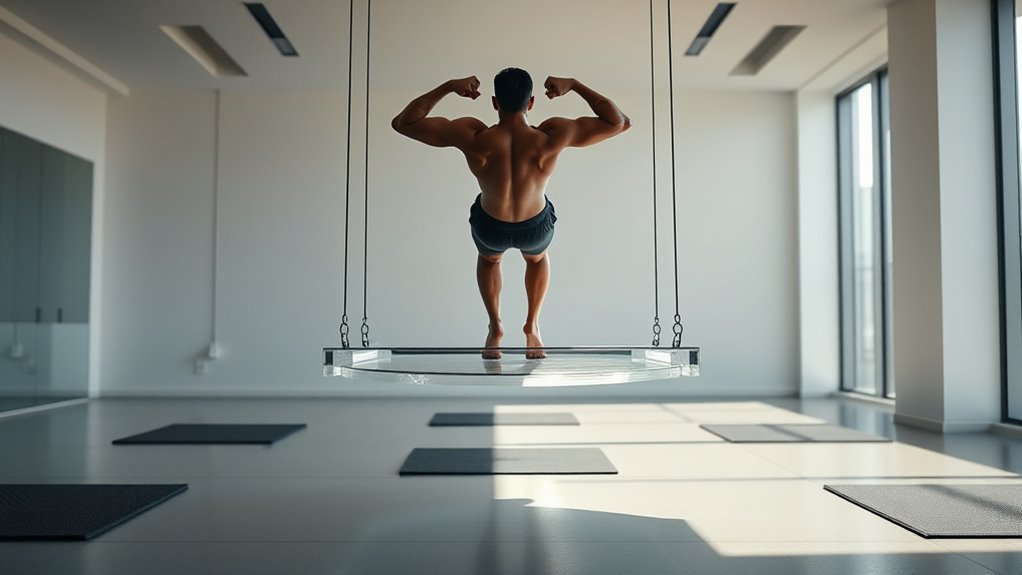

Combining floating exercises with isometric holds boosts your stability training by challenging your core muscles in dynamic and static ways. This approach activates small stabilizer muscles, improves balance, and enhances overall strength more effectively than traditional workouts. Continuous core engagement during these exercises helps you control your movements and maintain stability longer. Keep exploring this method to discover how progressive floating and isometric holds can considerably elevate your body control and stability skills.

Get pool and patio gear delivered free — and shop member deals
- Fast, free delivery on millions of items
- Access to Prime Big Deal Days deals on October 6–7
- Prime Video, Amazon Music and more included
Key Takeaways
- Combining floating exercises with isometric holds activates stabilizer muscles and enhances overall core strength effectively.
- This integration challenges balance and coordination, promoting better posture and injury prevention.
- Maintaining core engagement during dynamic floating movements increases muscular control and responsiveness.
- Progressing from simple to complex holds improves stability, endurance, and control over time.
- Consistent practice of these combined exercises leads to improved balance, strength, and functional movement skills.
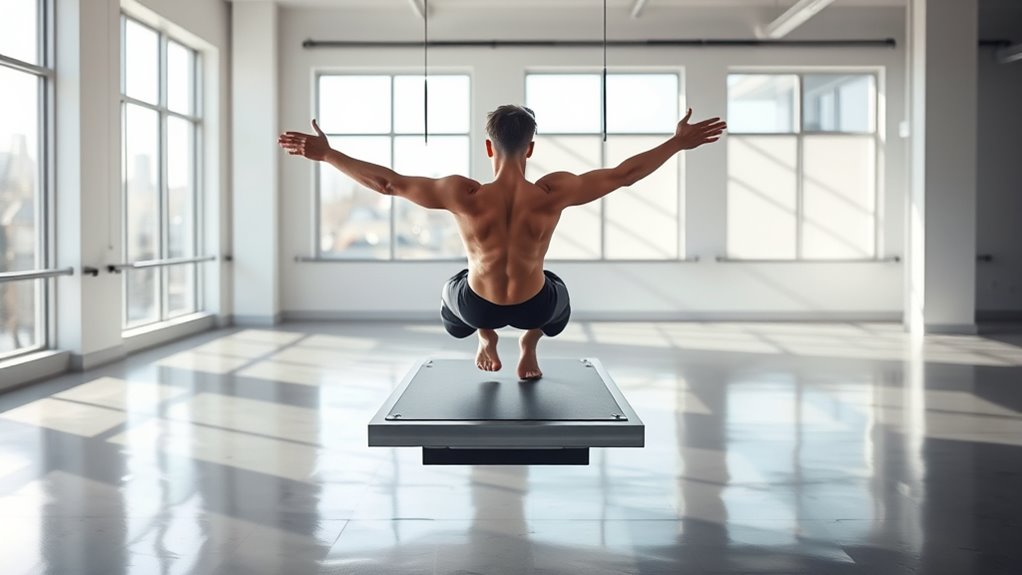
When it comes to enhancing your stability and core strength, combining floating exercises with isometric holds offers an effective approach. This method challenges your body in unique ways, forcing your muscles to engage more deeply and improving your overall balance. You’ll find that as you progress, your ability to maintain control during both floating and static holds becomes more refined, leading to better posture, coordination, and injury prevention. The key lies in focusing on core engagement, which acts as the foundation for all movement and stability. By actively tightening your abdominal, back, and pelvic muscles during these exercises, you create a sturdy center that supports your entire body. This core activation is essential because it not only stabilizes your spine but also enhances your balance progression over time.
Floating exercises, such as suspended planks or leg lifts on a stability ball, demand that you maintain a delicate equilibrium while your body is off the ground or supported by unstable surfaces. These movements activate small stabilizer muscles that often go unnoticed in traditional workouts, making your core work harder. When combined with isometric holds—where you hold a position without any movement—you increase the challenge to your muscles, demanding sustained core engagement. For example, holding a plank on a stability ball while your feet are floating creates a dynamic environment where your muscles must constantly adjust to maintain balance. This not only boosts your core strength but also trains your nervous system to respond quickly to shifts in stability, paving the way for improved balance progression.
The beauty of this combination is that it pushes your limits gradually. Start with simple floating holds and progress to more complex positions as your strength and stability improve. The continuous focus on core engagement during these exercises ensures you’re not just going through the motions but actively building a resilient, stable core. Over time, you’ll notice that your ability to hold challenging positions increases, and your overall body control improves. This heightened awareness and control translate into better performance in other physical activities and daily movements. Keep in mind that consistency is crucial; regularly practicing these floating plus isometric holds will accelerate your stability gains and help you achieve a stronger, more balanced body.
stability ball for core exercises
As an affiliate, we earn on qualifying purchases.
As an affiliate, we earn on qualifying purchases.
Frequently Asked Questions
Can Beginners Safely Perform Floating Isometric Holds?
Yes, beginners can safely perform floating isometric holds with proper technique modifications and progression strategies. Start with shorter holds and maintain good form to prevent injury. Gradually increase hold duration and difficulty as your strength improves. Focus on controlled movements and engaging core muscles. Listening to your body and possibly consulting a trainer guarantees safe progression, making these exercises effective without risking strain or injury.
How Often Should I Incorporate These Exercises Into My Routine?
Think of your workout like a well-curated playlist—balance is key. You should incorporate floating and isometric holds about 2-3 times a week, allowing your muscles time to recover. This exercise frequency helps improve stability without overtraining. Integrate these exercises into your routine gradually, maybe on days you focus on core or balance, ensuring steady progress. Consistency is your best bet for gaining strength and stability.
What Equipment Is Necessary for Floating Stability Holds?
You only need minimal equipment for floating stability holds, such as a sturdy, non-slip surface like a yoga mat or a padded floor. Some may prefer resistance bands or a stability ball to add challenge. Always prioritize safety by ensuring your equipment is in good condition and used on a safe surface. Avoid slippery areas and perform exercises within your comfort zone to prevent injuries.
Are There Any Common Mistakes to Avoid During These Exercises?
To avoid common mistakes during floating and isometric holds, focus on maintaining proper form and alignment throughout. Keep your core engaged and avoid letting your hips sag or shoulders hunch. Breathe steadily, using controlled breathing techniques to stay relaxed and focused. Don’t hold your breath, and make certain your movements are deliberate. Regularly check your posture to prevent strain, and pause if you experience discomfort to correct your form.
How Do These Exercises Benefit Athletic Performance?
Imagine opening a hidden fortress within your body—these exercises sharpen your core activation, turning your muscles into a resilient shield. By strengthening stabilizer muscles, they enhance your athletic performance, enabling smoother, more controlled movements. Plus, this focus on stability acts as a safeguard, helping you prevent injuries during intense activities. With consistent practice, you’ll notice improved balance, coordination, and confidence, making every move more powerful and precise.
Conclusion
By combining floating exercises with isometric holds, you challenge your stability in ways that both test and strengthen your core. While floating may seem unpredictable, holding still offers control—each balances the other like chaos meeting calm. This contrast pushes your limits, transforming instability into strength. Embrace the tension between movement and stillness; it’s where real stability is built. Ultimately, this dynamic duo makes your body more resilient, ready to face any challenge with grounded confidence.
Fall Picks
fall essentials
As an affiliate, we earn on qualifying purchases.