Rooftop tents have become the fastest way to turn any SUV, truck, or Jeep into a basecamp, but the category splits sharply between budget-friendly hard shell clamshells and premium aluminum builds with winter insulation. If you want the best balance of durability, weather protection, and setup speed, the Solar Panel Rooftop Tent Hard Shell with Winter Thermal Layer stands out as the top overall pick for its rare combination of off-grid power and four-season comfort. The Naturnest Sirius 1 makes more sense for first-time buyers who want a proven clamshell design at a lower commitment level, while the Pioneer Pro suits overlanders who need a lighter aluminum shell for frequent vehicle swaps. The main tradeoffs you’ll face are weight versus durability, sleep capacity versus packed size, and price versus insulation. Read on for the full breakdown of all 15 tents.

Get pool and patio gear delivered free — and shop member deals
- Fast, free delivery on millions of items
- Access to Prime Big Deal Days deals on October 6–7
- Prime Video, Amazon Music and more included
Complete the kit


Key Takeaways
- Hard shell clamshell designs dominated this lineup because they set up in minutes and handle snow load better than soft shells — nearly every top pick uses this format.
- Winter insulation was the biggest differentiator among the premium tents; models with a thermal layer or insulated base commanded attention for buyers in cold climates, but add weight and cost.
- Aluminum shells like the Pioneer Pro and Adventurer Pro consistently weighed less than comparable ABS models, making them the smarter choice for smaller vehicles or anyone keeping the tent mounted year-round.
- Sleep capacity claims were often optimistic — a ‘4 person’ rooftop tent realistically sleeps two adults plus gear, so size up one tier if you camp as a family.
- Several listings in this roundup were near-identical unbranded tents, which is why fit details, warranty clarity, and mounting hardware quality mattered more than the name on the box.
| Solar Panel Rooftop Tent Hard Shell with Winter Thermal Layer |  | Best for Winter Camping and Off-Grid Power | VIEW ON AMAZON | See Our Full Breakdown | |||
| Naturnest Sirius 1 Hardshell Rooftop Tent |  | Best Slimline Value for Couples | VIEW ON AMAZON | See Our Full Breakdown | |||
| Naturnest Rooftop Tent Hard Shell – Sirius 1 Plus |  | Best Overall Build Quality | VIEW ON AMAZON | See Our Full Breakdown | |||
| Naturnest Rooftop Tent Hard Shell for 2-4 Person |  | Best for Families and Group Camping | VIEW ON AMAZON | See Our Full Breakdown | |||
| Adventurer Pro Rooftop Tent Hard Shell, 2-3 Person Aluminum |  | Best Livability and Covered Living Space | VIEW ON AMAZON | See Our Full Breakdown | |||
| Hardshell Rooftop Tent for SUV Truck Jeep, Pop Up Roof Top Tent |  | Best All-Climate Aluminum Shell | Capacity: 3 Person | Shell Material: High-strength aluminum alloy | Fabric: Waterproof polyester with blackout lining | VIEW ON AMAZON | See Our Full Breakdown |
| Solar Panel Rooftop Tent Hard Shell, Pop Up Car Roof Top Tent Hardshell |  | Best for Off-Grid Power | Capacity: 2 Adults + 1 Child/Pet | Solar Panel: 12V 216W integrated | Interior Dimensions: 85″ L x 52″ W x 59″ H | VIEW ON AMAZON | See Our Full Breakdown |
| WildFinder Rooftop Tent, Hard Shell Roof Top Tent for Jeep SUV Truck Van |  | Best Complete Kit | Capacity: 3 Person | Shell Material: Aircraft-grade aluminum alloy | Wind Resistance: Level 6 | VIEW ON AMAZON | See Our Full Breakdown |
| Naturnest Rooftop Tent Hard Shell, Sirius 1 Plus XL |  | Best for Families | Capacity: 4 Person | Floor Dimensions: 82.7″ L x 74.8″ W (2.47 sq m) | Weight: Approx. 89.6 kg (197 lbs) | VIEW ON AMAZON | See Our Full Breakdown |
| Aluminum Rooftop Tent Hard Shell, Pop Up Roof Tent Hardshell |  | Best Ventilation | Shell Material: Aircraft-grade aluminum alloy | Windows: 4, each with mesh and windproof layers | Sun Protection: 99% | VIEW ON AMAZON | See Our Full Breakdown |
| Rooftop Tent Hard Shell with Winter Insulation for 4-Season Camping |  | Best for Cold-Weather Campers | Capacity: 2 Person | Seasons: 4 Season | Shell Material: Aircraft-grade aluminum alloy | VIEW ON AMAZON | See Our Full Breakdown |
| Rooftop Tent Hard Shell with Winter Insulation, Aluminum Pop Up Roof Tent |  | Best for Gear Haulers and Stargazers | Shell Material: Aluminum alloy frame and shell | Fabric: 320G polyester with taped seams and blackout coating | Sun Protection: UPF 50+ | VIEW ON AMAZON | See Our Full Breakdown |
| SanHima Rooftop Tent Hard Shell, Aluminium Fold-Out SUV Truck Roof Top Tent |  | Best for Tech-Focused Camping | Capacity: 2-3 Person | Weight: 131.5 lbs | Open Dimensions: 84.65 x 51.18 x 40.94 inches | VIEW ON AMAZON | See Our Full Breakdown |
| Hardshell Rooftop Tent for SUV Truck Jeep, Pop Up Roof Top Tent for Camping |  | Best Simple Pop-Up Value | Shell Material: High-strength aluminum alloy | Struts: Stainless steel gas pressure rods | Fabric: Waterproof breathable polyester with blackout lining | VIEW ON AMAZON | See Our Full Breakdown |
| Pioneer Pro Rooftop Tent Hard Shell, 2-3 Person Aluminum Roof Top Tent |  | Best for Small Families | Capacity: 2-3 Person (2 adults + 1 child) | Maximum Load: 660 lbs | Closed Dimensions: 83.86 x 51.57 x 7.00 inches | VIEW ON AMAZON | See Our Full Breakdown |
More Details on Our Top Picks
Solar Panel Rooftop Tent Hard Shell with Winter Thermal Layer
This is the only tent in the lineup that attacks two problems most rooftop campers eventually face: cold nights and dead batteries. The dismountable winter thermal layer pairs a canvas outer with thermal cotton to hold heat, which puts it ahead of the Naturnest Sirius 1 for genuine four-season comfort — the Sirius relies on fabric alone. The integrated solar panel with a 12V outlet is a genuine differentiator; the Adventurer Pro offers an LED strip but no way to generate power. The full-metal aluminum shell closes to just 7 inches, skinnier than most clamshells here, so garage clearance is less of a headache. What holds it back: solar charging is limited by panel size, meaning it tops off a power bank rather than running gear, and canvas plus thermal layers add weight and setup fuss compared with simpler ABS clamshells.
Pros:- Dismountable winter thermal layer for true all-season use
- Integrated solar panel with 12V multi-function outlet
- Full aluminum shell and corners for durability and load bearing
- Ultra-low 7-inch closed profile for easy parking and garaging
Cons:- Solar output only trickle-charges devices, not a serious power system
- Heavier and more involved to set up than plain ABS clamshell tents
Best for: Cold-weather overlanders and off-grid travelers who want integrated power and real insulation without hauling extra gear
Not ideal for: Fair-weather summer campers — the thermal layer, canvas, and solar hardware add weight and cost they’ll never use
Our verdict“Buy this if winter trips and off-grid charging are central to your camping style; skip it if you only camp in mild weather.”
Naturnest Sirius 1 Hardshell Rooftop Tent
The Sirius 1 earns its spot by keeping things simple and doing them well. Its ABS polymer shell on an aluminum frame is the lightest-feeling formula in this batch, and the streamlined profile cuts wind resistance noticeably on long highway drives compared with boxier options like the Sirius 1 Plus, which adds honeycomb panels and crossbars that push weight higher. Setup is a 30-second hydraulic pop-up with a pre-assembled design, which makes it friendlier for first-timers than the Arctwonder solar tent with its removable thermal layers. The 420D ripstop nylon with a 5000mm rating and UV 50+ canopy matches the weatherproofing of pricier siblings. The honest tradeoff is comfort: the 1.2-inch foam mattress is the thinnest here, and two adults plus a child will feel snug at 82.6 x 63 inches with 47.2 inches of headroom.
Pros:- Aerodynamic ABS shell improves fuel economy and reduces highway noise
- 30-second hydraulic setup with pre-assembled components
- 5000mm waterproof 420D ripstop nylon with UV 50+ protection
- Double key-locking system deters theft and seals out dust
Cons:- 1.2-inch mattress is noticeably thinner than the 2-inch pads in rival tents
- Tight interior for the advertised 2-3 person capacity
Best for: Couples and rooftop tent newcomers who want an affordable, aerodynamic clamshell that sets up in half a minute
Not ideal for: Three-sleepers or anyone wanting a plush bed — the thin mattress and snug floor plan will disappoint on long trips
Our verdict“The smart pick for two-person travelers who prioritize low profile, quick setup, and value over interior luxury.”
Naturnest Rooftop Tent Hard Shell – Sirius 1 Plus
Where the Sirius 1 trims costs, the Sirius 1 Plus spends them in the right places: 316 stainless steel gas struts, YKK zippers, and honeycomb aluminum panels for sound and thermal insulation. Those components are the difference between a tent that feels fine in year one and one that still closes cleanly in year five — zippers and struts are exactly what fails first on cheaper units. The 1.97-inch non-deforming mattress nearly doubles the base Sirius 1’s padding, and blackout fabric delivers genuinely dark sleep at dawn. A dedicated heater/cooler vent port plus roof crossbars for skis, bikes, or solar panels make it a legitimate four-season base camp rather than a fair-weather shelter. The catches: at 160 pounds it’s among the heaviest clamshells here, mounting demands robust crossbars, and the premium hardware means paying noticeably more than the standard Sirius 1 for the same footprint.
Pros:- Premium YKK zippers and 316 stainless gas struts built for longevity
- Honeycomb aluminum floor and roof insulate against noise and cold
- Heater/cooler vent port enables real climate control
- Included roof crossbars add gear-hauling capacity
Cons:- 160-pound tent weight requires heavy-duty crossbars and careful vehicle matching
- Same 82.7 x 63-inch floor as the cheaper Sirius 1, so you pay a premium for build, not space
Best for: Buyers who plan years of hard use and want repairable, long-life components rather than the cheapest shell that pops open
Not ideal for: Vehicles with low dynamic roof ratings or budget crossbars — 160 pounds plus occupants demands a serious rack setup
Our verdict“The best long-term ownership choice if your roof can handle the weight and you want a tent that outlasts the vehicle.”
Naturnest Rooftop Tent Hard Shell for 2-4 Person
Most clamshells in this roundup cap out at two adults and maybe a child — this side-opening model is the one that actually sleeps three to four. The side-hinged floor extends beyond the roofline, and a raised hard shell lifts interior height so you can sit up and move around, something the flatter Sirius 1 can’t match. Like the Sirius 1 Plus it uses Stabilus gas struts and YKK zippers, plus 100% blackout fabric and a panoramic skylight — a combination of stargazing at night and darkness at 6 a.m. that families will appreciate. The heater/AC vent port keeps it usable across seasons, and dual tri-color LED strips plus a USB outlet round out livability. Be realistic about the tradeoffs: a fold-out floor this large creates more wind resistance and a higher mounted profile than slimline clamshells, four sleepers is a squeeze that suits kids more than adults, and the bigger footprint complicates mounting and garage clearance.
Pros:- Largest sleeping capacity in this lineup at 3-4 people
- Raised hard shell allows sitting up and moving around comfortably
- Panoramic skylight plus full blackout fabric for stargazing and dark sleep
- Vent port accepts a portable heater or air conditioner
Cons:- Bigger side-opening profile means more wind resistance and mounting complexity
- Four-adult capacity is optimistic; comfortable only with children included
Best for: Families of three or four who need everyone off the ground in one shelter and want sit-up headroom
Not ideal for: Solo travelers and couples with low garages — the extended footprint and added drag are wasted capacity
Our verdict“The clear choice for families who refuse to leave anyone sleeping on the ground, as long as their rack and garage can accommodate the size.”
Adventurer Pro Rooftop Tent Hard Shell, 2-3 Person Aluminum
The Adventurer Pro differentiates itself the moment you arrive at camp: it’s the only tent in this batch with a detachable side awning, giving you a shaded, rain-protected spot to cook and sit — every rival here, including the Sirius 1 Plus, drops you into the open once you climb down the ladder. The aircraft-grade aluminum shell, flocked moisture-proof floor lining, and 13 interior pouches make it feel like a finished room rather than a fabric box, and the 5-second hydraulic open with dual buckles is faster than the 30-second claims elsewhere. Sixty-three inches of peak height when open beats the Sirius 1’s 47.2 inches for sit-up comfort. It isn’t flawless: at 51.57 inches wide it’s narrower than the 63-inch Naturnest floor plans, so two adults plus a child will feel tighter despite the tall ceiling, and the 660-pound load rating assumes crossbars rated for at least 165 pounds of static weight.
Pros:- Unique detachable side awning creates covered camp living space
- 63 inches of opened headroom for comfortable sitting
- 5-second hydraulic pop-up with dual safety buckles
- 13 storage pouches and flocked moisture-proof lining
Cons:- Narrower floor plan than 63-inch rivals despite the higher ceiling
- Requires crossbars rated for at least 165 pounds, limiting older rack setups
Best for: Campers who spend full days at base camp and want covered outdoor living space, not just a bedroom
Not ideal for: Wide-load sleepers — the narrower 51.6-inch floor is tighter than the Naturnest options for two adults and a child
Our verdict“Pick this if your camping revolves around hanging out at camp under the awning; choose a wider Naturnest if pure sleeping space matters more.”
Hardshell Rooftop Tent for SUV Truck Jeep, Pop Up Roof Top Tent
This option stands out for buyers whose biggest worry is shell longevity through freeze-thaw cycles. The high-strength aluminum construction directly answers the problem that plagues cheaper plastic-shell tents like the Naturnest Sirius 1 Plus XL: cracking and leaking after a few seasons of thermal expansion. Pair that with stainless steel gas struts that resist rust and a blackout-lined polyester canopy, and you get a tent designed to survive year-round mounting rather than fair-weather-only trips.
The sleep system is where the thinking shows. An anti-condensation layer plus recessed marine pad addresses the damp-mattress complaint common to basic pop-ups, which matters if you camp in humid or cold conditions. Compared with the Arctwonder solar model, you lose integrated power but gain a simpler, lighter package that stores compactly. The tradeoff: three-person capacity is optimistic for adults, and there’s no included crossbar or accessory ecosystem like the WildFinder offers.
Pros:- Aircraft-grade aluminum shell resists warping and aging far better than plastic alternatives
- Anti-condensation layer and recessed marine pad keep the mattress dry in humid conditions
- Stainless steel gas struts won’t rust and give smooth pop-up deployment
- Blackout lining improves sleep quality for light-sensitive campers
Cons:- Three-person rating is tight for three adults; realistically a two-person tent
- No included roof crossbars or gear-mounting options
- No integrated lighting or power features included
Best for: Year-round overlanders in climates with harsh temperature swings who want a shell that won’t crack or warp
Not ideal for: Campers who want built-in power or a large accessory bundle — this tent keeps things deliberately basic
- Capacity:3 Person
- Shell Material:High-strength aluminum alloy
- Fabric:Waterproof polyester with blackout lining
- Seasons:4 Season
- Struts:Stainless steel gas pressure rods
- Compatibility:SUV, truck, Jeep, van roof racks
- Setup:Pop-up with hydraulic assist
Our verdict“A durable, no-frills aluminum hardshell for campers who prioritize long-term weather resistance over accessories.”
Solar Panel Rooftop Tent Hard Shell, Pop Up Car Roof Top Tent Hardshell
This Arctwonder model is the only tent in this batch that solves a problem most competitors ignore: keeping devices charged when you’re days from an outlet. The integrated 12V 216W solar panel fast-charges power banks, which means your fridge, lights, and phone don’t die mid-trip. No other pick here, including the similarly sized WildFinder, bundles generation with shelter.
Structurally, it makes smart choices — aluminum corners instead of the plastic ones that age and lose their seal on budget hardshells, plus a 7-inch closed profile that slips under parking garages and keeps wind noise down. Setup is a genuine 10-second pop thanks to the air-pressure rods, and the 85 x 52 x 59-inch interior with three awninged windows fits two adults and a child comfortably. The compromises: 320g polyester fabric is mid-grade, and the solar panel adds cost and a potential failure point that a plain shell like the B0F5WS17W7 aluminum model simply doesn’t have.
Pros:- Integrated 12V 216W solar panel charges power banks on the move
- Aluminum corners avoid the sealing and aging failures of plastic-cornered tents
- 7-inch folded height preserves garage access and aerodynamics
- Three awninged windows allow ventilation even in rain
Cons:- Solar hardware adds cost and complexity that can fail independently of the tent
- 320g polyester canopy is a step below heavier-duty expedition fabrics
- Less accessory-complete than the WildFinder bundle
Best for: Overlanders and boondockers who camp off-grid for days and need continuous device charging
Not ideal for: Weekend campers near facilities — the solar panel is dead weight if you never drain a battery
- Capacity:2 Adults + 1 Child/Pet
- Solar Panel:12V 216W integrated
- Interior Dimensions:85″ L x 52″ W x 59″ H
- Closed Height:7 inches
- Fabric:320g polyester, W/R 5000 waterproof rating
- Setup:Pop-up in about 10 seconds
- Windows:3 with awnings
Our verdict“The pick for extended off-grid trips where staying powered matters as much as staying dry.”
WildFinder Rooftop Tent, Hard Shell Roof Top Tent for Jeep SUV Truck Van
Where other tents in this lineup make you buy your way to a functional camp, the WildFinder arrives ready to go out of the box: a 7.5-foot telescoping ladder, LED light strip, ten organizer bags, two shoe organizers, and three mesh windows. That bundle is what separates it from the near-identical B0HHD9DRQC hardshell, which shares the aluminum-and-gas-strut formula but skips most accessories.
The spec sheet backs up four-season claims with actual numbers — 5000mm rainproofing, level 6 wind resistance, and level 4 snow load rating — plus 99.99% UV protection for desert trips. The condensation management trio (recessed marine pad, condensation pad, 5cm mattress) mirrors the best sleep systems here. Tradeoffs exist, though: crossbars are not included, so budget for those, the accessory count adds weight and clutter for minimalists, and the gray polyester canopy, while functional, isn’t as refined as the Naturnest Sirius 1 Plus XL’s honeycomb-insulated build for true winter comfort.
Pros:- Complete kit includes ladder, LED strip, and 12+ storage organizers
- Quantified weather ratings: 5000mm waterproof, level 6 wind, level 4 snow
- Triple-layer condensation control keeps bedding dry
- 5cm non-deforming mattress is thicker than most included pads
Cons:- Roof crossbars not included — an extra purchase before first use
- Accessory-heavy design adds packed weight and interior clutter
- Fabric lacks the insulated honeycomb construction of premium winter models
Best for: First-time rooftop tent buyers who want every accessory included instead of piecing together a kit
Not ideal for: Weight-conscious overlanders with low roof-rack load limits — the full accessory package adds bulk
- Capacity:3 Person
- Shell Material:Aircraft-grade aluminum alloy
- Wind Resistance:Level 6
- UV Protection:99.99%
- Windows:3 mesh
- Ladder:7.5 ft telescoping, included
Our verdict“Buy this if you want a one-purchase rooftop camping setup; skip it if you already own racks and accessories.”
Naturnest Rooftop Tent Hard Shell, Sirius 1 Plus XL
The Sirius 1 Plus XL earns its place through pure interior volume: an 82.7 x 74.8-inch floor with 2.47 square meters of space means three to four people can actually sleep, not just theoretically fit. That’s a genuine step up from the 3-person WildFinder or Arctwonder, whose 52-inch width forces adults to sleep in a row. It’s the pick in this batch for families with kids.
The construction is also the most refined here — honeycomb aluminum panels for sound and thermal insulation, 316 stainless struts, YKK zippers, and replaceable tear-resistant fabric, so a damaged panel doesn’t end the tent’s life. A dedicated heater/cooler vent and included crossbars for bikes or solar panels round out an expedition-ready package. Be realistic about the downsides: the ~90 kg weight demands a serious rack and a two-person install, ABS hardshell is less dent-resistant than the full-aluminum B0HHD9DRQC, and the 1-year seller warranty is shorter than you’d want on a premium buy.
Pros:- 2.47 sq m floor genuinely sleeps 3-4 people, unlike tighter ‘3-person’ rivals
- Honeycomb insulated floor and roof reduce noise and moderate temperature
- Includes roof crossbars for bikes, skis, or solar panels
- Dedicated climate-control vent accepts a heater or cooler hose
Cons:- At roughly 90 kg, it requires a heavy-duty rack and two people to mount
- ABS shell is more prone to cracking in extreme cold than full aluminum builds
- Only a 1-year seller-provided warranty
Best for: Families of three or four who need real sleeping space and four-season climate control
Not ideal for: Solo travelers or couples with small SUVs — the weight and footprint are overkill for two
- Capacity:4 Person
- Floor Dimensions:82.7″ L x 74.8″ W (2.47 sq m)
- Weight:Approx. 89.6 kg (197 lbs)
- Shell:High-strength ABS with aluminum frame
- Mattress:1.97-inch non-deforming foam
- Setup:Latch release, ~30 seconds
- Extras:Roof crossbars, heater/cooler vent, 3 windows
- Warranty:1 year (seller)
Our verdict“The most livable tent in this lineup for families — if your vehicle and rack can carry the weight.”
Aluminum Rooftop Tent Hard Shell, Pop Up Roof Tent Hardshell
Four windows instead of the usual two or three is this tent’s defining advantage. Each opening pairs a mesh layer with a separate windproof layer, so you can tune airflow to conditions — full mesh on a muggy summer night, sealed against a dusty desert wind. No other model in this lineup, including the three-window WildFinder, matches that cross-ventilation, which makes it the standout choice for hot-climate camping.
Compared with the B0HHD9DRQC, it shares the aircraft-grade aluminum shell and 5000mm waterproof rating but upgrades the floor to a flocked lining that actively fights condensation, keeping the mattress dry where ordinary floors let moisture collect. The included bundle — ladder, LED strip, five internal bags, condensation pad — lands between the bare-bones B0HHD9DRQC and the accessory-stacked WildFinder. The catch: four hydraulic struts and four window assemblies mean more seals and zippers to maintain over the years, and with no stated weight or capacity figure from the manufacturer, matching it to your rack’s load limit takes extra diligence.
Pros:- Four dual-layer windows deliver the best cross-ventilation in this batch
- Flocked lining floor actively prevents condensation under the mattress
- Full aluminum shell with 5000mm waterproofing and grade 6 wind resistance
- Solid accessory bundle including ladder, LED strip, and storage bags
Cons:- More window seals and zippers mean more long-term maintenance points
- Manufacturer doesn’t clearly publish capacity or packed weight
- No gear-mounting crossbars included
Best for: Campers in hot, humid regions who prioritize airflow and cross-ventilation over raw capacity
Not ideal for: Buyers who want verified weight specs before mounting — published details are sparse on capacity
- Shell Material:Aircraft-grade aluminum alloy
- Windows:4, each with mesh and windproof layers
- Sun Protection:99%
- Wind Resistance:Grade 6
- Struts:4 high-strength hydraulic support rods
- Included Accessories:7.5 ft ladder, LED strip, 5 storage bags, 2 shoe organizers, condensation pad
Our verdict“The airflow champion of this group — pick it for warm-weather camping, verify your rack limits first.”
Rooftop Tent Hard Shell with Winter Insulation for 4-Season Camping
Most hardshell tents claim four-season capability but deliver little more than a waterproof shell — this one actually earns the label with a removable winter thermal liner that adds genuine insulation when temperatures drop. Where the Pioneer Pro relies on fabric thickness alone for winter comfort, this model lets you zip in warmth for January trips and strip it out for July ventilation. The flocked lining floor is another differentiator: it actively fights the condensation that soaks mattresses in cheaper tents. Four windows with dual mesh and windproof layers keep airflow manageable even in a storm. The tradeoff is weight and bulk — the aircraft-grade aluminum shell and liner system make this heavier than softshell rivals, and the two-person capacity feels snug for larger couples.
Pros:- Removable winter thermal liner provides real cold-weather insulation
- Flocked floor lining actively reduces condensation under the mattress
- 5000mm waterproof 320G polyester with blackout and 99% UV blocking
- Complete accessory package including ladder, LED strip, and five internal storage bags
Cons:- Heavier and bulkier than softshell alternatives due to the aluminum shell and liner system
- Two-person rating is tight for larger couples
- Hydraulic strut and liner system adds parts that need maintenance over time
Best for: Campers who regularly sleep out in freezing conditions and want true winter insulation rather than a marketing claim
Not ideal for: Fair-weather summer campers who will pay a weight and complexity penalty for a thermal liner they never use
- Capacity:2 Person
- Seasons:4 Season
- Shell Material:Aircraft-grade aluminum alloy
- Fabric:320G polyester with blackout coating
- Water Resistance:5000mm
- Windows:4 (mesh + windproof layers)
- Setup:4 hydraulic support rods, quick open/close
- Includes:7.5 ft telescoping ladder, mattress, LED strip, condensation pad, winter liner
Our verdict“If your trips involve frost on the ladder, this is the insulated hardshell to beat; if they don’t, lighter options serve you better.”
Rooftop Tent Hard Shell with Winter Insulation, Aluminum Pop Up Roof Tent
This model solves a problem most rooftop tents create: once the tent claims your roof, where do the kayaks go? The integrated aluminum luggage rack handles bulky gear on top of the closed shell, something no other tent in this lineup offers, including the similarly insulated Rooftop Tent Hard Shell with Winter Insulation for 4-Season Camping. Inside, the elevated rear design creates real sitting headroom, and the sky-view window turns clear nights into the highlight of a trip. The 360° LED strip is brighter and more evenly distributed than the single strips found on the SanHima or Pioneer Pro. The catch: loading gear on the roof means climbing up to strap everything down before opening the tent, and the extra rack hardware adds assembly time and weight compared with simpler clamshells.
Pros:- Built-in aluminum luggage rack frees the vehicle for kayaks, boards, and storage boxes
- Elevated rear design adds genuine interior volume and legroom
- Sky-view stargazing window plus two triangular mesh windows for airflow
- Removable winter thermal liner with fully taped 320G polyester seams
Cons:- Gear must be loaded and secured on the rack before the tent can deploy
- Heavier and more involved to install than plain clamshell rivals
- Rack adds wind noise and height when driving unloaded
Best for: Overlanders who carry surfboards, kayaks, or recovery gear and refuse to tow a trailer
Not ideal for: Minimalist campers who want the fastest possible setup — the rack adds steps before the tent can open
- Shell Material:Aluminum alloy frame and shell
- Fabric:320G polyester with taped seams and blackout coating
- Sun Protection:UPF 50+
- Winter Features:Removable thermal liner
- Lighting:360° surround LED strip
- Extras:Integrated roof luggage rack, sky-view window, rear ventilation window
Our verdict“The only pick here that lets you bring the boat and sleep on the roof the same night — just expect a longer evening routine.”
SanHima Rooftop Tent Hard Shell, Aluminium Fold-Out SUV Truck Roof Top Tent
At 131.5 lbs, this fold-out undercuts most hardshell pop-ups by a wide margin, which matters if your vehicle’s dynamic roof rating is modest. But the real story is the onboard digital panel — USB-C, USB-A, and a cigarette socket — plus a dedicated air conditioner duct hole, a feature nobody else in this roundup provides. Compared with the Pioneer Pro, which offers only a light strip, the SanHima treats the tent like a small habitat rather than a sleeping box. The Snap Fold System unfolds into an 84.65 x 51.18-inch floor that legitimately sleeps two adults and a child, and the Light Shield canopy keeps the interior dark past sunrise. Tradeoffs: fold-out fabric designs are slower and fussier to close in rain than clamshells, and 2000mm waterproofing on the main body trails the 5000mm shells from the insulated aluminum picks.
Pros:- Digital panel with USB-C, USB-A, and 12V socket built in
- Dedicated AC duct hole for portable air conditioning hoses
- Lightweight at 131.5 lbs, friendlier to lower-rated roof racks
- Roomy 84.65 x 51.18-inch interior with 2.17-inch high-density foam mattress
Cons:- Fold-out closure takes longer than one-motion clamshell designs
- 2000mm main-body waterproofing is lower than hardshell aluminum rivals
- Fabric construction offers less hail and wind protection than a full shell
Best for: Campers who run portable air conditioning and want charging ports at arm’s reach without a separate power setup
Not ideal for: Storm-country travelers who need to pack down fast — the fold-out design is slower to close than a clamshell when weather turns
- Capacity:2-3 Person
- Weight:131.5 lbs
- Open Dimensions:84.65 x 51.18 x 40.94 inches
- Water Resistance:3000mm canopy; 2000mm main body
- Power:Digital panel with USB-C, USB-A, CIG socket
- Cooling:Air conditioner duct hole
- Warranty:2 years
Our verdict“For hot-climate campers who value power and cool air over bulletproof weather sealing, this is the smartest layout in the lineup.”
Hardshell Rooftop Tent for SUV Truck Jeep, Pop Up Roof Top Tent for Camping
This is the pick for buyers who want the aluminum hardshell advantage without paying for extras. No digital panels, no sky windows, no luggage rack — just a rustproof shell, stainless gas struts that pop the roof open in seconds, and a sleep system with a recessed marine pad and anti-condensation layer that punches above its price class. Compared with the feature-loaded Pioneer Pro, the stripped-down approach means fewer components to fail and a lighter, more compact folded profile for storage between trips. The fabric is waterproof and breathable with a blackout lining for real sleep quality. What you give up is capacity and storm confidence: it suits two adults comfortably, its wind resistance is adequate rather than exceptional, and there is no thermal liner for genuinely cold nights like the insulated models above offer.
Pros:- Rust-resistant stainless steel gas struts for effortless pop-up
- Anti-condensation layer and recessed marine pad keep the mattress dry
- Lightweight aluminum shell with a compact folded profile for easy storage
- Fewer accessories means fewer failure points and simpler maintenance
Cons:- Bare-bones feature set — no LED lighting, storage systems, or power options included
- Modest wind resistance compared with the 5000mm insulated hardshells
- Two-adult capacity with little spare room
Best for: First-time rooftop tent buyers who want dependable aluminum hardshell basics at a lower complexity and cost
Not ideal for: Winter campers or families of three — no thermal liner and limited interior space rule it out
- Shell Material:High-strength aluminum alloy
- Struts:Stainless steel gas pressure rods
- Fabric:Waterproof breathable polyester with blackout lining
- Condensation Control:Recessed marine pad + anti-condensation layer
- Compatibility:SUV, truck, Jeep, van roof racks
Our verdict“A no-frills aluminum hardshell that gets the fundamentals right — buy it if you value reliability over gadgetry.”
Pioneer Pro Rooftop Tent Hard Shell, 2-3 Person Aluminum Roof Top Tent
With a 660 lb load rating and a footprint that swallows two adults plus a child, the Pioneer Pro is the family play in this batch. The five-second hydraulic pop-up is the fastest deployment here — a real advantage over the SanHima’s multi-step fold-out when kids are waiting in the rain — and the attachable side awning creates covered entry space no other pick matches. Four-sided vent windows give 360° views and cross-ventilation for summer, while the honeycomb aluminum base and flocked floor handle moisture sensibly. Compared with the Adventurer Pro from the same family, this one adds the awning and broader window coverage. The honest drawbacks: four doors and windows mean more zippers and seals to maintain and more potential leak points, and the 165 lb crossbar requirement rules out lightweight factory racks.
Pros:- 660 lb maximum load comfortably fits two adults and a child
- Hydraulic pop-up opens and closes in roughly five seconds
- Attachable side awning creates covered outdoor living space
- Four-sided windows with mesh offer panoramic views and strong ventilation
Cons:- More zippers, doors, and seals mean more long-term leak-point maintenance
- Requires crossbars rated for at least 165 lbs
- Awning and window hardware add packed bulk over simpler clamshells
Best for: Families of two adults and a child who want fast setup and a shaded changing area outside the tent
Not ideal for: Vehicles with lightweight factory roof racks — the 165 lb crossbar requirement demands a serious aftermarket rack
- Capacity:2-3 Person (2 adults + 1 child)
- Maximum Load:660 lbs
- Closed Dimensions:83.86 x 51.57 x 7.00 inches
- Open Dimensions:83.86 x 51.57 x 39.57 inches
- Setup:Hydraulic pop-up, ~5 seconds
- Windows/Doors:4-sided vent windows
- Base:Honeycomb aluminum with flocked lining
- Rack Requirement:Crossbars rated 165 lbs minimum
Our verdict“The most family-ready hardshell in this batch — if your roof rack can carry it and your crew fills it, it’s the easy call.”
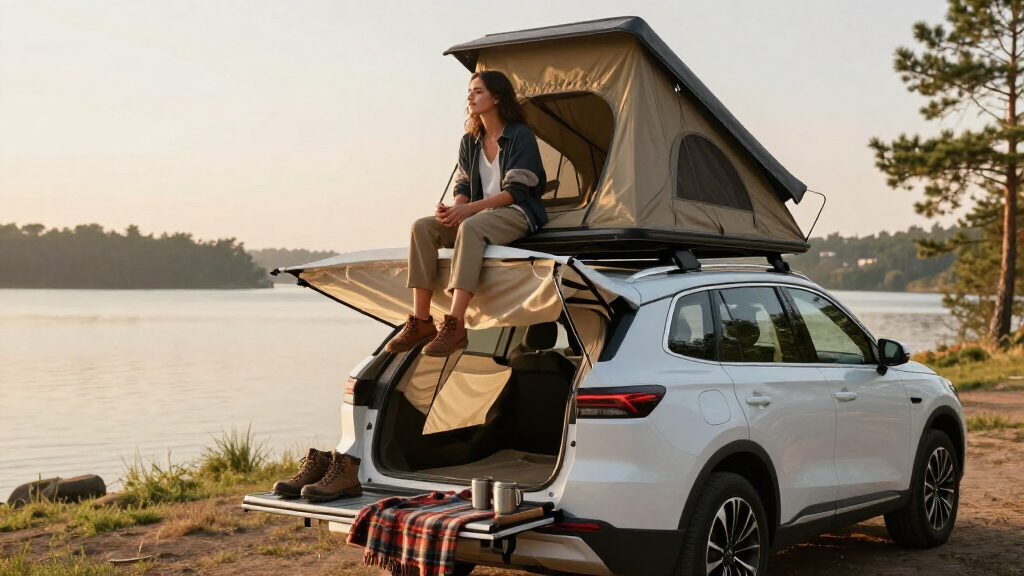
How We Picked
I ranked these rooftop tents by focusing on the factors that actually shape the ownership experience: shell material and weight, setup speed, weather performance across seasons, realistic sleep capacity, and mounting hardware quality. Hard shell models were favored over soft shells at equal price points because they offer better insulation, quicker deployment, and superior long-term durability. Tents with documented insulation layers or thermal bases ranked higher for four-season use, while lighter aluminum builds earned credit for fuel economy and compatibility with lower-rated roof racks.
I also compared how transparently each product communicated its specs. Listings with vague weights, missing rainfly details, or unbranded hardware ranked lower regardless of apparent value, because those gaps usually signal sourcing from generic factories with inconsistent quality control. The final ordering reflects a simple logic: the best overall pick balances every criterion, value picks trade insulation or shell material for price, and specialty picks win on a single factor like capacity or cold-weather performance.
Factors to Consider When Choosing Rooftop Tents
Choosing a rooftop tent involves more than picking the largest or cheapest option. These are the factors that separate a tent you’ll love from one you’ll uninstall after two trips.
Check Your Dynamic Roof Load Rating First
The most common mistake buyers make is confirming their roof rack’s dynamic load rating — the weight the rack carries while driving — not the static rating. A hard shell rooftop tent typically weighs 110 to 160 pounds, and once you add a mounting bracket set, you may exceed what a factory rack can handle on rough roads. Factory crossbars almost never suffice; you’ll need an aftermarket rack or a rated platform. Before ordering any tent in this roundup, verify your vehicle’s dynamic rating and match it against the tent’s shipping weight plus hardware. Skipping this step is why some buyers end up returning perfectly good tents.
Hard Shell Versus Soft Shell Is the Biggest Fork in the Road
Every tent in this roundup is a hard shell, and that’s deliberate — but you should understand why before committing. Hard shells pop open in under a minute, insulate better in winter, and protect the fabric from UV damage and road debris while closed. The tradeoff is weight and packed height: a hard shell adds real mass to your roof and raises your center of gravity, which changes handling on trails and highway crosswinds. Soft shell tents are lighter and cheaper but take longer to deploy and degrade faster. If you camp fewer than ten nights a year, a hard shell may be more tent than you need.
Insulation Matters More Than Marketing Suggests
Several tents here advertise ‘winter insulation,’ but there’s a difference between a thermal fabric layer and a genuinely insulated base with sealed seams. Condensation is the hidden enemy of rooftop camping — warm bodies in a sealed shell produce moisture that soaks sleeping bags by morning unless the tent ventilates well. Look for mesh windows, adjustable vents, and an insulated or honeycomb base if you camp below freezing. Buyers in mild climates can save money by skipping insulated models entirely, since the added weight costs fuel economy all year for a benefit you’ll use twice.
Match Sleep Capacity to Real Bodies, Not Box Numbers
Manufacturers calculate capacity using narrow pad dimensions, so a ‘3 person’ tent comfortably fits two adults and a child at most. If you’re camping as a couple with a dog, aim for a 3-4 person footprint; a family of four needs the largest XL footprint in this lineup plus a gear-conscious packing strategy. Also check the expanded mattress dimensions rather than the shell size, because clamshell designs lose interior length at the angled sections. Taller campers over six feet two inches should verify floor length specifically, as several 2-3 person models run short.
Mounting Hardware and Ladder Quality Separate Good Deals From Regrets
The tent shell gets the glory, but the mounting brackets and telescoping ladder determine daily satisfaction. Cheap aluminum brackets flex on washboard roads and eventually crack at the welds, and flimsy ladders feel sketchy at full extension with a loaded camper. When comparing similar-looking tents at different prices, the hardware is usually where the cost was cut. Confirm the tent includes a rated ladder sized for your vehicle height, and check whether replacement parts or mounting rails are sold separately. A tent that arrives without mounting rails can add unexpected cost and delay your first trip.
Weight, Fuel Economy, and Year-Round Storage
Decide early whether the tent stays mounted permanently or comes off between trips. A permanently mounted tent costs roughly one to two miles per gallon in fuel and forces you to remember clearance limits in parking garages and drive-throughs. Aluminum shells like the Pioneer Pro and Adventurer Pro shave 20 to 40 pounds compared with steel-framed alternatives, which matters if you’ll remove the tent seasonally — most people need two helpers or a hoist system either way. If you camp only in summer, plan garage or storage space for the off-season, because a rooftop tent left on a vehicle through winter weather ages the seals and fabric faster.
Frequently Asked Questions
Can my SUV’s factory roof rack support a rooftop tent?
Almost never without reinforcement. Factory crossbars typically carry a dynamic load rating of 75 to 150 pounds, which a 130-pound hard shell tent exceeds before you even climb inside. The static rating is different — once the vehicle is parked, the rack can usually hold several hundred pounds — but the dynamic rating while driving is what matters for safety. You’ll want an aftermarket roof rack or platform with a dynamic rating above the combined weight of the tent and mounting hardware. Check your vehicle’s manual for the specific number, because exceeding it risks rack failure at highway speed.
Are the cheaper unbranded hard shell tents on Amazon worth buying?
Sometimes, yes — several tents in this roundup are clearly sourced from the same few factories, and the shells themselves are often well-made. The differences show up in the details: ladder quality, mounting rail fit, mattress thickness, and how responsive the seller is when a part arrives damaged or a seal fails. Before buying, confirm the listing specifies actual weight, mattress dimensions, and included hardware, and check the seller’s return policy rather than assuming brand-name support. If two listings look identical, the one with clearer specs and a responsive seller is usually the safer bet even at a slightly higher price.
How much does a rooftop tent hurt my gas mileage?
Expect a real-world penalty of roughly one to three miles per gallon at highway speeds, depending on your vehicle and the tent’s shape. Hard shell clamshell designs are more aerodynamic than boxy soft shells, so they sit at the lower end of that range. The effect is worst on boxy SUVs and trucks with already-poor aerodynamics, and barely noticeable around town. If you drive the vehicle daily, that fuel cost adds up — many owners remove the tent between trips using a garage hoist or two-person lift to avoid paying the penalty year-round.
Do insulated rooftop tents actually work in winter?
Genuinely insulated models make a real difference, but with limits. An insulated base and thermal fabric layer keep the floor from pulling heat out of your sleeping setup, which is the main way rooftop tents lose warmth — you’re sleeping on a thin mattress suspended in cold air. What insulation cannot do is heat the tent on its own; pair it with a rated sleeping bag and a low-wattage heater designed for enclosed spaces. The other winter factor is condensation management, so insulated tents still need ventilation to prevent soaked gear by morning. For trips below roughly 20°F, an insulated model paired with proper sleep gear beats a standard tent by a wide margin.
Is a clamshell pop-up tent or a fold-out tent better for me?
Clamshell designs, like most of the Naturnest lineup here, pop open in under a minute and offer a smaller footprint with a large panoramic window, which makes them great for quick overnight stops and solo travelers. Fold-out designs, like the SanHima, unfold sideways or backward to create a much larger sleeping floor, which suits families and campers who want room to sit up and change clothes. The tradeoff is setup effort — fold-outs take longer and require more physical handling in wind. If you move camp every night, choose a clamshell; if you set up a basecamp for a week, the extra space of a fold-out earns its keep.
Conclusion
For most buyers, the Solar Panel Rooftop Tent Hard Shell with Winter Thermal Layer is the best overall choice because it’s the only pick here that pairs four-season insulation with off-grid power — a combination that covers the widest range of trips. For best value, the Naturnest Sirius 1 delivers the core clamshell experience with proven waterproofing at a lower commitment level, and the Sirius 1 Plus adds blackout fabric if you sleep in daylight. The Pioneer Pro and Adventurer Pro aluminum models make the most sense as premium picks for weight-conscious overlanders, while the Sirius 1 Plus XL is the clear choice for families needing a true four-person footprint. Cold-climate campers should shortlist the dedicated winter-insulation models, and first-time buyers should start with a Naturnest hard shell before paying for features they may never use. Whatever you choose, verify your roof rack’s dynamic load rating before checkout — it’s the one mistake this roundup can’t fix after the box arrives.
Halloween Picks
halloween
As an affiliate, we earn on qualifying purchases.