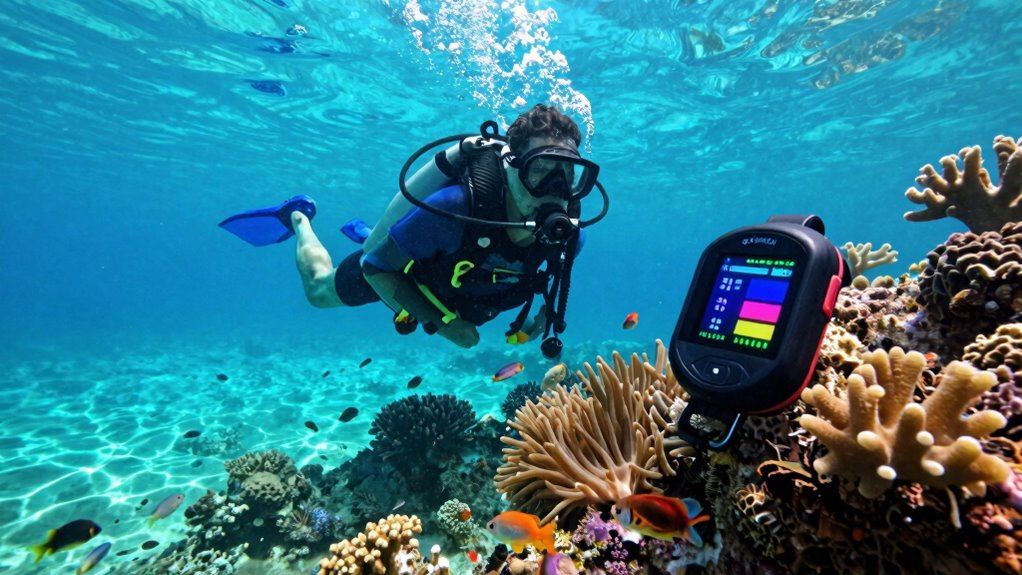

Choosing among highly rated dive computers comes down to one core tradeoff: readability, battery life, and simplicity versus smartwatch-style versatility and GPS. The Shearwater Perdix 2 Ti earns my best overall pick for its big color display, intuitive menu logic, and rugged titanium build that works equally well for recreational divers and technical diving down the road. If you want one device that tracks runs and hikes on the surface, the Garmin Descent G2 is the strongest watch-style all-rounder, while the Shearwater Peregrine stands out as the best value for travel-focused recreational divers. Below, I break down all 15 models, who each one suits, and which ones aren’t worth the money for certain divers.

Get pool and patio gear delivered free with Prime
- Fast, free delivery on millions of items
- Prime Video, Amazon Music and more included
- Member-only deals all year
Complete the kit


Key Takeaways
- Shearwater dominates the top of this lineup because its menu logic and color displays are easier to read and operate underwater than any watch-style competitor, which matters more than raw feature counts when you’re at depth with gloves on.
- The Garmin Descent family (G1, G2, Mk3i, X50i, X30) is the clear choice only if you want surface fitness tracking and GPS navigation in one wrist device — you pay a premium and accept a smaller screen compared with Shearwater‘s dedicated formats.
- Air integration is the biggest price divider in this roundup: the Peregrine TX adds wireless tank pressure reading for far less than the Garmin Mk3i or X50i, making it the smartest upgrade path for recreational divers.
- Budget picks like the Mares Puck Pro EZ and Suunto Zoop Novo remain legitimate dive computers, but their monochrome segment displays and conservative algorithms make them better as backup or first-certification devices than primary computers for frequent divers.
- The Suunto Ocean and D5 split the difference between watch-style convenience and dive-first design, but both run Suunto‘s more conservative decompression model — a real factor for divers who like long, shallow reef days or repeat multi-day diving.
| Shearwater Perdix 3 Dive Computer |  | Best Overall | Display: 2.4″ ultra-bright AMOLED | Resolution: 4x higher than previous model | Bluetooth: 6x faster connectivity | VIEW ON AMAZON | See Our Full Breakdown |
| Shearwater Perdix 2 Ti Dive Computer |  | Best for Technical Divers | Display: 2.2″ LCD, LED backlight, 320×240 | Battery life: Up to 100 hours (Saft LS14500), 60 hours (Lithium 1.5V), 40 hours (AA Alkaline) | Gas support: 5 Open Circuit + 5 Closed Circuit gases | VIEW ON AMAZON | See Our Full Breakdown |
| SUUNTO Ocean Dive Computer, GPS Multisport Watch |  | Best Dive Watch for Multisport Athletes | Display: 1.43″ color AMOLED touchscreen | Water resistance: 100m (60m measurement depth) | Dive modes: Freediving, snorkeling, mermaid, single and multigas (air/nitrox) | VIEW ON AMAZON | See Our Full Breakdown |
| Garmin Descent G2 Watch-Style Dive Computer, 46mm |  | Best Smartwatch-Dive Hybrid | Display: 1.2″ AMOLED | Lens: Sapphire | Case size: 45.5 x 45.5 x 15.2 mm | VIEW ON AMAZON | See Our Full Breakdown |
| Shearwater Research Peregrine Adventures Edition Dive Computer |  | Best for Recreational Divers | Interface: Two-button, state-aware menu structure | Battery life: Up to ~30 hours per charge (medium brightness) | Charging: USB wireless charging station included | VIEW ON AMAZON | See Our Full Breakdown |
| Garmin Descent G1 Rugged Dive Computer – Slate Gray |  | Best Battery Life | Display: Monochrome | Lens: Sapphire | Battery (Dive Mode): Up to 25 hours | VIEW ON AMAZON | See Our Full Breakdown |
| Garmin Descent Mk3i Watch-Style Dive Computer, 51mm, Black |  | Best Premium Watch-Style | Display: 1.4″ AMOLED | Bezel: 51mm titanium | Water Resistance: 200-meter dive-rated | VIEW ON AMAZON | See Our Full Breakdown |
| SUUNTO D5 Dive Computer, Color Display 100m Waterproof, All Black |  | Best Style-Focused Recreational Pick | Water Resistance: 100 meters | Display: Color | Air Integration: Wireless tank pressure | VIEW ON AMAZON | See Our Full Breakdown |
| Garmin Descent X50i, Premium Dive Computer, Air Integration |  | Best for Technical Diving | Display: 3″ vibrant color touchscreen | Buttons: Leakproof metal inductive | Sonar: Diver-to-diver messages up to 30 meters | VIEW ON AMAZON | See Our Full Breakdown |
| Shearwater Research Peregrine TX Air Integrated Color Dive Computer |  | Best Value for Serious Recreational Divers | Display: 2.2″ full color LCD | Air Integration: Optional wireless via Shearwater Swift transmitter | Compass: Tilt-compensated digital compass | VIEW ON AMAZON | See Our Full Breakdown |
| Garmin Descent X30 Rugged Dive Computer with Surface GPS |  | Best for Tech-Curious Recreational Divers | Display: 2.4-inch color | Dive Modes: Scuba single- and multi-gas including trimix | Customizable Data Fields: Up to 3 per page | VIEW ON AMAZON | See Our Full Breakdown |
| Mares Puck Pro EZ Wrist Underwater Scuba Dive Computer (414177) |  | Best Budget Pick | VIEW ON AMAZON | See Our Full Breakdown | |||
| Suunto Zoop Novo Wrist Scuba Diving Computer |  | Best First Dive Computer | VIEW ON AMAZON | See Our Full Breakdown | |||
| Shearwater Peregrine TX Wrist Dive Computer with GPS Transmitter |  | Best Upgrade Pick | Display: 2.2-inch color LCD, 320 x 240 QVGA | GPS Transmitter: Swift GPS, GNSS (GPS, Galileo, BeiDou), rated to 656 ft (200 m) | Air Integration: Yes, up to 4 optional transmitters | VIEW ON AMAZON | See Our Full Breakdown |
| Shearwater Research Peregrine Adventures Edition Dive Computer |  | Best Everyday Recreational Pick | Display: 2.2-inch LED LCD, vivid enhanced color | Dive Modes: Air, Nitrox, 3 Gas Nitrox, Gauge | Algorithm: Buhlmann ZHL-16C with gradient factors; no lockout | VIEW ON AMAZON | See Our Full Breakdown |
| rated dive computer | Display |
|---|---|
| Shearwater Perdix 3 Dive Compu | 2.4" ultra-bright AMOLED |
| Shearwater Perdix 2 Ti Dive Co | 2.2" LCD, LED backlight, 320×240 |
| SUUNTO Ocean Dive Computer | 1.43" color AMOLED touchscreen |
| Garmin Descent G2 Watch-Style | 1.2" AMOLED |
| Shearwater Research Peregrine | — |
| Garmin Descent G1 Rugged Dive | Monochrome |
| Garmin Descent Mk3i Watch-Styl | 1.4" AMOLED |
| SUUNTO D5 Dive Computer | Color |
| Garmin Descent X50i | 3" vibrant color touchscreen |
| Shearwater Research Peregrine | 2.2" full color LCD |
| Garmin Descent X30 Rugged Dive | 2.4-inch color |
| Mares Puck Pro EZ Wrist Underw | — |
| Suunto Zoop Novo Wrist Scuba D | — |
| Shearwater Peregrine TX Wrist | 2.2-inch color LCD, 320 x 240 QVGA |
| Shearwater Research Peregrine | 2.2-inch LED LCD, vivid enhanced color |
More Details on Our Top Picks
Shearwater Perdix 3 Dive Computer
The Perdix 3 earns the top spot because it improves the platform technical and recreational divers already trust without breaking what worked. Its 2.4-inch AMOLED display is dramatically brighter and sharper than the LCD on the Perdix 2 Ti, which matters most on night dives and in murky water where reading your deco obligation quickly is a safety issue, not a luxury. The updated interface and programmable quick-change settings mean switching between dive configurations takes seconds instead of menu-diving. Compared with the Peregrine Adventures Edition, the Perdix 3 keeps the same approachable Shearwater logic but adds trimix and closed-circuit support that serious divers will eventually want. The tradeoff is real: this is a premium purchase, and divers who only do occasional recreational nitrox dives are paying for capability they will never touch.
Pros:- Ultra-bright, high-resolution AMOLED display that stays readable in dark or silty conditions
- 14 colour options and two layouts let you customize readability for gloves, aging eyes, or trim positions
- 6x faster Bluetooth makes dive log downloads and firmware updates far less tedious
- Grows with you from open circuit recreational to full technical diving
Cons:- Premium price that exceeds what most recreational divers need to spend
- Feature depth can overwhelm newer divers who haven’t learned decompression theory yet
- AMOLED screens consume more power than the Perdix 2’s simpler LCD, shifting you to a recharge cycle
Best for: Divers who want one computer that handles recreational diving today and technical diving later without replacing it
Not ideal for: Vacation-only divers and beginners — the gas-switching and stress-monitoring features are overkill, and the Peregrine covers those needs for less
- Display:2.4″ ultra-bright AMOLED
- Resolution:4x higher than previous model
- Bluetooth:6x faster connectivity
- Colour options:14 customizable
- Layouts:Standard and Big (giant fonts)
- Decompression features:Advanced decompression stress monitoring
- Interface:Updated UI with programmable quick-change settings
Our verdict“If you want the single most capable and readable dive computer in this lineup and plan to dive for years, this is the one to buy.”
Shearwater Perdix 2 Ti Dive Computer
The Perdix 2 Ti remains the working standard for technical diving, and its priorities explain why it isn’t trying to win a screen war with the Perdix 3. The user-replaceable AA battery is the headline: on a remote liveaboard with no outlets, swapping a battery beats waiting on a charge — up to 100 hours on a Saft LS14500 cell. With support for 5 open circuit and 5 closed circuit gases, a 260m depth rating, and roughly 1,000 hours of log storage, it covers full trimix and CCR workflows that watch-style options like the SUUNTO Ocean simply cannot. The titanium housing and aluminosilicate glass take abuse that wrist-worn computers with sapphire crystal lenses can’t match. The honest tradeoff is the lower-resolution LED-backlit LCD — perfectly readable, but a generation behind the AMOLED panels now common at this price.
Pros:- Field-swappable AA battery with up to 100 hours of runtime eliminates charging anxiety on long trips
- 10-gas switching capability covers complex trimix and rebreather dive plans
- 260m depth rating with tough titanium and glass construction built for hard use
- Massive 1,000-hour dive log capacity for detailed post-dive analysis
Cons:- Lower-resolution LCD display compared with the newer AMOLED Perdix 3
- No smartwatch, GPS, or fitness functionality — it does one job
- Premium pricing that recreational-only divers won’t justify
Best for: Technical and CCR divers, especially those traveling to remote locations where charging is unreliable
Not ideal for: Casual recreational divers and anyone wanting smartwatch features — it’s a dedicated dive instrument, not an everyday wearable
- Display:2.2″ LCD, LED backlight, 320×240
- Battery life:Up to 100 hours (Saft LS14500), 60 hours (Lithium 1.5V), 40 hours (AA Alkaline)
- Gas support:5 Open Circuit + 5 Closed Circuit gases
- Dive log storage:Approximately 1,000 hours
- Lens:Tough aluminosilicate glass
- Housing material:Titanium with Delrin
Our verdict“The pick for serious technical divers who value battery independence and gas-switching depth over a pretty screen.”
SUUNTO Ocean Dive Computer, GPS Multisport Watch
The SUUNTO Ocean is built for the diver whose life above water matters as much as the dive itself. With 95+ sport modes, HRV-based training insights, and dual-band GNSS, it functions as a genuine endurance watch that happens to dive — a different philosophy from the Garmin Descent G2, which it competes with directly on battery endurance (26 days standby versus Garmin’s 10 days smartwatch mode). Underwater, the Bühlmann 16 GF algorithm with wireless tank pod support gives it credible technical credibility for a watch format, and the 3D dive-route tracking in the Suunto app is a genuinely fun post-dive feature no console-style computer offers. The limitations are structural: a 1.43-inch touchscreen is inherently harder to read at depth than the Perdix 3’s 2.4-inch panel, and serious trimix divers will hit its ceiling quickly.
Pros:- Exceptional battery life: 26 days standby, 40 hours in dive or GPS mode
- Bühlmann 16 GF algorithm with optional wireless tank pressure monitoring
- 3D underwater route tracking saved to your logbook for sharing
- Full multisport training platform with AI Coach and 95+ sport modes
Cons:- Small 1.43-inch screen is harder to read underwater than dedicated wrist units
- Air integration requires a separately purchased tank pod
- Touchscreen operation can be awkward with thick gloves
Best for: Runners, triathletes, and outdoor athletes who dive regularly and want one watch for everything
Not ideal for: Technical divers — watch-format displays and gas support can’t match a dedicated unit like the Perdix 2 Ti
- Display:1.43″ color AMOLED touchscreen
- Water resistance:100m (60m measurement depth)
- Dive modes:Freediving, snorkeling, mermaid, single and multigas (air/nitrox)
- Algorithm:Bühlmann 16 GF
- Air integration:Optional wireless tank pod
- GPS:Dual-band GNSS with global offline maps
- Battery:26-day standby / 12-day daily use / 40-hour dive or GPS mode
- Charging:Fast charge, full in about one hour
- Sport modes:95+ preset modes with HRV-based AI Coach
Our verdict“The best choice if you want a serious training watch and a capable dive computer on the same wrist.”
Garmin Descent G2 Watch-Style Dive Computer, 46mm
The Descent G2 sits in a sweet spot the SUUNTO Ocean also occupies, but leans harder into everyday smartwatch life: Garmin Pay, Connect IQ, smart notifications, and health tracking built on sleep, stress, and exercise data. Its standout differentiator is dive readiness insights — Garmin scores how prepared your body is to dive based on recovery metrics, a genuinely thoughtful safety layer for divers stacking multiple dive days. With support for recreational, technical, freediving, and even pool apnea modes, it covers more dive types than most watch-format rivals. The recycled ocean-bound plastic housing is a real design choice, not greenwash marketing, though it doesn’t feel as bombproof as the titanium Perdix 2 Ti. Battery life is the compromise: 27 hours in dive mode is respectable but well short of dedicated units, and the 1.2-inch display demands good eyes or reading glasses.
Pros:- Covers recreational, technical, freediving, and pool apnea in one watch
- Dive readiness scoring based on sleep, stress, and exercise data
- Sapphire lens and leakproof buttons rated to 10 ATM
- Housing, bezel, and buttons made from recycled ocean-bound plastics
Cons:- 27-hour dive-mode battery is short for week-long liveaboard trips without charging
- 1.2-inch display makes detailed data squint-worthy at depth
- Health metrics are estimations, and smart features depend on a paired smartphone
Best for: Divers who want one rugged daily-wear smartwatch that switches to full dive mode at the boat
Not ideal for: Divers prioritizing long dive-mode battery or a large, glanceable screen — the Peregrine or Perdix serve better underwater
- Display:1.2″ AMOLED
- Lens:Sapphire
- Case size:45.5 x 45.5 x 15.2 mm
- Dive modes:Recreational, technical, freediving, pool apnea
- Battery:Up to 27 hours dive mode / 10 days smartwatch mode
- Navigation:Multi-GNSS for dive entry/exit marking
- Wrist fit:128-224 mm (silicone band) / 128-373 mm (extra long band)
- Sustainability:Housing, bezel, and buttons from recycled ocean-bound plastics
Our verdict“The best pick if you want Garmin’s ecosystem on your wrist all week and a legit dive computer on the weekend.”
Shearwater Research Peregrine Adventures Edition Dive Computer
The Peregrine Adventures Edition proves that most divers don’t need a Perdix — they need a computer that does air and nitrox exceptionally well with zero confusion. Its two-button, state-aware menu is arguably the most intuitive interface in this roundup; where the Perdix 2 Ti demands familiarity with technical menus, the Peregrine shows you only what’s relevant to your current mode. Around 30 hours of battery per charge with the included wireless charging dock keeps multi-day trips simple, though it gives up the Perdix 2’s swap-anywhere AA battery advantage. The 316 stainless steel buttons feel built to last through years of salt water. The honest limitation is scope: no trimix, no closed-circuit support, and no air integration — divers eyeing technical progression should look at the Peregrine TX or step up to the Perdix line instead.
Pros:- Two-button, state-aware menu that beginners can master in a single dive day
- Up to 30 hours of runtime per charge with a convenient wireless charging dock
- Corrosion-resistant 316 stainless steel buttons built for saltwater use
- Full-sized, highly readable display in a purpose-built dive format
Cons:- Limited to air and nitrox — no trimix or closed-circuit support
- No air integration without stepping up to the Peregrine TX
- Still priced well above basic entry-level consoles like the Mares Puck Pro
Best for: Recreational air and nitrox divers, including newer divers, who want simplicity and clarity above all
Not ideal for: Divers planning technical or rebreather diving — the lack of gas switching and air integration will force an upgrade
- Interface:Two-button, state-aware menu structure
- Battery life:Up to ~30 hours per charge (medium brightness)
- Charging:USB wireless charging station included
- Buttons:316 stainless steel
- Dive modes:Air and nitrox recreational diving
- Package dimensions:6.69 x 4.45 x 4.33 inches
Our verdict“The easiest recommendation in this roundup for recreational divers who want premium readability and simplicity without technical features they’ll never use.”
Garmin Descent G1 Rugged Dive Computer – Slate Gray
The Descent G1 makes the list because it solves the most annoying problem in watch-style dive computers: constant charging. With up to 21 days in smartwatch mode and 25 hours in dive mode, it outlasts the AMOLED-equipped Garmin Descent Mk3i by a wide margin — the tradeoff being that you give up the color display and SubWave sonar to get there. For divers who travel or dive infrequently, never wondering whether the computer is charged before a trip is a real outcome, not a spec-sheet detail.
Its monochrome screen is genuinely readable underwater, though divers accustomed to the Suunto D5’s color interface may find it plain. What the G1 offers instead is durability — a sapphire lens and a rugged build that shrugs off daily wear — plus coverage of recreational, technical, free diving, and spear fishing modes in one device.
Pros:- Exceptional battery life: up to 21 days smartwatch, 25 hours dive mode
- Rugged build with scratch-resistant sapphire lens for daily abuse
- Covers recreational, technical, free diving, and spear fishing modes
- Full smartwatch feature set with GPS and 30+ sports apps
Cons:- Monochrome display is less information-rich than color rivals like the Mk3i
- No air integration or sonar-based diver communication
Best for: Travel divers and everyday wearers who want one device that handles diving, fitness tracking, and weeks of battery without a charger
Not ideal for: Divers who want color maps, air integration, or sonar features — the G1 keeps things deliberately basic on that front
- Display:Monochrome
- Lens:Sapphire
- Battery (Dive Mode):Up to 25 hours
- Battery (Smartwatch Mode):Up to 21 days
- Satellite Systems:GPS/GLONASS/Galileo
- Dive Log Storage:Up to 200 dives
- Dive Types:Recreational, advanced, technical, freediving, spear fishing
- Smart Features:Notifications, Garmin Pay, Connect IQ, 30+ sports apps
Our verdict“Buy the G1 if you value endurance and everyday versatility over a color screen; skip it if you want premium dive-specific features.”
Garmin Descent Mk3i Watch-Style Dive Computer, 51mm, Black
The Mk3i is the most complete wrist-wrapped package here. Its 1.4-inch AMOLED display is dramatically clearer than the Descent G1’s monochrome screen, and the titanium bezel plus sapphire lens give it a durability story that matches its price. Rated to 200 meters, it handles technical diving that softer watch-style competitors avoid.
The standout differentiator is SubWave sonar: diver-to-diver messaging at up to 30 meters and tank pressure monitoring for up to 8 divers (each requiring a Descent T2 transceiver, sold separately). No other product in this lineup offers underwater communication, which is why it sits above the Suunto D5 for anyone diving with a team. Add DiveView bathymetric maps for 4,000+ sites and an integrated LED flashlight, and the extras go well beyond diving — though the 51mm case is genuinely bulky for smaller wrists, and GPS naturally stops at the surface.
Pros:- Bright AMOLED display with titanium bezel and sapphire lens
- SubWave sonar for diver-to-diver messaging and monitoring up to 8 divers
- DiveView bathymetric maps covering 4,000+ dive sites
- 200-meter dive rating with full smartwatch and health tracking
Cons:- Tank pressure monitoring requires Descent T2 transceivers sold separately
- 51mm case is bulky for everyday wear on smaller wrists
- GPS does not function underwater
Best for: Serious recreational and technical divers who want sonar communication, air integration, and a premium everyday smartwatch in one device
Not ideal for: Slim-wristed divers or budget-conscious buyers — the size is imposing and full functionality requires buying extra T2 transceivers
- Display:1.4″ AMOLED
- Bezel:51mm titanium
- Water Resistance:200-meter dive-rated
- Sonar Range:Up to 30 meters (diver-to-diver)
- Tank Monitoring:Up to 8 divers within 10 meters (T2 required)
- Dive Log Capacity:200 dives
- GPS:Multi-band
- Flashlight:LED, red/white, variable intensity, strobe
Our verdict“If money is no object and you want the most capable watch-style dive computer made, the Mk3i justifies its premium; smaller-wristed divers should consider the Descent G2 instead.”
SUUNTO D5 Dive Computer, Color Display 100m Waterproof, All Black
Where the Garmin Mk3i piles on technical features, the Suunto D5 takes the opposite approach: a clean, colorful interface that makes recreational diving feel effortless. Its color display and interchangeable straps give it genuine wrist appeal — this is a computer you can wear to dinner after a dive, something the blockier Shearwater Peregrine TX can’t claim.
Wireless tank pressure integration and vibration alarms round out the core recreational feature set, and the wireless mobile connection makes logging and reviewing dives far less clunky than cable-based transfers. The 100-meter rating covers recreational depths comfortably. The compromises are real, though: no GPS or mapping, a shallower rating than Garmin’s 200-meter offerings, and a display and button layout geared toward simplicity rather than data density. Technical divers will outgrow it quickly.
Pros:- Vibrant color display with an intuitive, simplified interface
- Wireless air integration for real-time tank pressure
- Vibration alarms that are noticeable even with thick gloves
- Interchangeable straps and slim profile for everyday wear
Cons:- No GPS, mapping, or sonar features found on Garmin rivals
- 100-meter rating and feature set limit appeal for technical diving
Best for: Style-conscious recreational divers who want a color screen, air integration, and a device that looks good on land
Not ideal for: Technical divers or gauge-mode users who need deep gas switching and dense data displays — the D5 is built for simplicity, not tech diving
- Water Resistance:100 meters
- Display:Color
- Air Integration:Wireless tank pressure
- Alarms:Vibration alerts
- Compass:Digital compass
- Connectivity:Wireless mobile connection via Suunto app
Our verdict“The D5 suits recreational divers who prioritize readability and style over technical capability.”
Garmin Descent X50i, Premium Dive Computer, Air Integration
The X50i is Garmin’s answer to the Shearwater Perdix line — a full-size, instrument-grade computer rather than a smartwatch that dives. Its 3-inch color touchscreen is the largest display in this roundup, and that size matters: projected ascent profiles and in-dive depth charts become glanceable rather than squint-inducing. Compared with the Mk3i, the X50i trades everyday wrist appeal for serious underwater legibility.
Built for depth, it carries a 20 ATM dive rating, leakproof metal inductive buttons that work reliably at pressure, and the same SubWave sonar messaging and multi-diver tank monitoring as the Mk3i (again, T2 transceivers sold separately). An integrated backup dive light and DiveView maps for 4,000+ sites complete the package. The honest tradeoff: this is a diving instrument first. If you want something that doubles as a daily smartwatch, the Mk3i or Descent G2 fit that life better.
Pros:- Large 3-inch color touchscreen showing ascent profiles and depth charts at a glance
- 20 ATM dive rating with leakproof metal inductive buttons
- SubWave sonar messaging and monitoring of up to 8 divers’ tank pressure
- Integrated backup dive light accessible above and below water
Cons:- Bulky instrument form factor unsuited to everyday wear
- Sonar tank monitoring depends on separately sold T2 transceivers
Best for: Technical and deep divers who prioritize a huge readable display, rugged depth-rated hardware, and sonar communication
Not ideal for: Casual vacation divers or anyone wanting a daily-wear smartwatch — the X50i is a dedicated instrument and wears like one
- Display:3″ vibrant color touchscreen
- Buttons:Leakproof metal inductive
- Sonar:Diver-to-diver messages up to 30 meters
- Tank Monitoring:Up to 8 divers within 10 meters (T2 required)
- Dive Sites:4,000+ via DiveView maps
- Dive Log:Up to 200 dives, shareable via Garmin Dive app
Our verdict“The X50i is the pick for divers who treat this as serious underwater instrumentation rather than a lifestyle watch.”
Shearwater Research Peregrine TX Air Integrated Color Dive Computer
The Peregrine TX occupies a sweet spot the Garmins don’t: near-flagship usability at a mid-tier price. Its 2.2-inch color LCD is large and uncluttered, with Shearwater’s famously simple menu logic — a real advantage over the busier interfaces on the Suunto D5 or Garmin watches when you’re task-loaded underwater.
Where the standard Peregrine stops at recreational basics, the TX adds air integration with the Swift transmitter, a tilt-compensated digital compass, and a rechargeable battery good for around 30 hours of diving. Bluetooth syncing to Shearwater Cloud makes dive logging painless. The compromises are structural rather than functional: it’s a dedicated wrist unit, not a smartwatch — no GPS, notifications, or fitness tracking — and full tech-diving support remains the domain of the Perdix 2 Ti. For recreational and nitrox divers, though, those omissions are features, not flaws.
Pros:- Large, easy-to-read 2.2″ full color screen with simple menu logic
- Optional wireless air integration with gas time remaining calculations
- Tilt-compensated digital compass that stays accurate at any wrist angle
- Rechargeable battery delivering up to 30 hours of diving
Cons:- Air integration requires the Swift transmitter purchased separately
- No smartwatch features, GPS, or maps unlike Garmin alternatives
Best for: Recreational and nitrox divers who want air integration and a superb interface without paying flagship prices
Not ideal for: Divers wanting a smartwatch hybrid or full trimix technical support — the Peregrine TX is a pure dive computer
- Display:2.2″ full color LCD
- Air Integration:Optional wireless via Shearwater Swift transmitter
- Compass:Tilt-compensated digital compass
- Battery:Wireless rechargeable, up to 30 hours diving
- Connectivity:Bluetooth to Shearwater Cloud
- Gas Support:Recreational and nitrox diving
Our verdict“The Peregrine TX gives serious recreational divers the core of a flagship computer at a friendlier price — just add the transmitter if you want air data.”
Garmin Descent X30 Rugged Dive Computer with Surface GPS
The Garmin Descent X30 earns its place by bridging the gap between a full trimix-capable technical computer and a rugged everyday wearable. Its 2.4-inch color display is one of the largest in this lineup, and the recycled ocean-bound plastics housing gives it an identity the Shearwater Peregrine can’t match on sustainability. Compared with the Shearwater Peregrine TX, the X30 includes surface GPS built in rather than relying on a separate transmitter — but its GPS stops working the moment you submerge, which is a real limitation for anyone expecting underwater waypoint navigation. The four leakproof metal buttons and 10 ATM rating make it genuinely durable, though trimix support and multi-gas menus will feel like overkill for a diver who never leaves recreational limits.
Pros:- Large, vibrant 2.4-inch color display with up to three customizable data fields per page
- Full multi-gas support including trimix, rare at this tier
- Built-in surface GPS with dive site entry and exit marking — no separate transmitter needed
- Rugged 10 ATM housing with leakproof metal buttons and recycled ocean-bound plastics
Cons:- GPS is surface-only; it does not track position underwater
- Feature depth is overkill and menu complexity is real for casual recreational divers
Best for: Divers progressing toward mixed-gas and trimix diving who also want a big, readable screen and built-in surface navigation
Not ideal for: Vacation-only or once-a-year recreational divers — the advanced gas menus add complexity and cost they will never use
- Display:2.4-inch color
- Dive Modes:Scuba single- and multi-gas including trimix
- Customizable Data Fields:Up to 3 per page
- Buttons:4 metal leakproof buttons
- Compass:3-axis digital
- GPS:Surface GPS with dive site navigation and entry/exit marking
- Sensors:Water temperature
- Materials:Recycled ocean-bound plastics (housing and bezel)
Our verdict“This is the pick for a diver whose ambitions are growing faster than their current certification card — just know the GPS quits at the surface.”
Mares Puck Pro EZ Wrist Underwater Scuba Dive Computer (414177)
Where the Garmin Descent X30 piles on capability, the Mares Puck Pro EZ wins by doing the fundamentals without waste. Its single-button interface is genuinely usable with gloved hands, and the replaceable battery rated for up to 100 dives means no charging cable, no dock, and no dead computer the morning of a trip — a practical advantage over the wirelessly-charged Shearwater Peregrine Adventures Edition. The Buhlmann ZH-L16C algorithm with gradient factors is the same decompression math trusted in far more expensive machines, so safety is not where Mares cut corners. What you give up is scope: single-gas Nitrox only (21–50%), no air integration, and a monochrome segment display that looks dated next to the Suunto Zoop Novo’s phosphorescent screen. For a straightforward recreational diver, that trade is easy to accept.
Pros:- Industry-standard Buhlmann ZH-L16C algorithm with dual gradient factors at an entry price
- User-replaceable battery lasting up to 100 dives — no charging infrastructure needed
- Single-button control that works easily underwater, even with gloves
- Bluetooth log transfer to smart devices for dive tracking
Cons:- Single-gas Nitrox only; no multi-gas or air integration support
- Basic segment display lacks the readability of color screens in low light
Best for: Newly certified divers and infrequent travelers who want reliable Nitrox-capable computing at the lowest sensible price
Not ideal for: Divers planning technical, multi-gas, or air-integrated setups — this platform has no upgrade path for any of them
Our verdict“The Puck Pro EZ is the smart no-frills choice for a diver who wants correct decompression math and long battery life without paying for features they’ll never open.”
Suunto Zoop Novo Wrist Scuba Diving Computer
The Suunto Zoop Novo remains a rental-fleet favorite for a reason: it is the computer most instructors hand to students, and it teaches good habits. Its phosphorescent backlit LCD stays readable on night dives without menu fiddling, and the four push-button layout is more forgiving than the Mares Puck Pro EZ’s single button when you need to scroll to a specific setting mid-dive. The built-in dive planner lets you preview no-deco limits before entering the water — something neither the Puck Pro EZ nor the Garmin X30 makes as accessible for beginners. Its Suunto RGBM algorithm is more conservative than the Buhlmann ZH-L16C in the Mares, which means shorter bottom times on aggressive profiles but extra margin for cautious divers. The honest tradeoff: it’s wrist-mounted and bulky, data transfer requires optional software, and there’s no wireless anything.
Pros:- Extremely intuitive push-button menu structure suited to first-time owners
- Phosphorescent backlit display readable in low light and at night
- Built-in dive planner for previewing no-deco limits before a dive
- Versatile mounting — wearable on the wrist or in a Suunto console combo
Cons:- Suunto RGBM algorithm runs more conservative, cutting bottom time on deeper profiles
- Log transfer depends on optional desktop software rather than Bluetooth
Best for: Open-water students and conservative recreational divers who want a proven, classroom-friendly computer with a real dive planner
Not ideal for: Divers chasing maximum bottom time or wanting modern connectivity — the conservative algorithm and dated desktop-only log transfer will frustrate them
Our verdict“If your dive education is still fresh, the Zoop Novo is the dependable, plain-speaking computer that grows with you through Nitrox without ever feeling intimidating.”
Shearwater Peregrine TX Wrist Dive Computer with GPS Transmitter
The Peregrine TX sits in a smart middle position: it carries the Shearwater interface and color display that technical divers trust, at a step below the flagship Shearwater Perdix 3. Its standout pairing is air integration with the included Swift GPS transmitter — real-time tank pressure and gas-time-remaining calculations on your wrist, plus automatic entry and exit coordinates that map beautifully in the Dive Shearwater log. Compared with the Garmin Descent X30, the Peregrine TX adds vibration alerts and a tilt-compensated compass, though its 2.2-inch screen is slightly smaller than Garmin’s 2.4-inch panel. The 120m depth rating and upgradeable firmware mean this computer will not be outgrown quickly. The catches: the GPS function does not work underwater (coordinates are captured at the surface), additional transmitters for side-mount or stage bottles are optional purchases, and air integration only pays off if you actually commit to the transmitter ecosystem.
Pros:- Air integration supporting up to 4 optional transmitters with gas time remaining calculations
- Included Swift GPS transmitter captures entry/exit coordinates viewable on maps in Dive Shearwater
- Customizable vibration alerts for depth, time, decompression, and tank pressure
- Bright 2.2-inch 320×240 color LCD with upgradeable firmware and 30-hour battery life
Cons:- GPS does not function underwater; location capture is surface-based only
- Adding transmitters for multiple tanks drives up total system cost
Best for: Advancing recreational divers ready for air integration, tank pressure monitoring, and GPS-mapped dive logs without paying flagship prices
Not ideal for: Minimalist divers who dive bare-back-gauge style — the transmitter adds gear, maintenance, and battery management for features they may ignore
- Display:2.2-inch color LCD, 320 x 240 QVGA
- GPS Transmitter:Swift GPS, GNSS (GPS, Galileo, BeiDou), rated to 656 ft (200 m)
- Air Integration:Yes, up to 4 optional transmitters
- Compass:3-axis tilt-compensated digital
- Battery:Up to 30 hours per charge; wireless charging; transmitter uses user-replaceable CR2
- Alerts:Customizable vibration alerts
- Construction:Ballistic nylon polymer case, 26mm silicone band, stainless steel clasp
Our verdict“The Peregrine TX is the natural next computer for a diver whose next purchase was going to be a pressure gauge anyway — pairing Shearwater’s interface with genuinely useful air integration.”
Shearwater Research Peregrine Adventures Edition Dive Computer
Strip away the transmitters and trimix menus, and the Peregrine Adventures Edition becomes arguably the purest recreational computer in this lineup. Its core promise is the 2.2-inch color display and two-button Shearwater menu logic — the same interface praised on the Perdix 2 Ti, minus the technical overhead. The most underrated feature is its no-lockout policy: unlike many entry computers including the Suunto Zoop Novo, it will not brick itself into gauge mode if you deviate from a dive plan, instead continuing to compute a solution — a genuinely safer approach for real-world diving. Three Nitrox gas capability covers most recreational scenarios, and the ~30-hour wireless-charging battery handles a full liveaboard week. The compromises are deliberate: no air integration, no GPS geotagging, no trimix, and a reliance on charging rather than a replaceable battery like the Mares Puck Pro EZ.
Pros:- Vivid 2.2-inch color LCD with Shearwater’s famously simple two-button, state-aware menus
- No lockout for dive plan deviations — the computer keeps computing instead of punishing you
- Three-gas Nitrox support using Buhlmann ZHL-16C with gradient factors
- Up to ~30 hours of battery per charge with included wireless charging station
Cons:- No air integration or GPS — capabilities reserved for the Peregrine TX and flagship models
- Rechargeable battery depends on power access, unlike user-replaceable cell options
Best for: Committed recreational divers who want a brilliant display and forgiving software for years of air and Nitrox diving
Not ideal for: Technical divers and gear minimalists — no trimix, no air integration, and the rechargeable battery is a liability on extended trips without power
- Display:2.2-inch LED LCD, vivid enhanced color
- Dive Modes:Air, Nitrox, 3 Gas Nitrox, Gauge
- Algorithm:Buhlmann ZHL-16C with gradient factors; no lockout
- Interface:Two-button, state-aware menu; 316 stainless steel buttons
- Battery:Up to ~30 hours per charge (medium brightness), wireless USB charging included
- Connectivity:Bluetooth, compatible with iOS and Android
- Band:Silicone with tang buckle
Our verdict“For a diver who wants flagship readability and forgiving software without technical features they’d never touch, the Peregrine Adventures Edition is the cleanest answer in this lineup.”

How We Picked
I evaluated these 15 dive computers against the criteria that actually affect a purchase decision: underwater readability (display size, color versus monochrome, button operation with gloves), decompression algorithm flexibility, battery life and charging method, build quality and depth rating, air integration and GPS options, and long-term usability including firmware support and menu logic. A computer with a spec sheet full of features but confusing menus ranks lower than a simpler model a diver can actually operate while task-loaded at 30 meters.
The ranking also reflects who each computer is for, not just raw capability. A premium technical machine like the Descent X50i ranks highly for capability but isn’t the right recommendation for a vacation diver — so the order balances performance against fit and value. Where two models overlap heavily (the Perdix 2 Ti and Perdix 3, or the two Peregrine variants), I differentiated them by upgrade relevance and price positioning rather than listing them as interchangeable.
Factors to Consider When Choosing Rated Dive Computers
Before settling on a specific model, it helps to understand the bigger decisions that shape what a dive computer can and can’t do for you. These are the factors that separate a satisfying purchase from an expensive regret.Watch-Style Versus Dedicated Format
The single biggest fork in this category is form factor, and it shapes everything else. Watch-style computers like the Garmin Descent line and Suunto Ocean double as everyday wearables, which means you get one device for diving, running, and notifications — but you accept a small screen that’s harder to read at depth, especially with thick gloves. Dedicated formats like the Shearwater Perdix and Peregrine have larger displays and bigger buttons, which makes them faster to read and operate when your attention should be on your buoyancy, not your wrist. A common mistake is buying a watch-style computer for its looks, then discovering mid-dive that a two-line display doesn’t work for you. If you only dive on vacation and already wear a fitness watch daily, the compromise makes sense; if you dive monthly or more, prioritize the display.
Air Integration: When It’s Worth Paying For
Wireless air integration lets your computer display your live tank pressure and true remaining bottom time instead of relying on a separate gauge and mental math. It’s genuinely useful — but it requires buying a transmitter for each tank, which adds a real cost on top of the computer itself. Many divers buy an air-integrated-capable computer like the Peregrine TX or Descent Mk3i and never purchase the transmitter, which is fine, but you should know that’s a possibility going in. Technical divers running stage bottles benefit most, since tracking multiple cylinders manually is error-prone. Recreational divers doing single-tank no-decompression dives can skip it initially and choose a model with an upgrade path rather than paying for the capability up front.
Algorithm Conservatism and Your Diving Style
Not all dive computers calculate decompression the same way, and this difference shows up on multi-dive days. Suunto’s algorithms run more conservative than Shearwater’s Bühlmann-based model with adjustable gradient factors, meaning a Suunto may tell you to ascend or end a dive earlier under identical conditions. For older divers, repeat-day liveaboard schedules, or anyone with physiological risk factors, that conservatism is a feature, not a flaw. For divers who want to maximize bottom time and understand how to manage their own gradient factors, Shearwater’s flexibility is a genuine advantage. Neither approach is wrong — the mistake is buying without knowing which philosophy you’re getting, then being surprised on day four of a dive trip.
Battery, Charging, and Travel Practicality
Battery strategy affects travel more than most buyers expect. Rechargeable computers like the Suunto D5 and Garmin line are convenient at home but leave you dependent on USB charging at remote dive resorts, where outlets and power reliability vary. Models with user-replaceable AA or disposable batteries, like the Mares Puck Pro EZ and Suunto Zoop Novo, can be revived anywhere with a coin and a battery — a real advantage on liveaboards. High-end models split the difference with long-lasting rechargeable cells; the Perdix line supports both rechargeable and standard AA-sized cells. Match the battery type to where you actually dive, not just the spec sheet number.
Growth Room Versus Overbuying
The most expensive mistake in this category is overbuying — purchasing a technical-capable computer packed with trimix and multi-gas support when you dive twice a year on coral reefs. That capability costs money, adds menu complexity, and goes unused. The opposite mistake is underbuying: a basic monochrome unit that can’t grow with you means buying twice if you progress to nitrox, deeper diving, or eventual technical training. The sweet spot for most certified divers is a mid-range color computer with nitrox support and multi-gas capability — the Peregrine and Descent G1/G2 tier — which covers recreational diving today and holds value if your interests expand. Buy for the diver you’ll be in two or three years, not the diver you were on certification day.
Support, Firmware, and Resale Value
A dive computer is a long-term relationship, and the manufacturer behind it matters as much as the hardware. Shearwater and Garmin both have strong records of free firmware updates that add features years after purchase, which effectively extends the life of your investment. Smaller or budget brands update less often, and some entry-level models are essentially frozen at launch. This also drives resale value: well-supported computers hold their worth on the secondhand market, which softens the sting of a premium purchase if you later upgrade. Before buying any model, check whether the manufacturer still supports it and whether the community considers its software actively developed.
Frequently Asked Questions
Is a more expensive dive computer actually safer?
Not inherently. Every computer in this roundup, including the budget Mares Puck Pro EZ and Suunto Zoop Novo, tracks decompression status and will keep you within no-decompression limits. What you pay more for is readability, flexibility, and convenience — bigger color displays, adjustable algorithms, air integration, and better build quality. A cheaper conservative computer can actually be safer for a distracted or infrequent diver because it builds in a wider margin. The real safety factor is understanding your own computer and diving within its guidance, which favors whichever model you’ll actually learn to operate confidently.
Should I buy the Shearwater Peregrine or spend more on the Perdix 2 Ti or 3?
The deciding factors are air integration and technical ambitions. The Peregrine is a superb recreational computer but lacks wireless tank pressure monitoring and trimix support; if you’re happily doing single-tank nitrox dives, it’s arguably all you need. The Perdix line adds air integration, multiple gas switching, and titanium build, which matter the moment you start technical training or want live tank data on your wrist. Divers who choose the Perdix typically keep it for a decade across their entire diving progression. If you’re unsure, the Peregrine TX splits the difference by adding air integration at a mid-tier price.
Do I need GPS on a dive computer?
It depends on where you dive. Surface GPS, found on the Garmin Descent line and Suunto Ocean, is genuinely valuable for shore diving and drift diving, where surfacing away from your entry point or boat is a real risk — you can mark waypoints and navigate back. For typical boat diving at established sites, GPS adds little practical safety value. The catch is that GPS signals don’t penetrate water, so it only works at the surface. If you don’t shore dive or dive from kayaks, GPS is a nice-to-have bundled into a fitness watch, not a reason to choose one computer over another.
Can I use one of these as my everyday smartwatch instead of buying both?
The watch-style models — Garmin Descent G1, G2, Mk3i, X50i, and Suunto Ocean — are designed exactly for this, offering full fitness tracking, notifications, and multi-day battery as daily wearables. The tradeoff is real: you’ll be wearing a thicker, heavier watch than a dedicated fitness band, and dive-rated depth sensors add bulk. The dedicated formats like the Perdix and Peregrine are too large for daily wear and should be treated as dive equipment only. If you already own a smartwatch you love, duplicating that functionality in a dive computer means paying twice for features you use once.
Is a watch-style dive computer hard to read underwater compared to a dedicated one?
It can be, and this is the most common regret among watch-style buyers. Screen sizes in the Garmin and Suunto watch formats are a fraction of the Perdix or Peregrine displays, and dive data is often squeezed onto smaller fonts to fit the circular face. In warm water with bare hands it’s manageable; in cold water with thick gloves, small displays and side buttons become genuinely frustrating. Manufacturers mitigate this with high-contrast modes and AMOLED screens, and the newer models are much better than early generations. If you frequently dive cold water or have vision challenges, lean toward a dedicated format with a large rectangular display.
Conclusion
For most divers, the Shearwater Perdix 2 Ti is the best overall pick — it pairs the most readable interface in this lineup with a build and feature set that covers recreational diving today and technical diving later. The Shearwater Peregrine is the best value, delivering the core Peregrine experience for divers who want quality without paying for capability they won’t use. At the premium end, the Garmin Descent Mk3i and X50i justify their cost only if GPS navigation, smartwatch features, and full air integration in a wrist format match how you actually live and dive. For beginners and newly certified divers, the Suunto Zoop Novo and Mares Puck Pro EZ are honest, dependable first computers that won’t overwhelm you — and can serve as backups later. The Suunto D5 and Garmin Descent G2 suit style-conscious recreational divers who want one wearable for everything, while the Peregrine TX is the smart middle path for anyone wanting air integration without a flagship price. Match the computer to the diver you’ll be in two years, and you’ll make the right call.
Fall Picks
fall essentials
As an affiliate, we earn on qualifying purchases.