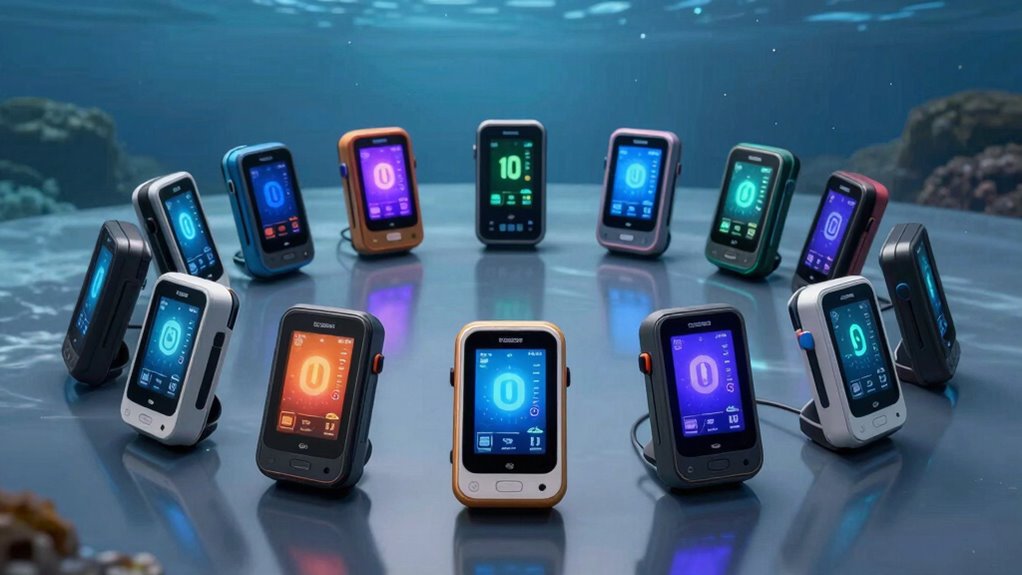

Choosing the right freediving computer hinges on your activity level, preference for data tracking, and environment. The Mares Sirius Hunter stands out for rugged durability and advanced freediving features, making it ideal for serious freedivers and spearfishers. The Seac Driver offers extensive dive data and easy connectivity, perfect for those who want detailed logs and data analysis. Meanwhile, the Cressi Nepto provides a compact, high-contrast display suited for divers prioritizing simplicity and durability. Each of these picks balances features with tradeoffs like bulkiness, complexity, or limited smart features, helping you weigh what’s most important for your diving style.
Complete the kit


Key Takeaways
- The Mares Sirius Hunter excels in durability and advanced freediving features for demanding conditions.
- The Seac Driver offers extensive data storage and easy PC/Mac integration for serious data analysis.
- The Cressi Nepto provides a compact, easy-to-read display designed specifically for freediving safety.
- Tradeoffs include bulky design versus simplicity, and smart features versus rugged durability.
- Choosing depends heavily on whether you prioritize data, durability, or ease of use.
| Mares Sirius Hunter Dive Wrist Computer |  | Best Overall Freediving Computer | Battery Duration: 200-300 hours of diving | Max Displayed Depth: 100 m / 328 ft | Resolution: 0.1m until 99.9m, 1m at deeper depths | VIEW ON AMAZON | See Our Full Breakdown |
| Seac Driver Wrist-Mount Freediving Computer with Data Download System |  | Best for Data & Connectivity | Water Resistance: 100 meters | Display: Full dive profile on screen | Memory: Up to 500 dives | VIEW ON AMAZON | See Our Full Breakdown |
| SEAC Apnea Freediving Computer with Log and Real-Time Data |  | Best for Simplicity & Customization | MSST function: Yes | Display: LCD with adjustable contrast and backlighting | Alarms: Illuminated and sound alarms (deactivatable) | VIEW ON AMAZON | See Our Full Breakdown |
| Cressi Nepto Freediving Watch Computer |  | Best Compact & Durable Watch | Case Diameter: 48 mm | Display Size: 35 mm | Water Resistance: 120 m / 393 ft | VIEW ON AMAZON | See Our Full Breakdown |
| Salvimar One Plus Freediving Wrist Computer |  | Best Versatile Dive Watch | Display: Digital | Movement Type: Quartz | Water Resistance Depth: 100 meters | VIEW ON AMAZON | See Our Full Breakdown |
| freediving computer | Display |
|---|---|
| Mares Sirius Hunter Dive Wrist | — |
| Seac Driver Wrist-Mount Freedi | Full dive profile on screen |
| SEAC Apnea Freediving Computer | LCD with adjustable contrast and backlighting |
| Cressi Nepto Freediving Watch | — |
| Salvimar One Plus Freediving W | Digital |
More Details on Our Top Picks
Mares Sirius Hunter Dive Wrist Computer
The Mares Sirius Hunter stands out for its rugged, lightweight design, making it suitable for demanding underwater conditions. Its advanced freediving functions include silent mode and pool options, with a durable display for clear readings. Compared with more feature-rich models, it doesn’t have extensive data storage, but its long-lasting, user-replaceable battery ensures reliability for frequent use. Its Bluetooth connectivity is handy for firmware updates and tracking, though it requires the app for full functionality. This device is a solid choice for freedivers who need durability and straightforward operation.
Pros:- Durable and rugged for demanding environments
- Advanced freediving features including silent mode
- Long-lasting, user-replaceable battery
- Easy navigation with gloves
Cons:- Limited to freediving and spearfishing activities
- Requires Bluetooth app for updates
- Display resolution may hinder detailed data viewing
Best for: Serious freedivers and spearfishers seeking ruggedness and reliability
Not ideal for: Diving enthusiasts wanting extensive dive logs or smart features
- Battery Duration:200-300 hours of diving
- Max Displayed Depth:100 m / 328 ft
- Resolution:0.1m until 99.9m, 1m at deeper depths
- Temperature Range:-10 to +50°C / 14 to 122°F
- Logbook Memory:10 hours of dive profile
- Waterproof Depth:up to 100 meters
Our verdict“A top choice for divers needing durability and core freediving features without extra smart frills.”
Seac Driver Wrist-Mount Freediving Computer with Data Download System
The Seac Driver provides a user-friendly interface with comprehensive real-time data and extensive memory for up to 500 dives. Its full dive profile display and customizable alerts make it ideal for divers who want detailed performance insights. Compared with the Sirius Hunter, this model offers better data management and PC/Mac compatibility, but it requires a separate USB data cable (sold separately) and some effort for battery replacement. Its design is straightforward, making it a practical choice for those who prioritize long-term dive tracking and post-dive analysis.
Pros:- Extensive memory for up to 500 dives
- Real-time performance monitoring
- Easy data download to PC/Mac
- Customizable alerts for safety
Cons:- Battery replacement effort required
- USB cable sold separately
- Limited to wrist-mount design
Best for: Diving enthusiasts who want detailed logs and data management capabilities
Not ideal for: Divers seeking a rugged, minimalist device or waterproof smart features
- Water Resistance:100 meters
- Display:Full dive profile on screen
- Memory:Up to 500 dives
- Connectivity:USB to PC/Mac
- Battery:CR2032, user-replaceable
- Colors:Black, Military Green
Our verdict“Ideal for divers who value detailed performance tracking and data analysis over compactness or smart features.”
SEAC Apnea Freediving Computer with Log and Real-Time Data
The SEAC Apnea offers a straightforward LCD display with adjustable contrast and backlighting, showing essential data like MSST, dive and ascent speeds, and temperature. It includes audible and illuminated alarms that can be turned off for silent diving, making it suitable for divers who want critical info without complexity. However, it lacks detailed battery life info and water resistance specifications, which might be a concern for those diving in harsh environments. Its simplicity makes it appealing for beginners or those who prefer a no-frills device with customization options.
Pros:- Clear, single-screen data display
- Adjustable contrast and backlighting
- Alarms can be deactivated for silent use
- Lightweight and easy to operate
Cons:- Limited info on battery life
- No water resistance details provided
- Potentially complex for complete beginners
Best for: Beginners and casual freedivers who want an affordable, customizable device
Not ideal for: Advanced divers needing extensive dive logs or rugged durability
- MSST function:Yes
- Display:LCD with adjustable contrast and backlighting
- Alarms:Illuminated and sound alarms (deactivatable)
Our verdict“A simple, customizable option for divers who prioritize essential data and alarm flexibility.”
Cressi Nepto Freediving Watch Computer
The Cressi Nepto combines a compact, high-contrast display with durability, making it ideal for divers who value simplicity and reliability. Its water resistance up to 120 meters and rugged mineral glass case provide peace of mind in challenging environments. Compared with larger, more feature-rich models, the Nepto emphasizes core safety metrics, especially for those who prefer a watch-style device without smart features or extensive data logging. Its Italian craftsmanship adds to its appeal for dedicated freedivers seeking a no-nonsense, durable tool.
Pros:- Compact, lightweight design
- High-contrast display for easy reading
- Water resistance up to 120 meters
- Rugged construction
Cons:- Limited to freediving use only
- No Bluetooth or smart features
- Basic data functionality
Best for: Freedivers who want a durable, straightforward watch with high readability
Not ideal for: Diving tech enthusiasts seeking detailed logs or smart connectivity
- Case Diameter:48 mm
- Display Size:35 mm
- Water Resistance:120 m / 393 ft
- Material:Mineral glass, stainless steel, rubber
- Made in:Italy
Our verdict“Perfect for divers who need a durable, easy-to-read watch for safety and basic tracking.”
Salvimar One Plus Freediving Wrist Computer
The Salvimar One Plus offers accurate depth tracking up to 100 meters, along with multiple features like alarms, world time, and a long-lasting battery. Its digital, quartz movement provides reliable performance, and the backlit display ensures visibility underwater. While its design is somewhat bulky, it caters well to divers needing an all-in-one device for freediving, spearfishing, and outdoor activities. The main tradeoff is the need for battery replacements and a somewhat heavier build, but it offers broad functionality for active divers.
Pros:- Accurate depth and temperature tracking
- Clear backlit display
- Multiple functions including alarms and world time
- Durable and water-resistant
Cons:- Bulky design
- Requires battery replacements
- Limited to digital and quartz movements
Best for: Freedivers and spearfishers who want a versatile, feature-rich watch
Not ideal for: Minimalist divers or those seeking lightweight, low-profile devices
- Display:Digital
- Movement Type:Quartz
- Water Resistance Depth:100 meters
- Additional Features:Alarm, Light Up, Retro lighting
- Power Source:Battery
- Case Material:Stainless Steel
Our verdict“A good choice for divers needing a comprehensive, durable wrist device with multiple features.”
How We Picked
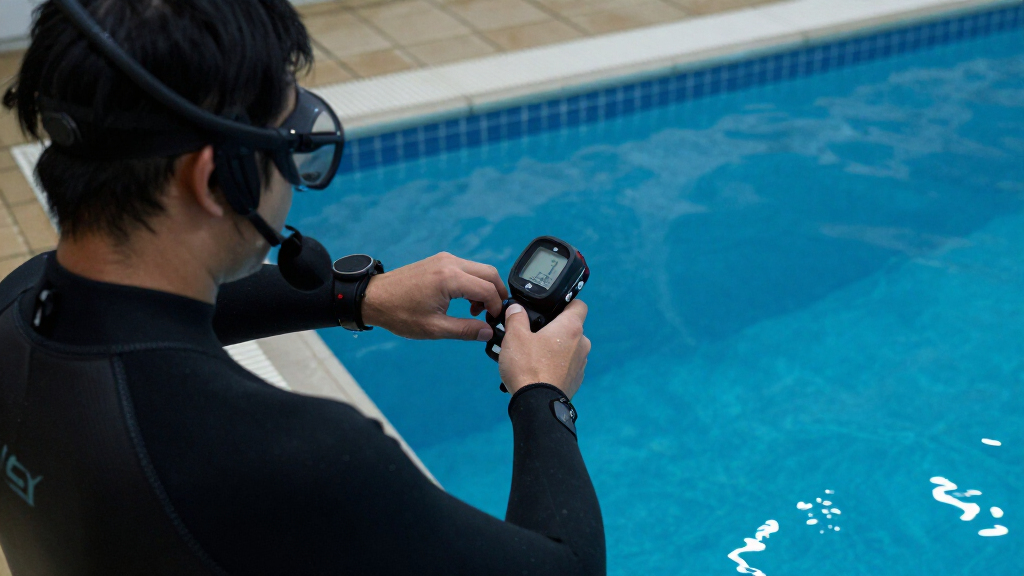
Our selection process focused on balancing core freediving functions, durability, user interface, and connectivity features. We prioritized devices that cater specifically to freedivers and spearfishers, considering their typical environments and needs. Products were evaluated based on display clarity, battery life, data capacity, and durability. We aimed to highlight options suited for beginners, advanced divers, and those seeking robust, long-lasting devices. Tradeoffs such as bulkiness or limited smart features were factored into the overall utility for different diver profiles.
| freediving computer | Display |
|---|---|
| Mares Sirius Hunter Dive Wrist | — |
| Seac Driver Wrist-Mount Freedi | Full dive profile on screen |
| SEAC Apnea Freediving Computer | LCD with adjustable contrast and backlighting |
| Cressi Nepto Freediving Watch | — |
| Salvimar One Plus Freediving W | Digital |
Factors to Consider When Choosing Freediving Computers
When selecting a freediving computer, understanding your specific needs is key. Are you a casual diver or a seasoned spearfisher? Do you prioritize data tracking, durability, or simplicity? This guide walks through essential features to consider, helping you identify which device aligns best with your diving style and environment.
Durability and Build
If you often dive in challenging conditions, look for a device with rugged construction, water resistance up to at least 100 meters, and impact-resistant materials. Devices like the Mares Sirius Hunter and Cressi Nepto excel here, offering tough, long-lasting designs.
Data and Functionality
For divers interested in performance metrics, dive logs, and detailed analysis, models like the Seac Driver and Salvimar One Plus provide extensive information. These are ideal if you want to review your dives or monitor progress over time.
Ease of Use and Size
Beginners or those who prefer simplicity should consider compact, straightforward devices such as the Cressi Nepto or SEAC Apnea. Larger devices with multiple functions may be overwhelming for some users.
Smart Features and Connectivity
Smart features like Bluetooth and data download are available on the Sirius Hunter and Seac Driver but add complexity and cost. If these are priorities, focus on models that support seamless connectivity and updates.
Frequently Asked Questions
How important is water resistance in a freediving computer?
Water resistance is vital because freediving computers operate submerged for extended periods. Devices rated at 100 meters or more provide peace of mind, especially during deep dives, while lower ratings may suffice for shallow or recreational diving.
Should I prioritize a device with a color display?
A color display enhances readability and quick data recognition, especially in complex environments. However, it often comes with increased power consumption and cost. For basic needs, a monochrome screen like the Nepto may be sufficient and more durable.
Is Bluetooth connectivity necessary in a freediving computer?
Bluetooth is useful for firmware updates and tracking dive data via apps, but it isn’t essential for core functionality. If you prefer simplicity and longer battery life, models without Bluetooth might better suit your needs.
How long should a freediving computer’s battery last?
Battery life varies widely but aim for at least 200 hours of diving or several months of regular use. Devices like the Sirius Hunter offer long-lasting, user-replaceable batteries, reducing downtime and maintenance hassle.
Are smaller, watch-style freediving computers better?
Smaller devices like the Cressi Nepto are lightweight and less intrusive, ideal for those valuing comfort and portability. Larger, feature-rich models may be more suitable if you need extensive data and multiple functions.
Conclusion
For casual freedivers and beginners, the Cressi Nepto offers durability and ease of use without extra complexity. Advanced divers seeking detailed logs and data analysis should consider the Seac Driver or Salvimar One Plus. Those who need a rugged, reliable device for demanding conditions will find the Mares Sirius Hunter to be the best fit. Ultimately, your choice depends on whether you prioritize simplicity, data richness, or durability—match your device to your diving style for the best experience in 2026.