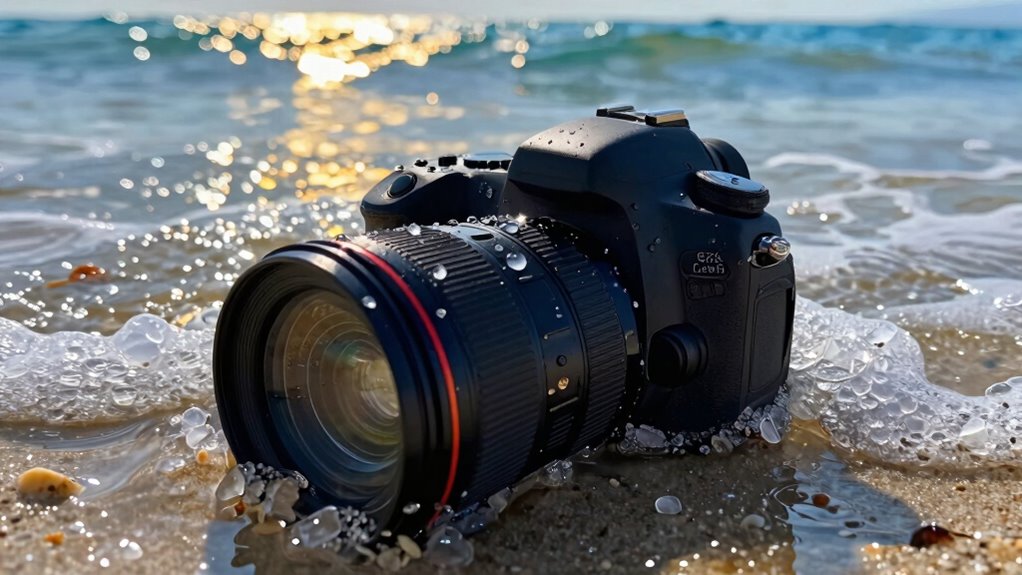
Saltwater can cause rapid and severe damage to your camera gear because even brief exposure leads to corrosion, salt residue buildup, and internal component failure. Humidity, salt spray, and moisture can linger and damage delicate parts long after you’re out of the water. Proper maintenance, like rinsing with fresh water and using protective covers, is essential to prevent costly repairs. Understanding these risks helps you protect your gear—stick around to learn more about preventing saltwater damage effectively.

Get pool and patio gear delivered free with Prime
- Fast, free delivery on millions of items
- Prime Video, Amazon Music and more included
- Member-only deals all year
Key Takeaways
- Saltwater causes corrosion not only externally but also internally, risking long-term damage to camera components.
- Residual salt residue after rinsing can accelerate corrosion over time if not properly cleaned.
- Exposure to salt spray and humidity can compromise waterproof seals, leading to water intrusion.
- Regular maintenance, including thorough rinsing and protective measures, significantly extends camera lifespan.
- Using protective housings and weather-sealed equipment is crucial in preventing costly saltwater-related repairs.
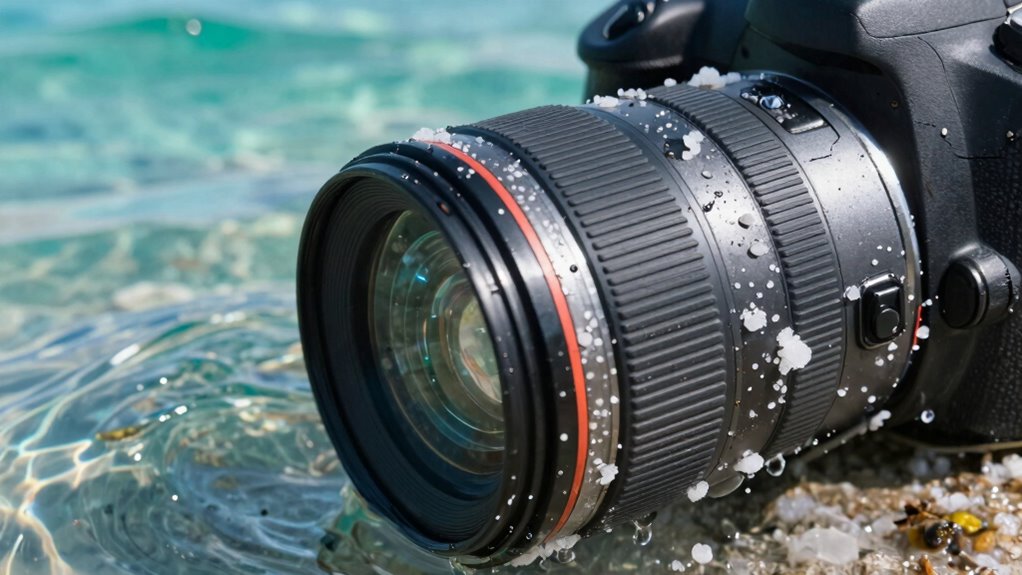
Saltwater can be harsh on your camera gear, but with proper care, you can protect your equipment and keep it functioning smoothly. When you’re out capturing marine wildlife, saltwater exposure is almost inevitable. Salt particles, humidity, and corrosive elements can quickly damage sensitive components if you’re not careful. You might think a quick rinse or wipe is enough, but salt residue can linger and cause corrosion over time, especially in places you can’t see or reach easily.
Understanding ocean safety is vital for anyone serious about underwater or coastal photography. When you’re near the water, the environment is unpredictable—waves can splash saltwater onto your gear unexpectedly, and humidity levels are high. This means you need to take extra precautions, like using waterproof housings or protective covers, to shield your camera from splashes and salt spray. Remember, the impact of saltwater isn’t just immediate; it can cause long-term damage, leading to costly repairs or replacements. Regular maintenance, including rinsing your gear with fresh water after exposure, is essential to prevent salt buildup that can corrode internal parts. Proper maintenance practices are crucial for ensuring your gear remains in optimal condition over time. Additionally, understanding the science of corrosion can help you better anticipate and prevent damage caused by salt and moisture.
Marine wildlife photography demands close proximity, increasing your risk of exposing your gear to salty droplets or accidental splashes. This makes it all the more important to invest in weather-sealed equipment and to practice ocean safety. Handling your camera with care, especially around unpredictable marine environments, minimizes the chances of accidental drops or water intrusion. You should also be aware of your surroundings—waves or sudden movements can cause equipment to fall or get submerged unexpectedly, which could be disastrous for your camera. Additionally, familiarizing yourself with corrosion prevention techniques can save you from costly repairs down the line. Recognizing the importance of preventive measures can help extend the lifespan of your equipment significantly. Being aware of environmental factors that accelerate corrosion can further enhance your protective strategies.
As an affiliate, we earn on qualifying purchases.
Frequently Asked Questions
How Quickly Does Saltwater Damage Camera Components?
Saltwater can damage camera components within minutes if not cleaned promptly. Corrosion prevention is essential, as salt residue accelerates corrosion, especially on metal parts. You should rinse your gear with fresh water immediately after exposure and apply protective coatings or corrosion inhibitors to safeguard against ongoing damage. Regular maintenance helps extend your camera’s lifespan, ensuring it stays functional and protected against the harsh effects of saltwater exposure.
Can Saltwater Damage Be Reversed or Repaired?
Saltwater damage can sometimes be reversed or repaired, but it depends on the extent of corrosion. You should act quickly, using corrosion prevention techniques like rinsing with fresh water and drying thoroughly. For repairs, professionals might clean components, replace corroded parts, or use specialized treatments to stop further damage. Regular maintenance and prompt care are essential to minimize long-term issues and preserve your camera gear’s functionality after saltwater exposure.
What Specific Camera Parts Are Most Vulnerable to Saltwater?
You should know that camera sensors and electronic circuits are most vulnerable to saltwater damage. Salt causes corrosion, especially in metal parts like lens mounts and buttons. With only 20% of cameras being corrosion-resistant, proper corrosion prevention becomes crucial. Material durability varies, but investing in sealed or weatherproof gear can protect sensitive components. Regular maintenance and rinsing with fresh water help reduce salt buildup and extend your camera’s lifespan.
Is There a Difference Between Freshwater and Saltwater Damage?
Yes, there’s a difference. Saltwater causes more severe damage because it leads to salt corrosion and accelerates water intrusion inside your camera. Freshwater might seem less harmful, but it can still cause water damage if it seeps into sensitive components. Saltwater’s corrosive nature makes it especially risky, damaging internal parts faster and more thoroughly. Always clean and dry your gear immediately after exposure to prevent long-term harm.
How Often Should I Clean My Gear After Saltwater Exposure?
After saltwater exposure, you should clean your gear immediately, then every few days if it stays wet or salty. Regular cleaning frequency prevents corrosion and salt buildup. Use protective coatings or sprays to shield delicate parts from future damage. Think of it like giving your gear a fresh coat of armor—quick, consistent care keeps your equipment safe and functions smoothly, even after salty adventures.
Conclusion
Think of your camera gear as a delicate ship steering treacherous saltwater seas. Just as a captain carefully tends to their vessel to prevent corrosion, you must protect your gear from the silent, corrosive threat of salt. A quick rinse or proper drying isn’t just maintenance—it’s your safeguard against unseen damage. When you treat your gear with care, you’re ensuring it remains a steadfast explorer, ready to capture memories from the wildest, salt-kissed adventures ahead.
Halloween Picks
halloween
As an affiliate, we earn on qualifying purchases.