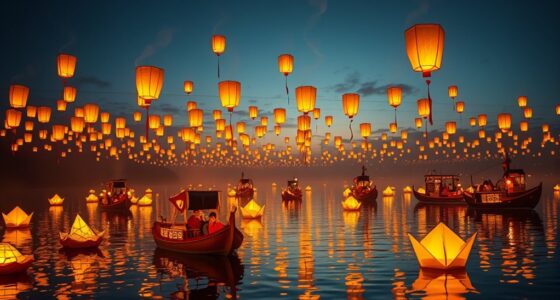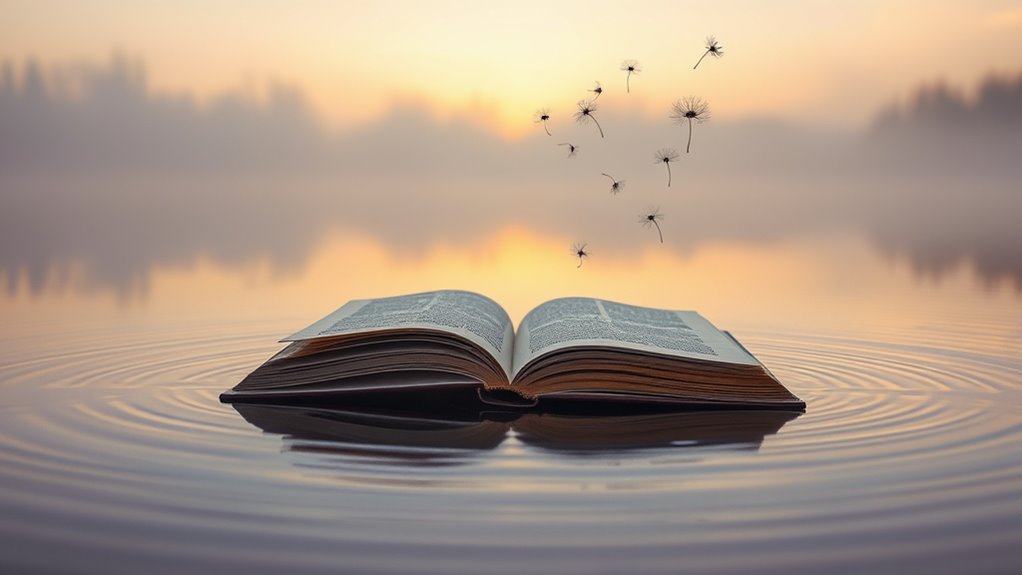

Floating imagery in literature and art symbolizes transcendence, freedom, and the soul’s journey across cultures and eras. It often reveals subconscious desires, fears, or spiritual quests, acting as a bridge between the conscious and unconscious mind. Surreal compositions and vivid colors deepen emotional resonance, inviting you to explore hidden meanings beneath surface appearances. If you continue exploring, you’ll uncover how these symbols reveal universal truths that resonate across time and cultures.
Key Takeaways
- Floating imagery in literature and art often symbolizes transcendence, spiritual ascent, or the boundary between conscious and subconscious realms.
- Across ages, floating has represented freedom, escape, or detachment from reality, reflecting cultural attitudes toward spirituality and liberation.
- Dreamlike floating scenes utilize surreal compositions to reveal hidden emotions, desires, or unresolved conflicts within the subconscious.
- Color symbolism enhances floating imagery, with hues like white or blue evoking serenity, spirituality, or detachment in different cultural contexts.
- Historically, floating symbols serve as bridges between individual inner worlds and collective cultural or spiritual narratives.
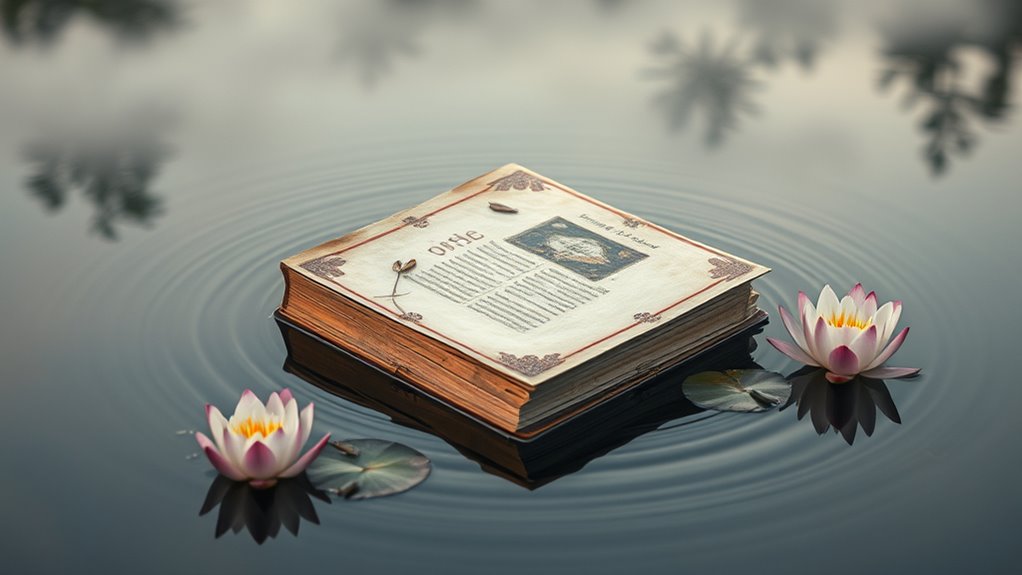
Literature and art symbolism serve as powerful tools that deepen the meaning of creative works by embedding layers of significance beyond their surface. When you explore these symbols, you begin to see beyond the literal, uncovering hidden emotions, cultural messages, and universal truths. One of the most evocative ways symbols communicate is through dream imagery. In both literature and visual art, dreams often represent the subconscious mind, revealing desires, fears, and unresolved conflicts. You might notice how a character’s dream sequence in a novel uses surreal, fantastical images—floating islands, shadowy figures, or impossible landscapes—to evoke feelings that words alone can’t capture. These dreamlike visuals serve as symbolic gateways, allowing you to access deeper truths about the characters’ inner worlds. Similarly, in paintings, dream imagery manifests through surreal compositions that challenge realism, inviting you to interpret their hidden meanings. These symbols transcend literal interpretation, prompting you to reflect on your own subconscious and emotional landscape. Incorporating symbolic representations like dream imagery helps deepen the emotional resonance and interpretive richness of the artwork. Color symbolism adds another rich layer of meaning, serving as an emotional language that transcends words. Colors are associated with specific feelings and ideas across cultures and eras, so their use in art and literature can instantly evoke moods or themes. For example, you might notice how red often symbolizes passion, anger, or vitality, while blue can represent calmness, sadness, or spirituality. When an artist or writer employs particular colors, they’re not just choosing a hue—they’re communicating a complex set of associations that resonate on a subconscious level with you. This use of color symbolism guides your interpretation, helping you understand the underlying tone or message of a piece. For instance, a scene bathed in dark, muted tones might evoke despair or mystery, while bright, vibrant colors could suggest hope or celebration. Recognizing these symbolic uses of color enhances your appreciation of the work’s emotional depth and thematic richness. Throughout history, artists and writers have harnessed dream imagery and color symbolism to create layered, meaningful works that invite prolonged contemplation. These symbols act as bridges between the conscious and unconscious, between individual experience and collective understanding. When you engage with them thoughtfully, you *access* new perspectives, gaining insight not just into the artwork but into human nature itself. By paying attention to these subtle cues—whether surreal visions or nuanced color palettes—you participate in a timeless dialogue that enriches your experience and *enhances* your appreciation for the power of symbolism in both literature and art.
Frequently Asked Questions
How Has Floating Symbolism Evolved Across Different Cultures?
You see that floating symbolism has evolved through diverse cultural interpretations, reflecting each society’s values and beliefs. In some cultures, floating symbolizes spiritual transcendence or connection to the divine, while others see it as freedom from earthly burdens. Over time, floating imagery has also come to represent uncertainty or progression. This dynamic symbolism adapts to cultural contexts, highlighting humanity’s universal fascination with levity, spirituality, and the journey beyond material existence.
What Are Common Motifs Associated With Floating in Mythology?
You see clouds and water often symbolize floating in mythology, yet they ironically anchor us to the earth’s surface. Common motifs include spirits drifting on water, representing transcendence, and clouds symbolizing divine messages or enlightenment. These floating images evoke freedom and spiritual elevation, but they also remind us of our roots. You’re drawn to these symbols because they embody both liberation and the universal desire to rise above earthly bounds.
How Does Floating Relate to Spiritual Transcendence in Art?
Floating in art symbolizes spiritual transcendence and ascension. You might see it as representing dream states where the soul rises beyond physical limitations. Artists use floating to evoke a sense of liberation, connection with higher spheres, or divine presence. When you observe floating figures, you sense an individual’s journey toward enlightenment or spiritual awakening, capturing the moment of transcendence that moves beyond the material world into a higher, sacred level.
Are There Specific Periods When Floating Symbolism Was Most Prominent?
You’ll find floating symbolism most prominent during the medieval period, where it represented spiritual ascent and divine connection. Later, in modern interpretations, artists explore floating to symbolize liberation, transcendence, or the subconscious. This recurring motif reflects a desire to rise above earthly concerns and reach higher states of consciousness. Whether in medieval symbolism or contemporary art, floating continues to evoke themes of spiritual growth and transformation.
How Do Contemporary Artists Interpret Floating Compared to Historical Works?
You see contemporary artists interpret floating through surrealist lenses, emphasizing dreamlike, illogical scenes that challenge reality. They often use minimalist representations, stripping down forms to evoke a sense of weightlessness and transcendence. Unlike historical works that might depict floating symbolically or allegorically, modern artists focus on personal and psychological meanings, blending surrealist interpretations with minimalism to explore identity, consciousness, and the subconscious in innovative, thought-provoking ways.
Conclusion
As you explore the symbolism of floating in literature and art, you’ll see how this motif reveals deeper truths about human experience. Did you know that over 65% of artworks from the 19th century depict floating figures, symbolizing transcendence and uncertainty? This statistic shows how, across ages, floating continues to resonate, reminding you of life’s fragile balance between control and surrender. Embrace these symbols, and you’ll gain a richer understanding of our collective quest for meaning.