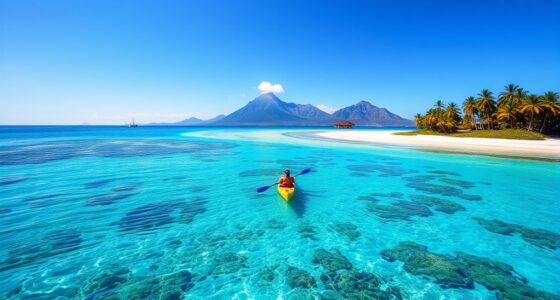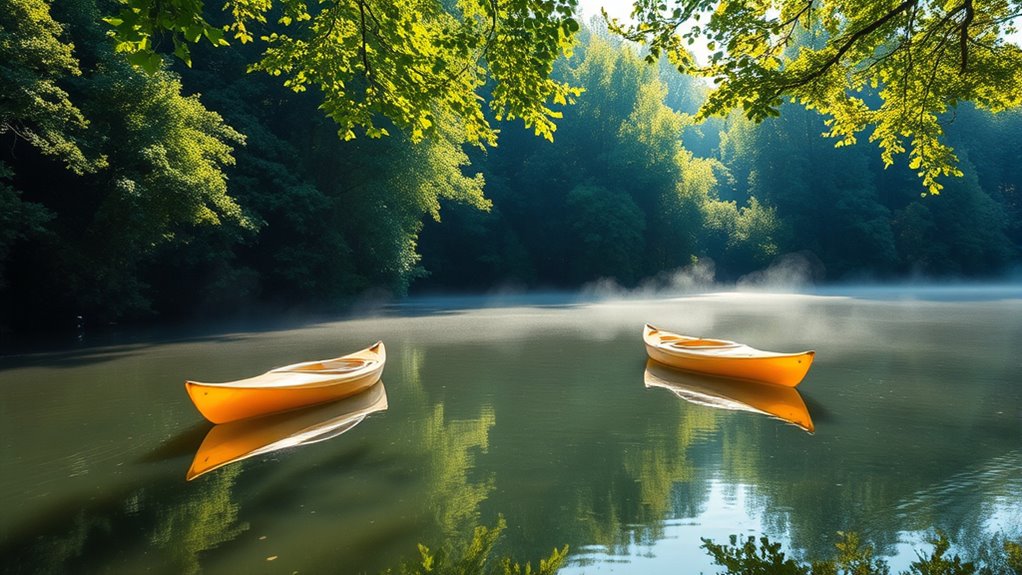

Floating and forest bathing along shoreline settings create a powerful multisensory experience that enhances relaxation and mental clarity. As you float near calm waters and walk through lush greenery, you engage your senses and reconnect with nature, reducing stress and boosting well-being. The gentle sounds of water combined with the sights of the forest foster deep calm and physical rejuvenation. Keep exploring to discover more about this harmonious approach to wellness that transforms your connection to nature.
Key Takeaways
- Floating therapies, like water immersion or gentle paddling, enhance relaxation when combined with shoreline forest walks.
- Shoreline integration amplifies multisensory engagement, promoting mental clarity and physical rejuvenation through water and forest synergy.
- Combining floating experiences with forest bathing supports stress reduction and mindfulness in natural aquatic and woodland settings.
- Accessing tranquil waters alongside lush shoreline forests fosters grounding, tension release, and sensory sharpening.
- This integrated approach encourages reconnection with nature, boosting overall well-being through immersive water and forest therapies.

Have you ever wondered how combining the serenity of water with the tranquility of nature can boost your well-being? It’s a powerful combo that many people are discovering through practices like water therapy and immersive forest experiences. When you integrate these elements, you tap into a natural harmony that relaxes your mind, rejuvenates your body, and sharpens your senses. Water therapy, which involves immersing yourself or simply being near water, has been used for centuries to reduce stress and promote healing. The gentle sounds of flowing streams, the calmness of lakes, or even the rhythmic lapping of waves can have a profound calming effect. When you combine this with forest bathing—strolling through lush canopies on canopy walks—you engage all your senses in a peaceful, restorative environment.
As you walk along a canopy trail, you elevate your connection to nature, feeling the cool breeze through the leaves and hearing the rustle of branches overhead. The canopy walks give you a unique perspective, allowing you to observe the treetops while feeling suspended above the forest floor. This elevated experience heightens your awareness of the natural world around you and enhances your sense of freedom and relaxation. When you immerse yourself in this setting, your body naturally slows down, your breathing becomes deeper, and your mind clears. It’s like giving yourself a reset that’s both invigorating and calming.
Imagine pairing your forest walk with water therapy—perhaps sitting beside a tranquil pond or dipping your toes into a gentle stream after your trek. The combination of water’s soothing presence and the lush greenery surrounding you creates a harmonious environment that amplifies the benefits of each activity. Water has a unique ability to ground and center you, helping to dissolve tension and foster mindfulness. Additionally, incorporating nature-based therapies such as forest bathing and water therapy can further amplify your overall sense of well-being. Meanwhile, the canopy walk immerses you in a living, breathing ecosystem, encouraging you to disconnect from digital distractions and reconnect with the natural world. Together, these experiences foster a deep sense of peace, clarity, and vitality.
Frequently Asked Questions
How Can I Safely Practice Shoreline Floating Alone?
To safely practice shoreline floating alone, prioritize solo safety by always staying within your skill level and avoiding strong currents. Maintain water awareness by observing weather conditions, tide changes, and your surroundings. Use a flotation device for added security and stay close to the shoreline. Inform someone about your plans, and avoid floating in isolated or hazardous areas. Trust your instincts and exit the water if you feel uncomfortable or unsafe.
What Equipment Is Essential for Forest Bathing Near Water?
You might think you need a fancy kit, but for forest bathing near water, simplicity wins. Essential equipment includes waterproof gear to stay dry and safety equipment like a whistle or first aid kit for peace of mind. Ironically, the less you carry, the more you connect with nature. Just make sure you’re prepared, calm, and respectful of the environment, and you’ll enjoy a safe, rejuvenating experience.
Are There Specific Seasons Best for Shoreline Integration Activities?
You should aim for the ideal timing of shoreline integration activities during seasons with mild weather and clear conditions, typically spring and early fall. Seasonal variations affect water levels, wildlife activity, and plant life, enhancing your experience. Avoid harsh winter or peak summer heat, as these can diminish comfort and safety. Planning your activities during these suitable times allows you to fully immerse yourself in the natural beauty and tranquility of the shoreline.
Can Shoreline Floating Help With Mental Health Issues?
Yes, shoreline floating can markedly help with mental health issues. It encourages mindfulness techniques, helping you stay present and focused, which reduces anxiety and depression. As you gently float on the water, you can experience stress reduction through calming sensations and peaceful surroundings. This practice promotes relaxation, clarity, and emotional resilience, providing a natural, accessible way to improve mental well-being and foster a sense of calm amidst daily life challenges.
How Does Shoreline Environment Impact the Benefits of Forest Bathing?
The shoreline environment enhances forest bathing benefits by immersing you in marine ecosystems that promote relaxation and mindfulness. The sights and sounds of water, waves, and shoreline wildlife deepen your connection with nature, boosting mental health. Shoreline conservation efforts protect these ecosystems, ensuring their health and accessibility. This preservation allows you to continually experience the calming effects of the shoreline, making your forest bathing sessions more meaningful and restorative.
Conclusion
As you embrace the gentle dance of floating and forest bathing, you begin to sense the subtle whispers of harmony between water and wood. This quiet retreat offers more than simple relaxation; it guides you toward a graceful surrender, where nature’s secrets softly unfold. In these fleeting moments, you find yourself gently woven into the fabric of the shoreline’s silent song, inviting a deeper connection that lingers long after you leave its tender embrace.