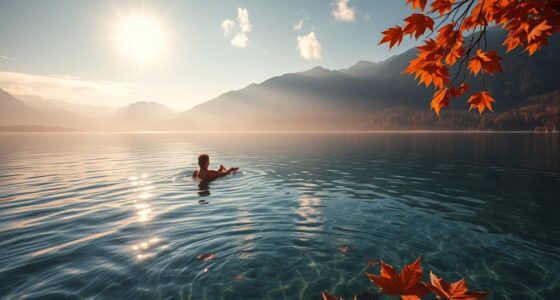

Floating rituals from different cultures highlight water’s sacred role in cleansing, renewal, and spiritual transformation. You might find yourself immersed in sacred rivers like the Ganges or standing under waterfalls during Japanese misogi practices, which wash away impurities. These traditions symbolize rebirth, harmony, and releasing negativity, creating a deep personal and universal connection. If you explore further, you’ll discover the rich meanings and tools that make these water-based acts so powerful across cultures.
Key Takeaways
- Water symbolizes spiritual cleansing, renewal, and transformation across various cultures worldwide.
- Sacred rivers like the Ganges and Japanese springs are central to rituals of purification.
- Rituals often involve immersion, standing under waterfalls, or using special water containers for spiritual renewal.
- Water-based rituals serve as powerful symbols of rebirth, balance, and harmony in diverse traditions.
- These ceremonies foster personal transformation and universal connection through water’s sacred symbolism.
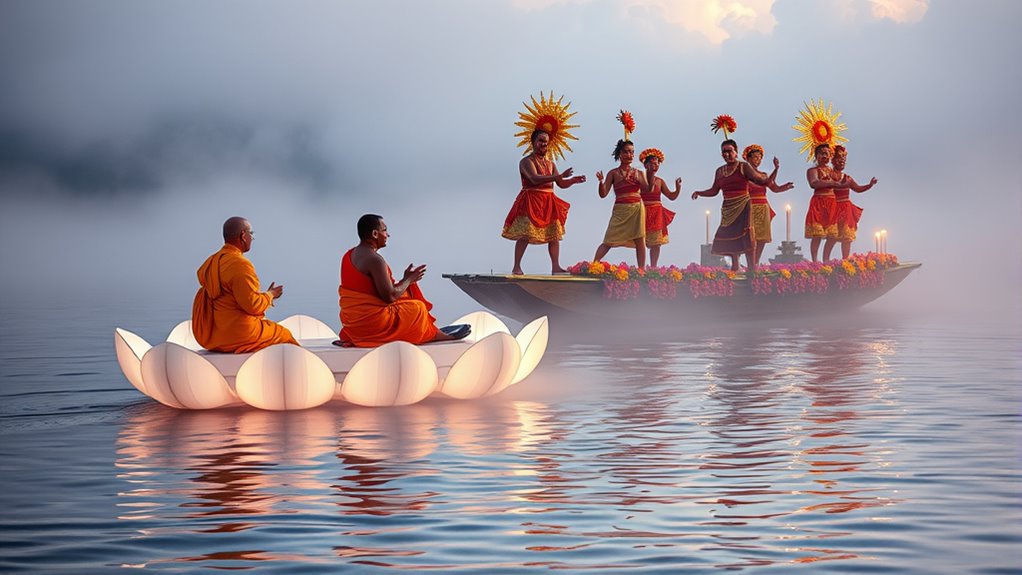
Across cultures around the world, floating rituals serve as powerful symbols of connection, renewal, and spiritual cleansing. These ceremonies often involve submerging oneself in water, symbolizing a fresh start or purification of the soul. When you participate in such rituals, you’re engaging in an ancient act of water purification, believing that water has the unique ability to wash away impurities—both physical and spiritual. It’s not just about cleansing the body; it’s about cleansing the spirit, releasing negative energies, and embracing renewal. This act of floating or immersion becomes a deeply personal, yet universally meaningful, experience that aligns your inner self with the natural world.
In many cultures, floating rituals are rooted in the idea that water embodies the essence of life and transformation. For example, in Hindu traditions, sacred rivers like the Ganges are considered divine channels for spiritual cleansing. Pilgrims dip into these waters to purify their sins and start anew, trusting that the act of water purification will bring spiritual liberation. Similarly, in Japan, the practice of misogi involves standing under waterfalls or floating in natural springs as a form of purification—believing the water’s flow washes away impurities and awakens the spirit. These rituals emphasize that water isn’t merely a physical element but a conduit for spiritual renewal, capable of restoring balance and harmony within. Additionally, the use of specialized water containers in many traditions helps facilitate these cleansing experiences, reinforcing their significance.
Frequently Asked Questions
How Do Floating Rituals Influence Local Community Bonds?
Floating rituals strengthen your local community bonds by encouraging participation and shared cultural identity. When you take part in these traditions, you help foster community cohesion, creating a sense of belonging and mutual respect. These rituals connect you with others, preserving cultural heritage and promoting unity. As everyone engages actively, you reinforce social ties, making your community more resilient, vibrant, and proud of its unique cultural identity.
Are There Specific Materials Used for Floating Objects Across Cultures?
Think of floating objects as vessels of cultural symbolism, each crafted with materials that endure like tradition itself. You’ll find natural elements like bamboo, clay, and wood, valued for their durability and connection to nature, while modern materials like plastics or metals also appear, symbolizing progress. These choices reflect cultural significance and practicality, ensuring that the ritual’s message remains resilient across time, much like the community bonds they strengthen.
What Are the Environmental Impacts of Floating Rituals?
Floating rituals can lead to pollution concerns if non-biodegradable materials like plastics are used, harming local ecosystems. These practices may also cause ecosystem disruption when floating objects interfere with aquatic life or block waterways. You should consider eco-friendly alternatives, ensuring that the rituals respect the environment. By doing so, you help prevent pollution and preserve the health of ecosystems while honoring cultural traditions.
How Have Floating Rituals Evolved Over Centuries?
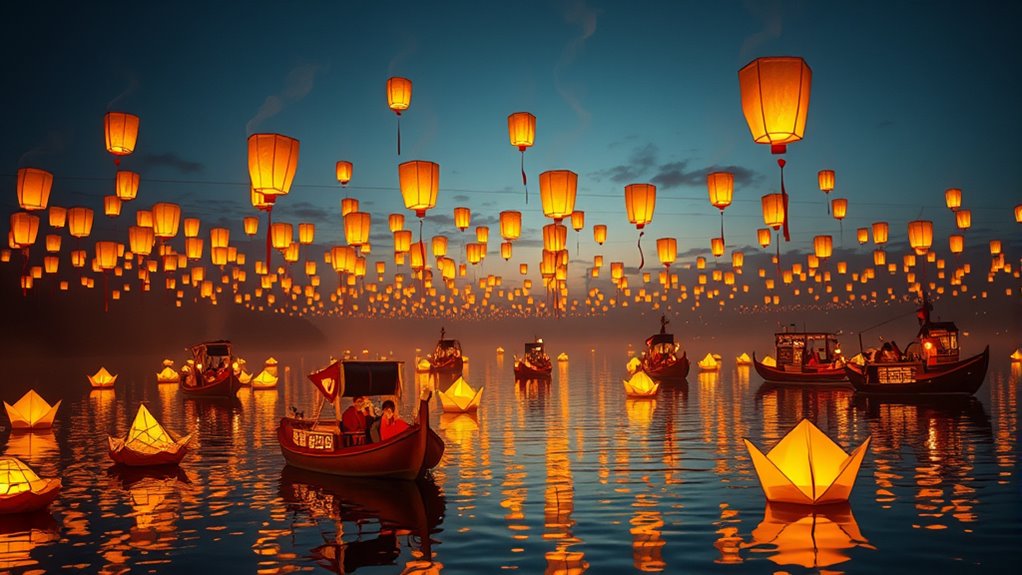
Imagine ancient lakes shimmering under moonlight as floating rituals evolve over centuries. You see how their historical evolution reflects changing beliefs and customs, shaping their cultural significance. Over time, traditions blend with modern practices, while maintaining core spiritual meanings. You witness communities adapting rituals, like adding lanterns or music, to deepen their connection. This ongoing transformation highlights how floating ceremonies remain essential, blending history with contemporary expression.
Are Similar Floating Practices Found in Indigenous or Lesser-Known Cultures?
Yes, similar floating practices exist in indigenous and lesser-known cultures. You might find ritualistic floating tied to cultural symbolism and spiritual symbolism, often representing purity, rebirth, or connection with spirits. These practices typically involve water, where individuals float to honor ancestors, seek healing, or achieve spiritual enlightenment. By participating, you engage with profound cultural meanings, experiencing a powerful connection to nature and your community’s spiritual beliefs.
Conclusion
You now see how floating rituals connect cultures worldwide, symbolizing purification, renewal, or honoring deities. Did you know that over 60% of cultures with floating ceremonies believe these rituals help release negative energies? Whether in rivers, lakes, or spiritual lakes, floating rituals create a profound bond between people and nature. Embrace these traditions’ diversity and significance, reminding you that rituals like these transcend borders, uniting humanity in shared spiritual expression.