
To maintain water clarity around your floating zones, guarantee your filtration system is properly sized and regularly cleaned to remove debris and excess nutrients. Limit overfeeding and fertilizer use to prevent algae buildup, and consider adding beneficial bacteria to outcompete algae. Routine maintenance, such as removing algae mats and debris, helps keep water crystal-clear. Monitoring water parameters like pH and nitrates is also key. Keep these practices in mind, and you’ll see clearer water surrounding your floating zones—discover more tips as you continue.
Key Takeaways
- Implement properly sized and maintained filtration systems to continuously remove debris and pollutants.
- Limit nutrient overload by controlling feeding and fertilizer use to prevent algae overgrowth.
- Regularly clean filters, remove algae mats, and debris to reduce organic matter buildup.
- Introduce beneficial bacteria and consider UV clarifiers to enhance water clarity and control algae.
- Monitor water quality parameters like pH, ammonia, and nitrates to address imbalances promptly.
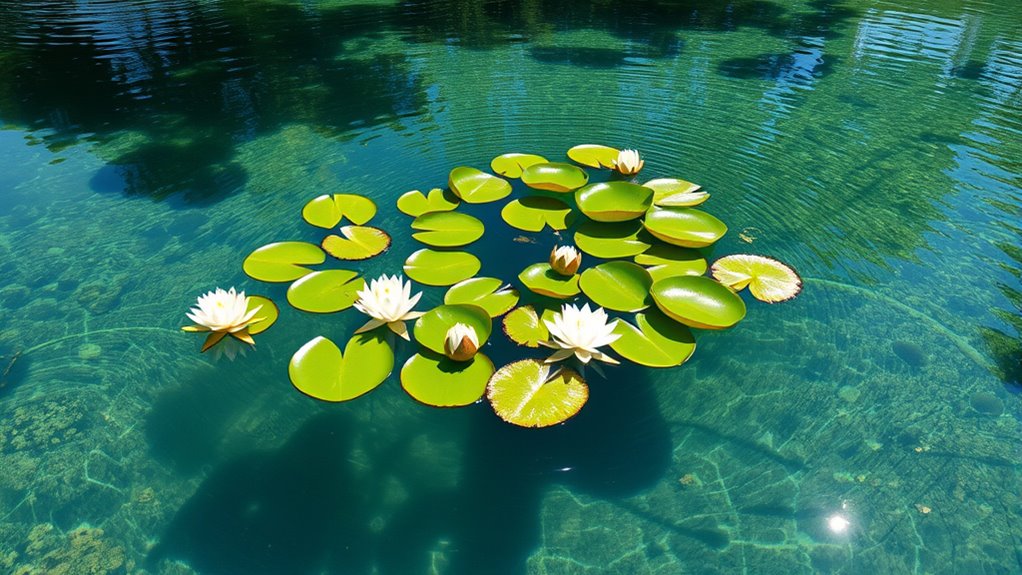
Floating zones can enhance the beauty of your water feature, but maintaining clear water around them requires diligent effort. One of the most effective ways to achieve this is by installing proper filtration systems. These systems are essential because they continuously clean the water, removing debris, excess nutrients, and organic matter that can cloud your pond or lake. Look for filters designed specifically for aquatic environments, such as biological or mechanical filters, and ensure they’re adequately sized for your water body’s volume. Regularly check and clean your filtration system to prevent clogging, which can reduce its effectiveness and allow murkiness to develop. When your filtration system is functioning ideally, it helps keep the water crystal clear, even around floating zones where debris might otherwise accumulate.
Algae control is another critical component of maintaining water clarity around floating zones. Algae tend to thrive in nutrient-rich waters, especially when sunlight is abundant. To prevent algae blooms, limit excess nutrients by avoiding overfeeding fish or adding too many nutrients through fertilizers. You can also introduce beneficial bacteria that outcompete algae for nutrients, thereby reducing algae growth naturally. Using algaecides can be effective in the short term, but they shouldn’t be relied on solely, as they can disrupt the natural balance of your water ecosystem. Instead, focus on preventing algae from taking hold by maintaining good water quality and shading the area with aquatic plants or floating covers that block sunlight. Regular removal of algae mats and debris from around your floating zones keeps the water moving and prevents algae from settling and multiplying.
Consistency is key when it comes to filtration and algae control. You’ll want to establish a regular maintenance schedule, including cleaning your filtration media, removing debris, and inspecting your treatment systems. This proactive approach reduces the risk of murky water and keeps your floating zones looking stunning. Also, monitor water parameters such as pH, ammonia, and nitrate levels; imbalances can promote algae growth and cloudiness. Using UV clarifiers can further enhance water clarity by killing free-floating algae and bacteria, providing an extra layer of filtration. Additionally, ensuring proper filtration system sizing is crucial to effectively maintain water clarity around your floating zones. Remember, the clearer your water is, the more your floating zones will stand out as a beautiful feature rather than an eyesore. By investing in good filtration systems, actively controlling algae, and maintaining routine upkeep, you’ll enjoy a pristine water environment that complements the natural beauty of your floating zones.
Frequently Asked Questions
How Often Should I Test Water Parameters Around Floating Zones?
You should test water parameters around floating zones at least once a week to guarantee ideal water quality. Using the best, most reliable testing kits helps you get accurate readings of pH, ammonia, nitrite, and nitrate levels. Consistent water testing frequency allows you to catch any imbalances early, preventing clarity issues and maintaining a healthy environment for your aquatic life. Adjust your testing schedule based on system changes or weather conditions as needed.
What Are the Best Natural Remedies for Algae Control?
You can control algae naturally by introducing algae eating fish like plecos or Siamese algae eaters, which help keep growth in check. Additionally, consider natural remedies such as adding barley straw, which releases compounds that inhibit algae growth, or increasing aquatic plants to compete for nutrients. Regularly removing excess nutrients and maintaining proper filtration also supports natural algae control, making your water clearer and healthier.
Can Certain Fish or Plants Improve Water Clarity Naturally?
Think of your pond as a well-orchestrated symphony, where aquatic plants and beneficial fish play essential roles. By adding aquatic plants like water lilies and submerged vegetation, you naturally filter the water, absorbing excess nutrients. Beneficial fish, such as koi and goldfish, help control algae and pests. Together, they create a balanced ecosystem that keeps your water clear and lively without chemical interference, like a refreshing gust.
How Does Weather Affect Water Clarity Near Floating Zones?
Weather patterns and seasonal changes directly impact your water clarity near floating zones. Rain can wash in debris, causing cloudiness, while wind stirs up sediments, reducing clarity. Hot, sunny days promote algae growth, making water appear murkier. Cold weather slows down biological activity, helping clarity stabilize. By monitoring seasonal shifts and weather forecasts, you can take proactive steps like adjusting filtration or shading to maintain clear water around floating zones.
Are There Specific Filtration Methods Ideal for Floating Zone Areas?
Think of your floating zone as a delicate garden that needs precise care. You should use high-quality filtration equipment designed for large or dynamic water areas, like biofilters or UV sterilizers, to keep water clear. Regular water testing helps you spot issues early, ensuring your filtration system works efficiently. By choosing the right filtration methods and monitoring water quality, you keep your floating zone pristine and healthy, just like a well-tended garden.
Conclusion
So, there you have it—keeping your floating zones crystal clear is just a matter of patience, vigilance, and a touch of miracle-worker magic. Remember, it’s not about the water itself, but about your relentless obsession with perfection. After all, who needs natural beauty when you can spend hours tweaking, cleaning, and obsessing over every tiny ripple? Embrace the chaos, because in the end, a perfectly clear pond is just a beautifully maintained illusion.