Solar pool heating works best in sunny climates and depends on proper system sizing, placement, and maintenance. Flat plate collectors and integral systems can be effective, but weather, shading, and pool size influence how warm your pool gets. While initial costs are higher, the long-term savings are worth it if you keep the system well-maintained. To understand common limitations and tips for maximizing efficiency, keep exploring what really makes solar pool heating work.
Key Takeaways
- Proper system sizing, placement, and maintenance are critical for maximizing solar pool heating efficiency.
- Solar collectors work best in sunny, unobstructed locations with optimal orientation toward the sun.
- Cloud cover, weather, and shading significantly reduce heating performance; system effectiveness varies seasonally.
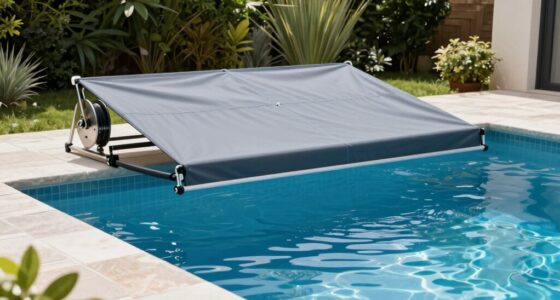
- Pool covers enhance heat retention, reduce evaporation, and improve overall system efficiency and warmth.
- Solar pool heating is cost-effective and environmentally friendly in suitable climates, but less effective in cold or cloudy regions.
How Solar Pool Heating Works
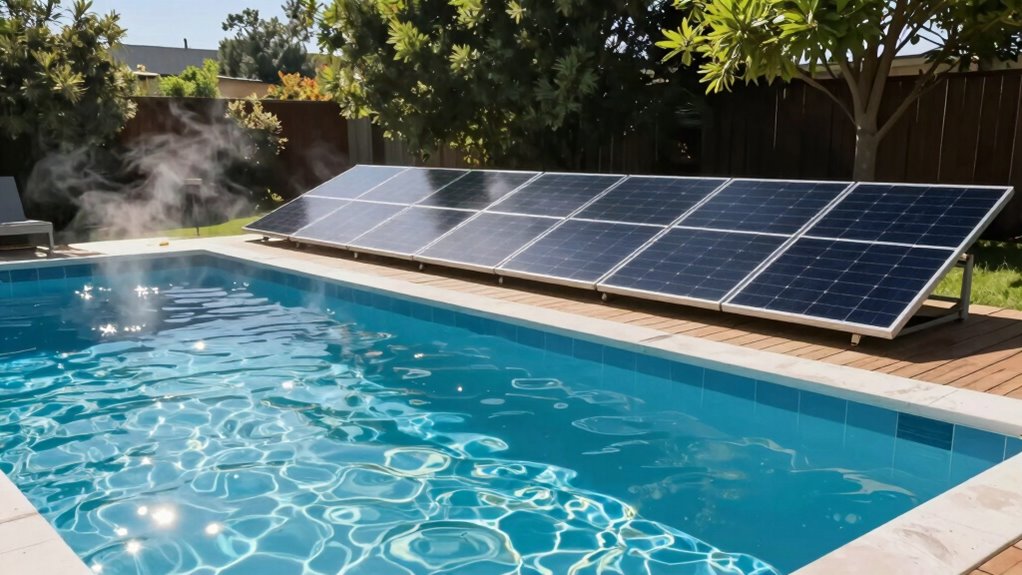
Solar pool heating works by capturing the sun’s energy and using it to warm your pool water. There are many solar pool myths suggesting it only works in perfect weather, but its seasonal performance can actually be quite effective even on cloudy days. The system uses solar collectors—usually installed on your roof or nearby—that absorb sunlight and transfer that heat to the water circulating through them. As water flows through these collectors, it heats up before returning to your pool. This process is eco-friendly and cost-effective, reducing your reliance on traditional heating methods. While solar pool heating performs best during sunnier months, advancements have improved its efficiency, making it a reliable choice for year-round comfort, debunking common misconceptions about its limitations.
Types of Solar Pool Heating Systems

There are different types of solar pool heating systems you can choose from, each with its own advantages. Flat plate collectors are a common option, mounted on your roof or nearby, to absorb sunlight efficiently. Alternatively, integral collector systems combine the collector and filter into one unit, simplifying installation and maintenance.
Flat Plate Collectors
Flat plate collectors are a common choice for solar pool heating systems because they efficiently capture sunlight to heat your pool water. These systems use a solar collector, which acts like a solar panel, to absorb solar energy. Typically, the collector consists of a flat, insulated box with a glazed top that allows sunlight in while minimizing heat loss. Inside, a dark-colored absorber plate transfers heat to the circulating water. As water flows through the collector, it heats up before returning to your pool. Flat plate collectors are durable, easy to install, and effective in sunny climates. They work best when positioned correctly to maximize sunlight exposure, providing a reliable and cost-effective solar heating solution for your pool.
Integral Collector Systems
Have you considered the different types of integral collector systems available for heating your pool? These systems integrate a solar panel directly into your water heater, making installation simple and space-efficient. They typically consist of a specialized solar collector that heats the water as it circulates through the system. Integral collector systems are ideal if you want an all-in-one solution that combines solar heating with your existing water heater. They work well in moderate climates and are easy to maintain. You can choose from various configurations, depending on your pool size and setup. Keep in mind that these systems often have a lower initial cost and are straightforward to install, making them a popular choice for homeowners seeking an effective solar pool heating solution.
- Compact design with integrated solar panel and water heater
- Easy installation and minimal space requirements
- Suitable for moderate climates and small pools
- Cost-effective compared to separate systems
- Low maintenance with durable components
Will Solar Heating Keep Your Pool Warm All Season?
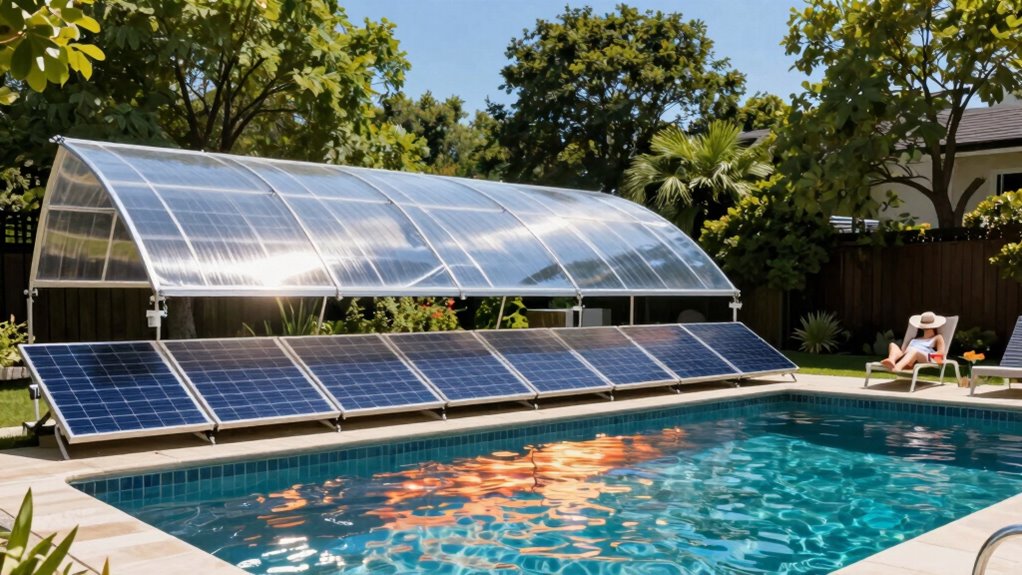
Your climate plays a big role in how well solar heating keeps your pool warm throughout the season. A properly sized and well-designed system can maximize efficiency, but if it’s too small or poorly set up, you might still need supplemental heating. Understanding these factors helps determine if solar heating will meet your swimming needs all season long.
Climate Dependency and Effectiveness
While solar pool heating can be highly effective, its performance largely depends on your local climate. Climate variability impacts how well the system can maintain warm water throughout the season. In areas with long, sunny summers, you’ll likely enjoy consistent seasonal performance. However, in regions with frequent cloud cover or cooler temperatures, solar heating might struggle to keep your pool warm. Your geographic location determines the amount of solar energy available and influences how often you’ll need supplemental heating. Factors like seasonal sunlight hours and air temperatures directly impact effectiveness. To get the most from your system, understand your area’s climate patterns. To put it briefly, solar heating works best in stable, sunny climates but may be less reliable in variable or cooler environments.
System Size and Design
The size and design of your solar pool heating system play a vital role in its ability to keep your pool warm throughout the season. A properly sized system ensures enough solar collectors to capture sufficient sunlight, while an efficient design maximizes heat transfer. Using a pool cover can help retain warmth overnight and reduce heat loss, making your system more effective. Additionally, maintaining proper water chemistry is essential for maximum heat absorption and system performance. If the system is too small, it won’t generate enough heat to keep your pool warm, especially during cloudy days or cooler months. Conversely, an oversized system may be unnecessary and costly. Carefully planning your system’s size and design guarantees you get the most out of your solar investment and enjoy warmer water all season.
Factors That Influence Solar Pool Heating Effectiveness

What factors truly determine how effectively a solar pool heater works? Several elements play a role in maximizing performance. First, your pool’s exposure to sunlight is vital—shaded areas reduce efficiency. A quality pool cover helps retain heat overnight, reducing energy loss. Chemical maintenance ensures water chemistry remains balanced, preventing issues that can hinder heating. The size and placement of the solar collectors matter; they should be appropriately sized and oriented toward the sun. Weather conditions, like cloud cover and wind, also influence heating capacity. Lastly, regular system upkeep keeps components functioning at their best. By paying attention to these factors, you can greatly enhance your solar pool heating results and enjoy a warmer pool more consistently.
What Does Solar Pool Heating Cost Compared to Other Options?
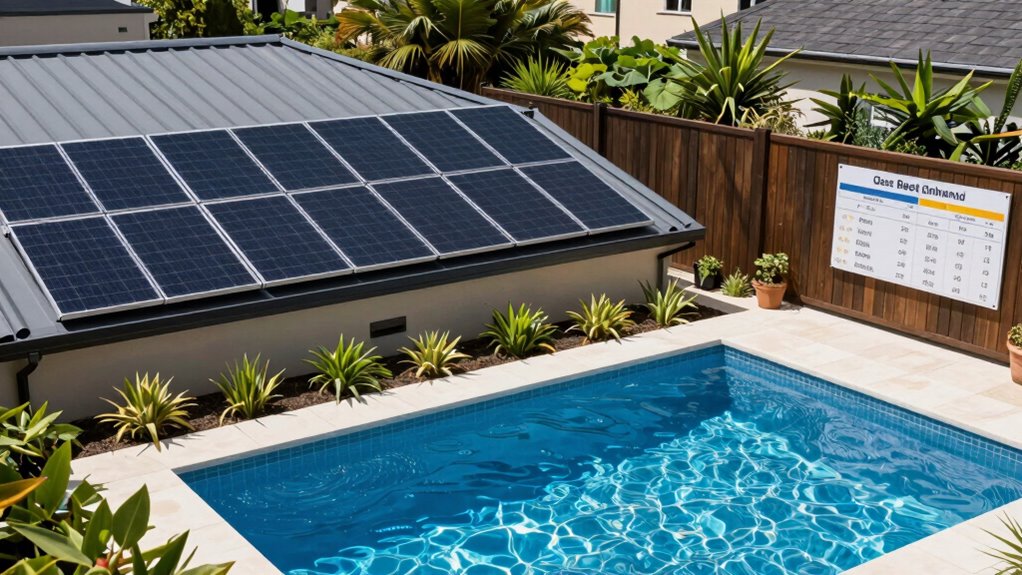
Solar pool heating generally offers a more cost-effective solution over time compared to traditional heating methods like gas or electric systems. When considering a cost comparison, solar options require a higher upfront investment but substantially lower ongoing operating costs. This means you’ll save money on energy bills in the long run. Your budget considerations should include installation expenses, maintenance, and potential incentives or rebates that can reduce initial costs. While solar heating might seem pricier initially, the reduced energy costs often make it more affordable over its lifespan. In contrast, conventional systems can incur higher operational expenses, making solar a smarter financial choice if you’re focused on long-term savings and environmental benefits.
Limitations and Downsides of Solar Pool Heating

Although solar pool heating offers many advantages, it also has notable limitations that can affect its effectiveness. One major concern is cost considerations, as initial setup can be expensive, and ongoing maintenance adds to expenses. Additionally, solar systems rely heavily on weather conditions, so cloudy days or cold seasons reduce efficiency. Maintenance challenges include cleaning panels and checking for leaks or damage, which can be time-consuming. You might also face space constraints, as sufficient roof or yard area is needed for ideal performance. Moreover, solar heaters are less effective in colder climates or during winter months, limiting their year-round usability. These factors can influence your decision, especially if budget, climate, or space are limited.
Sizing and Installing a Solar Pool Heater

Proper sizing and installation are key to maximizing the efficiency and longevity of your solar pool heater. To get it right, consider your pool’s size, climate, and sunlight exposure. Oversized systems waste energy, while undersized ones struggle to heat effectively. Proper installation involves positioning collectors where they receive maximum sun, typically on a south-facing roof or open area. Additionally, maintaining pump efficiency and chemical balance ensures ideal flow and prevents damage. Here’s a quick guide:
| Factor | Importance | Tip |
|---|---|---|
| Pool Size | Determines collector area | Match collector size to pool volume |
| Sunlight Exposure | Ensures adequate heating | Install collectors in direct sunlight |
| Pump Maintenance | Keeps system running smoothly | Regularly check and clean pump |
| Chemical Balance | Protects system components | Maintain proper water chemistry |
| Installation Site | Affects system efficiency | Choose open, unobstructed locations |
Is Solar Pool Heating Worth It?

Is investing in a solar pool heater worth it? It depends on your priorities and climate. Solar heating can reduce energy costs and extend your swimming season, but you should consider factors like pool size, sunlight exposure, and upfront costs. Using a pool cover helps maintain heat and reduces evaporation, making your solar heater more effective. Proper chemical maintenance ensures water stays clean and safe, minimizing algae growth that can hinder heating efficiency. If you live in a sunny area and want long-term savings, solar heating is a smart choice. However, if your climate is cooler or you prefer quick results, other options might suit you better. Ultimately, a well-designed solar system paired with a pool cover and good chemical maintenance can make it worthwhile.
Frequently Asked Questions
How Long Does a Typical Solar Pool Heater Last?
A typical solar pool heater lasts about 10 to 15 years. Durability factors like proper maintenance, climate, and quality of materials influence its lifespan. You can extend its life by regularly inspecting and cleaning the system. When it does need replacement, consider the costs involved, which can vary based on system size and efficiency. Proper care helps you get the most out of your investment and delays costly replacements.
Can Solar Pool Heaters Work in Cloudy or Rainy Weather?
You might be surprised, but solar pool heaters can still work in cloudy days and rainy weather. About 30% of solar energy is captured during overcast conditions, so your heater will still provide some warmth. While efficiency drops, it doesn’t stop functioning entirely. Keep in mind, consistent sunlight yields the best results, but even on less sunny days, a solar pool heater can help maintain your pool’s temperature and save you money.
What Maintenance Does a Solar Pool Heating System Require?
You should routinely clean your solar pool heater system to prevent dirt buildup and guarantee efficiency. Regular panel inspection is essential to check for cracks, leaks, or debris that could block sunlight. Keep the panels clear of leaves and dirt, and flush the system periodically to maintain ideal performance. Proper maintenance extends the lifespan of your system and keeps your pool comfortably warm throughout the season.
Are There Any Government Incentives for Installing Solar Pool Heaters?
Think of government incentives like a golden handshake for your wallet. You can often find government grants and tax credits that make installing solar pool heaters more affordable. These programs aim to encourage eco-friendly choices and reduce energy costs. Check your local and federal programs, as eligibility varies, but don’t miss out on these financial perks that help turn your sunny swimming dreams into reality.
How Does Shading Affect Solar Pool Heating Efficiency?
Shade impact considerably reduces solar pool heating efficiency because it blocks sunlight, leading to less energy reaching your pool’s collector. Sunlight reduction means your system can’t absorb as much heat, causing slower or insufficient water warming. To maximize efficiency, position your solar collectors in areas with minimal shading during peak sunlight hours, ensuring they receive direct sunlight for ideal heat absorption and quicker pool heating.
Conclusion
If you’re considering solar pool heating, know that it can cut your energy costs by up to 70%, making it a smart, eco-friendly choice. While it may not keep your pool warm into the deep winter, it’s effective for most of the swimming season with proper sizing and installation. Ultimately, weighing the initial costs against long-term savings and environmental benefits will help you decide if solar heating is the right fit for your pool lifestyle.