Relying solely on your pool’s water volume to choose a heat pump can lead to costly mistakes, like inefficient heating or high energy bills. To get the right size, consider factors such as climate, pool insulation, covers, and your usage habits. Properly sizing your heater involves more than numbers—it’s about understanding environmental and operational needs. Keep exploring to discover how addressing these elements guarantees your pool stays warm efficiently and comfortably.
Key Takeaways
- Proper sizing considers climate, insulation, and usage patterns, not just pool volume, to ensure efficiency and cost savings.
- Oversized or undersized heat pumps lead to higher energy bills and reduced lifespan; accurate assessment prevents this.
- Evaluate environmental factors like wind, sun exposure, and seasonal temperature changes for optimal heater capacity.
- Use detailed heat loss calculations, including evaporation and insulation, instead of relying solely on pool size.
- Professional assessment ensures correct sizing tailored to your pool’s unique conditions, improving performance and longevity.
How Do You Size a Pool Heat Pump Correctly?
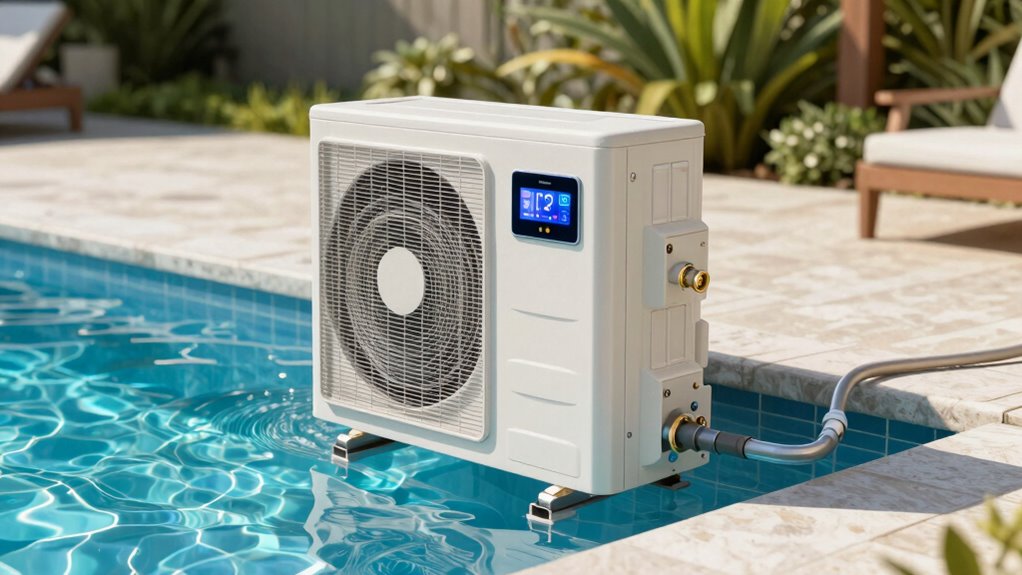
To size a pool heat pump correctly, you need to determine your pool’s heating requirements based on its size, climate, and your desired water temperature. Start by evaluating your pool’s volume and how often you plan to use it. Proper pump maintenance ensures efficient water circulation, which impacts heating performance. Keeping your pool chemistry balanced prevents issues like algae or corrosion that can affect equipment longevity. When sizing your heat pump, consider the local climate—colder environments require more heating capacity. Avoid oversizing or undersizing, as both can lead to higher energy costs or insufficient heating. Accurate sizing ensures your system runs efficiently, maintains stable water temperature, and prolongs equipment life, making your pool experience more enjoyable and cost-effective.
Why Is Pool Volume Not Enough When Choosing a Heater?
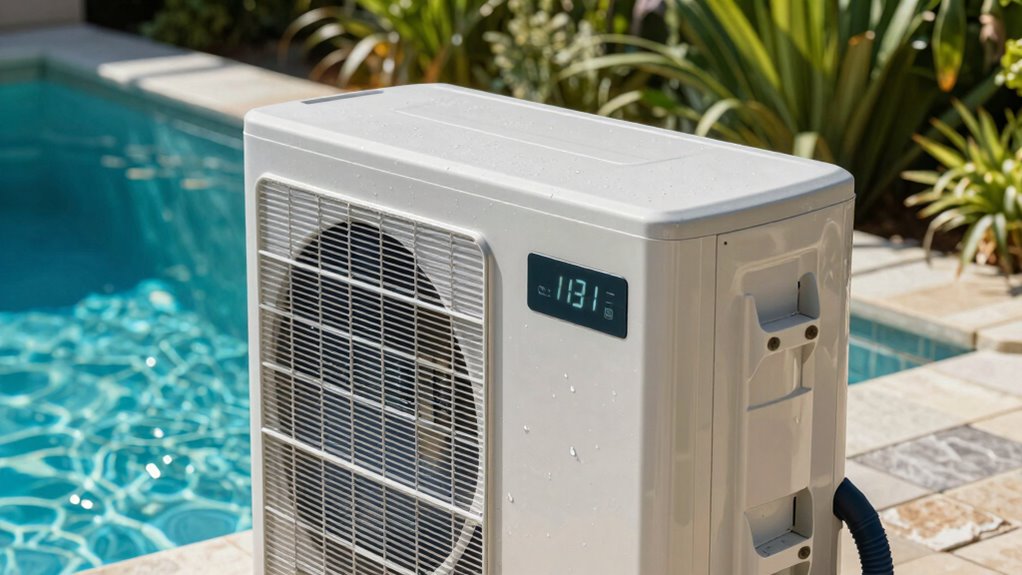
While knowing your pool’s volume is a good starting point, it doesn’t tell the whole story when selecting a heater. Many fall for pool volume misconceptions, believing that larger pools always need bigger heaters. That’s a heater sizing myth. Your pool’s volume alone doesn’t account for factors like climate, desired temperature, or insulation, which all impact heating needs. Ignoring these details can lead to undersized or oversized heaters, wasting energy and money. Proper heater sizing requires more than just pool size; you need to consider environmental conditions and usage patterns. Relying solely on pool volume oversimplifies the process and can result in inefficient heating solutions. To optimize performance and savings, focus on the full picture, not just the size of your pool.
What Environmental Factors Affect Pool Heating Needs?
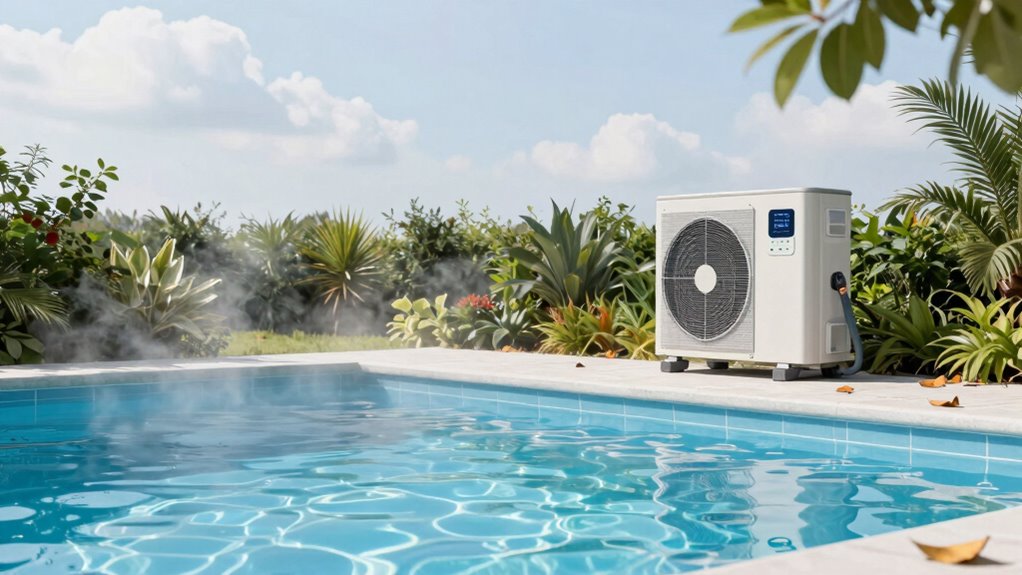
Your pool’s heating needs are influenced by the climate and temperature changes in your area, which can cause your heater to work harder during colder months. Wind can cool the water faster, while sun exposure helps keep it warmer, affecting how much energy your heater uses. Considering these environmental factors helps you select the right size and type of pool heat pump for your setup.
Climate and Temperature Variations
Environmental factors like climate and local temperature variations directly influence how much heat your pool needs to stay comfortable. In cooler climates or during colder months, your heat pump must work harder, reducing solar efficiency and increasing energy consumption. Additionally, temperature fluctuations can impact pool chemistry, making it more challenging to maintain proper water balance. If your area experiences significant seasonal changes, you might need a larger or more efficient heat pump to compensate for these variations. Understanding your local climate helps you choose the right equipment and set realistic expectations for heating performance. By considering these environmental factors, you guarantee your pool remains inviting without overpaying for unnecessary heating capacity.
Wind and Sun Exposure
Sun exposure and wind considerably influence your pool’s heating efficiency. Solar orientation plays a key role—pools facing the sun naturally absorb more warmth, reducing the demand on your heat pump. Conversely, if your pool is shaded or oriented away from direct sunlight, it’ll lose heat faster and require more energy to stay warm. Wind exposure also impacts temperature retention; strong, consistent winds increase evaporation and heat loss, forcing your heater to work harder. To optimize efficiency, consider positioning your pool in a sunny spot with minimal wind exposure, or adding windbreaks like fences or shrubbery. Taking these environmental factors into account helps guarantee your heat pump operates effectively, saving you energy and money while maintaining a comfortable swimming temperature.
How Do Insulation and Covers Improve Heating Efficiency?
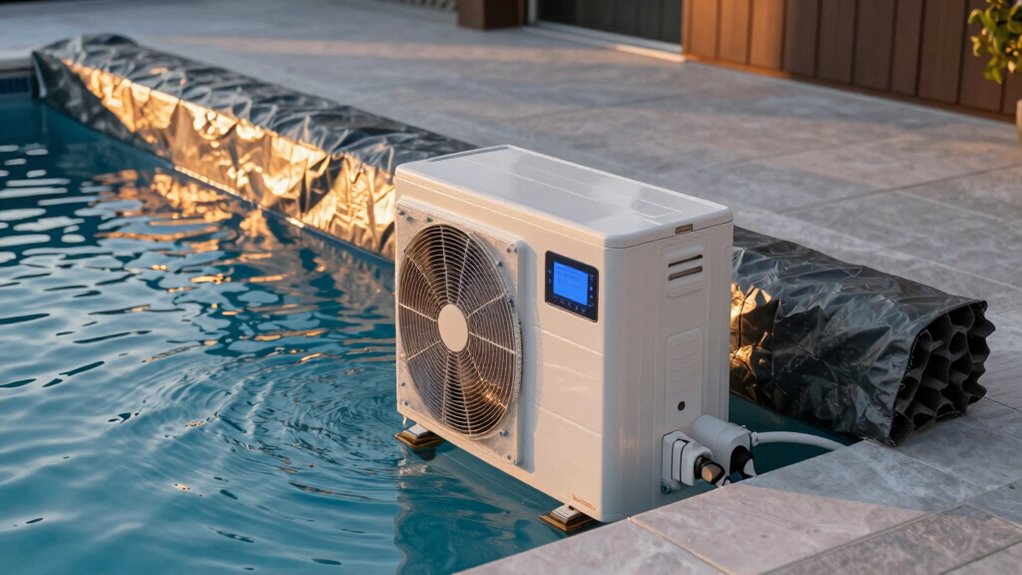
Insulation and covers play a crucial role in boosting your pool’s heating efficiency by minimizing heat loss. Insulation benefits include reducing the amount of heat that escapes through the pool walls and floor, helping your heat pump work less and save energy. Pool covers, especially solar or thermal covers, prevent evaporation, which is a major source of heat loss. Cover advantages also include trapping heat during the night and windy days, maintaining a warmer water temperature. When you use insulation and covers effectively, you decrease the workload on your heat pump, leading to lower energy bills and quicker heating times. Incorporating these strategies into your pool maintenance routine ensures your pool stays warm longer, maximizing your investment in a heat pump system.
How Can You Calculate Your Pool’s Heat Loss Accurately?
To estimate your pool’s heat loss accurately, start by measuring the surface area, since larger surfaces lose more heat. Then, consider your local climate, as colder temperatures increase heat loss rates. Finally, monitor your water temperature regularly to see how much heat your pool needs to maintain your desired level.
Measure Pool Surface Area
Measuring your pool’s surface area is an essential step in accurately calculating its heat loss. The surface area directly impacts the evaporation rate, which accounts for a significant portion of heat loss. To get an accurate measurement:
- Measure the length and width of rectangular pools, then multiply these dimensions to find the surface area.
- For irregularly shaped pools, divide the surface into sections, measure each, and sum the areas.
- Use online calculators or formulas for complex shapes to ensure precision.
Understanding your pool surface area helps determine how much heat your heat pump needs to compensate for evaporation and heat loss. Accurate measurements allow you to size your system properly, avoiding over- or under-sizing.
Consider Climate Factors
Since climate conditions considerably influence your pool’s heat loss, understanding and accounting for these factors is essential for accurate calculations. Solar considerations play a significant role; sunny locations reduce heat loss during the day, while shaded pools lose heat more rapidly. Cold climates increase heat loss through evaporation and conduction, so you’ll need a larger heat pump. Chemical effects also matter; proper water chemistry minimizes evaporation and surface tension issues that can accelerate heat loss. Wind exposure further enhances heat dissipation by increasing evaporation and convection. To get an accurate picture, monitor local weather patterns, seasonal variations, and your pool’s exposure to sun and wind. Incorporating these climate factors guarantees your heat pump is appropriately sized, avoiding overspending or insufficient heating.
Monitor Water Temperature
Monitoring your pool’s water temperature accurately is vital for calculating heat loss and selecting the right heat pump size. Precise readings help you understand how much heat escapes and how well your pool retains heat. To improve accuracy:
- Use a reliable digital thermometer placed at the skimmer or water outlet for consistent readings.
- Record temperature changes throughout different times of the day and weather conditions to gauge heat retention.
- Consider installing a temperature data logger for ongoing monitoring, especially in variable climates.
How Do Usage Patterns Change Your Pool Heater Size?
Your pool usage patterns play a crucial role in determining the right heater size. If you swim frequently or during extended periods, you’ll need a heater that can keep up with higher demand. Conversely, if you only use your pool occasionally, a smaller unit might suffice. Seasonal fluctuations also impact sizing; during colder months, your heater needs to work harder to maintain a comfortable temperature, so you may require a more powerful system. In warmer seasons, less heating is necessary, allowing you to choose a smaller, more efficient model. Understanding your typical usage schedule and how often you plan to swim helps guarantee you select a heater that heats efficiently without overspending on capacity you don’t need.
What Common Mistakes Should You Avoid When Sizing Your Pool Heat Pump?
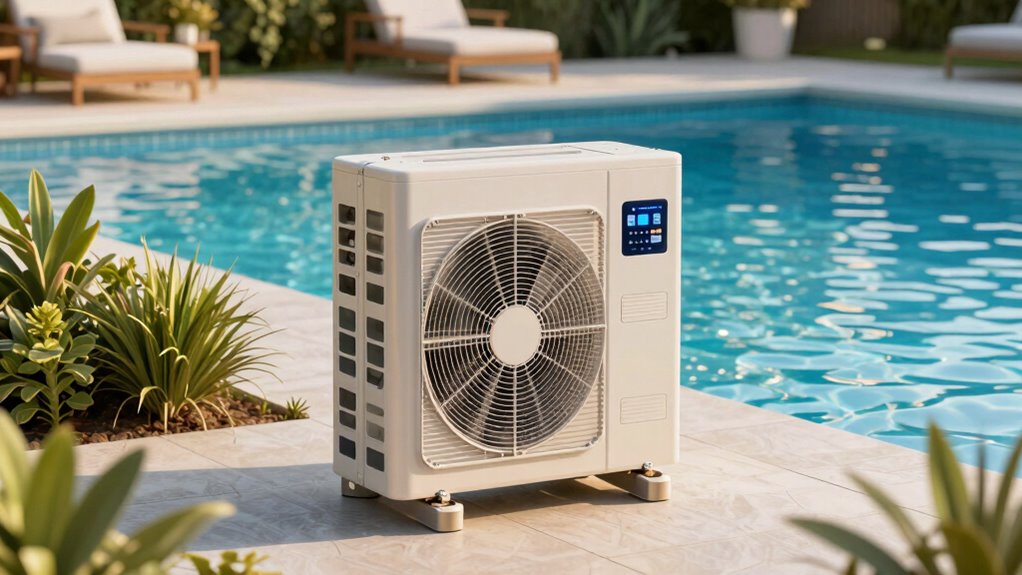
Choosing the wrong size pool heat pump can lead to inefficient heating, higher energy bills, and comfort issues. Avoid these common mistakes:
Selecting the wrong pool heat pump size can cause inefficiency, higher costs, and comfort problems.
- Ignoring pool chemistry and neglecting proper water balance, which can strain the heater and reduce efficiency.
- Overlooking maintenance routines, such as cleaning filters and inspecting components, causing unnecessary wear or failure.
- Relying solely on pool volume without considering factors like insulation, wind exposure, or usage patterns, which can lead to undersized or oversized units.
How Can Professionals Help You Find the Right Size?
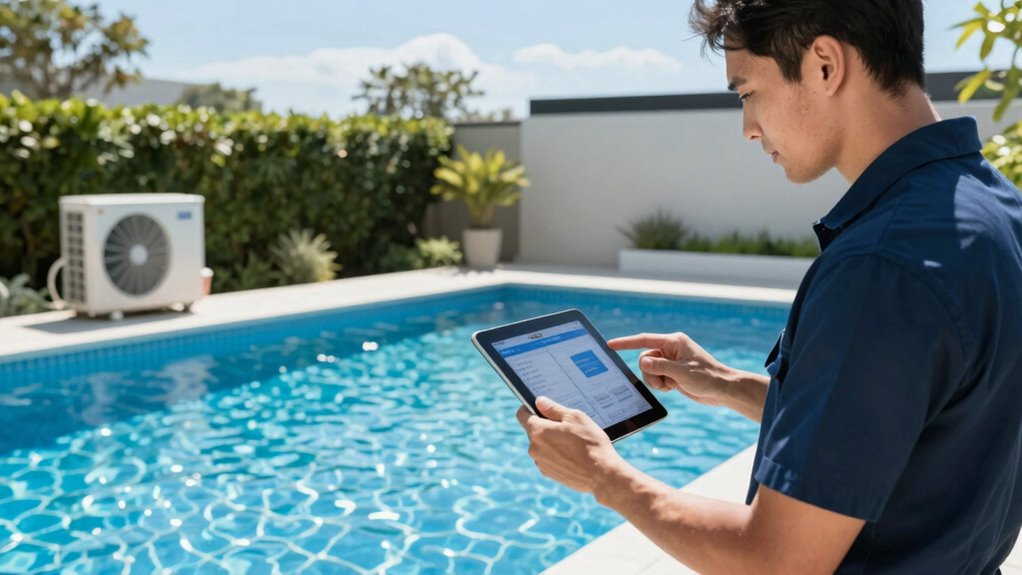
Professionals bring valuable expertise to the pool heat pump sizing process, guaranteeing you get a unit that matches your specific needs. They assess factors like pool chemistry, which influences corrosion and efficiency, helping to select a system that maintains ideal water balance. Experts also evaluate your pump efficiency, guaranteeing the heat pump works seamlessly with your existing equipment and reduces energy waste. By considering these elements, professionals prevent undersized units that struggle to heat your pool or oversized ones that waste energy and increase costs. They use detailed calculations and industry experience to recommend the right size, saving you money and extending your equipment’s lifespan. Ultimately, working with a professional ensures your pool stays comfortably heated while maximizing performance and energy efficiency.
Frequently Asked Questions
How Does Local Climate Influence Pool Heat Pump Sizing?
Your local climate considerably impacts pool heat pump sizing because climate zones and temperature fluctuations determine how much heating capacity you need. In colder zones, you’ll require a larger or more efficient heat pump to maintain comfortable temperatures year-round. Conversely, in milder climates with stable temperatures, a smaller unit may suffice. Always consider your area’s typical weather patterns to choose a heat pump that guarantees consistent, energy-efficient pool heating.
Can Multiple Heaters Be More Effective Than One Large Unit?
Multiple heaters can be more effective than one large unit if you strategically place them, optimizing heater placement for even heat distribution. This setup can reduce energy consumption because you can turn off some units during mild days, saving power. Using multiple heaters also provides redundancy, ensuring your pool stays warm if one unit needs maintenance. Overall, this approach offers flexibility and improved efficiency.
What Are the Maintenance Impacts on Heater Efficiency?
Did you know that poorly maintained heaters can lose up to 20% of their efficiency? Regular maintenance impacts heater efficiency profoundly, as dirty filters and unbalanced chemicals hinder filtration efficiency and cause strain on the system. You should routinely clean filters, check chemical levels, and inspect components. Keeping your heater well-maintained ensures peak performance, saves energy, and extends its lifespan, making it a smart investment for your pool.
How Often Should a Pool Heater Be Serviced?
You should service your pool heater at least once a year to maintain efficiency. Regular maintenance includes checking the filter, inspecting the heat pump, and cleaning the pool cover and solar heating components. This helps prevent debris buildup and guarantees peak performance. If you notice issues, consider more frequent check-ups. Proper upkeep keeps your heater running smoothly and extends its lifespan, especially when combined with effective pool cover and solar heating use.
Does Pool Shape Affect Heat Distribution and Sizing?
Your pool shape definitely impacts heat distribution and sizing. Irregular or complex shapes may create cold spots, making it harder to evenly heat the water. When choosing a heat pump, consider the pool’s design to guarantee proper circulation and efficient heating. You might need a larger or more powerful unit to cover all areas effectively, especially if your pool has nooks, steps, or irregular contours.
Conclusion
Remember, choosing the right pool heat pump isn’t just about volume—it’s about understanding the whole picture, much like Da Vinci’s mastery of art and science. By considering factors beyond size, you guarantee comfort and longevity. Don’t let missteps turn your oasis into a chilly disappointment. Seek professional guidance, and let your pool become a sanctuary, not a source of frustration. Because with the right size, your perfect swimming season is just a decision away.