
If you find yourself continually adjusting chemicals or dealing with algae during hot weather, a pool chiller might be right for you. It helps lower pool temperatures, making swimming more comfortable and reducing maintenance concerns. If energy efficiency and consistent cooling are priorities, a chiller offers precise temperature control in comparison to other methods. To discover if a pool chiller fits your needs and what factors to evaluate, explore more about how these systems work and their benefits.
Key Takeaways
- Pool chillers are ideal when water temperatures become uncomfortable or promote algae growth, especially in hot climates.
- They use refrigeration technology to efficiently lower pool water temperature, improving comfort and reducing chemical use.
- Consider installing a chiller if frequent swimming or extended season use makes temperature control a priority.
- Proper sizing and energy-efficient models ensure effective cooling while minimizing ongoing operating costs.
- Compared to shading or covers, pool chillers provide precise, consistent temperature control regardless of weather conditions.
Do You Need a Pool Chiller? How to Know When Cooling Is Necessary
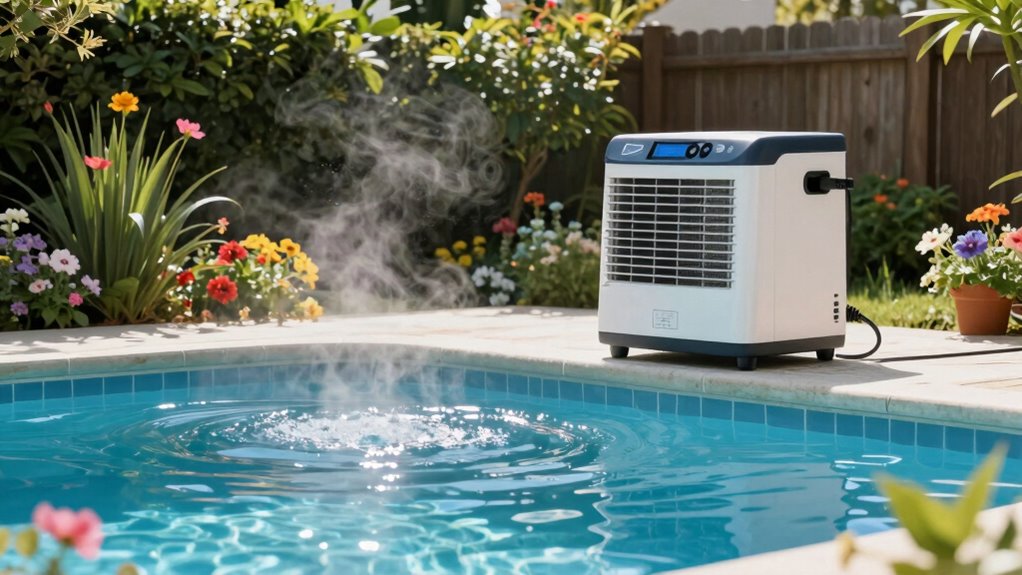
Knowing whether you need a pool chiller depends on how hot your pool gets and how comfortable you want your swimming experience to be. If your pool temperature rises quickly during summer, it can make pool maintenance more challenging, as algae and bacteria thrive in warmer water. A chiller can help keep the water cool and reduce the need for frequent chemical adjustments. Additionally, a pool chiller promotes energy efficiency by lowering the demand on your filtration and heating systems, saving you money in the long run. Consider how often you swim and your comfort preferences—if you prefer invigorating dips in cooler water, investing in a chiller might be worthwhile. Ultimately, if the heat impacts your pool enjoyment and adds to your maintenance efforts, cooling may be the right choice.
What Is a Pool Chiller and How Does It Work?
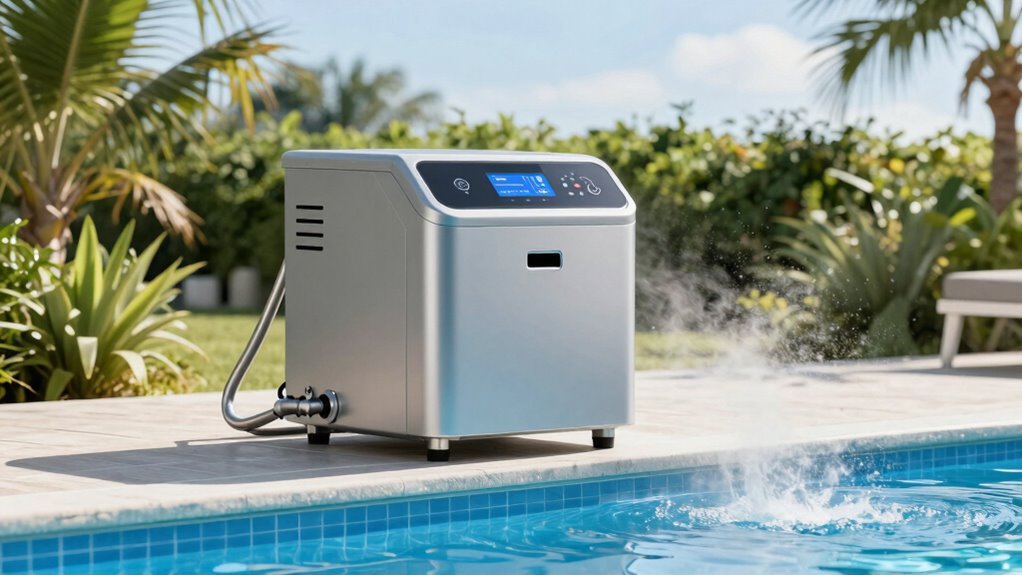
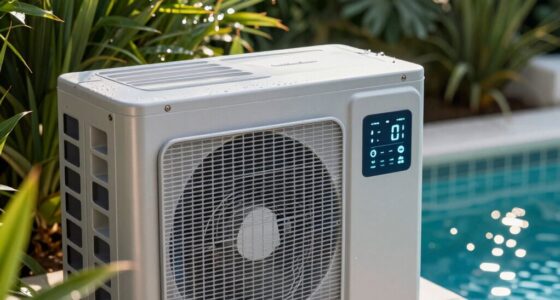
Ever wonder how a pool chiller actually cools your swimming water? It works by removing heat from the pool water through a refrigeration process similar to air conditioners. Water from your pool is circulated through the chiller’s evaporator coil, where a refrigerant absorbs the heat. The cooled water is then pumped back into your pool, lowering the temperature. Pool maintenance becomes easier because the chiller helps prevent algae growth and reduces chemical use by keeping the water at a stable, comfortable temperature. Plus, modern pool chillers are designed for energy efficiency, consuming less power while providing effective cooling. This means you can enjoy a cooler swim without substantially increasing your energy bills, making it a practical addition to your pool setup.
Key Factors to Consider Before Buying a Pool Chiller
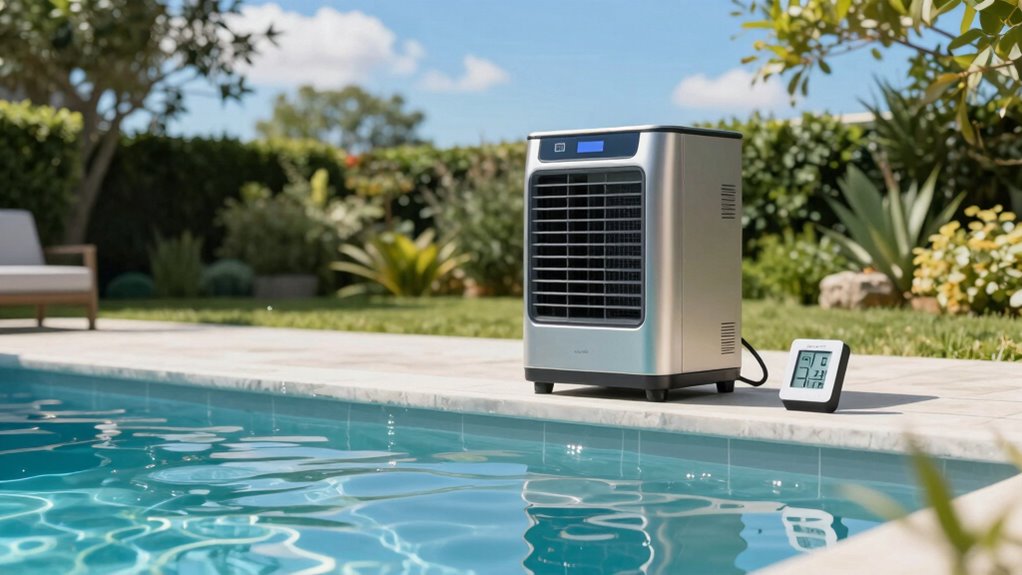
Before investing in a pool chiller, it’s important to take into account several key factors to guarantee you choose the right model for your needs. First, consider energy efficiency, as a more efficient chiller can save you money on operating costs over time. Look for units with high SEER ratings and energy-saving features. Next, evaluate installation considerations, including space availability, electrical requirements, and ease of integration with your existing pool system. Proper placement can impact performance and maintenance. Additionally, assess the chiller’s capacity to match your pool size and usage patterns. By focusing on energy efficiency and installation needs, you’ll select a model that delivers effective cooling while minimizing ongoing costs and complications.
How Do Pool Chillers Compare to Other Pool Cooling Options?

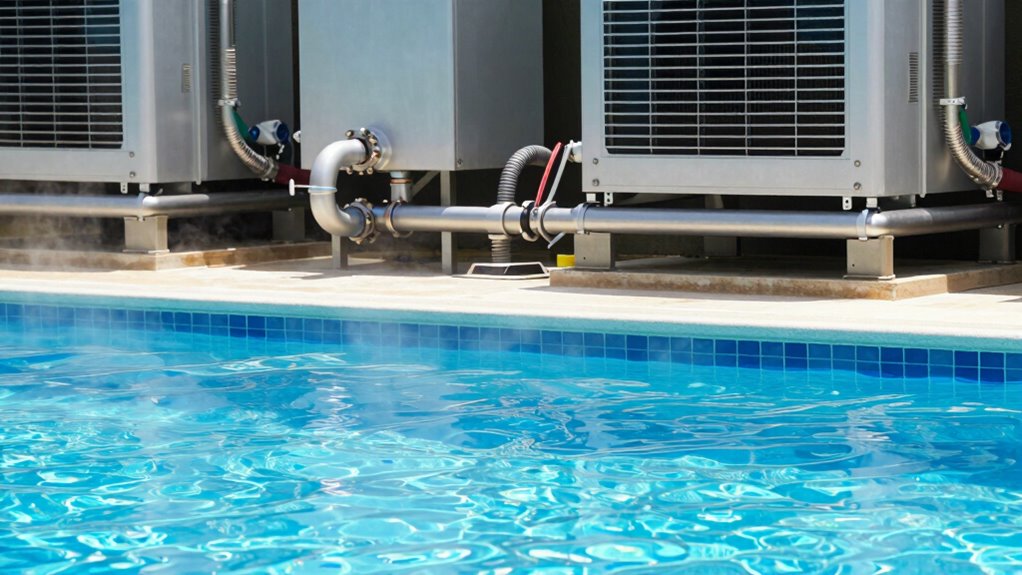
Pool chillers are often considered the most effective way to cool your pool, especially when you need precise temperature control. Compared to shading or pool covers, chillers provide consistent cooling regardless of weather conditions. They also outperform simple circulation or evaporation methods, which are less efficient and harder to control. In terms of energy efficiency, chillers can be more cost-effective over time because they target specific temperature needs without wasting energy on unnecessary heating or cooling. However, installation costs can be higher upfront, especially for larger systems, but their long-term savings and precise control often justify the expense. Overall, pool chillers offer a reliable, efficient solution that balances performance with energy use, making them a competitive option among pool cooling methods.
Is Investing in a Pool Chiller Worth It for Your Pool?

Investing in a pool chiller can be a smart choice if maintaining a comfortable swimming temperature is important to you. When considering energy efficiency, pool chillers can be more effective than traditional methods, reducing overall energy consumption and operating costs. A thorough cost analysis reveals that while the initial investment might be higher, the long-term savings on energy bills and enhanced comfort often justify the expense. If you frequently swim during hot months or want to extend your swimming season, a pool chiller can keep your water consistently cool without overburdening your pool’s filtration system. Ultimately, if energy efficiency and ongoing cost savings matter, investing in a pool chiller could be a worthwhile decision for your pool.
Frequently Asked Questions
How Energy-Efficient Are Pool Chillers Compared to Alternative Cooling Methods?
Pool chillers are generally more energy-efficient than alternative cooling methods, helping you save on energy costs. They use targeted cooling, reducing overall energy consumption and improving efficiency. When comparing costs, chillers often have a higher upfront price but deliver better energy savings over time, making them a cost-effective choice. So, if you’re looking to cut expenses and enhance cooling efficiency, pool chillers are a smart option.
Can Pool Chillers Be Used for Heating as Well?
Did you know that some pool chillers can double as heaters? Yes, their versatility allows you to use them for pool heating, especially with heat pump models. This makes them a practical choice for year-round comfort. You can enjoy a warm swim in winter or cool off in summer, all with one system. Pool heating becomes more efficient and convenient, giving you greater control over your pool’s temperature.
What Maintenance Is Required for a Pool Chiller?
You need to regularly maintain your pool chiller by inspecting key components like the compressor, fan, and coolant levels to guarantee efficient operation. Keep an eye on pool water quality, as debris and algae can clog the system. Schedule routine chiller component inspections and clean filters often to prevent buildup. Proper maintenance extends the lifespan of your chiller and keeps your pool comfortable and clean all season long.
Are There Any Safety Concerns With Installing a Pool Chiller?
Yes, there are safety concerns when installing a pool chiller. You need to guarantee electrical safety by properly grounding and wiring the unit to prevent shocks. Additionally, check the structural integrity of the installation area to support the chiller’s weight and prevent accidents. Always follow manufacturer guidelines and consult a professional to minimize risks, ensuring safe operation and long-term durability of your pool chiller system.
How Long Does a Typical Pool Chiller Installation Take?
A typical pool chiller installation takes about one to three days, depending on your site’s complexity. You’ll want to start with site preparation, ensuring proper space and access for equipment. During the installation timeline, a professional will connect the chiller to your pool’s plumbing and electrical systems. With proper planning and site prep, the process runs smoothly, and you can enjoy cooler, more comfortable pool water in no time.
Conclusion
So, you’ve decided a pool chiller is your pool’s new best friend—how avant-garde. Just remember, while it may keep your water cool enough to impress even the most overheated sunbather, it’s not a magic wand for eternal perfection. Consider your budget, climate, and sanity before diving in. After all, nothing says “luxury” like spending more on cooling your pool than on the pool itself—truly, a masterstroke of aquatic sophistication.