
In colder climates, gas pool heaters often outperform heat pumps because they can generate heat quickly and handle low temperatures better. Conversely, if you’re in a warm, sunny area, heat pumps are more energy-efficient and cost-effective since they use air and electricity. Solar heating can also help in sunny regions. To choose the best system for your climate and goals, consider factors like installation, costs, and environmental impact—you’ll find more helpful details ahead.
Key Takeaways
- Gas heaters excel in cold climates with quick, reliable heating, while heat pumps are more efficient in warm, mild conditions.
- Heat pumps offer lower operating costs and environmental impact in suitable warm climates; gas heaters are better for colder regions.
- Solar heating and insulation complement heat pumps in sunny areas, reducing energy costs and environmental footprint.
- Gas heaters require more maintenance, venting, and safety measures, making them less suitable for environmentally conscious regions.
- Choose based on climate: gas for colder, variable weather; heat pumps and solar for warm, sunny environments.
How Do Gas Pool Heaters and Heat Pumps Work?

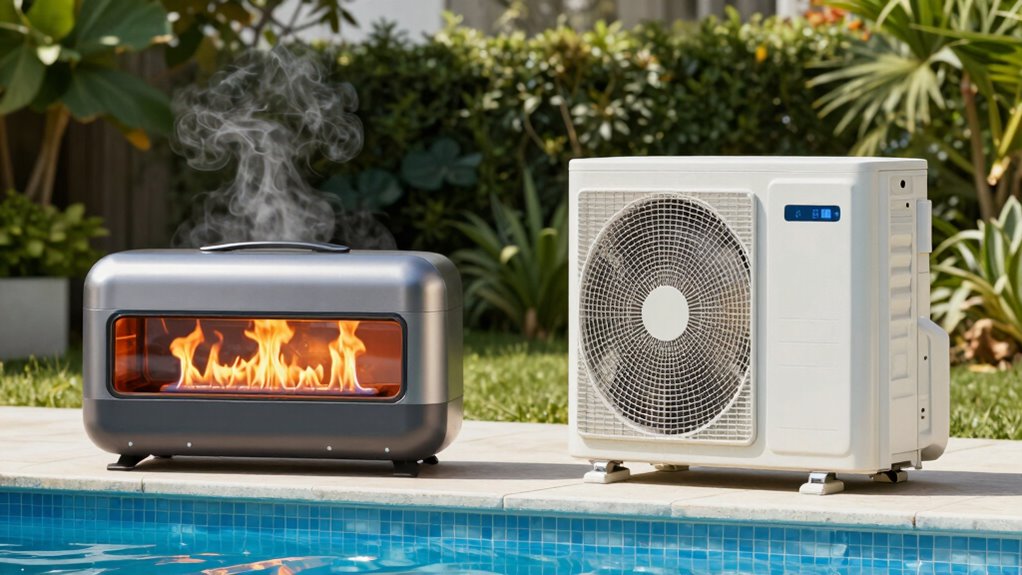
Gas pool heaters work by burning natural gas or propane to generate heat, which is then transferred directly to the water as it circulates through the heater. This process heats your pool quickly, especially when combined with effective pool insulation that minimizes heat loss. While solar heating can supplement your system by harnessing sunlight for free warmth during sunny days, gas heaters provide consistent performance regardless of weather. Proper pool insulation helps retain the heat your gas heater produces, making the system more efficient. Unlike heat pumps, which use electricity to transfer heat from the air, gas heaters generate their own warmth. Understanding how these systems work helps you decide which option fits your climate and energy preferences best.
Which System Performs Better in Cold and Warm Climates?
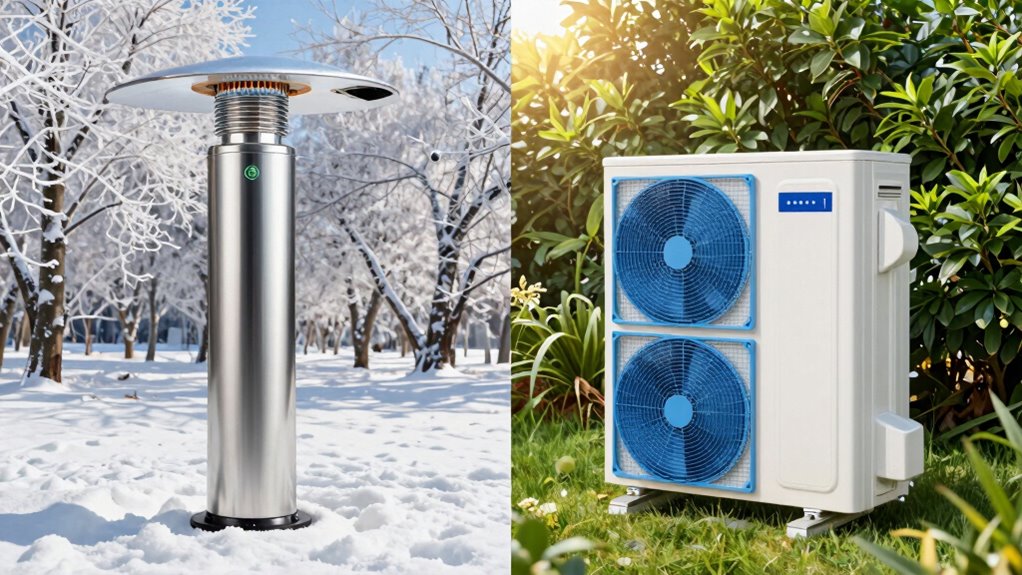
When considering cold and warm climates, you’ll notice that gas heaters tend to perform better in colder weather because they generate heat quickly. In warmer areas, heat pumps can be more cost-effective and energy-efficient, especially during mild temperatures. Temperature fluctuations also play a role, with gas heaters handling sudden changes more reliably than heat pumps.
Cold Climate Efficiency
In cold climates, heat pumps often face challenges because their efficiency drops as outdoor temperatures plummet. To mitigate this, you can consider solar heating options to supplement your pool’s warmth when it’s cold outside. Proper pool insulation also helps retain heat and reduces the demand on your heating system. While gas heaters perform reliably in low temperatures, heat pumps rely on extracting heat from the air, making them less effective in freezing conditions. However, advanced models with enhanced defrosting features can operate better during cold snaps. Combining a heat pump with solar heating and good insulation can improve overall efficiency, but in consistently cold climates, gas heaters tend to be the more dependable choice for maintaining comfortable pool temperatures year-round.
Warm Climate Cost-Effectiveness
In warm climates, heat pumps often prove to be more cost-effective than gas pool heaters because they use electricity to transfer heat, which generally costs less than burning fuel. By combining a heat pump with solar heating options, you can further reduce operating costs and maximize energy efficiency. Proper pool insulation also plays a crucial role in maintaining water temperature, decreasing the workload on your heating system. In these climates, the milder temperatures mean a heat pump can efficiently heat your pool without excessive energy use. Gas heaters tend to be less economical here, as they’re designed for colder conditions and may consume more fuel. Overall, investing in a heat pump complemented by solar heating and good insulation makes your pool heating more affordable in warm climates.
Temperature Fluctuation Handling
Heat pumps generally handle temperature fluctuations better in warm climates because their efficiency drops as outdoor temperatures fall, making them less suitable for colder conditions. In colder weather, a gas pool heater often performs more reliably, especially if you combine it with solar heating options to extend the season. Pool covers also help regulate temperature fluctuations by reducing heat loss overnight or during cold spells. They keep the water warmer and minimize the impact of sudden temperature drops. In warmer climates, heat pumps adapt well to temperature swings, maintaining efficiency with minimal adjustments. However, in colder climates, relying solely on a heat pump isn’t ideal. Instead, pairing a gas heater with solar heating and pool covers offers better control over temperature fluctuations year-round.
How Do Operating Costs and Energy Efficiency Compare by Climate?
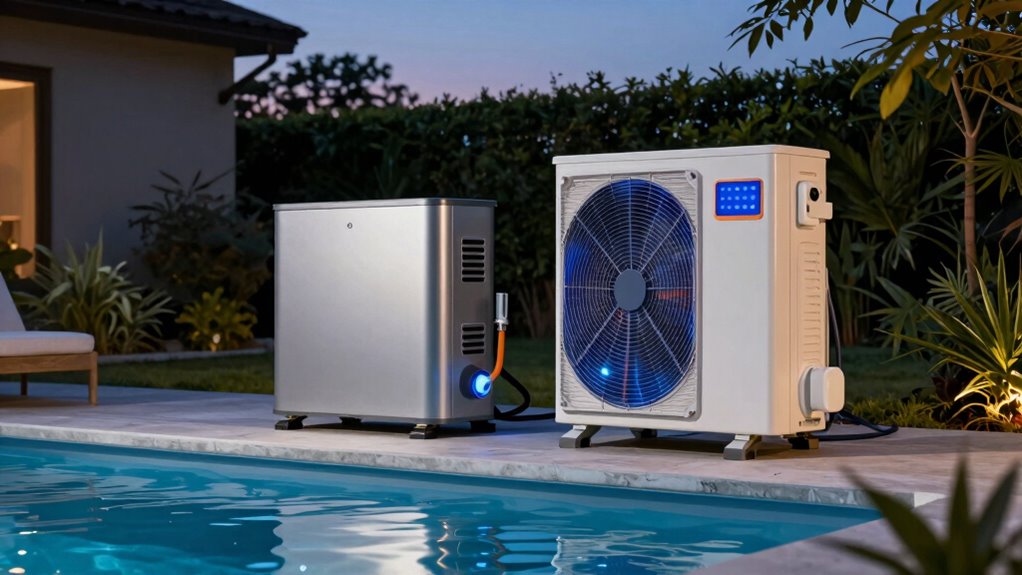
Climate plays a crucial role in determining whether a gas pool heater or a heat pump offers more cost-effective and energy-efficient operation. In warmer climates, heat pumps shine because they use electricity and draw heat from the air, making them more energy-efficient and cost-saving. Conversely, in colder climates, gas heaters tend to be more reliable, especially when outdoor temperatures drop, as heat pumps become less efficient. Consider these points:
- Fuel sources impact costs—gas is often cheaper in colder areas, electricity in warmer regions.
- Heat pumps generally have lower operating costs due to higher energy efficiency.
- Noise levels tend to be lower with heat pumps, making them more suitable for quiet neighborhoods.
- Cold climates can increase operating costs for heat pumps, reducing their efficiency advantage.
What Are the Key Factors to Consider When Choosing a Pool Heater?

Choosing the right pool heater involves balancing several important factors to guarantee you get efficient and reliable performance. First, consider your climate—colder areas may require a more powerful heater or supplemental options like solar heating. Solar heating can be a cost-effective, eco-friendly option if your location receives ample sunlight, but it’s less effective in shaded or cloudy conditions. Pool insulation also plays a pivotal role; well-insulated pools retain heat better, reducing heater workload and energy costs. Think about your budget, maintenance needs, and how quickly you want your pool heated. Compatibility with your pool size and existing setup is essential. By weighing these factors carefully, you’ll select a heater that meets your needs while optimizing energy efficiency and long-term savings.
Are Gas or Heat Pumps More Environmentally Friendly in Your Area?

Your choice between a gas heater and a heat pump depends on your local emission rules, energy sources, and climate. Some areas favor cleaner energy options, making heat pumps more eco-friendly, while others have regulations that limit their use. Considering these factors helps you choose the most environmentally friendly option for your pool.
Local Emission Regulations
Local emission regulations can substantially influence whether gas pool heaters or heat pumps are more environmentally friendly in your area. If your region enforces strict rules to promote green building and reduce emissions, heat pumps often qualify as the greener choice due to their efficiency and use of renewable energy. Conversely, areas with lenient or no regulations might favor gas heaters, which produce more emissions. Consider these points:
- Regulations encouraging renewable energy adoption favor heat pumps.
- Emission caps may restrict gas heater usage.
- Green building standards often prioritize low-emission systems.
- Local policies can incentivize or penalize certain technologies.
Understanding your area’s regulations helps you choose an environmentally responsible option, aligning with sustainable practices and reducing your carbon footprint.
Energy Source Availability
The availability of energy sources in your area substantially impacts whether gas pool heaters or heat pumps are more environmentally friendly. Your local energy infrastructure determines the fuel options accessible to you. If natural gas or propane is readily available, gas pool heaters may be a practical choice, especially if the infrastructure supports efficient fuel delivery. Conversely, if your area relies heavily on electricity generated from renewable sources, heat pumps become a greener option. The environmental impact depends on how the electricity is produced and the efficiency of the energy infrastructure supporting your home. Knowing your fuel options and understanding the regional energy infrastructure helps you choose the most eco-friendly solution for heating your pool.
Climate Impact Differences
Climate conditions substantially influence which pool heating option is more environmentally friendly. In colder areas, gas heaters emit more greenhouse gases, making heat pumps with good pool insulation a greener choice. Conversely, in warmer climates, heat pumps operate efficiently, reducing energy consumption. Consider these factors:
- Solar heating can supplement heat pumps, especially in sunny regions, lowering environmental impact.
- Better pool insulation reduces heat loss, decreasing energy needs regardless of climate.
- Gas heaters may produce higher emissions where electricity is generated from fossil fuels.
- Heat pumps are more eco-friendly in areas with mild winters due to their efficiency.
What Are the Installation and Maintenance Requirements?

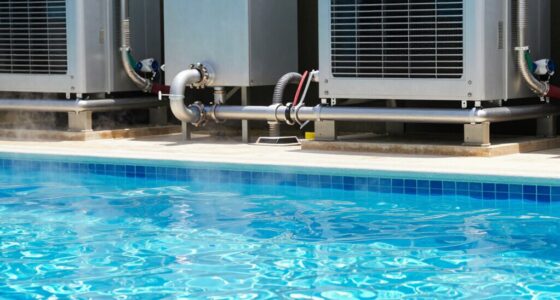
Installing a gas pool heater typically requires professional setup due to its need for proper gas line connections, venting, and electrical wiring. These installation challenges can be complex, often needing permits and careful planning to guarantee safety and code compliance. Once installed, gas heaters tend to have a higher maintenance frequency, as their burners, filters, and vents must be regularly inspected and cleaned to prevent efficiency loss or safety issues. You’ll also need to monitor gas pressure and check for leaks periodically. Conversely, heat pumps usually involve simpler installation processes, often requiring only electrical connections. Maintenance for heat pumps tends to be less frequent, mainly involving filter cleaning and system checks. Overall, installation and ongoing upkeep are key factors influencing your choice.
Which Pool Heater Is Right for Your Climate?
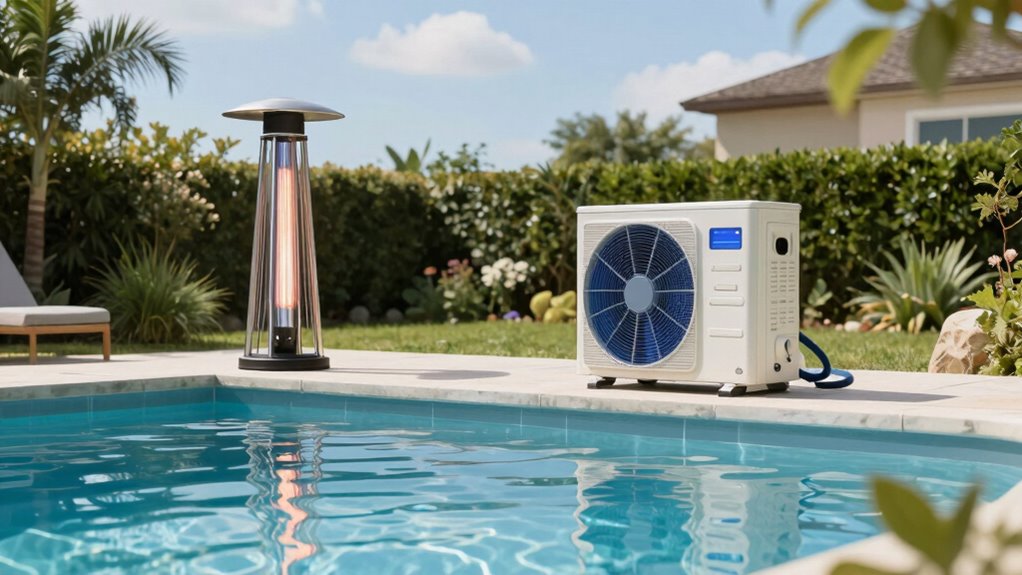
Choosing the right pool heater depends heavily on your local weather conditions. If you live in a warm climate, a solar heating system combined with pool cover options can keep your pool warm efficiently and cost-effectively. In cooler climates, a gas heater provides quick, reliable warmth regardless of sunshine. Consider these factors:
Choose a solar heater for warm climates; gas heaters suit cooler weather for reliable pool warmth.
- Sun exposure and average temperatures
- Frequency of pool use
- Budget for installation and operation
- Availability of solar heating and quality of pool covers
Solar heating works best where sunlight is abundant, but it may struggle on cloudy days. Pool covers help retain heat, making your heater more efficient. Match your climate with the appropriate system for ideal comfort and savings.
Frequently Asked Questions
How Long Does It Take to Heat a Pool With Each System?
Heating speed varies between systems; a gas pool heater heats your pool faster, often in a few hours, making it ideal for quick warm-ups. Heat pumps take longer—around 24 to 72 hours—to reach your desired temperature, but they’re more energy-efficient over time. If you need rapid heating, gas is the way to go. For long-term energy savings, heat pumps provide a slower but more efficient solution.
Can Existing Pool Equipment Be Adapted for Gas Heaters or Heat Pumps?
Think of your pool equipment as a puzzle piece; some fit better than others. You can often adapt existing systems with retrofit options for gas heaters or heat pumps, but it depends on your current pool equipment compatibility. You’ll need to check if your current setup can handle the new heater’s requirements. Consulting a professional ensures a smooth changeover, making your upgrade as seamless as a gentle wave.
What Safety Features Are Available With Gas Pool Heaters Versus Heat Pumps?
Gas pool heaters often include safety advancements like automatic emergency shutoffs that turn off the gas supply if a leak or malfunction occurs. Heat pumps prioritize safety with features like high-pressure sensors and thermal overload protection, preventing overheating. Both systems provide essential safety features, but gas heaters focus more on emergency shutoffs for gas leaks, while heat pumps emphasize sensors and overload protection to guarantee safe operation.
Are There Tax Incentives or Rebates for Installing Energy-Efficient Pool Heaters?
Did you know that over 20% of energy-efficient upgrades qualify for tax incentives or rebate programs? You can often save hundreds on installing energy-efficient pool heaters, especially heat pumps, which are highly favored in many states. Check with local or federal programs for specific rebates and incentives. These financial benefits make upgrading more affordable, helping you enjoy a warm pool while saving money and supporting energy conservation efforts.
How Does Climate Impact the Lifespan of Each Pool Heating System?
Climate influence profoundly impacts the lifespan of your pool heating system. In colder climates, gas heaters tend to be more durable because they handle low temperatures better and often last longer with proper maintenance. Heat pumps may experience reduced efficiency and wear out faster in extreme cold, decreasing their durability. You should consider your local climate when choosing a system to guarantee maximum equipment durability and longevity.
Conclusion
Choosing between a gas pool heater and a heat pump depends on your climate and priorities. Remember, “a stitch in time saves nine,” so consider long-term costs and environmental impact before deciding. If you need quick warmth in colder weather, gas might be your best bet. But for energy efficiency and eco-friendliness in milder climates, a heat pump could be the smarter choice. Weigh your options carefully to keep your pool perfect year-round.