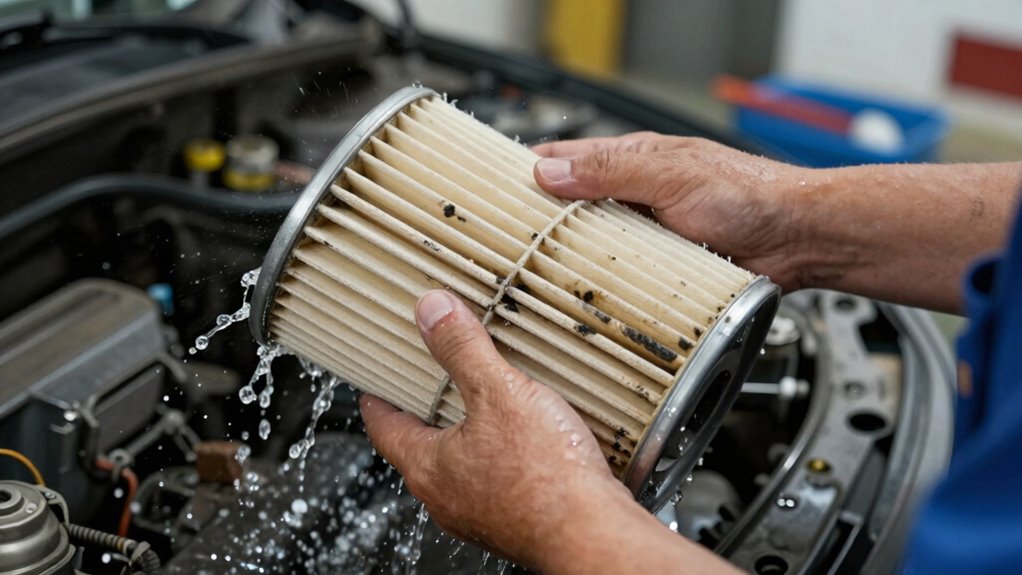

If you ignore proper cartridge filter cleaning techniques, you risk damaging the media or leaving debris behind, which decreases flow and system efficiency. Using harsh brushes, high-pressure water, or neglecting routine maintenance can weaken the filter or cause clogs. Rushing through cleaning or using incompatible chemicals may also harm the filter material. To prevent flow loss and extend your filter’s life, follow correct procedures—more tips await if you keep going.
Key Takeaways
- Using harsh brushes or high-pressure water damages the filter media, causing tears and reducing flow.
- Infrequent or inconsistent cleaning allows debris buildup, leading to clogs and decreased circulation.
- Over-cleaning or aggressive scrubbing weakens the filter’s trapping ability and impairs flow efficiency.
- Neglecting manufacturer-recommended cleaning intervals results in debris accumulation and flow reduction.
- Mishandling or rough treatment during cleaning can damage the filter, causing leaks and flow loss.
Why Proper Cartridge Filter Cleaning Matters for Your Equipment

Proper cartridge filter cleaning is vital because dirty filters can considerably reduce your equipment’s efficiency and lifespan. When filters aren’t maintained properly, their filter longevity diminishes, leading to more frequent replacements and higher costs. Regular cleaning guarantees the filter remains effective, preventing debris buildup that can clog passages and impair flow. Additionally, understanding chemical compatibility is essential during cleaning; using the wrong cleaning agents can damage the filter media or degrade its performance. Always select cleaning solutions compatible with your filter material to avoid unintended damage. Proper maintenance not only extends the life of your filter but also keeps your equipment running smoothly and efficiently. By prioritizing correct cleaning methods, you protect your investment and ensure ideal operation over time.
What Mistakes Can Reduce Flow When Cleaning Your Cartridge Filter?

When cleaning your cartridge filter, making certain mistakes can considerably reduce flow and hinder performance. One common error is using harsh cleaning methods that damage the filter material, causing it to collapse or tear, which blocks flow paths. Additionally, cleaning too infrequently allows debris to clog the filter, increasing resistance and reducing flow. Conversely, over-cleaning or cleaning too aggressively can strip away the filter’s fine particles, compromising its ability to trap dirt and debris effectively. Failing to follow the manufacturer’s recommended cleaning frequency can lead to either neglect or overuse, both of which harm flow. Always handle the filter gently, avoid harsh chemicals, and stick to the proper cleaning schedule to maintain ideal flow and filter life.
How to Clean Your Cartridge Filter Safely Without Damaging It
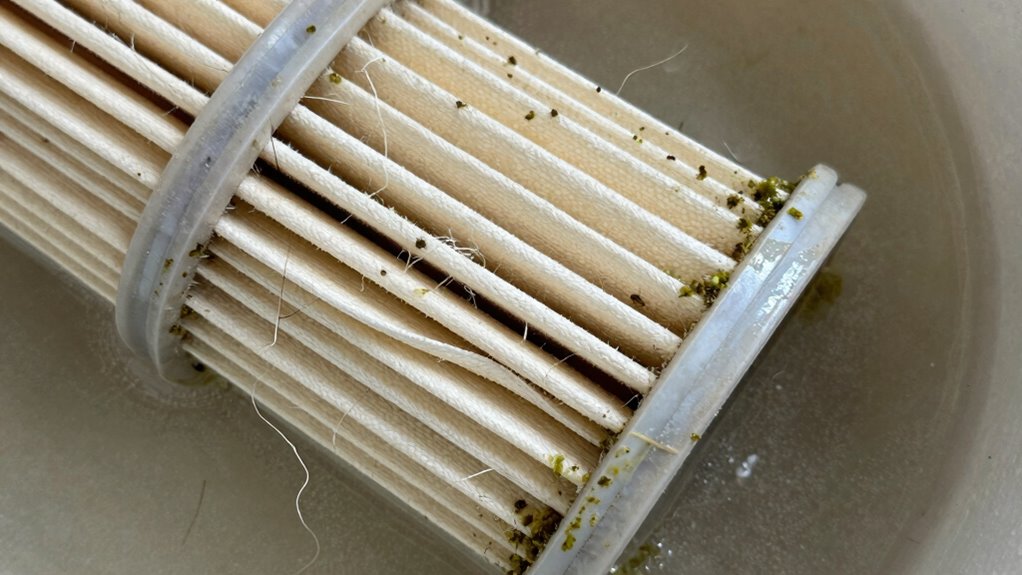
To clean your cartridge filter safely without causing damage, it’s essential to handle it gently and follow recommended procedures. Start by turning off the pump and removing the filter carefully, supporting the filter material to prevent tears or rips. Use a soft brush or low-pressure hose to rinse away debris, avoiding high-pressure jets that can damage the filter material. Regular cleaning frequency depends on usage, but don’t over-clean, as excessive handling can lead to wear. When cleaning, focus on removing dirt without scrubbing aggressively. Always inspect the filter for tears or damage after cleaning, and replace it if needed. Proper handling and adhering to recommended cleaning intervals will help maintain your filter’s integrity and guarantee optimal flow.
Why Rinsing and Drying Correctly Is Key to Prevent Clogs
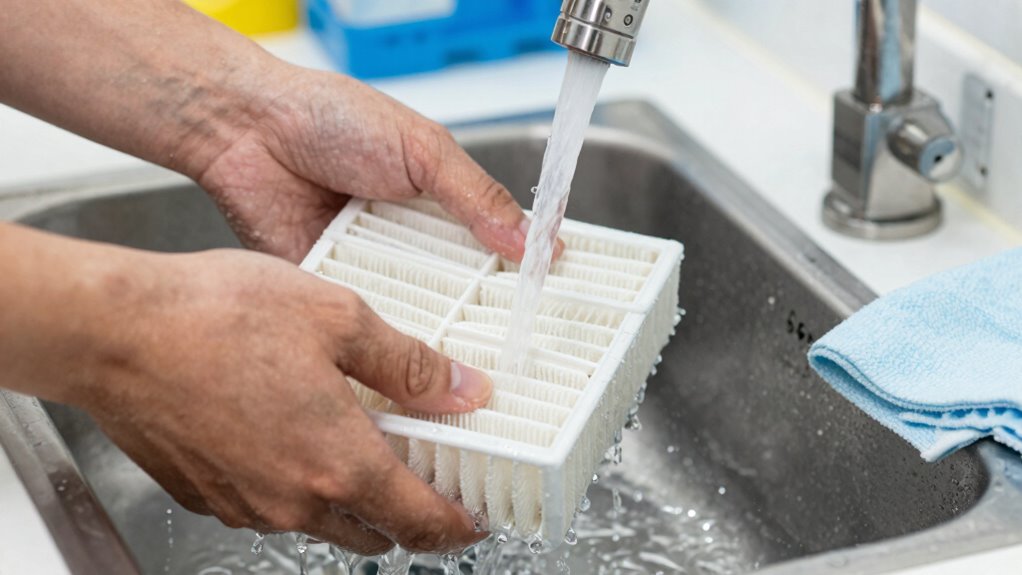
Proper rinsing techniques remove loose debris and residue that can cause clogs later. Drying your filter thoroughly prevents leftover moisture that promotes buildup. When you avoid residue and guarantee complete drying, your filter stays cleaner and functions better longer.
Proper Rinsing Techniques Matter
Rinsing your cartridge filter thoroughly removes debris and residual dirt that can cause clogs later on. Proper rinsing techniques guarantee you don’t leave behind particles that could block the flow. Use a gentle, steady stream of water, focusing on all parts of the filter material. Remember, cleaning frequency depends on your usage; more frequent rinsing prevents buildup.
| Filter Material | Rinsing Frequency |
|---|---|
| Pleated Paper | Weekly |
| Foam | Every 2 weeks |
| Textured Surface | Monthly |
| Synthetic | Every 3 weeks |
Maintaining consistent rinsing practices keeps your filter free of debris, prolongs its life, and maintains ideal flow. Proper rinsing is essential to prevent clog buildup and ensure efficient operation.
Effective Drying Methods Prevent Buildup
After rinsing your filter thoroughly, drying it completely is the next essential step to prevent buildup and clogs. Proper drying is a key part of filter maintenance that guarantees no residual moisture allows mold, bacteria, or debris to settle. Using a clean, lint-free cloth or air drying can help you achieve thorough dryness quickly. Avoid rushing this step, as leftover moisture can lead to buildup that impairs flow and shortens equipment longevity. Well-dried filters are less likely to develop mold or mineral deposits, reducing the need for frequent cleaning and repairs. Consistently drying your filter properly preserves its efficiency and extends its lifespan, saving you time and money in the long run. Effective drying truly supports smooth operation and optimal system performance.
Avoiding Residue and Debris
To prevent clogs and guarantee your filter performs at its best, it’s essential to eliminate all residue and debris during rinsing and drying. Proper debris removal ensures the filter media stays clear of particles that can cause flow restrictions. Rinsing thoroughly washes away dirt, oils, and other contaminants that might cling to the filter media. Drying completely prevents moisture buildup that encourages mold or residue formation.
- Use a gentle stream of water to avoid damaging the filter media
- Remove debris carefully with a soft brush or cloth
- Ensure no residue remains in crevices or pleats
- Avoid rushing the drying process—air-dry thoroughly
- Check for any lingering debris before reassembling
Effective rinsing and drying are key to maintaining unobstructed flow and preventing clogs.
Tips to Maintain Optimal Flow After Cleaning Your Cartridge Filter
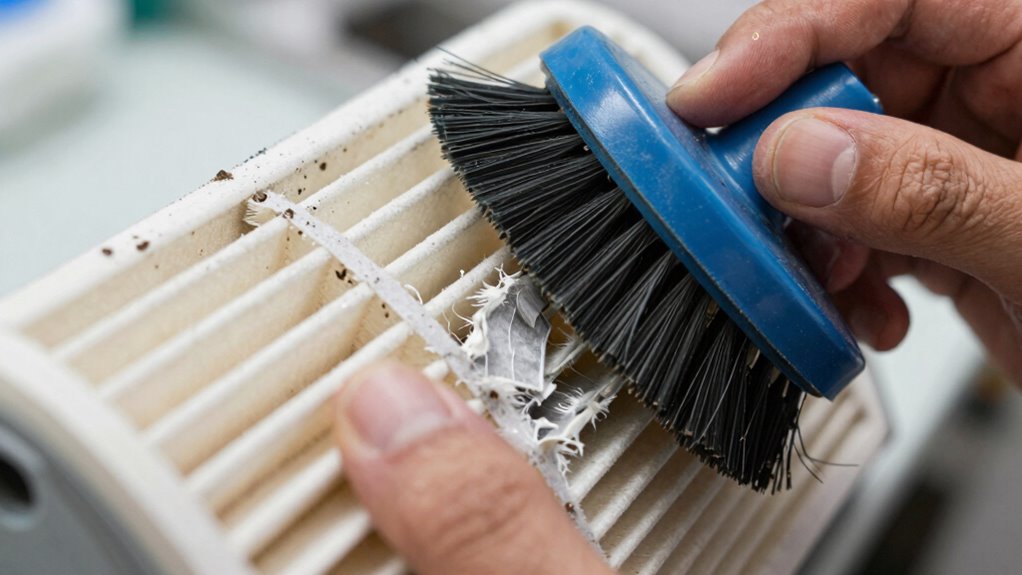
Maintaining ideal flow after cleaning your cartridge filter is essential for keeping your system running efficiently. To guarantee optimal filter maintenance and prolong equipment longevity, regularly check your filter’s condition and replace worn parts promptly. Properly reassemble the filter to avoid leaks that can hinder flow. Additionally, monitor flow rates and pressure gauges to detect early signs of clogging or damage.
| Tip | Benefit |
|---|---|
| Check flow rates frequently | Detects issues early, prevents damage |
| Replace damaged cartridges | Maintains flow, extends equipment life |
| Keep surroundings clean | Prevents debris buildup that impairs flow |
| Follow manufacturer guidelines | Ensures correct procedures, preserves longevity |
Step-by-Step: The Best Way to Clean Your Cartridge Filter
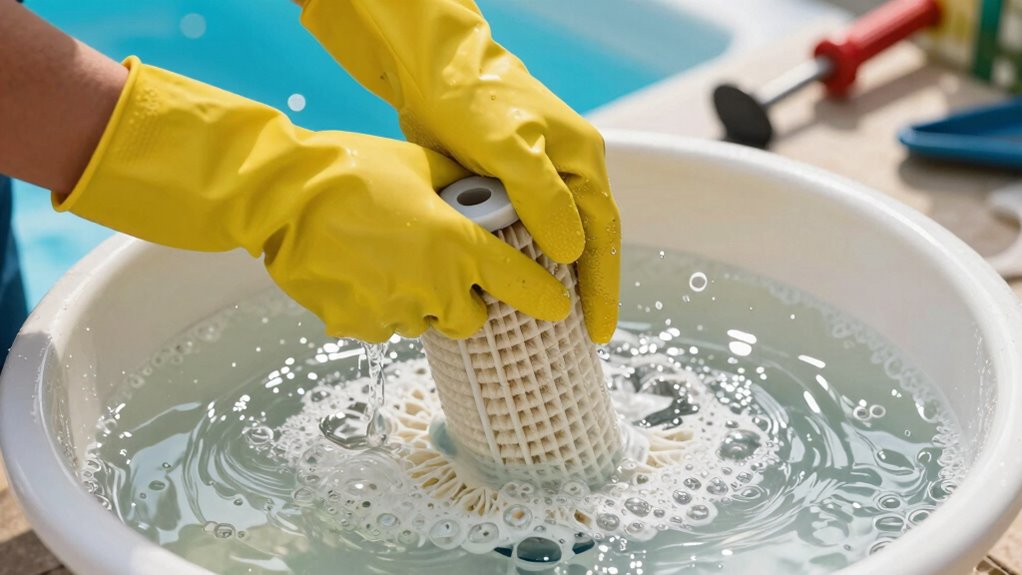
Cleaning your cartridge filter thoroughly guarantees it functions efficiently and lasts longer. To do it right, start by removing the filter from your pool and rinsing off loose debris with a garden hose. For a deeper clean, consider chemical cleaning solutions designed for cartridge filters—this helps break down oils and grime. Avoid using harsh cleaners that can damage the filter media. If your filter is heavily clogged or damaged, consider filter replacement instead of re-cleaning.
Regularly clean your cartridge filter with gentle rinsing and chemical solutions for optimal pool maintenance.
Remember these key points:
- Never skip rinsing after chemical cleaning
- Use a soft brush to scrub without damaging the media
- Regularly inspect for tears or wear
- Follow manufacturer instructions for chemical solutions
- Properly dry and store the filter before reinstallation
What to Do When Flow Problems Persist After Cleaning
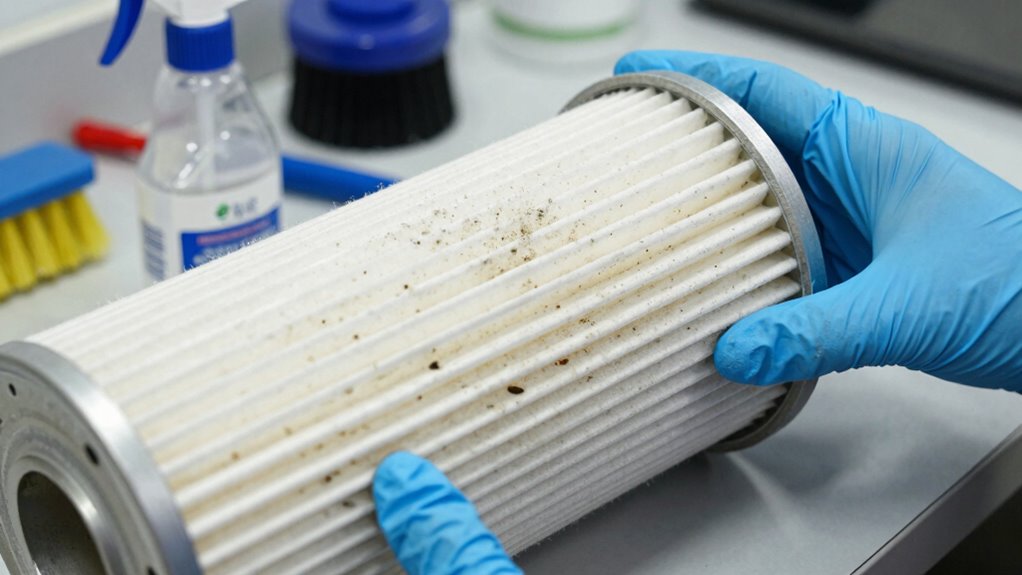
Even after thoroughly cleaning your cartridge filter, persistent flow issues can be frustrating. First, check the filter compatibility—using the wrong type or an incompatible replacement can restrict flow despite proper cleaning. If flow remains low, consider applying targeted chemical treatments designed to break down stubborn buildup or biofilm. Be cautious to select chemicals suitable for your filter material and pool chemistry. Sometimes, mineral deposits or algae can hide deep within the filter media, so a secondary cleaning or a specialized cleaning solution may be necessary. Also, verify that your pump and plumbing aren’t obstructed or clogged, as these issues can mimic filter problems. Addressing both filter compatibility and appropriate chemical treatments helps restore ideal flow and keeps your pool system running smoothly.
Frequently Asked Questions
How Often Should I Schedule Cartridge Filter Cleaning?
You should schedule cartridge filter cleaning every 4 to 6 weeks, depending on your filter’s lifespan and usage. Regular cleaning helps maintain ideal flow and extends your filter’s life. Don’t wait too long, as neglecting cleaning can cause clogs and reduce efficiency. Keep an eye on pressure gauges or flow rates; if they drop, it’s time to clean your filter to guarantee smooth operation.
Can Using Harsh Chemicals Damage My Filter’s Material?
Yes, using harsh chemicals can cause chemical damage and material degradation to your filter. When you choose strong cleaners, they may weaken or break down the filter’s material, reducing its effectiveness and lifespan. To protect your filter, always opt for gentle, manufacturer-approved cleaning solutions. This approach helps maintain the filter’s integrity, ensuring it continues to perform well and lasts longer without risking damage from aggressive chemicals.
What Signs Indicate My Filter Needs Immediate Cleaning?
If your water suddenly turns murky or smells terrible, it’s a red flag that your filter’s clogged and needs cleaning immediately. Ignoring these signs can drastically shorten your filter’s lifespan and ruin your water quality. You might notice reduced flow or pressure, which indicates debris buildup. Act fast—clean your filter thoroughly to restore peak flow and keep your water safe, ensuring your filter lasts longer and your water remains crystal clear.
Are There Specific Cleaning Tools Recommended for Cartridge Filters?
You should use specific filter cleaning tools and cartridge maintenance equipment designed for your filter type. A gentle hose nozzle with a spray wand helps remove debris without damaging the filter material. Soft brushes can scrub stubborn dirt, while a filter cleaner solution can improve effectiveness. Avoid harsh tools that could tear the filter. Proper cleaning tools guarantee your cartridge stays in good condition, maintaining ideal flow and prolonging filter life.
How Does Environmental Temperature Affect Filter Cleaning Procedures?
Think of cleaning your filter like tuning a vintage radio—temperature impact can make or break your results. When it’s too hot, cleaning efficiency drops because dirt and debris stick harder. Cold weather, on the other hand, slows down the process, making it harder to get a thorough clean. To keep your filter working at peak performance, adjust your cleaning procedures based on environmental temperature, ensuring ideal flow and longevity.
Conclusion
Remember, a clean cartridge filter is the heartbeat of your equipment’s performance. If you rush or cut corners, you risk choking the flow like a clogged artery. Take your time, follow the proper steps, and treat your filter with care. When you do, you keep the flow steady and your system running smoothly—like a well-oiled machine. Keep up the good work, and your equipment will thank you with reliable, clog-free operation.