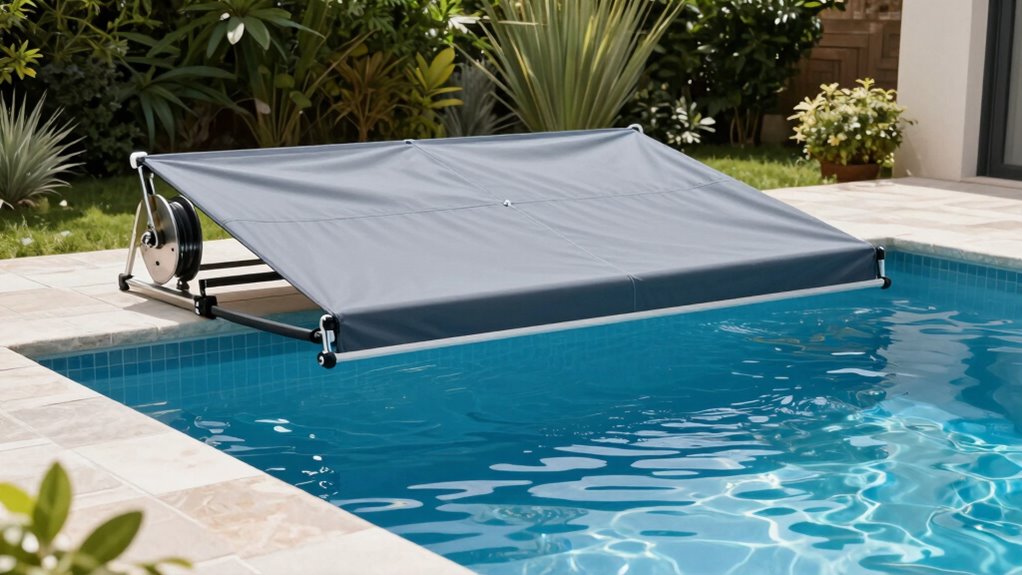

Automatic pool covers improve safety by creating a secure barrier that prevents children and pets from falling in, while locking mechanisms keep the cover in place when not in use. They also help retain heat with insulation and reflective surfaces, reducing energy costs. Regular maintenance of components like sensors, motors, and tracks keeps everything functioning smoothly. To guarantee safety and efficiency, it’s vital to monitor and troubleshoot your system—more tips await if you continue exploring.
Key Takeaways
- Automatic pool covers enhance safety by preventing accidental falls, securing the pool, and reducing drowning risks.
- Proper maintenance, including cleaning sensors and inspecting mechanical parts, ensures reliable operation and safety.
- Selecting the right cover involves measuring correctly, choosing compatible materials, and regular cleaning to prevent damage.
- Using insulation, solar heating, and proper installation improves heat retention and energy efficiency.
- Persistent issues require professional assistance to ensure safety features function correctly and system reliability is maintained.
How Do Automatic Pool Covers Keep Your Family Safe From Accidents?
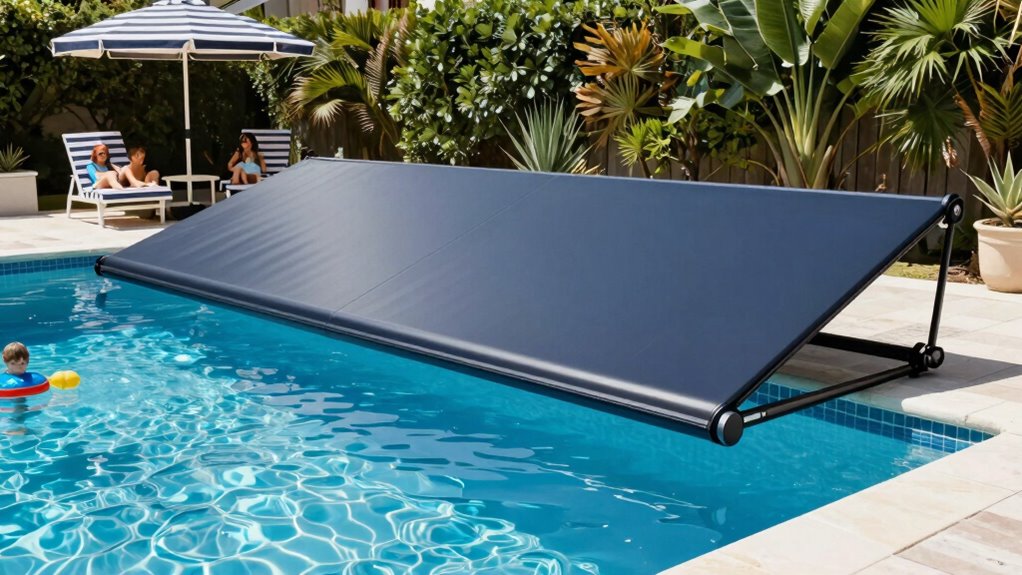
Automatic pool covers enhance safety by creating a barrier that prevents children and pets from accidentally falling into the water. This helps greatly reduce the risk of drowning incidents, making your pool area safer for everyone. With a sturdy cover in place, you can rest assured that unsupervised kids or curious pets won’t access the water unexpectedly. The cover’s secure locking mechanism also adds an extra layer of child safety, ensuring it stays in place when not in use. By preventing accidental falls, these covers play a crucial role in accident prevention around the pool. They keep your loved ones safe while giving you peace of mind, especially during busy or unsupervised moments. Automatic pool covers are an essential safety feature that protect your family from avoidable accidents.
How to Choose the Best Automatic Pool Cover for Your Pool Type and Size?
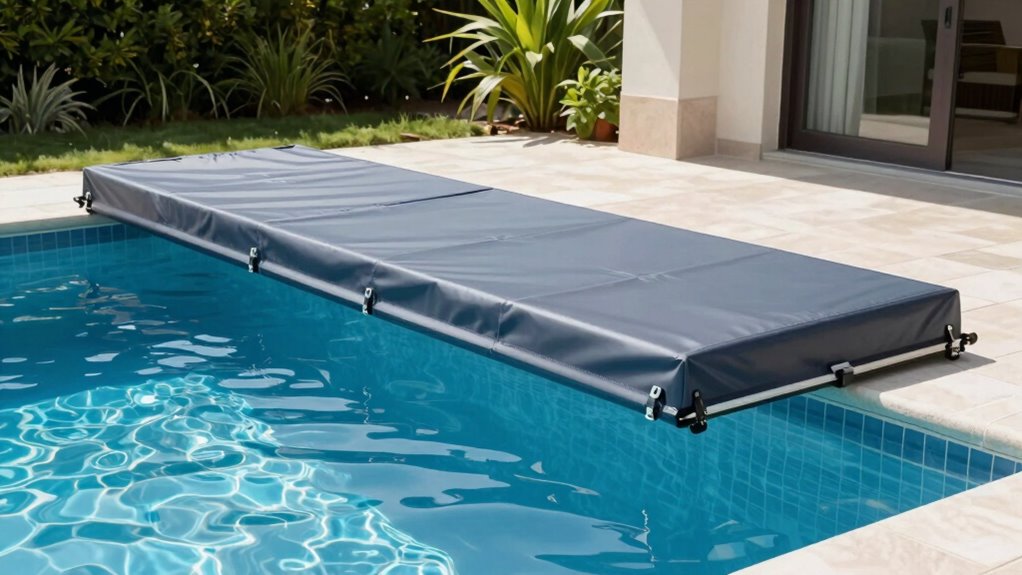
When selecting an automatic pool cover, you need to consider your pool’s size to ensure a proper fit and smooth operation. It’s also important to check that the cover material is compatible with your pool’s surface to prevent damage. By focusing on these factors, you can choose a cover that offers safety, durability, and ease of use tailored to your pool’s specifications.
Pool Size Considerations
Choosing the right automatic pool cover depends heavily on your pool’s size and shape. Proper fit guarantees safety, efficiency, and ease of use. When considering pool size, keep in mind key factors like pool dimension considerations and cover sizing guidelines. Oversized covers can be difficult to operate, while too-small covers leave gaps, compromising safety and heat retention. To select the best fit, measure your pool accurately, including any curves or irregular shapes. Keep these points in mind:
- Exact measurements of length, width, and depth
- Shape of your pool (rectangular, freeform, etc.)
- Space for track installation
- Pool features that affect cover size
- Manufacturer’s cover sizing guidelines
Following these steps helps ensure your cover fits perfectly, enhancing safety and functionality.
Material Compatibility Tips
Ever wonder how to guarantee your pool cover works seamlessly with your specific pool type and size? Material compatibility is key. You need a cover with high material durability to withstand weather, UV rays, and daily wear. Chemical resistance is equally important if you regularly treat your pool with chlorine or other chemicals, preventing deterioration over time. Consider the following table to match your needs:
| Pool Type | Recommended Material | Key Features |
|---|---|---|
| In-ground | Vinyl or Polyester | Strong, flexible, chemical-resistant |
| Above-ground | Polypropylene or PVC | Lightweight, durable |
| Saltwater | Marine-grade vinyl | Corrosion-resistant, long-lasting |
| Indoor | Polyester fabric | Mold-resistant, easy to clean |
| Large Pool | Heavy-duty reinforced vinyl | High durability, weatherproof |
Choose materials that balance durability and chemical resistance to ensure your cover lasts.
What Are the Top Heat Retention Features of Automatic Pool Covers?
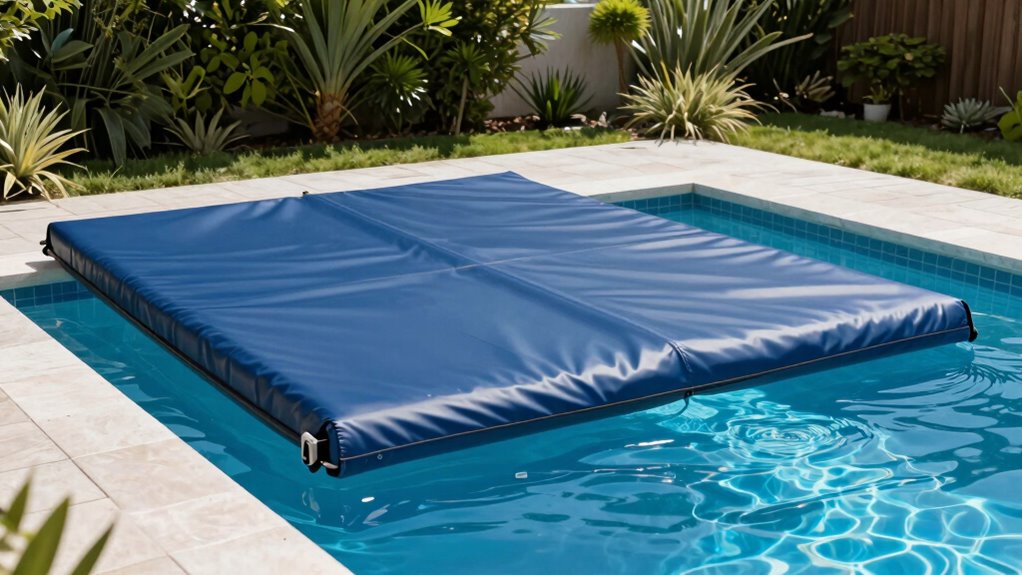
Automatic pool covers are designed to maximize heat retention, helping you save energy and extend your swimming season. The top features include:
Automatic pool covers maximize heat retention, saving energy and extending your swimming season.
- Insulation materials that trap heat and reduce heat loss
- Solar heating capabilities that harness sunlight to warm your pool naturally
- Thermal covers with high-quality, insulating layers
- Automatic sealing around the edges to prevent heat escape
- Reflective surfaces that bounce heat back into the water
These features work together to maintain a consistent water temperature and minimize energy costs. By using insulation materials and solar heating, your pool stays warmer longer without extra electricity. An effective automatic cover acts as a barrier, reducing heat loss from evaporation and conduction, so you enjoy a comfortable swim for more of the year.
Essential Maintenance Tips to Keep Your Automatic Pool Cover Working Smoothly?
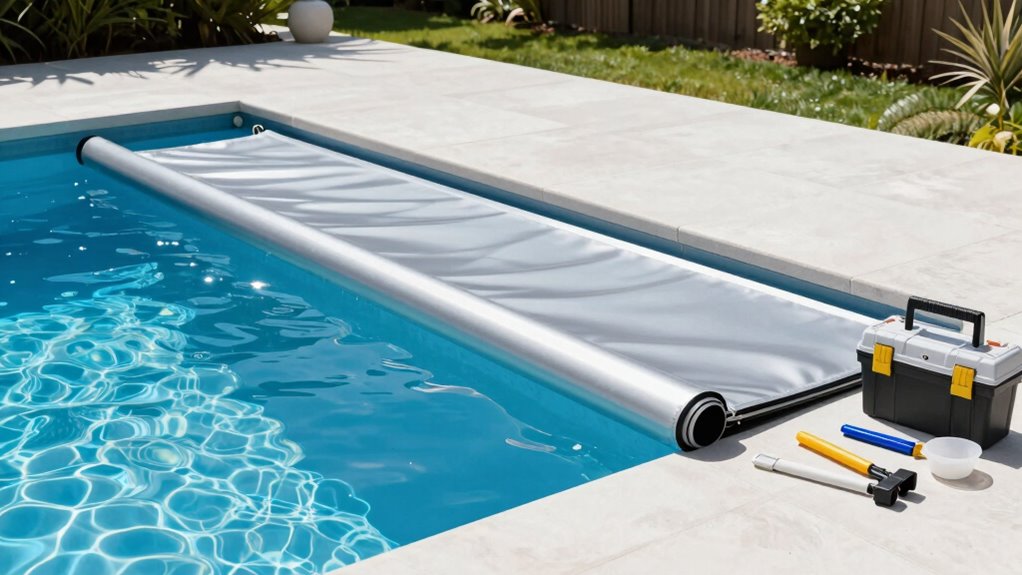
Keeping your automatic pool cover in top shape requires regular cleaning and inspections. You should routinely clean the cover to prevent debris buildup and check for any signs of wear or damage. Staying on top of these tasks helps make certain smooth operation and extends the life of your cover.
Proper Cleaning Techniques
Regularly cleaning your pool cover is essential to guarantee it functions properly and lasts longer. To maintain its effectiveness, remove debris with a soft brush or cloth, avoiding harsh abrasives. Use a mild detergent mixed with water to scrub the surface gently, preventing chemical residue buildup. Rinse thoroughly to eliminate any soap traces. This routine helps with mold prevention and keeps the cover looking new. Keep these tips in mind:
- Clean after heavy storms or debris falls
- Avoid using harsh chemicals or power washers
- Use a soft-bristled brush for stubborn dirt
- Rinse off chlorine or other chemical residues
- Dry the cover completely before storage or retraction
Consistent cleaning ensures smooth operation and extends your cover’s lifespan.
Regular Inspection Procedures
To guarantee your pool cover functions properly, you need to perform regular inspections that catch issues early. Use an inspection checklist to systematically evaluate key components such as the cover’s tracks, motor, and safety sensors. During routine evaluations, check for tears, debris buildup, or misalignment that could hinder operation. Inspect the cover’s fabric for signs of wear and ensure the rollers move smoothly without resistance. Test the safety features, like auto-reverse and sensors, to confirm they’re working correctly. Regular inspections help identify minor problems before they become costly repairs, extending your cover’s lifespan. Make this a weekly habit, especially before and after the swimming season, to keep your automatic pool cover operating smoothly and safely.
How Automatic Pool Covers Help You Save on Energy Bills and Cleaning?
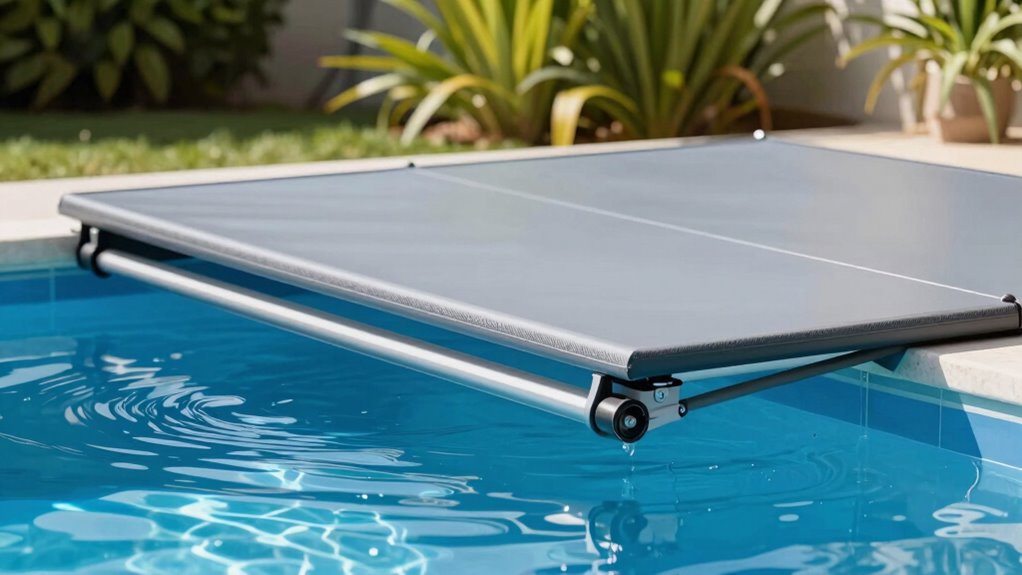
Automatic pool covers considerably reduce energy costs by helping your pool retain heat and minimize evaporation, which means you spend less on heating and water replacement. Proper pool cover installation ensures maximum efficiency, while the right cover material enhances durability and insulation. These covers prevent heat loss overnight and during off-season months, cutting your energy bills markedly. Additionally, by keeping debris out, they reduce the need for frequent cleaning and chemical treatment. This means less time and effort spent maintaining your pool’s cleanliness. With an automatic system, you simply press a button to cover or uncover your pool, streamlining maintenance and saving you money in the long run. Investing in the right cover material and professional installation pays off through energy savings and simplified cleaning routines.
- Improved heat retention and insulation
- Reduced water evaporation
- Less chemical and cleaning needs
- Easy, automated operation
- Long-lasting cover material
Troubleshooting Common Problems With Automatic Pool Covers?
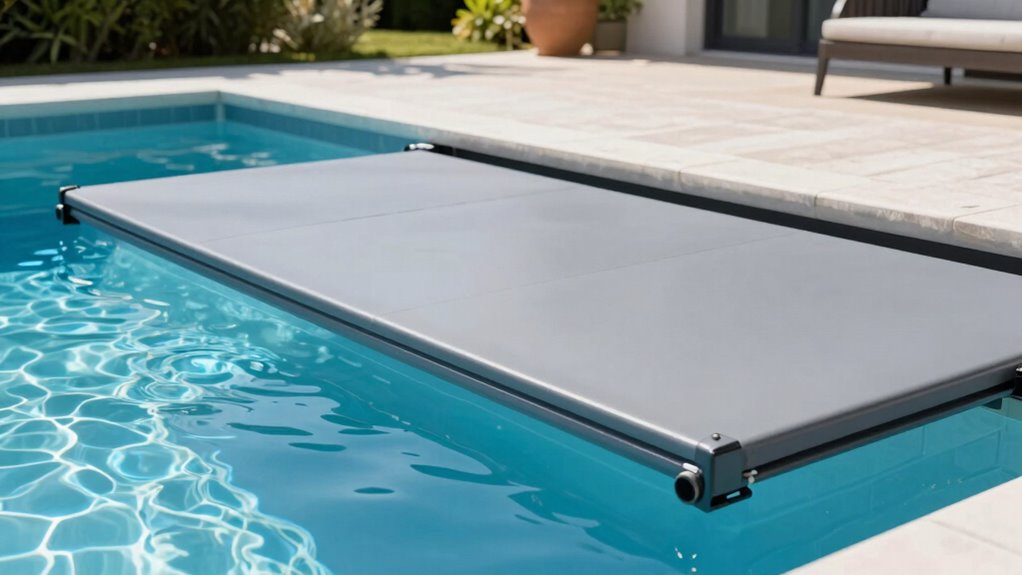
Are you experiencing issues with your automatic pool cover not opening or closing smoothly? First, check the cover installation to ensure everything is aligned correctly. Misaligned tracks or improper mounting can cause operational hiccups. Next, troubleshoot sensors, as faulty or dirty sensors often trigger safety features that block movement. Clean the sensors gently with a soft cloth and test their responsiveness. If the cover still struggles, inspect the motor and track system for obstructions or damage. Regular maintenance helps prevent common problems and keeps your cover functioning smoothly. Sometimes, recalibrating the sensors or resetting the system can resolve minor glitches. If problems persist, consulting a professional for detailed troubleshooting is advisable to guarantee safe, reliable operation.
Frequently Asked Questions
Are Automatic Pool Covers Suitable for All Pool Shapes and Materials?
Automatic pool covers are suitable for most pool shapes and materials, thanks to their pool shape flexibility and material compatibility. You can choose a cover that fits various designs, whether rectangular, kidney, or freeform. They work well with different pool surfaces like concrete, vinyl, or fiberglass. Just make certain you select a cover designed for your specific pool shape and material to guarantee proper fit and functionality.
How Long Does an Automatic Pool Cover Typically Last Before Replacement?
An automatic pool cover usually lasts around 7 to 12 years, but it can feel like a lifetime when you consider its importance. The cover lifespan depends heavily on material durability and how well you maintain it. High-quality materials, like reinforced vinyl or robust polymers, tend to last longer. Regular cleaning and inspections can extend its life, ensuring your investment stays effective and safe for years to come.
Can Automatic Pool Covers Be Operated Manually During Power Outages?
Yes, you can operate your automatic pool cover manually during a power outage. Most models include a manual operation feature or a backup system, allowing you to open or close the cover without power. This manual operation acts as a power outage backup, ensuring safety and convenience even when electricity fails. Be sure to familiarize yourself with the manual release mechanism in your cover’s user manual for quick access when needed.
What Security Features Are Included to Prevent Unauthorized Access?
Automatic pool covers include security protocols like lockable mechanisms and access control systems to prevent unauthorized access. You can activate these features to restrict cover operation, ensuring only authorized individuals can open or close the pool. Many models offer keypad or remote controls with password protection, adding an extra layer of security. These features help keep your pool safe, secure, and protected from unwanted intrusion or accidental access.
Are There Eco-Friendly Automatic Pool Cover Options Available?
You’ll be amazed at how eco-friendly automatic pool covers can transform your backyard! Many options now include solar features that harness sunlight to power the cover, drastically reducing energy use. Some models are made with biodegradable materials, making them incredibly sustainable. These eco-friendly choices help cut down your carbon footprint, so you can enjoy your pool guilt-free while protecting the environment—saving the planet, one swim at a time!
Conclusion
An automatic pool cover is your pool’s loyal guardian—safeguarding your loved ones, locking in warmth like a cozy blanket, and sweeping away maintenance worries. With the right choice and regular care, it becomes your pool’s best friend, making every swim safer, warmer, and more enjoyable. Embrace this seamless shield, and let your pool be a shimmering oasis that welcomes you with open arms, all while keeping safety and savings at your fingertips.