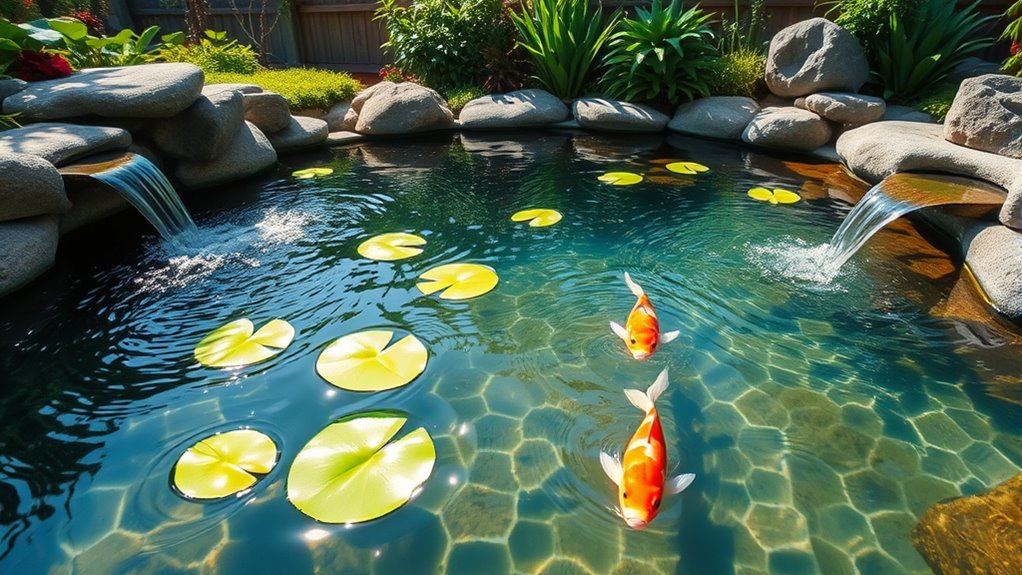

To create gentle water currents in your garden pond for floating plants, place a fountain, waterfall, or aerator at one end of the pond. This will generate steady movement, helping the plants sway naturally while preventing stagnation. Positioning the equipment strategically ensures even water flow and healthy growth. If you keep exploring, you’ll discover more tips on maintaining a vibrant, balanced pond ecosystem with ideal water circulation.
Key Takeaways
- Place water circulation devices like fountains or waterfalls at one end to create a steady, flowing current.
- Position floating plants where the current gently moves them, encouraging natural sway and healthy root growth.
- Use strategic placement of aerators or circulation pumps to prevent stagnation and promote even water movement.
- Ensure the flow direction guides debris away and supports sunlight penetration for all aquatic plants.
- Regularly adjust equipment to maintain consistent water currents that enhance pond aesthetics and ecological balance.

Have you ever wondered how water currents influence the health and beauty of your garden pond? Understanding how to harness water movement can make all the difference in maintaining a vibrant, balanced ecosystem. One of the key aspects to consider is the strategic placement of aquatic plants and implementing effective pond circulation techniques. These elements work together to promote healthy floating plants and keep your pond looking its best.
When it comes to aquatic plant placement, think of it as creating a natural flow that encourages healthy growth and prevents stagnation. You want to position floating plants like water lilies or duckweed where they can receive adequate sunlight but also where they won’t block essential water circulation. Proper placement ensures that nutrients are evenly distributed, and oxygen levels stay high throughout the pond. This minimizes algae buildup and supports beneficial bacteria, which are essential for breaking down organic matter. By carefully arranging your aquatic plants, you create zones of movement that foster a natural current, helping to circulate water continuously.
Pond circulation techniques are your tools for shaping these currents. Installing a small fountain, waterfall, or pond aerator can generate the necessary movement to keep water flowing smoothly. These devices help prevent dead zones—areas where water becomes stagnant—and encourage a steady exchange of oxygen and nutrients. When water is kept in motion, it discourages the buildup of debris and algae that could otherwise cloud the pond and harm floating plants. Additionally, circulation promotes the overall health of aquatic life by providing a dynamic environment that mimics natural streams or lakes.
You should contemplate the flow direction when setting up circulation equipment. Positioning a fountain or aerator at one end of the pond can create a gentle, continuous current that moves across the water’s surface. This circulation helps floating plants sway naturally, strengthening their roots and preventing them from sticking to the pond’s surface or sinking unevenly. Furthermore, a consistent flow ensures that floating debris doesn’t accumulate in one spot, making cleaning and maintenance easier.
Considering water circulation as an essential element can significantly improve pond health and aesthetics, ensuring your garden pond remains clear, lively, and inviting.
Frequently Asked Questions
Can Water Currents Harm Aquatic Plants in My Pond?
Water currents can harm aquatic plants if they’re too strong, especially if your aquatic plant placement is near the flow. You should control the current speed to prevent damage; gentle, steady currents are best. Monitor how your plants react and adjust the flow accordingly. Proper current speed regulation ensures your aquatic plants thrive without being uprooted or damaged by excessive movement.
How Do I Control the Strength of Water Currents?
Imagine your pond’s currents as gentle streams guiding floating plants like dancers on a stage. To control their strength, you can adjust the flow rate with a flow adjustment valve or pump settings. Lower the current speed for a soft breeze, and increase it when you need a lively dance. Regularly monitor the current speed to keep the water’s rhythm harmonious, ensuring your pond’s ecosystem stays balanced and beautiful.
Are There Safety Concerns With Strong Water Currents?
Strong water currents can create safety concerns, especially with water turbulence that might disorient or harm pond visitors or aquatic life. Excessive pond circulation can also disturb delicate plants and animals, leading to stress or injury. Always monitor and adjust flow strength to guarantee safe, gentle movement, preventing dangerous water turbulence. Keeping currents moderate helps protect both your pond’s ecosystem and anyone enjoying the garden space.
Can Water Currents Help Reduce Algae Growth?
Water currents can help reduce algae growth by promoting better water circulation benefits and algae suppression. For example, a pond owner noticed less green slime after installing a small fountain that creates gentle flows, preventing stagnant spots where algae thrive. By keeping water moving, you limit algae’s ability to settle and reproduce, making your pond clearer and healthier. Properly managed currents are a natural, effective way to control algae without chemicals.
What Are the Best Types of Pumps for Creating Currents?
You should choose submersible or external pumps for creating pond currents, as they offer reliable pumping options and adjustable flow rates. Look for pumps with features that allow current control, so you can fine-tune the water movement to suit your pond’s needs. Variable speed pumps are ideal, giving you flexibility to increase or decrease the current easily, ensuring a healthy, dynamic pond environment.
Conclusion
By harnessing water currents in your garden pond, you can effortlessly keep floating plants healthy and vibrant. Did you know that proper water movement can increase oxygen levels by up to 30%, supporting aquatic life? Using simple devices like pumps or aerators, you create natural currents that prevent stagnation. Embrace these currents, and you’ll enjoy a lively, flourishing pond with minimal effort—making your outdoor oasis both beautiful and sustainable.