To integrate plants near floating areas effectively, select native or well-adapted aquatic species like reeds or water lilies suited to your water conditions. Position them where they get enough sunlight and roots can extend into the water without being overshadowed. Use floating planters or anchored beds, and maintain proper spacing for growth. Regularly remove dead material and monitor plant health to keep your ecosystem balanced and thriving. Continue to explore how proper plant placement benefits your aquatic environment.
Key Takeaways
- Select native or well-adapted aquatic plants like reeds, water lilies, or cattails for optimal growth and ecosystem benefits.
- Position plants in sunlit areas with roots extending into water, using floating planters or anchored beds.
- Ensure plants are spaced appropriately to allow growth, root penetration, and water flow.
- Regularly remove dead plant material and control invasive species to maintain ecosystem health.
- Monitor plant health and adjust placement to maximize water filtration, biodiversity, and aesthetic appeal.
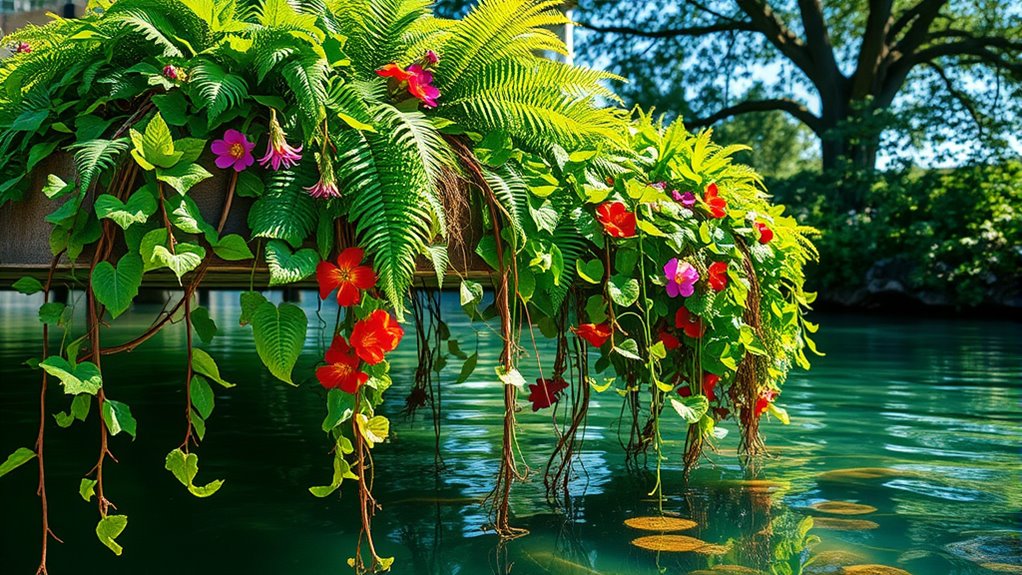
Integrating plants near floating areas can substantially enhance both the aesthetic appeal and ecological health of these environments. When you add plants thoughtfully, you’re not just creating a more beautiful space—you’re also improving water quality and supporting a diverse range of species. Plants act as natural filters, absorbing nutrients and pollutants from the water, which helps maintain clarity and balance. This process, known as water filtration, is essential in preventing algae overgrowth and ensuring a healthier aquatic environment. By choosing the right plants, you can markedly reduce the need for chemical treatments and foster a more sustainable ecosystem.
Adding native plants near floating areas boosts beauty, filters water naturally, and supports diverse wildlife.
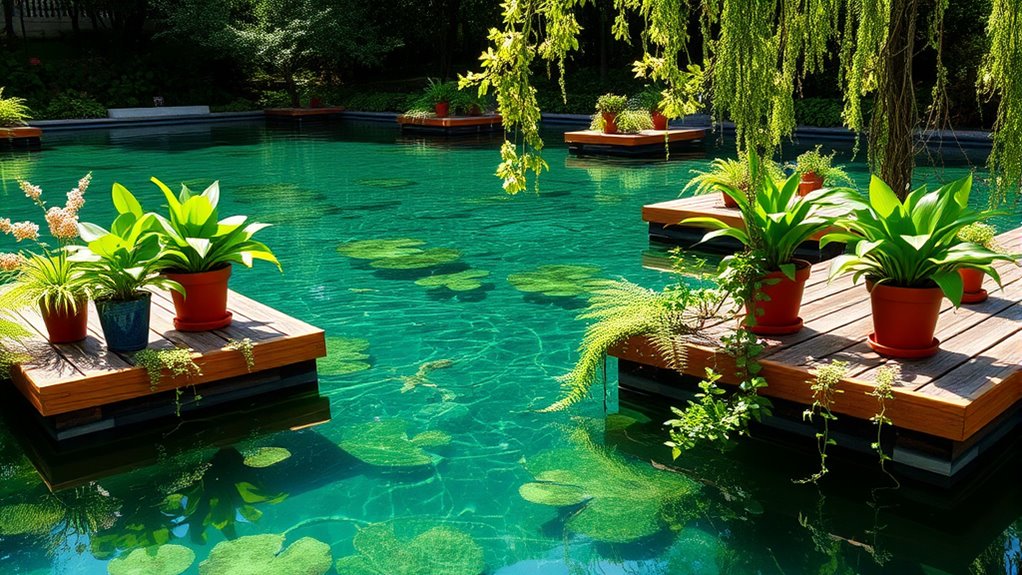
To optimize water filtration, focus on selecting native or well-adapted aquatic plants that thrive in your specific conditions. Think about species like reeds, bulrushes, water lilies, and cattails. These plants have extensive root systems that penetrate the water, trapping sediments and removing excess nutrients. When you plant these around floating structures or along the shoreline, you create a natural barrier that cleanses the water more effectively than artificial filters. Additionally, these plants provide habitat and food for a variety of wildlife, boosting biodiversity enhancement in your area. As a result, your floating environment becomes more resilient and vibrant, attracting insects, birds, and other creatures that rely on aquatic habitats.
Placement is key. You want to position plants in areas where they can receive adequate sunlight and where their roots can extend into the water without being overshadowed or crowded. When you install floating planters or anchored beds, ensure that the plants have enough space to grow and that their roots can reach deep enough to perform water filtration efficiently. Additionally, consider the flow of water; placing plants in zones with moderate current can help distribute nutrients and oxygen, further supporting aquatic life. Regular maintenance, like removing dead plant material and controlling invasive species, keeps the ecosystem balanced and maximizes biodiversity enhancement.
Incorporating plants near floating areas isn’t just about aesthetics—though it does create a more inviting environment—it’s about creating a self-sustaining system that benefits both nature and your space. By choosing the right native plants, positioning them correctly, and maintaining their health, you can dramatically improve water quality while supporting a diverse array of species. This approach fosters a more resilient ecosystem where plants, animals, and humans coexist harmoniously. Additionally, understanding size limitations for tiny houses can help you design or select structures that fit within sustainable living principles and local regulations, ensuring your eco-friendly practices are compliant and effective. Ultimately, integrating plants near floating areas is an effective, eco-friendly way to enhance ecological health, making your water environment more vibrant, sustainable, and attractive.
Frequently Asked Questions
What Are the Best Native Plants for Floating Areas?
You should choose native plant species like water lilies, pickerelweed, or duckweed for floating areas. These plants are ideal because they promote native plant selection and offer ecological benefits, such as supporting local wildlife and maintaining water quality. By selecting these native options, you create a sustainable environment that enhances biodiversity and benefits the surrounding ecosystem. Plus, they’re well-adapted, making maintenance easier and more effective.
How Do I Prevent Algae Growth Around Aquatic Plants?
Did you know that algae can double in number every 48 hours under ideal conditions? To prevent algae growth around aquatic plants, focus on algae control by reducing excess nutrients and sunlight exposure. Improving water circulation helps by preventing stagnant areas where algae thrive. Regularly remove debris, avoid overfeeding fish, and consider adding natural algae inhibitors. These steps keep your floating areas clean, healthy, and visually appealing.
Can I Grow Edible Plants Near Floating Structures?
Yes, you can grow edible plants near floating structures. Choose edible plant selections that thrive in your local climate and guarantee soil compatibility for ideal growth. Use containers or raised beds to prevent water contamination and maintain plant health. Regularly monitor water quality and avoid runoff from the floating area. This way, you enjoy fresh produce while maintaining a healthy aquatic environment around your floating structures.
What Are the Maintenance Tips for Floating Plant Systems?
Keep your floating plant system in tip-top shape by regularly checking water circulation and pest control. Make certain pumps and filters are clean to prevent stagnation, which can cause problems. Inspect plants often for pests and remove them promptly. Use natural deterrents when needed. Remember, a stitch in time saves nine; staying on top of maintenance keeps your floating garden thriving and hassle-free.
How Do Seasonal Changes Affect Floating Plant Integration?
Seasonal changes considerably impact floating plant integration by affecting growth and survival. You should plan for seasonal planting, choosing plants suited to your climate considerations. In colder months, you might need to remove or protect sensitive plants, while in warmer seasons, you can introduce new species. Adjust your maintenance routines accordingly, ensuring that your floating plants thrive year-round by monitoring temperature, sunlight, and water conditions.
Conclusion
By incorporating plants near floating areas, you transform your space into an oasis so stunning, even the sun pauses to admire it. These lush greens not only breathe life into the surroundings but also turn your floating area into the most talked-about paradise on Earth. With the right plants, you’ll create a haven so mesmerizing that visitors will swear they’ve entered a secret botanical kingdom. Get ready to make your floating space the envy of everyone—it’s that easy and extraordinary!