
To uphold a saltwater swimming pool efficiently, use a salt-chlorine generator for steady chlorine levels. Routinely clean to eliminate salt accumulation and debris, and maintain equipment like the filter, pump, and skimmer. Monitor and balance pool chemistry by assessing salt levels and stabilizing chlorine, aiming for a pH of 7.4. Additionally, remember to operate the pool pump daily for adequate circulation and use cleaning equipment tailored for saltwater pools to prevent corrosion. Taking care of pool chemistry and equipment ensures peak pool health and longevity.

Get pool and patio gear delivered free with Prime
- Fast, free delivery on millions of items
- Prime Video, Amazon Music and more included
- Member-only deals all year
Key Takeaways
- Use a salt-chlorine generator for consistent chlorine levels.
- Clean regularly to remove salt build-up and debris.
- Monitor and balance pool chemistry for optimal health.
- Maintain pH around 7.4 to prevent issues.
- Properly care for equipment to ensure longevity.
saltwater pool salt-chlorine generator
As an affiliate, we earn on qualifying purchases.
As an affiliate, we earn on qualifying purchases.
Understanding Saltwater Pool Maintenance
When it comes to maintaining a saltwater swimming pool, understanding the key aspects of saltwater pool maintenance is essential for keeping your pool in excellent condition.
Unlike chlorinated pools, saltwater pools utilize a salt-chlorine generator to maintain consistent chlorine levels, effectively preventing bacteria and algae growth.
Regular cleaning to remove salt build-up and debris, proper equipment care, and checking and cleaning the filter, pool pump, and skimmer are important steps in saltwater pool maintenance.
Additionally, balancing pool chemistry by monitoring salt levels, stabilizing chlorine with cyanuric acid, and maintaining pH levels around 7.4 are necessary for optimal pool health.
Essential Steps for Pool Care
To guarantee the longevity and proper functioning of your saltwater swimming pool, it is important to adhere to a set of necessary steps for pool care.
Initially, maintain proper circulation by running the pool pump for sufficient periods daily.
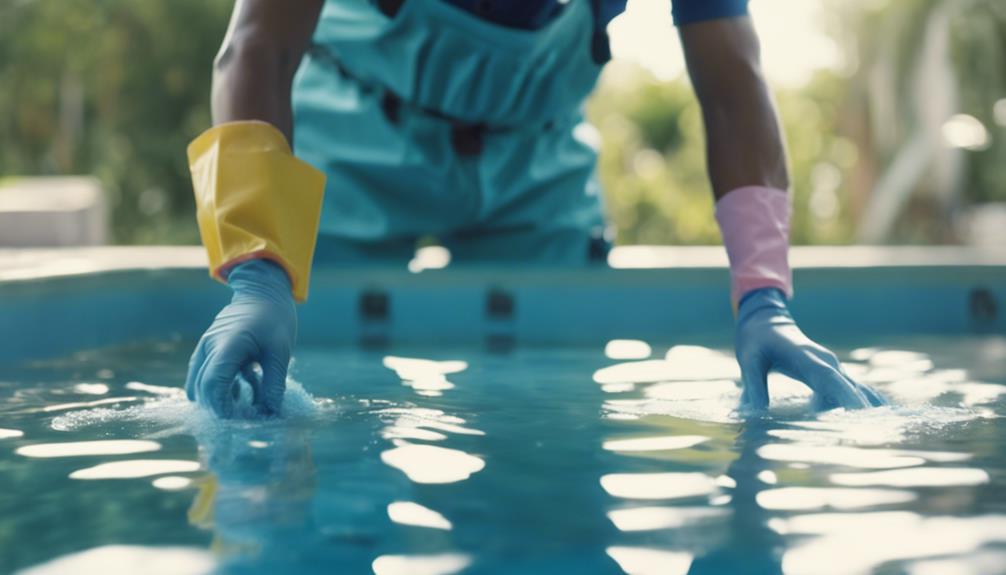
Regularly cleaning the pool is vital to eliminate salt build-up and debris.
Additionally, taking care of pool equipment, such as the filter, pump, and skimmer, helps prevent damage and maintains efficiency.
Using cleaning equipment specifically designed for saltwater pools is recommended to avoid corrosion and damage.
Mastering Pool Chemistry Basics
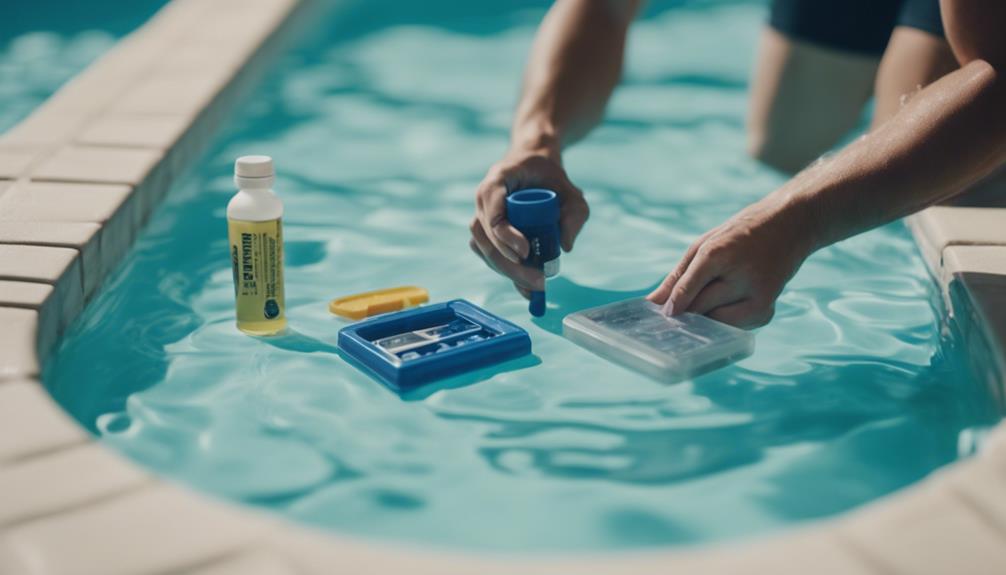
Understanding the fundamentals of pool chemistry is crucial for maintaining water quality and guaranteeing a safe swimming environment in your saltwater pool.
To master pool chemistry basics, follow these key steps:
- Regular Testing: Use a reliable test kit to monitor pH and chlorine levels frequently.
- Proper Balancing: Maintain a pH level around 7.4 to prevent algae growth and secure bather comfort.
- Chlorine Stabilization: Keep chlorine levels stable by using cyanuric acid within the recommended range of 50-80 ppm.
Achieving Optimal Ph Balance
Achieving the best pH balance in your saltwater pool is vital for maintaining water quality and ensuring a safe swimming environment for users. Keeping the pH levels around 7.4 helps prevent corrosion, eye irritation, and scale build-up in the pool. Regularly testing the water with a reliable test kit and adjusting the pH as needed is essential. Additionally, shocking the pool when the water appears cloudy or green can help restore the pH balance. Below is a table to illustrate the importance of maintaining ideal pH levels in your saltwater pool:
| Effects of pH Imbalance | Potential Issues |
|---|---|
| High pH (above 7.6) | – Skin irritation |
| – Scale formation | |
| Low pH (below 7.2) | – Corrosion of equipment |
| – Ineffective chlorine |
Caring for Your Chlorine Generator
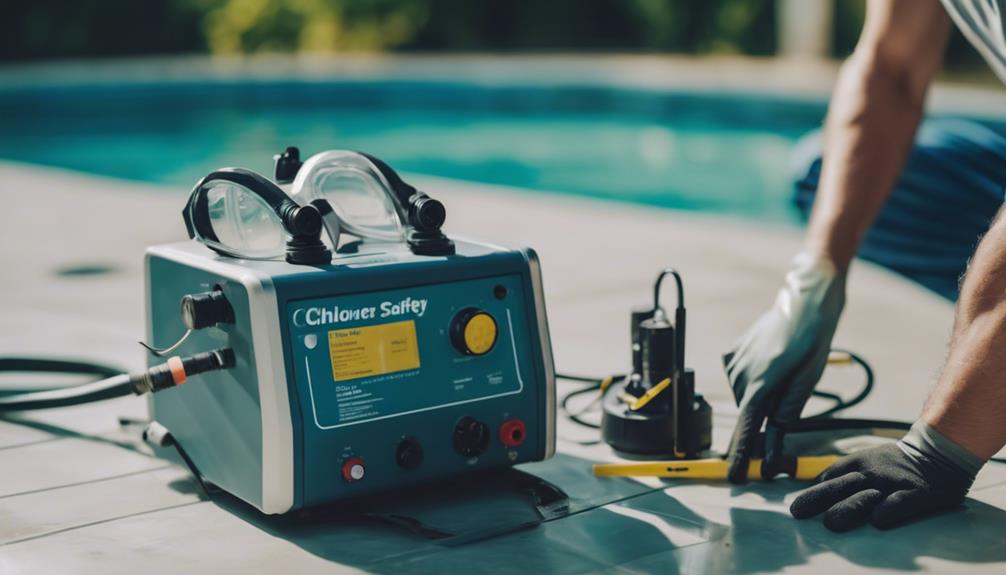
Maintaining the functionality of your saltwater pool's chlorine generator is key to ensuring consistent chlorine levels and effective sanitation.
To care for your chlorine generator:
- Maintain Peak Salt Levels: Keep salt levels between 2,700 and 3,500 ppm to support the generator's operation efficiently.
- Regular Cleaning: Clean the chlorine generator unit at least once per season to prevent mineral build-up and guarantee proper functioning.
- Monitor Calcium Levels: Track calcium levels in the pool water as high levels can impact the generator's performance.
Regular maintenance and monitoring will help prolong the life of your chlorine generator and keep your saltwater pool in top condition.
Frequently Asked Questions
How Often Should I Shock My Saltwater Pool?
Shocking a saltwater pool should be done when the water appears dirty or green. Regular testing with a kit is essential to monitor pH levels. Use granular or liquid shock to maintain water quality, dissolving granular shock before dispersing.
Can I Use Regular Pool Cleaning Equipment for a Saltwater Pool?
Yes, you can use regular pool cleaning equipment for a saltwater pool. However, it is advisable to choose equipment specifically designed for saltwater use to guarantee peak performance and longevity. Regular maintenance and cleaning are essential for pool longevity.
What Should I Do if My Salt Chlorine Generator Stops Working?
When encountering a malfunctioning salt chlorine generator, swift action is essential. Assess the power source, inspect for blockages, and verify proper salt levels. Remember, 'a stitch in time saves nine.' Seek professional assistance promptly to restore functionality.
Is It Necessary to Drain a Saltwater Pool for Maintenance?
Draining a saltwater pool for maintenance is not typically necessary. Regular cleaning, monitoring of water chemistry, and proper equipment care are essential for pool upkeep. Consult with a professional if major maintenance issues arise.
How Can I Prevent Salt Buildup on Pool Surfaces?
Preventing salt buildup on pool surfaces requires regular cleaning to remove debris and salt deposits. Proper maintenance of pool circulation, equipment, and cleaning tools is essential. Monitoring salt levels and using suitable cleaning equipment helps maintain a clean pool surface.
Conclusion
Just as a captain must navigate the treacherous seas with precision and care, maintaining a saltwater swimming pool requires diligent attention to detail.
By mastering the intricacies of pool chemistry, achieving ideal pH balance, and caring for the chlorine generator, pool owners can guarantee the smooth sailing of their aquatic oasis.
With dedication and commitment to regular maintenance, the shimmering waters of a saltwater pool will continue to beckon and delight for years to come.
Columbus Day / Indigenous Peoples' Day Picks
long weekend sales
As an affiliate, we earn on qualifying purchases.