If you’re choosing between wood-fired and gas pizza ovens, consider your flavor and convenience preferences. Wood-fired ovens offer smoky, authentic flavors and a rustic ambiance but need more effort to operate, clean, and install. Gas ovens are easier to use, maintain, and more budget-friendly, with consistent heat but milder flavors. Both suit different pizza styles and spaces—if you want detailed insights, explore further to find the best fit for your kitchen and taste.
Key Takeaways
- Wood-fired ovens produce authentic smoky flavors and charred crusts, enhancing traditional pizza taste and ambiance.
- Gas ovens offer precise temperature control, faster cooking times, and easier operation, prioritizing convenience.
- Wood-fired ovens require larger space, higher initial investment, and more maintenance, while gas ovens are more compact and cost-effective.
- For rustic, artisanal flavors and ambiance, wood-fired is preferred; for efficiency and consistency, gas ovens excel.
- The choice depends on flavor authenticity versus ease of use, available space, and budget considerations.
How Do Wood-Fired and Gas Pizza Ovens Differ?
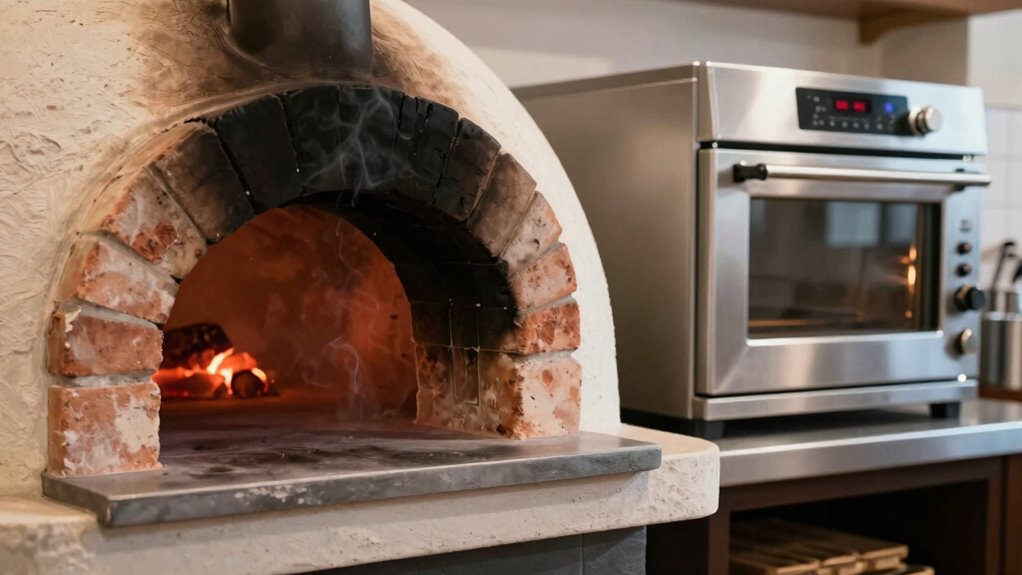
Wood-fired and gas pizza ovens differ mainly in how they generate heat and influence the cooking process. With wood-fired ovens, you create a cozy wood ambiance that adds a rustic charm to your space. They rely on fuel options like hardwood or seasoned logs, which burn directly in the oven, producing high heat and smoky flavors. Gas pizza ovens, on the other hand, use propane or natural gas, offering consistent and controllable heat with the flip of a switch. This makes them more convenient and easier to operate, especially for beginners. While wood-fired ovens create a warm, inviting atmosphere through their crackling fire, gas ovens focus on efficiency and ease of use. Both types impact your cooking style, but their fundamental differences lie in heat source and ambiance.
Which Oven Is Better for Developing Authentic Pizza Flavor?
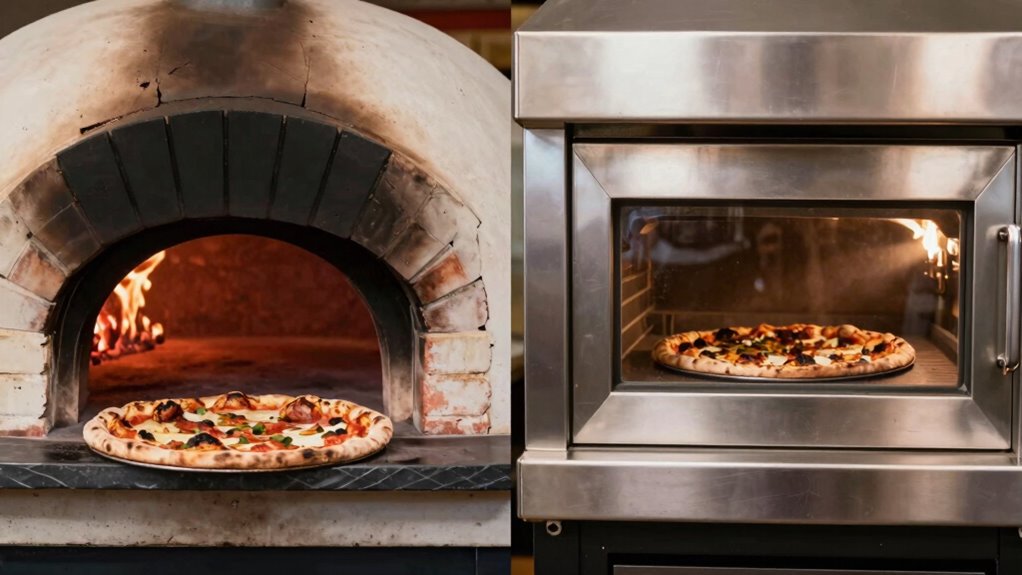
When it comes to developing an authentic pizza flavor, many enthusiasts argue that the type of oven you choose makes a significant difference. A wood-fired oven delivers a distinct wood flavor that enhances the pizza’s aroma and depth, helping you achieve an authentic taste. The high heat and smoky environment create a unique crust with a slightly charred, flavorful edge that’s hard to replicate elsewhere. Gas ovens, while convenient, often lack this smoky complexity, resulting in a milder flavor profile. If your goal is to craft pizza with genuine, traditional taste, a wood-fired oven provides an unmatched flavor experience. Its ability to impart natural wood flavor and authentic characteristics makes it the superior choice for true pizza connoisseurs.
How Do Cooking Times and Temperature Control Compare?
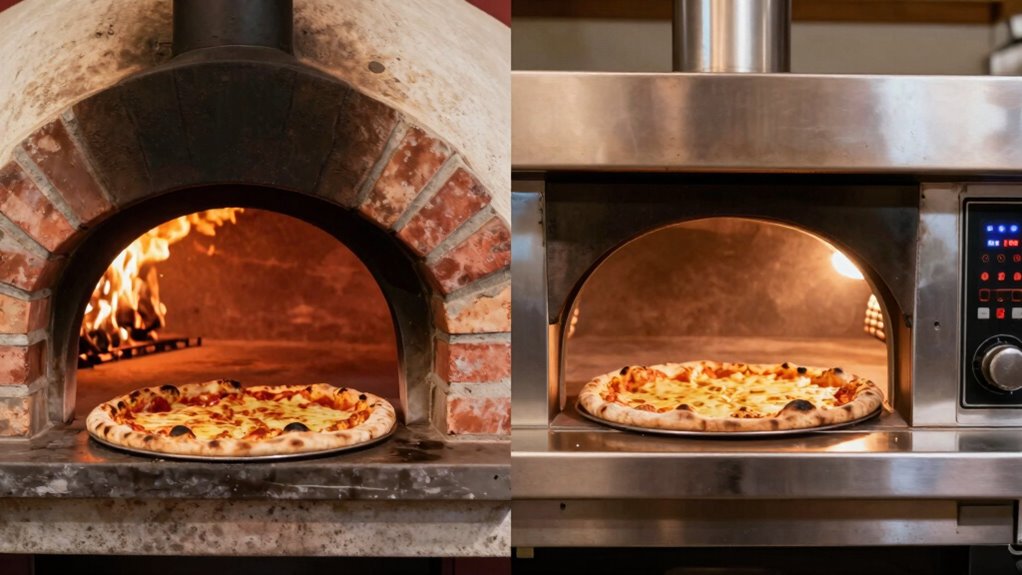
You’ll notice that wood-fired ovens heat up quickly but may take longer to reach and maintain a consistent temperature. Gas ovens, on the other hand, offer more precise control and stable heat across a wider range. These differences directly influence cooking times, with each oven type offering distinct advantages depending on your needs.
Heating Speed and Efficiency
Gas ovens heat up quickly and offer precise temperature control, making it easy to achieve consistent cooking times. Their fuel type allows for rapid heat-up times, saving you waiting around. Because gas burns efficiently, energy consumption is often lower compared to wood-fired ovens, especially during frequent use. This means you can reach desired temperatures faster and maintain them with minimal effort. In contrast, wood-fired ovens take longer to heat due to the need for building a fire and reaching high temperatures naturally. They are less efficient in energy use, as they consume more fuel and time to achieve the same heat levels. If speed and energy efficiency are priorities, gas ovens give you a clear advantage in getting your pizza cooked quickly and reliably.
Temperature Stability and Range
Temperature stability and range substantially influence how consistently you can cook your pizza. Wood moisture affects how evenly heat is distributed, making it trickier to maintain a steady temperature. Gas regulation offers precise control, allowing you to adjust heat quickly and keep a consistent oven environment.
| Feature | Wood-Fired Oven | Gas Oven | Impact on Cooking |
|---|---|---|---|
| Temperature Range | Wide, but fluctuates with wood moisture | Narrower, but more stable | Better for precise cooking |
| Stability | Less consistent due to wood moisture | Very stable with gas regulation | Ensures even cooking throughout |
| Control | Manual adjustments needed | Easy, precise temperature control | More predictable results |
Choosing the right oven depends on whether you prioritize range or stability.
Cooking Time Variations
Because of their differing methods of heat delivery, wood-fired and gas ovens produce noticeably different cooking times. Wood-fired ovens heat rapidly with intense, uneven heat, which cooks pizza dough quickly—often in just 90 seconds to 2 minutes—thanks to excellent oven insulation that retains high temperatures. Gas ovens, on the other hand, provide more consistent heat, but their cooking times are usually longer, around 4 to 8 minutes, depending on temperature settings. The precise temperature control in gas ovens helps maintain steady heat levels, ensuring even cooking. In contrast, wood-fired ovens require you to monitor and adjust the fire, which can influence cooking speed. Overall, the heat source and oven insulation considerably impact how quickly your pizza is ready.
Which Oven Is Easier and More Convenient to Use?
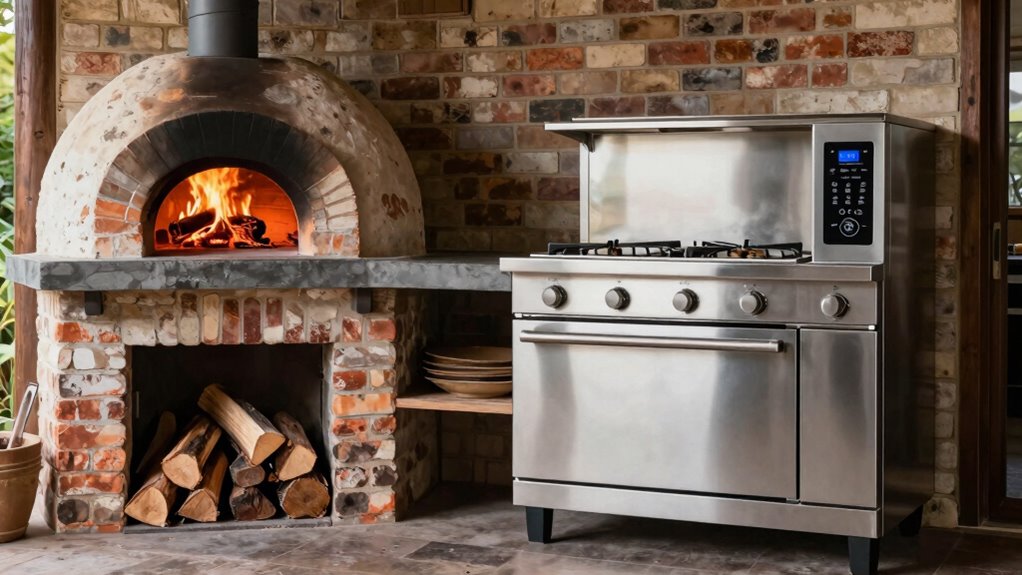
When choosing between wood-fired and gas pizza ovens, ease of use often hinges on how straightforward it is to operate each type. Gas ovens generally offer better ease of operation because they start quickly with the push of a button or turn of a knob, requiring minimal setup. Wood-fired ovens, on the other hand, need you to manage fire-building and temperature control manually, which can be more demanding. Cleaning simplicity also favors gas ovens, as they produce less ash and soot, making cleanup easier. Wood-fired models require more effort to clean out ashes and charred debris. If convenience and minimal maintenance are your priorities, a gas oven provides a more user-friendly experience, while a wood-fired oven demands more effort but offers a traditional charm.
What Are the Cost, Maintenance, and Space Needs?
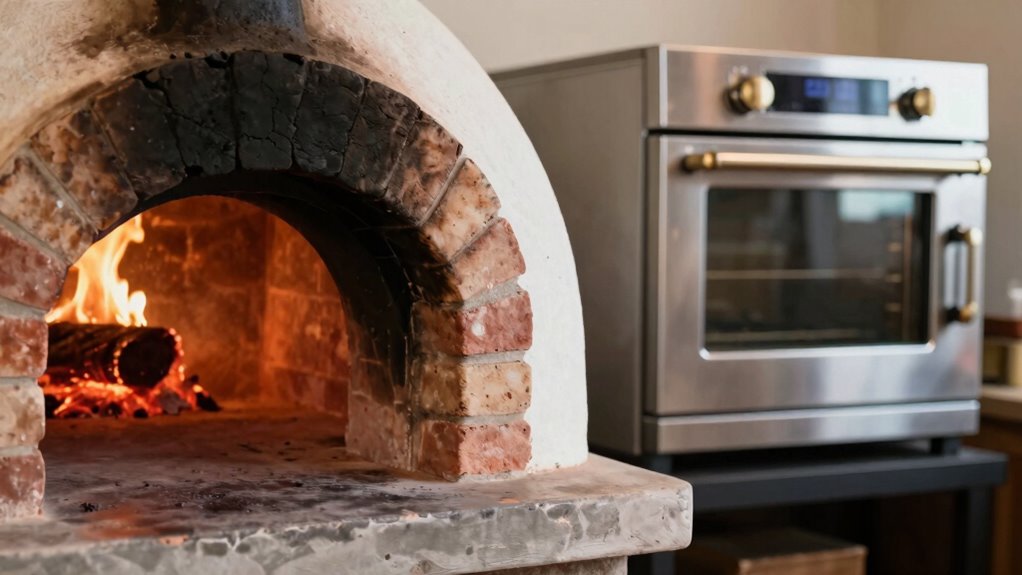
When choosing between wood-fired and gas pizza ovens, you’ll want to contemplate the initial costs, ongoing maintenance, and space requirements. Wood-fired ovens often cost more upfront and need regular cleaning, while gas models usually have lower ongoing efforts. Additionally, think about how much space you have, as installation needs can vary considerably between the two options.
Initial Cost Differences
Initial cost differences between wood-fired and gas pizza ovens can be significant, affecting your overall investment. The initial investment varies based on size, quality, and features, influencing your budget upfront.
Consider these factors:
- Wood-fired ovens often cost more initially, sometimes exceeding $10,000, due to their construction and materials.
- Gas ovens tend to be less expensive upfront, usually between $3,000 and $8,000.
- Long-term expenses include fuel costs—wood versus gas—and potential upgrades.
- Space requirements can also impact costs, as larger ovens demand more installation and setup investment.
Your decision should balance this initial investment with long-term expenses, ensuring you choose an oven that fits your budget and future needs.
Ongoing Maintenance Efforts
Ongoing maintenance for wood-fired and gas pizza ovens varies in cost, effort, and space requirements, affecting your long-term investment. Regular cleaning routines are essential to keep both types functioning properly; for wood-fired ovens, you’ll need to remove ash and soot frequently, while gas ovens require cleaning of burners and vents. Over time, parts like firebricks, gaskets, or burners may need replacement to guarantee ideal performance and safety. Wood-fired ovens often demand more intensive upkeep due to ash buildup and chimney cleaning, which can be labor-intensive. Gas ovens typically require less effort but still need periodic inspections and part replacements to prevent malfunctions. Overall, maintaining either oven type involves ongoing costs and effort but varies depending on your specific setup and usage frequency.
Space and Installation Needs
Choosing between a wood-fired and a gas pizza oven involves considering how much space each requires and how complex their installation can be. Wood-fired ovens often need more room due to their size and proper ventilation requirements to handle smoke. Gas ovens tend to be more compact and easier to install, but they still require careful planning for ventilation and gas hookup.
Here are some key points:
- Wood-fired ovens usually demand a dedicated outdoor space and sturdy foundation.
- Gas ovens have lower installation complexity but need proper ventilation for safety.
- Ventilation requirements for wood-fired ovens are more extensive due to smoke output.
- Cost varies, with wood-fired ovens often needing more space and structure, increasing initial investment.
Which Oven Is Best for Your Pizza Style and Kitchen Setup?
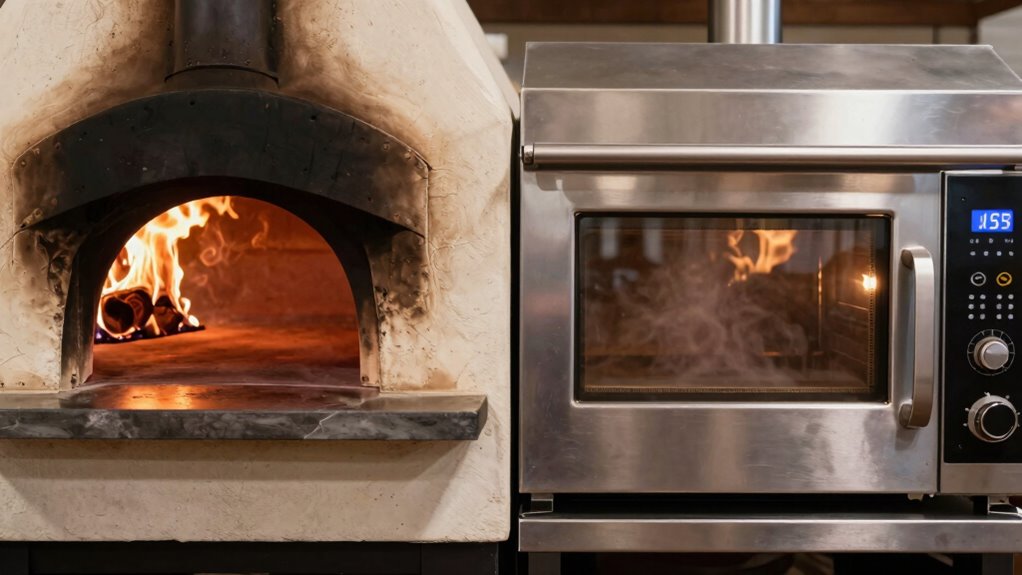
Selecting the right oven depends largely on your preferred pizza style and the space you have available. If you love traditional, smoky flavors and a crispy crust, a wood-fired oven made from durable oven materials like brick or stone suits you best. For convenience and consistent results, a gas oven offers precise temperature control, ideal for different pizza dough types. Consider your kitchen layout: wood-fired ovens require more space and ventilation, while gas models are more compact and easier to install.
| Pizza Style | Oven Type | Ideal Kitchen Setup |
|---|---|---|
| Rustic, smoky | Wood-fired | Spacious, well-ventilated |
| Classic, quick | Gas | Small or indoor kitchens |
| Thin crust, fast | Gas or Wood | Versatile, adaptable |
| Artisan, thick | Wood-fired | Traditional, spacious |
Frequently Asked Questions
Can Both Ovens Cook Other Dishes Besides Pizza?
Yes, both ovens can handle alternative uses beyond pizza, showcasing their cooking versatility. You can bake bread, roast vegetables, or cook meats in either oven, making them great for various dishes. A wood-fired oven adds a smoky flavor that enhances many recipes, while a gas oven offers quick, consistent heat. With proper adjustments, both ovens let you explore a wide range of culinary creations beyond just pizza.
How Does Weather Affect Outdoor Wood-Fired Oven Performance?
Weather impacts your outdoor wood-fired oven by creating weather sensitivity, making it harder to achieve consistent temperatures. Rain or high humidity can dampen the fire, while wind causes ventilation challenges, dispersing heat unpredictably. Cold temperatures slow down heating, and snow can block access. To guarantee good performance, you’ll need weather-resistant covers, windbreaks, or even a sheltered area, so you can still enjoy baking regardless of the elements.
Are There Health Risks Associated With Wood or Gas Ovens?
You should be aware that both wood and gas ovens can pose health concerns due to emission levels. Burning wood releases particulate matter and volatile organic compounds, which may affect respiratory health if ventilation isn’t adequate. Gas ovens produce fewer emissions but still emit nitrogen oxides. To minimize risks, guarantee proper ventilation and follow safety guidelines. Regular maintenance also helps reduce harmful emissions and keeps your cooking environment safer.
What Are the Environmental Impacts of Each Oven Type?
You should know that wood-fired ovens tend to have a higher carbon footprint due to wood harvesting and combustion emissions. Gas ovens usually produce lower emission levels, making them more environmentally friendly overall. However, natural gas is still a fossil fuel, contributing to greenhouse gases. Your choice impacts the environment, so consider how each oven’s emissions and resource use align with your sustainability goals.
How Long Does It Take to Learn to Operate Each Oven Effectively?
You can master each oven in what feels like a blink of an eye or a lifetime! The learning curve for gas ovens is quick—you’ll be flipping pizzas like a pro in a few hours. Wood-fired ovens, on the other hand, demand a bit more patience, maybe a few weeks, to perfect your skill acquisition. But once you get it, the flavors and techniques become second nature, making every pizza a masterpiece.
Conclusion
Ultimately, choosing between a wood-fired and gas pizza oven is like selecting your own culinary canvas. Will you chase the smoky, rustic flavor of wood or embrace the sleek, effortless convenience of gas? Each offers a unique flavor and experience—your perfect match awaits. So, weigh your priorities, imagine your ideal pizza nights, and craft your masterpiece. After all, the oven you choose sets the stage for your delicious story to unfold.