To keep safe around your patio heater, make sure you maintain proper clearance zones to prevent fires, burns, and accidents. Use a tape measure to check distances from combustible objects, following your manufacturer’s guidelines. Avoid placing heaters too close to furniture, plants, or walls, and keep them away from high-traffic areas. Regularly verify safety zones during use and storage. Keep risks at bay by adhering to these essential rules—continue exploring these safety tips to ensure your outdoor space stays secure.
Key Takeaways
- Always maintain the manufacturer-recommended clearance distances from combustible objects, including walls, furniture, and plants.
- Ensure proper overhead clearance to prevent heat contact with ceilings or overhanging structures.
- Keep a safe buffer zone around the heater to protect guests, children, and pets from burns or accidental contact.
- Regularly verify and adjust the heater’s position to maintain safe distances during use and storage.
- Avoid placing heaters near high-traffic areas or pathways to reduce trip hazards and accidental contact.
Why Do Safety Zones Matter When Using a Patio Heater?
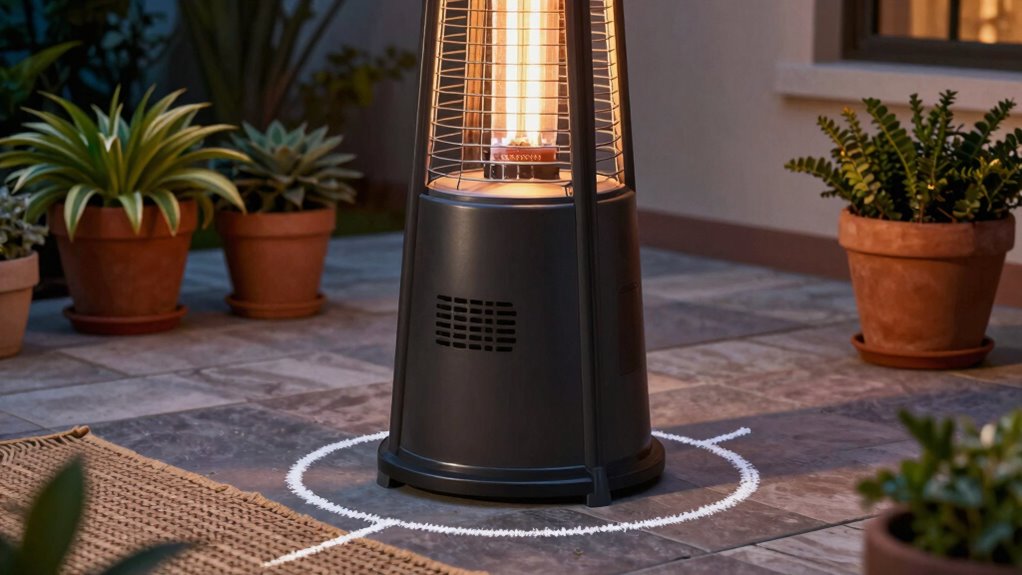
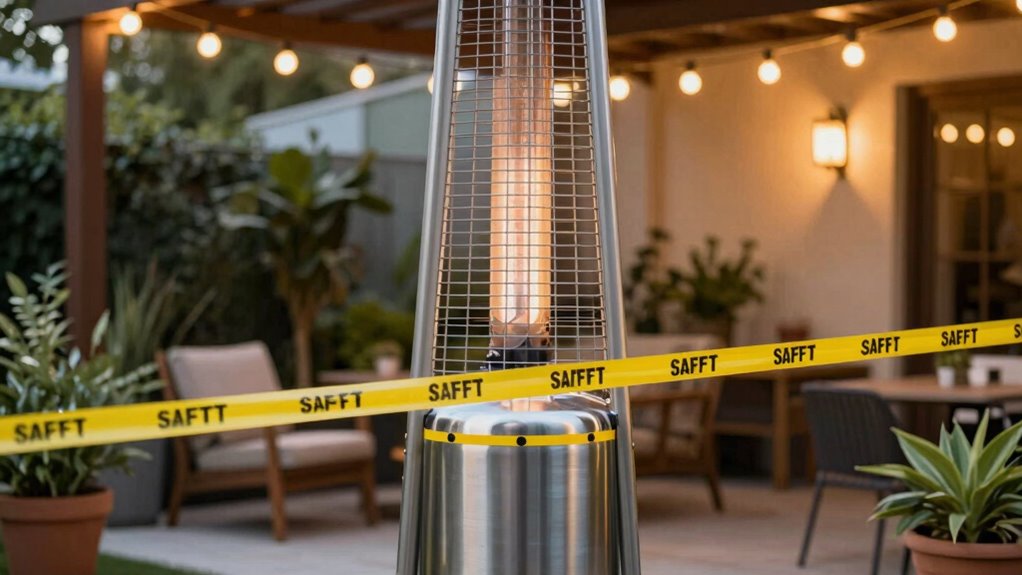
Safety zones are vital when using a patio heater because they help prevent accidents and injuries. Without proper clearance, you increase the risk of fire hazards and accidental burns. Keeping a safe distance ensures that the heater’s heat doesn’t ignite nearby objects or cause burns if someone accidentally touches it. A well-defined safety zone creates a buffer that protects guests, children, and pets from coming into direct contact with the hot surfaces or flames. It also helps you maintain control over the environment, avoiding unintended fires. By respecting these zones, you minimize the chance of dangerous incidents, making your outdoor space safer and more enjoyable. Proper safety zones are a simple but essential step in responsible patio heater use.
How Can You Measure and Set Proper Clearance for Your Heater?
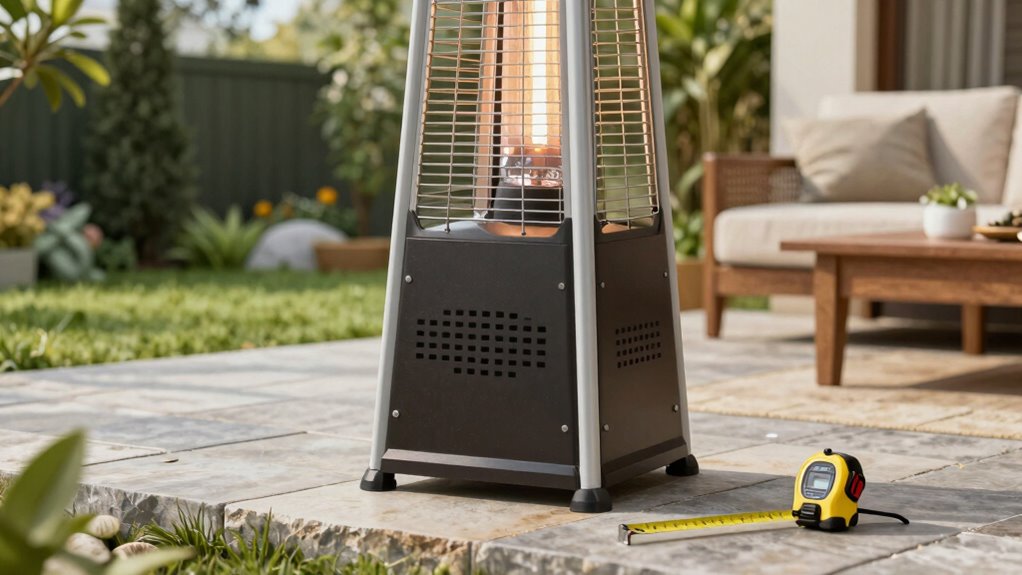
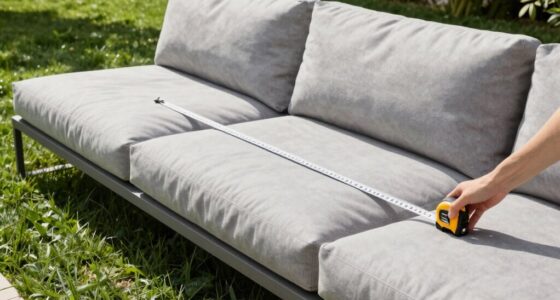
To guarantee your patio heater operates safely, you need to accurately measure and set the proper clearance around it. Start with measurement techniques such as using a tape measure to gauge distances from the heater to nearby objects. Follow clearance guidelines specified by the manufacturer and local safety codes.
To ensure correct placement, consider:
- Measuring the distance from the top, sides, and rear of the heater to nearby objects
- Checking the height clearance to prevent contact with overhead structures
- Using a level or straightedge for even spacing
- Keeping a consistent gap based on the heater’s heat output and safety recommendations
What Are Common Mistakes in Patio Heater Placement?
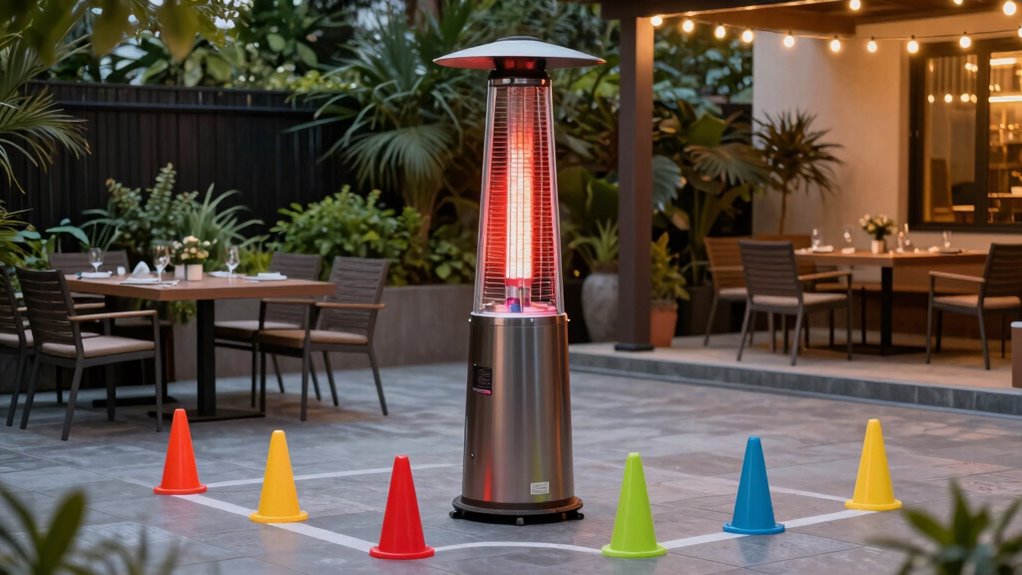
Many people make the mistake of placing patio heaters too close to combustible objects or in high-traffic areas, which can lead to accidents or fire hazards. It’s common to prioritize aesthetic considerations, like decorative accents, over safety zones, but this can be dangerous. You might position a heater for visual appeal, overlooking the necessary clearance, or set it near furniture or plants that could catch fire. Avoid blocking pathways or placing heaters where they could be bumped or knocked over. Always consider both safety guidelines and the visual appeal of your outdoor space. Proper placement balances aesthetics with safety, ensuring your patio remains both inviting and secure. Remember, neglecting these common mistakes can jeopardize your safety and the longevity of your furnishings.
How Do You Maintain Safe Clearance During Use and Storage?
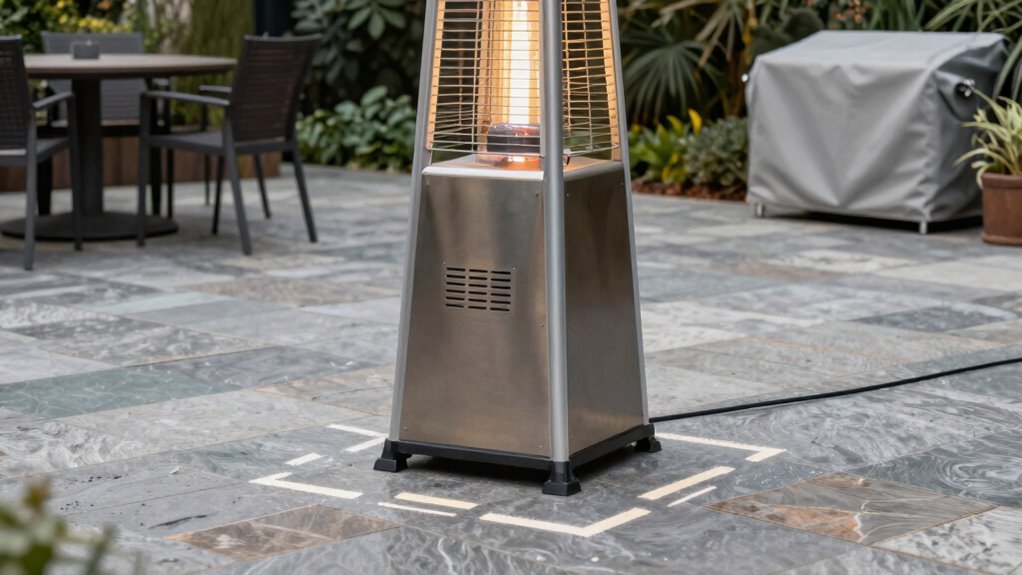
Maintaining safe clearance during use and storage is essential to prevent accidents and guarantee your patio heater functions properly. To do this, regularly check that combustible materials are kept at least the recommended distance, especially around fireproof materials designed to withstand heat. When storing, ensure the heater is cool, clean, and protected from wind considerations that could knock it over or cause instability.
- Keep the heater away from flammable objects and materials
- Store in a sheltered area, avoiding exposure to wind
- Use fireproof covers or barriers when not in use
- Maintain proper clearance as per manufacturer guidelines
What Are the Risks of Ignoring Safety Zones, and How Can You Prevent Accidents?
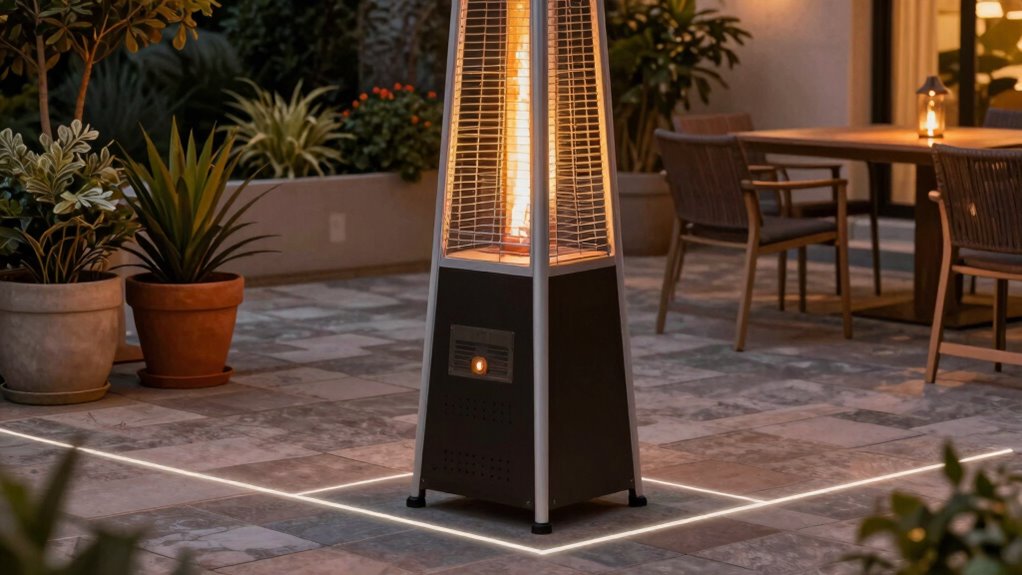
Ignoring safety zones around your patio heater considerably increases the risk of fires, burns, and property damage. Fire hazards become more likely when heaters are placed too close to combustible materials or personal belongings. Without proper clearance, you also risk accidental contact, which can cause serious injuries. To prevent accidents, always follow clearance guidelines and keep a safe distance from walls, furniture, and plants. Regularly inspect your heater for damage or leaks that could lead to dangerous malfunctions. Taking these precautions is essential for injury prevention and maintaining a safe outdoor environment. By respecting safety zones, you reduce the chance of fires and injuries, ensuring everyone stays safe and your property stays protected.
Frequently Asked Questions
Are There Specific Clearance Distances for Different Types of Patio Heaters?
Yes, there are specific clearance distances for different types of patio heaters. When planning your heater placement, follow clearance guidelines tailored to each heater type, whether propane, electric, or natural gas. These guidelines help prevent fire hazards and ensure safe operation. Always check the manufacturer’s instructions for recommended distances from combustible materials, furniture, and overhead structures, so you maintain a safe environment and enjoy your heater without worry.
How Often Should Safety Zones Be Re-Evaluated or Adjusted?
You should re-evaluate your safety zones regularly, ideally every few months, or after any maintenance checks or safety training sessions. Changes in your patio setup, new furniture, or weather conditions can affect clearance distances. Staying proactive guarantees safety. Incorporate routine maintenance checks and ongoing safety training for all users to keep the clearance zones effective. Regular reviews help prevent accidents and maintain a safe outdoor environment.
What Materials Are Safest for Surrounding Objects Near a Heater?
Think of surrounding materials as your heater’s best friends—they should be heat-resistant surfaces and non-flammable materials. You want to keep flammable materials like paper, fabric, or wood at a safe distance, as they’re like sparks waiting to ignite. Opt for fireproof tiles, stone, or metal surfaces around your heater. These materials help prevent accidents and keep your outdoor space safe, letting you enjoy warmth without worry.
Can Children or Pets Safely Be Around Patio Heaters Within Safety Zones?
Children and pets can be safely around patio heaters if you maintain proper safety zones. You should prevent them from entering the clearance area to guarantee child safety and pet protection. Keep kids and pets supervised, and create barriers if necessary. Always follow manufacturer guidelines and safety rules to minimize risks. By staying vigilant and respecting clearance zones, you help keep everyone safe while enjoying outdoor heating.
How Do Weather Conditions Affect Clearance Requirements?
Weather variations can impact clearance requirements because wind, rain, or snow may cause patio heaters to operate differently or become unstable. You should adjust safety protocols accordingly, ensuring clearances are maintained even during adverse conditions. For instance, strong winds might require increased distances from combustible materials to prevent accidents. Always stay alert to weather changes and follow safety guidelines to keep everyone safe around your patio heater.
Conclusion
Ignoring safety zones might keep your patio cozy, but it also risks fire and injury. While a warm glow creates inviting evenings, neglecting proper clearance turns that comfort into danger. Balancing warmth with caution guarantees your outdoor space remains both enjoyable and safe. Remember, the right distance isn’t just a rule—it’s the barrier between a pleasant gathering and a hazardous mishap. Prioritize safety, and let your patio heater bring warmth without regrets.