
You can make your outdoor speaker setup sound better without increasing the volume by focusing on proper placement and quality equipment. Position speakers at ear level and avoid obstacles to improve sound coverage and clarity. Using wireless technology allows you to easily fine-tune settings and find the most effective setup. Additionally, investing in high-quality gear reduces distortion and enhances sound fullness. Keep exploring to discover how these tips can transform your outdoor audio experience.

Get pool and patio gear delivered free with Prime
- Fast, free delivery on millions of items
- Prime Video, Amazon Music and more included
- Member-only deals all year
Key Takeaways
- Proper speaker placement optimizes sound coverage and reduces reflections, improving clarity without increasing volume.
- High-quality equipment delivers clearer sound at lower volumes, enhancing overall audio experience.
- Wireless connectivity allows flexible positioning, eliminating the need to turn up volume for better sound distribution.
- Fine-tuning settings via remote apps enhances sound clarity without raising loudness levels.
- Increasing volume can cause distortion, so well-designed setups focus on quality and placement instead.

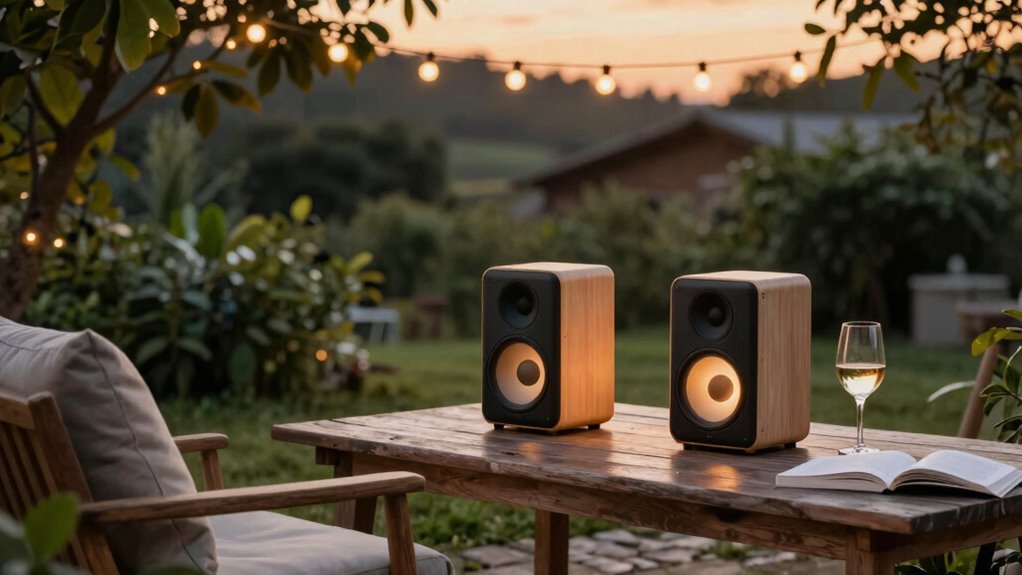
Many people assume that cranking up the volume is the best way to improve outdoor sound quality, but in reality, a well-designed setup can deliver richer, clearer audio without being louder. Instead of increasing volume, focus on how your speakers are connected and positioned. Wireless connectivity plays a vital role here, offering a seamless way to set up speakers without the clutter of wires. When your speakers connect wirelessly, you can position them more freely, allowing you to optimize sound distribution across your outdoor space. This flexibility ensures that sound reaches all corners evenly, reducing the need to turn up the volume to compensate for poor placement. Proper speaker placement is key to achieving better outdoor sound quality. Proper positioning involves more than just placing speakers on tables or hanging them randomly. You want to think about how sound waves travel and reflect off surfaces like walls, trees, or the ground. Positioning speakers at ear level or slightly above can help direct sound toward your listening area, making it clearer and more immersive. Avoid placing speakers directly on the ground or behind objects that could muffle or distort the sound. Instead, aim for an arrangement that maximizes coverage and minimizes sound bouncing away or getting lost in the environment. Wireless connectivity makes adjusting your setup easier and more more effective. You can move your speakers around without hassle, testing different positions until you find the perfect arrangement. Many modern outdoor speakers come with app control, allowing you to fine-tune audio settings and volume levels remotely. This also helps prevent unnecessary sound distortion, which can occur when volume is increased beyond optimal levels. Additionally, a well-optimized setup can enhance audio clarity and overall listening experience, making your outdoor gatherings more enjoyable without the need for louder volumes. Incorporating wireless audio technology can further improve signal stability and reduce interference, leading to a more consistent sound quality. Investing in high-quality speaker equipment is another way to ensure better sound performance without needing to turn up the volume.
outdoor wireless speaker with app control
As an affiliate, we earn on qualifying purchases.
As an affiliate, we earn on qualifying purchases.
Frequently Asked Questions
How Does Speaker Placement Affect Sound Quality Outdoors?
Speaker placement greatly impacts outdoor sound quality. You should position speakers at the right height, ideally ear level or higher, to guarantee clear, even sound. Avoid placing them near reflective surfaces like walls or water, as sound reflection can cause muddiness and uneven audio. Proper placement reduces echo and maximizes clarity, making your outdoor listening experience richer without needing to turn the volume up, creating better sound quality overall.
What Role Does Speaker Frequency Response Play Outdoors?
Did you know that a speaker’s frequency response directly impacts outdoor sound quality? It determines the tonal balance, ensuring clear highs and rich lows. When your speakers cover a wide frequency range, your outdoor setup sounds more natural and immersive. Focusing on proper frequency response helps avoid muddiness or harshness, making your music enjoyable without needing to turn up the volume. So, prioritize speakers with balanced frequency ranges for the best outdoor sound experience.
Can Outdoor Ambient Noise Influence Perceived Sound Clarity?
Yes, outdoor ambient noise can influence how you perceive sound clarity. When background noise is high, your perception of speaker clarity might decrease, making it seem less distinct. To combat this, your speakers should focus on perception enhancement by emphasizing clearer, more direct sounds. This way, even amidst background noise, you’ll enjoy better sound quality without needing to turn the volume up, ensuring a more enjoyable outdoor listening experience.
How Do Weather Conditions Impact Outdoor Speaker Performance?
Weather conditions greatly impact your outdoor speaker performance. Wind interference can distort sound, making it harder to hear clearly, especially over longer distances. Humidity effects can cause moisture buildup inside your speakers, potentially damaging components and dulling sound quality. To optimize performance, position speakers away from strong wind paths and protect them with weather-resistant enclosures. Regular maintenance and choosing weatherproof models help guarantee consistent sound quality regardless of weather changes.
What Are the Best Materials for Outdoor Speaker Enclosures?
You should choose outdoor speaker enclosures made from durable materials like polypropylene, ABS plastic, or stainless steel, which resist weather and corrosion. The enclosure design also matters; look for sealed or vented designs that protect internal components while enhancing sound quality. These materials and designs guarantee longevity and ideal performance, helping your outdoor speakers deliver clear, balanced sound without being overly loud or affected by harsh weather conditions.
Conclusion
Remember, sometimes cranking up the volume turns your outdoor symphony into a chaotic thunderstorm. Instead, focus on clarity and balance—like a gentle breeze that whispers through the trees. When your speakers breathe at just the right level, every note becomes a jewel sparkling in the sunlight, filling your space with rich, pure sound. Less roar, more melody—that’s the secret to turning your outdoor setup into a truly magical concert under the open sky.
Halloween Picks
halloween
As an affiliate, we earn on qualifying purchases.