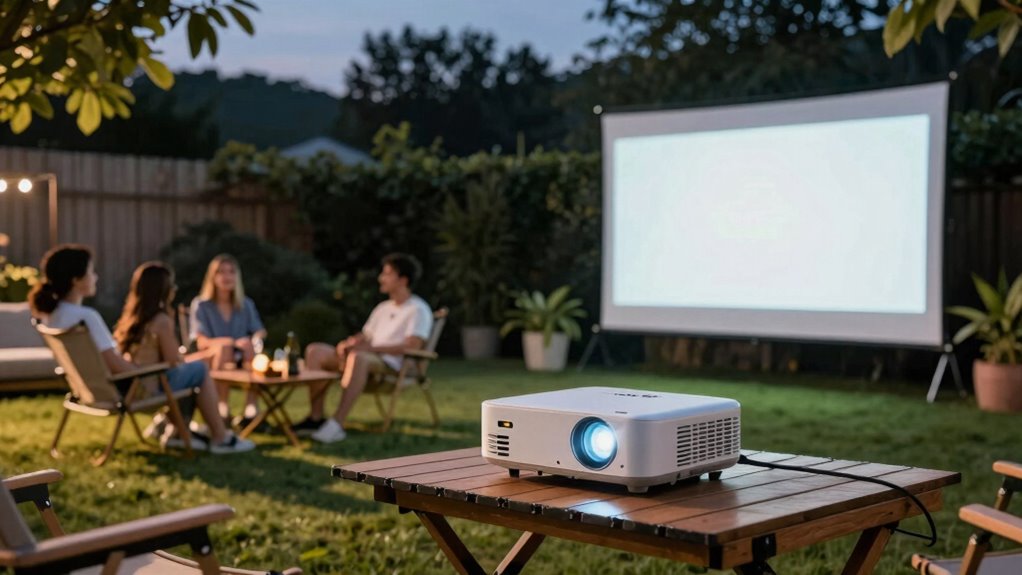

The projector brightness number that matters most for your backyard movie setup is measured in lumens. For outdoor use, a brightness of 2,000 to 3,000 lumens works well in ambient light, while 3,000+ lumens are ideal for brighter settings or twilight viewing. Selecting the right lumen level guarantees your images stay sharp and vivid, even outside. Keep in mind, calibration and environment also play key roles—so if you want to know more, stick around.

Get pool and patio gear delivered free with Prime
- Fast, free delivery on millions of items
- Prime Video, Amazon Music and more included
- Member-only deals all year
Key Takeaways
- For shaded yards or twilight viewing, a projector with 2,000–3,000 lumens is typically sufficient.
- Bright outdoor environments require 3,000+ lumens to ensure clear, vivid images.
- Calibrating projector settings can optimize image quality regardless of lumen rating.
- Ambient light level determines the ideal lumen range needed for outdoor projection.
- Balancing brightness with screen size and environment prevents washed-out images.
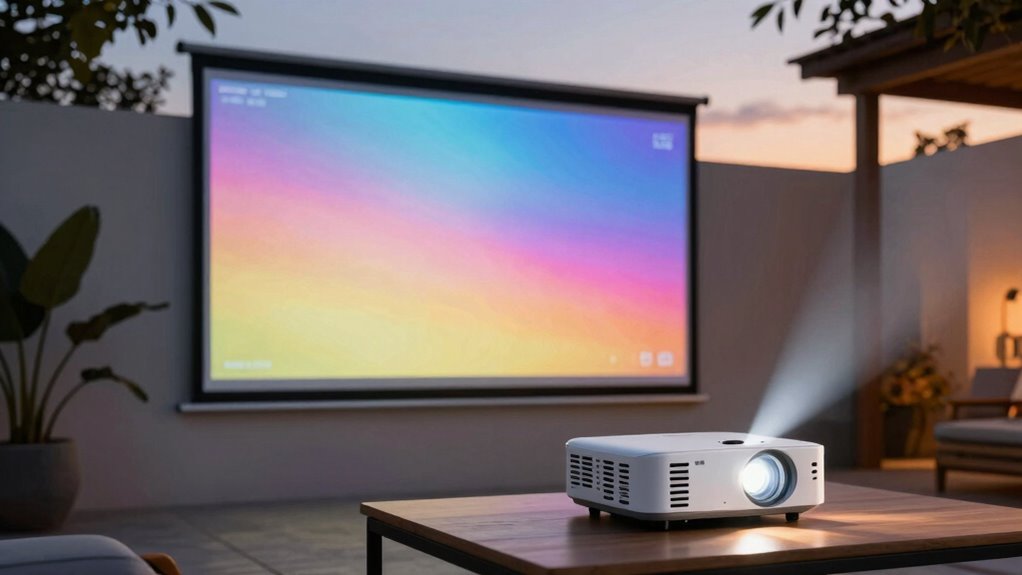
When choosing a projector, understanding its brightness number is essential because it directly impacts the image quality and viewing experience. In backyard setups, where ambient light varies and control over lighting conditions is limited, the projector’s brightness becomes even more critical. The brightness number is measured in lumens, and knowing how to interpret it is key to selecting the right device for your outdoor movie nights.
A lumens comparison helps you gauge how bright a projector is relative to others, giving you a clearer idea of its performance in different lighting environments. For backyard use, you’ll want a projector with a higher lumen count—generally, 2,000 to 3,000 lumens is considered suitable for outdoor viewing where some ambient light exists. If you live in a very bright area or plan to watch movies during twilight or early evening, opting for a projector with 3,000 lumens or more ensures your image remains vivid and sharp. Conversely, if you have a shaded backyard or plan to watch when it’s darker, a lower lumen count might suffice, saving you money and avoiding excessive brightness that can wash out the picture.
Brightness calibration is another crucial aspect. Even with a high-lumen projector, you need to calibrate it properly to optimize image quality. Adjust the projector’s settings to match your outdoor environment—this includes tweaking contrast, brightness, and color settings to achieve the best picture. Proper calibration ensures you’re not just relying on the lumen number alone but also making the most of your projector’s capabilities. Remember, a projector with excessively high lumens can sometimes produce a washed-out image if not calibrated correctly, so fine-tuning your settings is essential for that perfect backyard movie experience. Additionally, understanding the lumens comparison helps you select the most suitable projector for your specific outdoor conditions. Knowing how ambient light impacts your viewing conditions can also guide you in choosing the right brightness level, as different environments require different lighting considerations.
It’s also helpful to consider how ambient light affects your viewing experience, as this can influence the required brightness level for optimal image clarity. While choosing a projector, don’t just focus on the lumen rating; consider the entire setup, including screen size, ambient light control, and placement. High lumens are beneficial, but they work best when paired with proper calibration and a suitable environment. A well-calibrated projector with the right brightness level will give you a crisp, vibrant image that makes your backyard feel like a mini theater. Keep in mind that the goal is to find a balance—too much brightness can be as problematic as too little, especially if your space isn’t fully dark. Also, understanding projector specifications and how they correlate with your outdoor environment can help you make a more informed choice. By understanding lumens comparison and practicing good brightness calibration, you can ensure your outdoor movie nights are enjoyable, clear, and visually stunning.
outdoor projector with 3000 lumens
As an affiliate, we earn on qualifying purchases.
As an affiliate, we earn on qualifying purchases.
Frequently Asked Questions
How Does Ambient Light Affect Projector Brightness Needs?
Ambient glow and light pollution substantially impact how much projector brightness you need. When there’s more ambient light, like streetlights or reflections, your projector requires higher brightness to produce a clear image. In dark backyard settings, lower brightness settings work fine. You should consider a projector with at least 2,500 lumens for outdoor use, especially if nearby lights can cause light pollution, to guarantee your images stay sharp and vibrant.
Is a Higher Brightness Number Always Better?
A higher brightness number isn’t always better because it can compromise color accuracy and shorten lamp lifespan. While brighter projectors are useful in well-lit environments, excessively high brightness may cause colors to look washed out if the projector isn’t calibrated properly. In your backyard, choose a projector with enough brightness for ambient light, but also consider models balancing brightness with color quality and durability to guarantee a better viewing experience.
What Is the Ideal Projector Brightness for Small Backyards?
For small backyards, a projector with 2,000 to 3,000 lumens usually hits the sweet spot. This brightness level guarantees clear images even with some ambient light, while maintaining good color accuracy. Keep in mind that higher brightness can drain your lamp life faster, so select one that balances brightness and longevity. You want vibrant visuals without sacrificing the durability of your projector over time.
How Does Screen Size Influence Brightness Requirements?
Your screen size impacts brightness needs because larger screens demand higher lumens for clear visibility. With bigger screens, you might also consider your screen resolution to guarantee sharp images, especially in ambient light. Additionally, mounting options can influence brightness effectiveness—mounted projectors often need higher brightness for even illumination across the large surface area. So, choose a projector with enough lumens to match your screen size, resolution, and mounting setup for the best outdoor viewing experience.
Can a Projector’s Brightness Be Adjusted?
Yes, you can adjust a projector’s brightness, but it depends on the model. Many projectors offer settings to lower or boost brightness, helping you optimize projection angles and enhance sound quality. Adjusting brightness can improve image clarity and reduce glare, especially in different lighting conditions. Always check your projector’s menu for brightness controls, and consider how projection angles and sound quality will be affected when making adjustments.
Conclusion
Remember, the brightness number isn’t just a number—it’s your lantern in the night, guiding your backyard cinema experience. When you choose a projector with the right lumens, you’re lighting your outdoor adventures with clarity and vibrancy, transforming darkness into a canvas of memories. Let the brightness be your steady star, illuminating every detail and color, so your movie nights shine as brightly as your imagination. In the end, it’s the light you choose that shapes your backyard’s story.
Fall Picks
fall essentials
As an affiliate, we earn on qualifying purchases.