To save your compressor and make sure your outdoor fridge runs smoothly, give it plenty of space—at least 2-3 inches on the sides and back—and avoid placing it against walls or in direct sunlight. Proper ventilation helps heat escape and keeps moisture levels low, preventing damage. Stay attentive to signs like overheating or strange noises, and keep vents clear of dust. Keep your unit well-ventilated, and you’ll extend its lifespan—learn more to optimize your setup.
Key Takeaways
- Maintain at least 2-3 inches clearance on all sides for optimal airflow and heat dissipation.
- Place the fridge on a level, stable surface away from direct sunlight to prevent overheating.
- Avoid positioning the unit against walls or in tight corners that obstruct vents and airflow.
- Regularly clean vents and ensure surrounding areas are free from debris and obstructions.
- Monitor for signs of overheating or compressor strain, and reposition if ventilation issues persist.
Why Proper Ventilation Is Critical for Outdoor Refrigeration
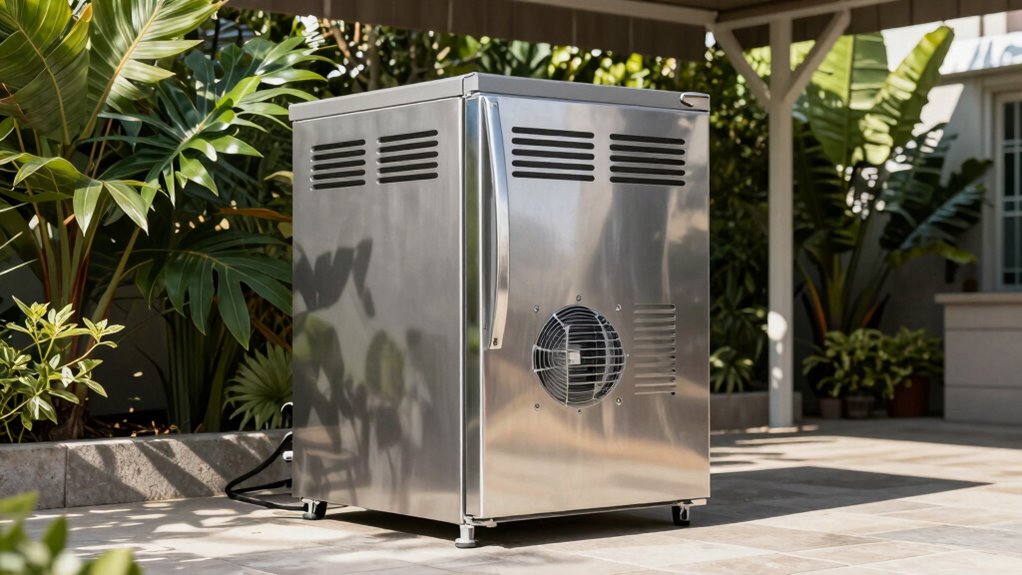
Proper ventilation is essential for outdoor refrigeration because it helps the compressor and condenser dissipate heat effectively. When airflow is unobstructed, the system maintains ideal insulation efficiency, reducing the risk of overheating. Without proper ventilation, heat builds up, forcing the compressor to work harder and increasing energy consumption. This strain can lead to premature wear and potential breakdowns. Good airflow ensures consistent temperature regulation, keeping your fridge’s interior at the desired level. Adequate ventilation also prevents moisture buildup around the compressor and condenser, which could cause corrosion or mold growth. By prioritizing proper airflow, you protect your outdoor fridge’s longevity and ensure it operates efficiently, saving you money and hassle in the long run.
Where and How to Place Your Outdoor Fridge for Good Airflow
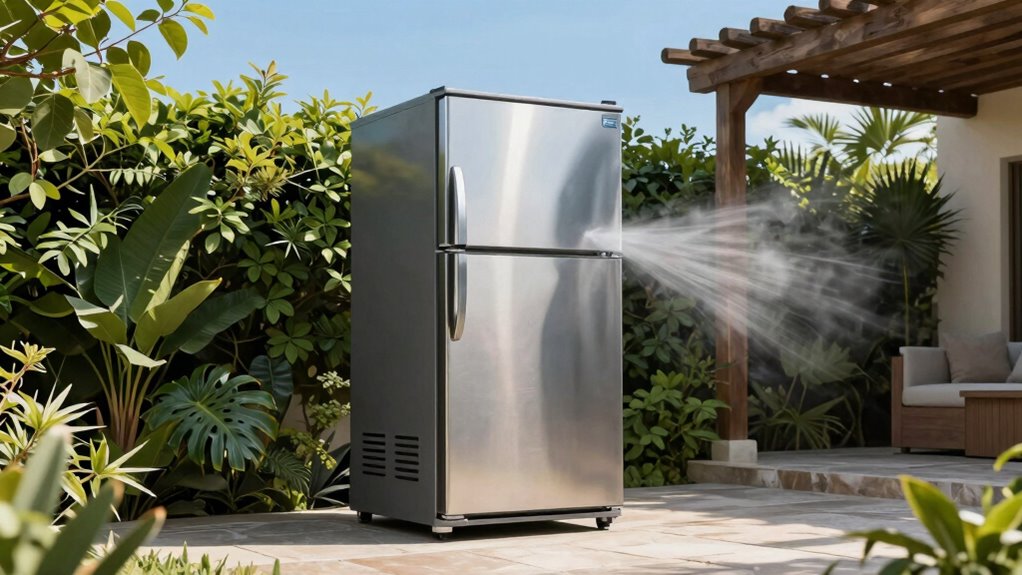
To guarantee your outdoor fridge works efficiently, you need to place it where it has enough clearance space around it. Avoid setting it in direct sunlight, which can cause overheating and energy loss. Make sure it sits on a stable surface to prevent vibrations and shifting that could affect performance.
Maintain Adequate Clearance Space
Ensuring your outdoor fridge has enough clearance space is essential for proper airflow and efficient operation. Adequate clearance helps maintain the ventilation significance, preventing heat buildup that can strain the compressor. Follow clearance guidelines by leaving at least 2-3 inches on the sides and back of the unit. This space allows air to circulate freely around the condenser coils, improving heat dissipation. Check your fridge’s manual for specific recommendations, as some models may require more or less space. Avoid placing your fridge in tight corners or flush against walls, which can impede airflow and cause overheating. Proper spacing ensures consistent cooling performance and extends the lifespan of your appliance. Prioritize ventilation importance through strategic placement and sufficient clearance.
Avoid Direct Sunlight Exposure
Placing your outdoor fridge in a shaded area is crucial to prevent it from overheating due to direct sunlight. Sunlight exposure can cause the compressor to work harder, risking damage and reducing efficiency. To achieve ideal airflow and protect your appliance, consider these tips:
- Position the fridge away from direct sunlight, such as under trees or an overhang, to minimize heat buildup.
- Use reflective surfaces like light-colored walls or reflective panels nearby to deflect sunlight and keep temperatures lower.
- Ensure the fridge isn’t facing east or west where the sun’s rays are strongest during peak hours, reducing heat absorption.
Ensure Stable Surface Placement
Choosing a stable, level surface for your outdoor fridge is essential to keep it secure and functioning properly. Ground stability prevents wobbling or shifting that could damage internal components or compromise airflow. Confirm the surface is firm and solid—concrete slabs, paved patios, or level ground work best. Avoid placing your fridge on uneven or soft ground like dirt or grass, which can cause instability. Use a level to check that the appliance sits evenly, preventing vibrations and uneven wear. Proper level positioning also helps maintain door seals and prevents leaks. By selecting a stable, level surface, you ensure your outdoor fridge operates efficiently, stays secure, and benefits from ideal airflow, ultimately extending its lifespan and maintaining consistent performance.
How to Detect If Your Outdoor Fridge Isn’t Ventilating Properly
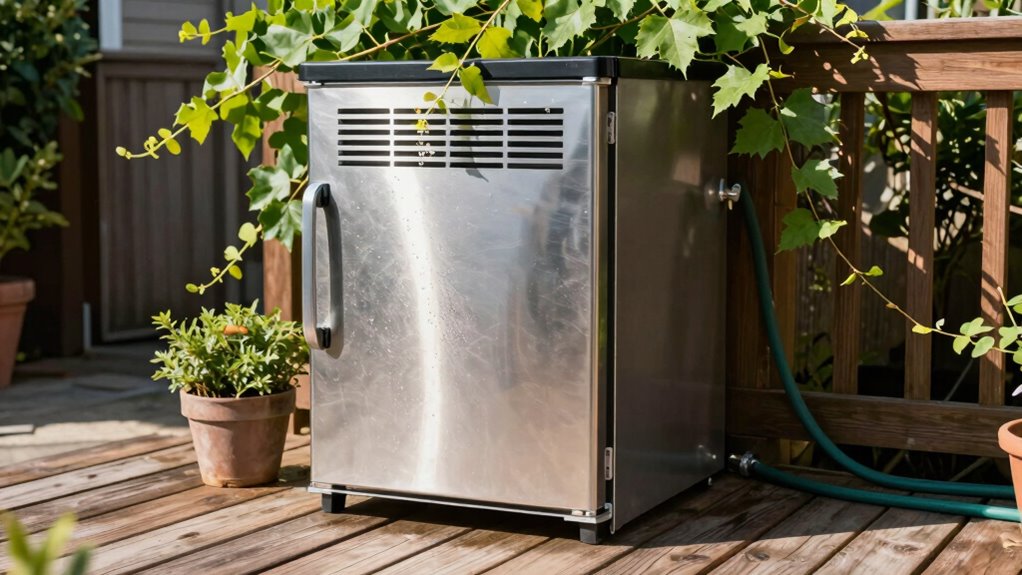
If your outdoor fridge isn’t ventilating properly, you might notice blocked vents that restrict airflow. Unusual noises from the compressor can also be a sign that it’s struggling to cool efficiently. Keep an eye out for these clues to catch ventilation issues early.
Blocked Vents Indicate Poor Airflow
Blocked vents are a clear sign that your outdoor fridge isn’t ventilating properly. When ventilation barriers or airflow obstructions develop, heat can’t escape efficiently, risking damage to the compressor. To detect poor airflow:
- Check for debris or dirt blocking the vents, which create airflow obstructions.
- Look for signs of condensation or frost buildup around vents, indicating restricted airflow.
- Feel for excessive heat emanating from the vents, revealing that heat isn’t dispersing as it should.
If any of these issues are present, your fridge isn’t ventilating properly. Ensuring vents are clear and unobstructed maintains proper airflow, preventing overheating and extending the life of your compressor. Regular inspections are key to *ideal* outdoor fridge performance.
Unusual Compressor Noises Signal Issues
Unusual noises coming from your outdoor fridge’s compressor can be a clear warning sign that it’s not ventilating properly. When the compressor makes loud, rattling, or buzzing sounds, it may be struggling to dissipate heat effectively. Poor ventilation causes the compressor to work harder, which can lead to increased noise levels and decreased refrigeration efficiency. If you notice these unusual compressor noises, it’s a sign that airflow might be blocked or restricted. Regularly check your fridge’s placement to verify vents are unobstructed and airflow isn’t hindered. Addressing ventilation issues promptly helps maintain ideal compressor performance, ensures your outdoor fridge runs quietly, and preserves refrigeration efficiency over time. Proper placement and ventilation are key to preventing costly repairs and extension of your fridge’s lifespan.
Common Mistakes That Block Ventilation and Damage Your Compressor
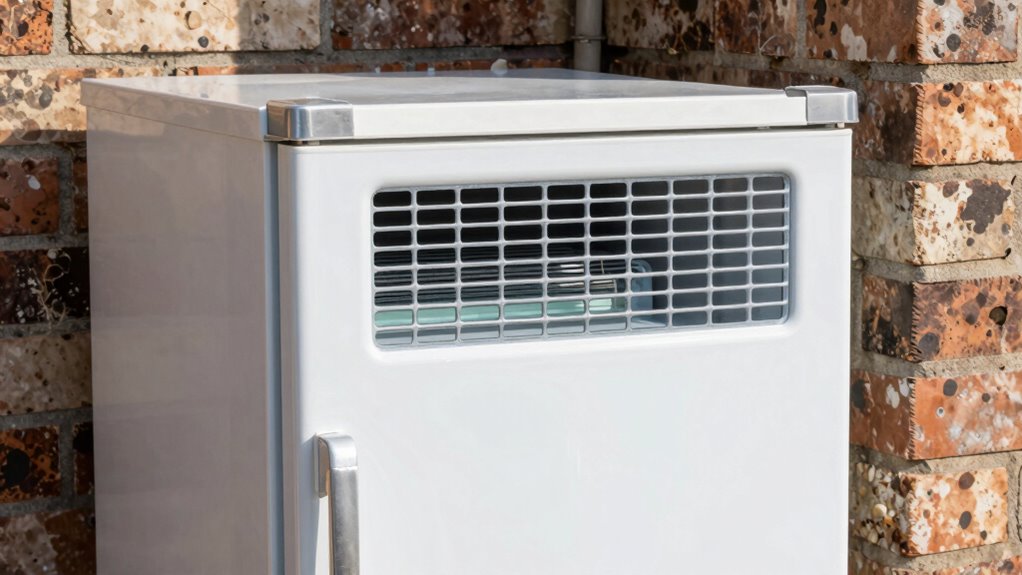
Many outdoor fridge owners unintentionally hinder proper ventilation by placing their units too close to walls or other objects. This restricts airflow, causing the compressor to overheat and wear out faster. Common mistakes include:
- Blocking vents with nearby furniture or plants, which traps heat and reduces cooling efficiency.
- Ignoring signs of refrigerant leaks, which can cause the compressor to work harder, generating excess heat.
- Overlooking electrical faults, such as faulty wiring, that can lead to overheating and damage the compressor.
These errors not only impair ventilation but also increase the risk of compressor failure. Proper placement ensures adequate airflow, preventing overheating and prolonging your fridge’s lifespan. Always keep vents clear and check for signs of leaks or electrical issues regularly.
Simple Tips to Improve Your Outdoor Fridge’s Ventilation
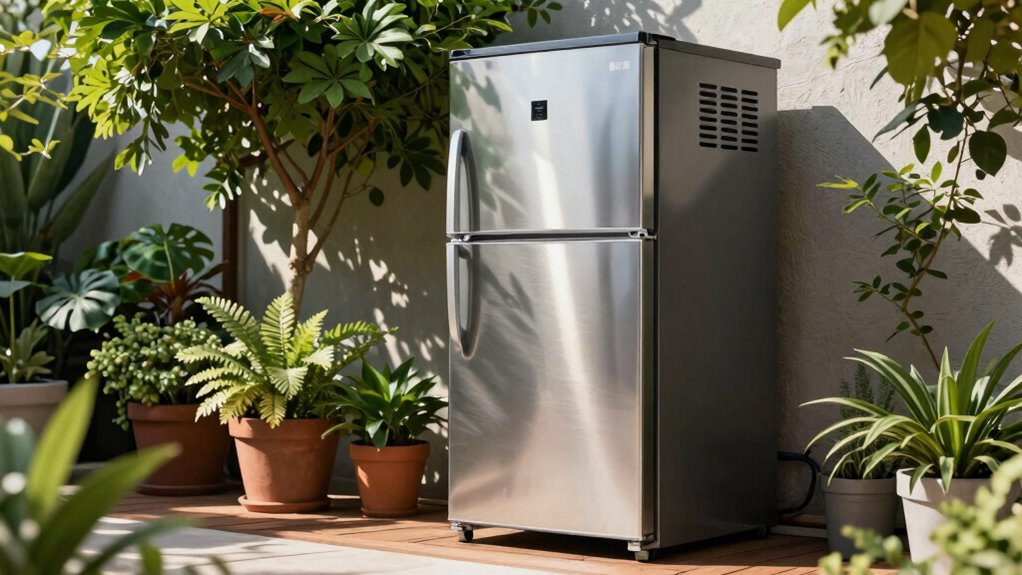
To improve your outdoor fridge’s ventilation, start by ensuring there’s enough space around it for air to circulate freely. Proper airflow helps maintain ideal temperature regulation, preventing overheating and ensuring your fridge runs efficiently. Keep the area clear of debris, plants, or objects that could block vents. Consider positioning the fridge away from direct sunlight, which can cause temperature fluctuations and increase noise levels. Good ventilation also reduces noise, making your outdoor space more comfortable. Regularly clean the vents to remove dust and dirt that hinder airflow. By taking these simple steps, you’ll help your fridge operate smoothly, extend its lifespan, and keep your food at the right temperature—all while minimizing disruptive noise.
How Proper Ventilation Saves Energy and Extends Your Fridge’s Life
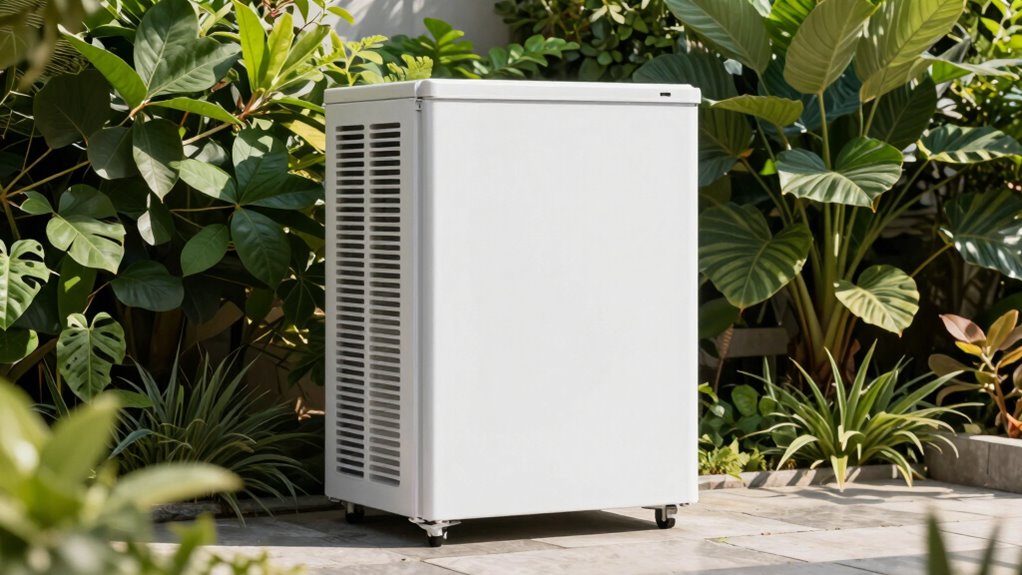
Proper ventilation allows your outdoor fridge to operate more efficiently, saving energy and reducing utility bills. When your fridge breathes well, it doesn’t have to work as hard, which directly benefits its energy efficiency and prolongs the compressor lifespan. Poor airflow causes the compressor to overheat, leading to increased energy use and potential damage over time. To maximize ventilation, consider these key points:
- Ensure there’s at least 2-3 inches of space around the sides and back of your fridge.
- Use a ventilated enclosure or vent openings to facilitate airflow.
- Regularly clean dust and debris that can block vents and hinder heat dissipation.
Implementing these steps maintains optimal airflow, reducing strain on the compressor and extending your fridge’s overall life.
When Should You Call a Professional for Ventilation Problems?
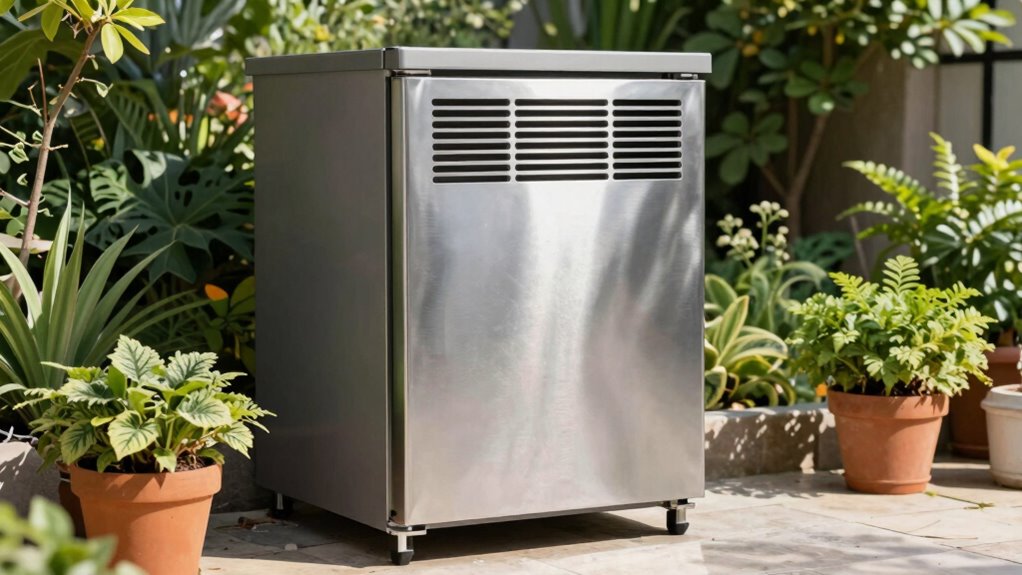
While maintaining adequate ventilation is vital for your outdoor fridge’s efficiency, there are signs that indicate it’s time to call in a professional. If you notice persistent overheating, unusual noises, or frequent compressor cycling despite following basic maintenance tips, it’s a clear sign something’s wrong. DIY solutions like cleaning vents or repositioning the unit help, but if problems persist, don’t hesitate to seek expert advice. A professional can assess ventilation issues thoroughly, identify hidden blockages, or faulty components that might be causing airflow restrictions. Ignoring these signs might lead to compressor damage or reduced lifespan. Trust a specialist when simple fixes don’t resolve the problem, ensuring your outdoor fridge operates safely and efficiently long-term.
Frequently Asked Questions
How Often Should I Check My Outdoor Fridge’s Ventilation?
You should check your outdoor fridge’s ventilation monthly to guarantee ideal airflow. Regular ventilation maintenance prevents overheating and keeps the compressor running efficiently. Keep vents clear of debris, leaves, and snow, especially after storms or heavy wind. Proper airflow enhancement not only prolongs your fridge’s lifespan but also saves energy. By staying proactive, you prevent costly repairs and ensure your outdoor fridge performs reliably in all weather conditions.
Can Poor Ventilation Cause My Fridge to Overheat?
Don’t fall for ventilation myths—poor ventilation can definitely cause your outdoor fridge to overheat, risking compressor overheating. Just like a vintage radio needs proper airflow to function, your fridge relies on good ventilation to stay cool. If you neglect this, your compressor works harder, wears out faster, and you risk costly repairs. Make sure vents are clear and unobstructed to keep your fridge running efficiently and extend its lifespan.
Are There Specific Ventilation Guidelines for Different Fridge Models?
Yes, there are specific ventilation guidelines for different fridge models. You should always check your fridge’s model specifications and installation guidelines provided by the manufacturer. These instructions detail the recommended clearances and ventilation space to prevent overheating and guarantee efficient operation. Proper adherence helps protect your compressor, prolongs the fridge’s lifespan, and maintains ideal cooling performance. Ignoring these guidelines can lead to overheating, noise, or system failure.
What Signs Indicate My Outdoor Fridge Needs Better Airflow?
You’ll notice your outdoor fridge struggling to keep things cool, which hints at airflow obstruction. If the compressor is running constantly or the exterior feels unusually hot, it’s a gentle nudge that airflow might be compromised. Poor ventilation can hinder cooling efficiency, so make certain vents aren’t blocked and there’s enough space around your fridge. Proper airflow keeps your unit operating smoothly, extending its lifespan and maintaining ideal cooling.
How Does Outdoor Climate Affect Ventilation Requirements?
The outdoor climate considerably influences your fridge’s ventilation needs. In hot or humid environments, you must prioritize climate adaptation by ensuring better airflow efficiency to prevent overheating. Cold climates may require less ventilation, but airflow still matters to keep the compressor functioning properly. Adjust your placement accordingly—shade in heat, sheltered spots in cold—to optimize airflow and protect your outdoor fridge from climate-related damage.
Conclusion
Proper ventilation isn’t just a detail—it’s essential. Did you know that poor airflow can reduce your outdoor fridge’s lifespan by up to 50%? By placing your fridge correctly and keeping vents clear, you’ll save energy, prevent costly repairs, and extend its life. Don’t overlook ventilation; it’s the key to reliable performance. Take these simple steps today, and enjoy a cooler, more efficient outdoor setup for years to come.