
Your best grill choice depends more on your cooking style than on your fuel preference. For high-heat searing or quick grilling, gas or charcoal grills work best. If you enjoy slow-smoking or roasting, a smoker or pellet grill will suit you better. Different techniques require specific equipment to achieve ideal results. Understanding your preferred cooking methods helps you select the right grill and accessories. Keep exploring to discover how to maximize your outdoor cooking setup even further.
Play games included with Prime
Start a Prime free trial and play with Amazon Luna on your devices.
As an affiliate, we earn on qualifying purchases.
Key Takeaways
- Different cooking styles, like searing or smoking, require specific grill types to achieve optimal results.
- Grill selection is influenced more by desired technique (e.g., indirect heat, slow smoking) than fuel source.
- Accessories tailored to cooking style enhance performance, regardless of whether the grill is gas, charcoal, or pellet.
- Maintenance routines are dictated by cooking style, impacting the choice of grill type.
- The complexity and time investment of the cooking method often determine the most suitable grill over fuel preference.

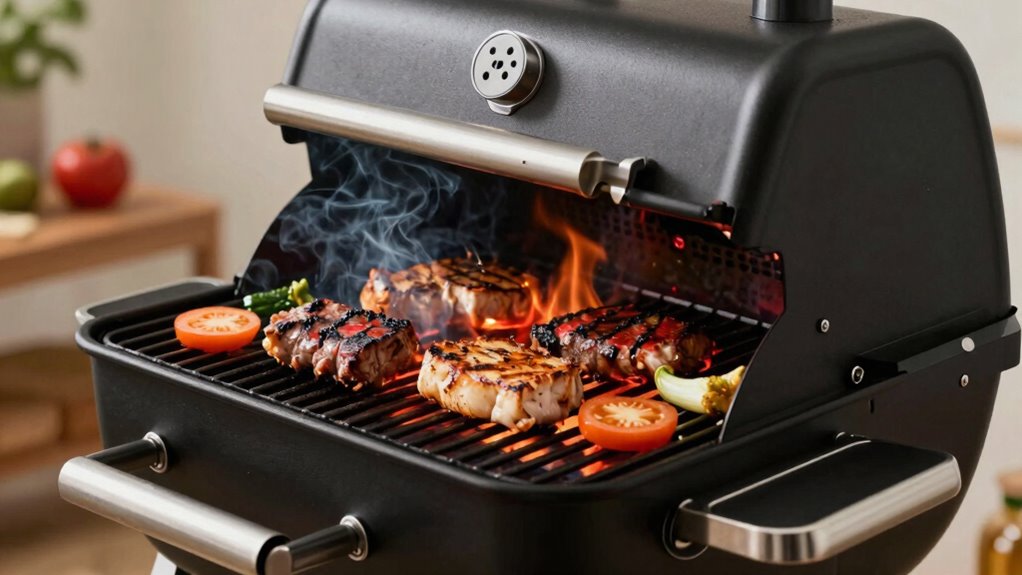
Choosing the right grill depends largely on your preferred cooking style, as different grills excel at different techniques. If you love searing steaks with those perfect grill marks, you might lean toward a gas or charcoal grill that can reach high temperatures quickly. But if you’re more into slow-smoking ribs or roasting vegetables, a smoker or pellet grill could be your best bet. Your cooking style guides your choice, but it also influences how you’ll handle grill maintenance and which grill accessories will make your experience better. For example, if you go with a charcoal grill, you’ll want to keep it clean and free of ash buildup for maximum heat and flavor, so investing in proper grill brushes and ash catchers becomes essential.
Choosing a grill tailored to your cooking style maximizes flavor and simplifies maintenance.
When considering your style, think about how often you plan to cook outdoors and how much time you’re willing to spend on prep and cleanup. If you prefer quick, straightforward grilling, a gas grill might suit you best, offering easy ignition and temperature control. However, if you enjoy the ritual of building a fire and the flavor that comes from charcoal, then you’ll want to familiarize yourself with grill maintenance routines specific to that type, like cleaning out ash and checking vents. The right accessories, such as temperature gauges or specialized tongs, can help you manage your grilling process more precisely, regardless of your fuel choice.
For those who love experimenting with various cooking techniques—such as indirect heat, direct grilling, or smoking—certain grills and accessories will serve you better. A versatile grill with multiple zones allows for more control, especially when you’re managing different types of food simultaneously. Accessories like heat-resistant gloves, grill mats, or smoker boxes can extend your capabilities and make your cooking safer and more enjoyable. Additionally, understanding grill maintenance routines can help prolong the lifespan of your equipment and ensure consistent results over time. Regularly learning about grill performance can also help you optimize your setup and troubleshoot issues quickly, leading to better overall results. Incorporating proper cleaning practices is crucial for maintaining optimal grill function and ensuring food safety. Moreover, staying informed about fuel types and their specific benefits can help you make smarter choices for your grilling needs.
best high heat gas grill for searing
As an affiliate, we earn on qualifying purchases.
As an affiliate, we earn on qualifying purchases.
Frequently Asked Questions
How Do I Determine My Primary Cooking Style for Grilling?
To determine your primary cooking style for grilling, consider the flavor profiles you prefer—whether smoky, charred, or tender. Think about how much heat control you need; if you like precise temperature adjustments, a gas grill might suit you. If you’re into intense, smoky flavors with high heat, a charcoal grill is ideal. Match your style to your preferred flavor profiles and your ability to manage heat for the best grilling experience.
Can a Grill Suit Multiple Cooking Styles Effectively?
Yes, a versatile grill can suit multiple cooking styles effectively. You can master flavor profiles and smoke control by adjusting vents, heat zones, and cooking methods. Whether you’re searing steaks or slow-smoking ribs, a well-designed grill offers flexibility. By balancing direct and indirect heat, you create complex flavors and perfect textures, making your grill a multifunctional marvel that adapts seamlessly to diverse grilling desires.
What Accessories Enhance Different Grill Types for Various Styles?
You can enhance your grill with versatile accessories and cooking tools tailored to your style. For direct heat grilling, get a good set of tongs, a spatula, and grill baskets. For smoking or slow cooking, add a smoker box and temperature probes. Cast iron grates and grill mats help with heat retention and easy cleanup. These accessories allow you to adapt your grill for different styles, making your cooking experience more flexible and enjoyable.
Are There Health Considerations Between Different Grilling Methods?
You should know that grilling methods impact health, with charcoal grilling producing more carcinogens than gas. To guarantee grill safety, avoid excessive smoke inhalation by grilling in well-ventilated areas and controlling flare-ups. Using lean meats and trimming fat can also reduce harmful smoke. Remember, choosing the right method not only affects flavor but also your health, so select a style that minimizes health risks while enhancing your cooking experience.
How Does Grill Maintenance Vary by Cooking Style?
Your grill maintenance varies with your cooking style, influencing how often you perform grill cleaning and how you manage fuel efficiency. For high-heat, quick-cook styles, you’ll need frequent cleaning to prevent buildup and guarantee peak performance. Low-and-slow methods require consistent upkeep to maintain fuel efficiency and even heat. Adjust your cleaning routine accordingly, and always keep your equipment in good shape to maximize fuel use and achieve the best results.
Conclusion
Ultimately, your grill choice hinges more on your cooking style than on fuel loyalty. Whether you prefer the quick sear of a gas grill or the smoky flavor of charcoal, pick what matches how you love to cook. Trust your instincts and experiment a bit—there’s no one-size-fits-all. By focusing on your style, you’ll enjoy grilling more and create delicious meals that reflect your unique tastes. Happy grilling!
Flea & tick season Picks
flea and tick prevention
As an affiliate, we earn on qualifying purchases.