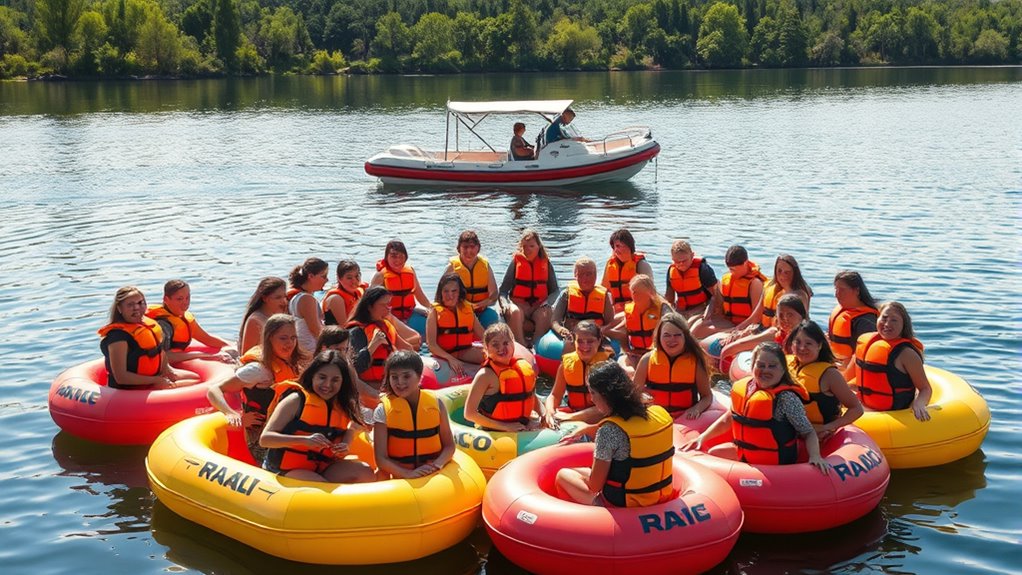

To guarantee floating safety for large groups, you must stay vigilant and follow strict protocols. Clearly communicate safety rules and keep everyone within designated areas. Regularly scan the water for signs of distress, rotate supervisory roles, and stay alert to subtle warnings like fatigue. Equip participants with proper safety gear and ensure it’s well-maintained. Staying proactive and prepared can prevent accidents—continue to explore essential strategies to keep everyone safe and confident.
Key Takeaways
- Clearly communicate pool rules and designated swimming areas to all participants.
- Maintain constant visual surveillance and actively scan the entire aquatic zone.
- Rotate supervision roles regularly to prevent complacency and ensure vigilance.
- Ensure all safety equipment, such as flotation devices, is available, well-maintained, and properly used.
- Conduct regular safety drills and review emergency protocols to enhance preparedness for large group situations.
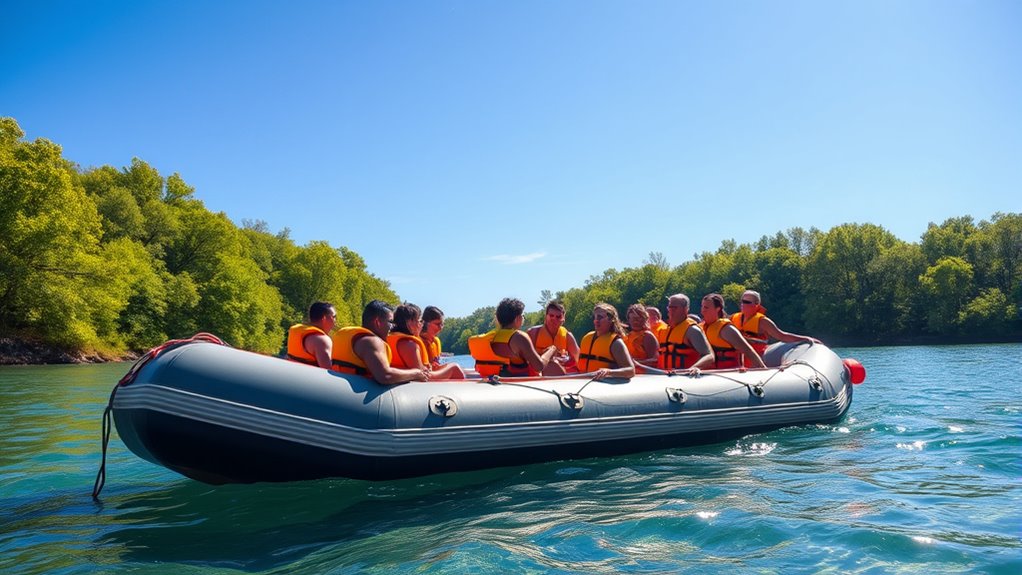
When managing large groups in aquatic environments, ensuring everyone’s safety is paramount. As someone responsible for overseeing such activities, you need to be well-prepared to handle any situation that might arise. One of the most effective ways to do this is through thorough lifeguard training. Proper training equips you with the skills to recognize potential hazards, respond swiftly to emergencies, and enforce safety rules effectively. It also covers essential emergency protocols that you must know inside and out. These protocols serve as your roadmap during crises, guiding you through rescue procedures, first aid, and communication strategies. Familiarity with these protocols ensures you can act confidently and decisively, minimizing risks and preventing accidents from escalating.
When working with large groups, it’s essential to establish clear safety guidelines before anyone enters the water. Make sure all participants understand pool rules, designated swimming areas, and the importance of staying within their limits. Clear signage and verbal instructions help reinforce these rules, and having additional staff or volunteers to monitor different zones adds an extra layer of safety. As a lifeguard or supervisor, you should also conduct regular headcounts and visual sweeps to ensure everyone is accounted for and no one is in distress. Using your training, you can identify distressed swimmers early and intervene before situations worsen.
Another key aspect of floating safety is maintaining constant vigilance. In large groups, it’s easy to overlook someone in the water, so staying alert is essential. This means actively scanning the entire area, rotating positions if necessary, and never becoming complacent. Your training prepares you to recognize subtle signs of trouble, such as a swimmer’s unusual movements or signs of fatigue. When you spot an issue, adhering to your emergency protocols allows you to respond in a structured manner—whether it’s performing a rescue, administering first aid, or summoning additional help. Regularly reviewing projector technology concepts and safety procedures can further enhance your preparedness.
Prevention is always better than cure, so preventive measures like ensuring proper floatation devices are available, checking their condition regularly, and instructing participants on their proper use are essential. In case of an emergency, your familiarity with lifeguard training and emergency protocols ensures a coordinated response, reducing panic and confusion. By combining proper training, clear communication, vigilant supervision, and established protocols, you create a safer environment for everyone. Ultimately, your preparedness and proactive approach help prevent accidents and make large aquatic gatherings safe and enjoyable for all.
Frequently Asked Questions
How Do I Handle Emergencies With Large Groups on Water?
When emergencies happen with large groups on water, follow established emergency protocols quickly and calmly. As a lifeguard, your responsibilities include evaluating the situation, providing immediate assistance, and coordinating rescue efforts. Keep your team informed and ready to act, guarantee everyone stays calm, and communicate clearly. Your swift, organized response minimizes risk and ensures everyone’s safety, demonstrating effective leadership during high-pressure situations.
What Communication Tools Are Best for Large Group Safety?
You should prioritize radio communication and mobile apps for large group safety. Radios offer instant, reliable communication, especially in areas with limited cell service, while mobile apps facilitate real-time updates, location sharing, and emergency alerts. Using both guarantees clear, coordinated communication, minimizes confusion, and enhances safety. Always test your tools beforehand, maintain backup options, and train your team to use these devices efficiently during emergencies.
How to Ensure All Group Members Are Wearing Proper Safety Gear?
To guarantee all group members wear proper safety gear, you should conduct a thorough gear inspection before the float. Remind everyone of the importance of personal protective equipment and check that their helmets, life jackets, and other gear are in good condition. Enforce a strict policy that no one participates without proper PPE, and assign staff to monitor gear compliance throughout the event, ensuring safety standards are maintained at all times.
What Training Is Recommended for Large Group Water Safety?
Imagine a sudden emergency during a large group float, and quick action saves lives. You should pursue extensive lifeguard training that includes first aid, CPR, and rescue techniques. Additional specialized courses, like water safety instructor training, can boost your team’s preparedness. Regular drills ensure everyone stays sharp. By investing in these trainings, you’ll build confidence and ensure safety for all, even in the most challenging situations.
How Can I Manage Different Swimming Skill Levels in One Group?
You should conduct a group skill assessment to identify each swimmer’s abilities. Based on this, create individualized swim plans that match their skill levels, ensuring everyone feels safe and confident. Keep the less experienced near the shore or in shallow areas, and assign lifeguards or instructors to monitor different skill groups closely. Regularly reassess skills and adjust swim plans to promote a safe, enjoyable experience for all swimmers.
Conclusion
By following these best practices, you guarantee everyone stays safe during your floating adventures. Imagine a group of friends on a summer float trip; with proper planning and safety measures, everyone enjoys the water without worry. For instance, a well-organized trip with designated lifeguards and clear communication can prevent accidents and save lives. Stay vigilant, prepared, and proactive—your group’s safety depends on it, making the experience fun and memorable for all.