
To incorporate floating into your exercise routine, start with gentle stretches and low-impact moves supported by water’s buoyancy. Use flotation devices for added stability and gradually increase your time in the water as you become more comfortable. Combine floating with resistance tools like waterproof paddles or weights to challenge your muscles. Focus on calm breathing and listen to your body. Keep exploring techniques to make floating a safe and effective part of your workouts.
Key Takeaways
- Start with gentle water-supported stretches to familiarize your body with floating sensations.
- Integrate core exercises using buoyancy to enhance stability and muscle engagement.
- Use resistance tools like waterproof weights or paddles while floating for added workout intensity.
- Practice deep, steady breathing to maintain relaxation and prevent disorientation during routines.
- Always prioritize safety by floating in supervised areas, using flotation aids, and listening to your body.
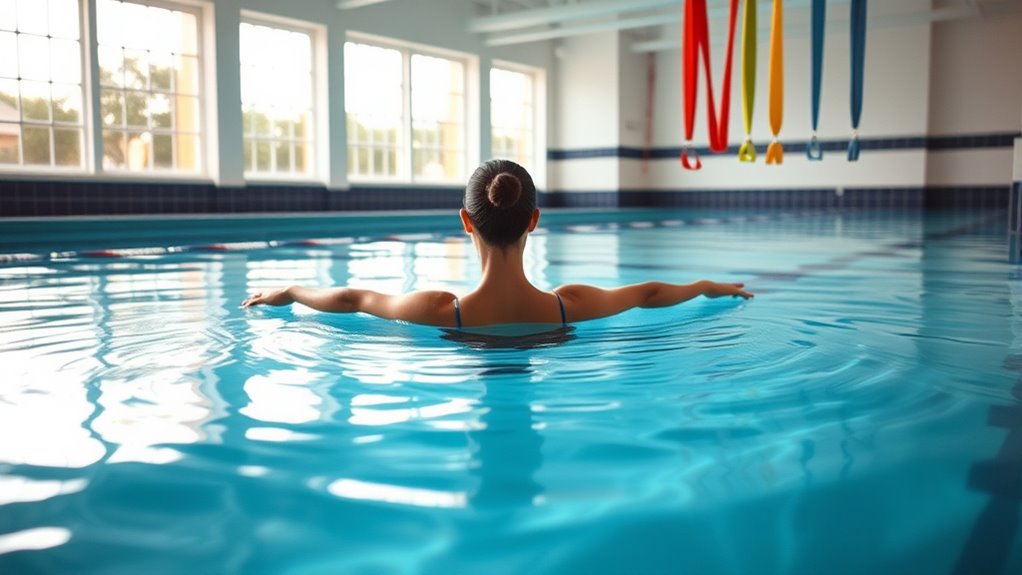
Floating is a powerful way to enhance your exercise routine by adding a low-impact, relaxing element that benefits both your body and mind. When you incorporate floating into your workouts, you’re tapping into hydrotherapy benefits that can improve flexibility, reduce muscle tension, and promote mental clarity. Hydrotherapy has long been recognized for its ability to soothe sore muscles and joints, making floating an excellent addition for recovery or gentle training. Plus, the buoyant environment allows you to perform movements that might be difficult on land, such as gentle stretches or resistance exercises, without putting stress on your joints.
Before diving into floating as part of your workout, it’s vital to prioritize safety. Floating safety tips include understanding the equipment and environment thoroughly. Always float in a designated, supervised area like a pool or a specialized floatation tank to minimize risks. Never float alone if you’re unfamiliar with the setting or if you’re new to floating exercises. It’s wise to start slow, especially if you’re prone to vertigo or anxiety, and gradually build your confidence in the water. Make sure the water temperature is comfortable—not too cold or hot—to avoid shock or overheating. Using appropriate flotation devices or mats can provide added security, especially during more active routines.
Incorporating floating into your workout can be as simple as adding gentle stretches while suspended in water or performing core exercises that leverage buoyancy. You can also combine floating with resistance tools like waterproof weights or paddles to amplify the workout’s effectiveness. The key is to listen to your body and avoid overexertion, as the relaxing nature of floating can sometimes mask fatigue. Always stay hydrated, and if you’re using a pool, ensure it’s well-maintained and clean to prevent infections.
Another safety tip is to be mindful of your breathing and comfort levels. Floating can sometimes evoke feelings of disorientation, so it’s vital to stay calm and breathe steadily. If at any point you feel uncomfortable or unwell, exit the water immediately. Additionally, understanding shark behavior and being aware of local marine life can help you prevent potential risks when practicing outdoor or open water floating exercises. As you become more familiar with floating exercises, you’ll notice how easily you can incorporate them into your routine for a balanced blend of relaxation and physical activity. With proper precautions and awareness of hydrotherapy benefits, floating can become a rewarding and safe addition to your fitness journey.
Frequently Asked Questions
Can Beginners Safely Try Floating Exercises?
Yes, beginners can safely try floating exercises. Water resistance provides gentle support, helping you build confidence and improve balance. Plus, floating promotes mental relaxation, reducing stress and enhancing focus. Start slowly, listen to your body, and stay within your comfort zone. If you have health concerns, consult a professional first. With proper guidance, floating becomes a safe, enjoyable way to enhance your overall well-being.
How Often Should I Incorporate Floating Into My Workouts?
You should incorporate floating into your workouts 2-3 times a week, embracing water resistance and mental relaxation. Ironically, the more you float, the less you’ll feel like working out—yet you’ll strengthen muscles effortlessly. This gentle practice enhances recovery and calms your mind. So, schedule floating sessions thoughtfully, balancing effort and serenity, and watch your routine become more enjoyable and effective without the usual sweat and strain.
Are There Specific Injuries That Floating Can Help Alleviate?
Floating can help alleviate injuries like joint pain, arthritis, and muscle strains because water buoyancy reduces stress on your joints. When you float, the supportive water takes the weight off your joints, providing much-needed relief. This low-impact environment allows you to move freely without pain, making it an excellent option for recovery and maintenance. So, if you’re dealing with joint issues, floating can be a gentle, effective part of your healing process.
What Equipment Is Needed for Floating Exercises?
You’ll need minimal equipment for floating exercises. A comfortable, warm water temperature—around 88-92°F—helps relax your muscles. Using floatation devices like foam noodles, kickboards, or life vests can support your body and improve stability. These tools make it easier to focus on your movements and breathing, enhancing the benefits of floating. Just verify your equipment is clean, well-maintained, and suited to your comfort level for the best experience.
How Does Floating Impact Cardiovascular Health?
Picture yourself drifting effortlessly on water, feeling your muscles stretch and your mind relax. Floating boosts your cardiovascular health by improving circulation and reducing blood pressure, thanks to the calming effect on your mind. As you embrace this gentle activity, you promote mental relaxation, which helps lower stress hormones that can strain your heart. Regular floating can make your heart stronger while giving you a peaceful, rejuvenating experience.
Conclusion
Now that you know how to incorporate floating into your exercise routine, why not give it a try? It’s a simple yet effective way to enhance your workouts, improve flexibility, and boost relaxation. Are you ready to experience the calming power of floating while staying active? Embrace this unique approach and see how it transforms your fitness journey. After all, sometimes the best progress comes from trying something a little different.