
Floating meditation creates a sensory-deprived environment that helps you focus inward by eliminating external sights, sounds, and sensations. As you relax in this space, you become more aware of your body’s subtle cues, like your breath, heartbeat, and muscle tension. This heightened awareness can reveal stress points and foster a deep sense of calm. Keep exploring, and you’ll discover how ongoing practice can enhance your body awareness and emotional well-being.
Key Takeaways
- Sensory deprivation in floating environments minimizes external stimuli, allowing deeper focus on internal sensations and heightened body awareness.
- Mindfulness techniques, like observing breath and bodily cues, enhance relaxation and foster attentive awareness during floating meditation.
- Noticing subtle bodily signals such as tension, warmth, or pulse deepens understanding of physical states and promotes relaxation.
- Heightened body awareness through floating can reveal stress points, aiding emotional regulation and physical tension release.
- Integrating meditation practices during floating encourages long-term mindfulness benefits and a more profound connection to bodily sensations.

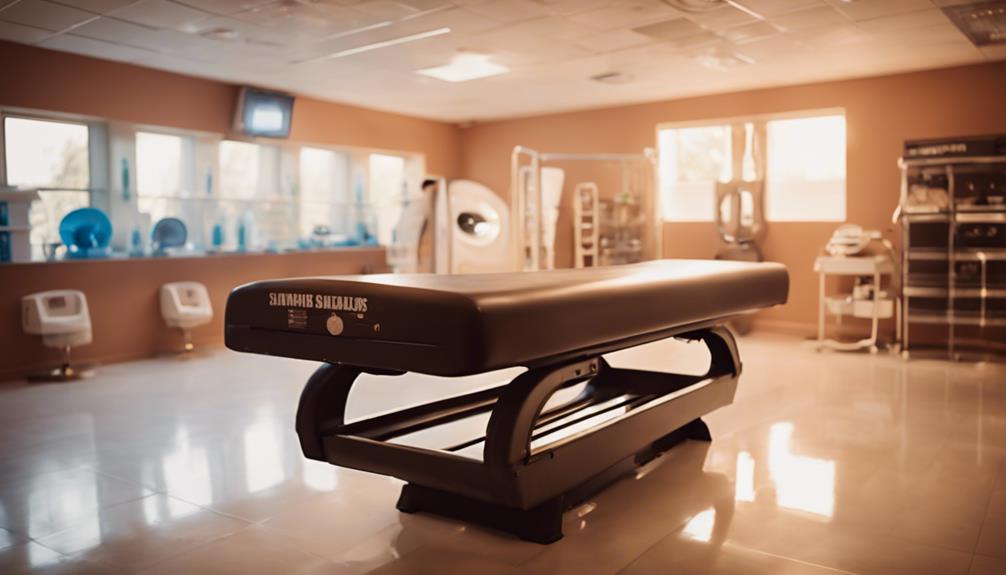
Have you ever wondered what it feels like to weightlessly drift in complete tranquility? Floating meditation offers that sensation, allowing you to experience a profound sense of body awareness. It’s a practice that combines mindfulness techniques with sensory deprivation, helping you tune into your body on a deeper level. When you lie back in a float tank, the environment eliminates external distractions—no sights, sounds, or tactile sensations—giving you a blank canvas to focus inward.
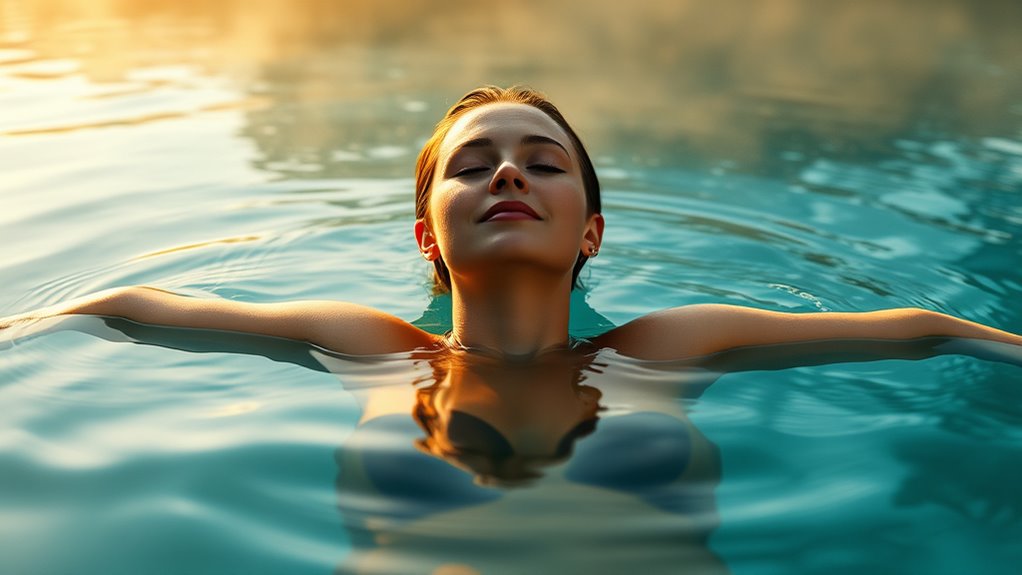
Experience profound body awareness through floating meditation in a distraction-free environment.
As you settle into the tank, you begin to notice your breath slowing naturally, creating a rhythmic cadence that anchors your attention. This is where mindfulness techniques come into play. By observing your breath without judgment, you heighten your awareness of each inhale and exhale, fostering a calm, focused state. With sensory deprivation reducing external stimuli, your mind becomes quieter, making it easier to recognize subtle bodily sensations that often go unnoticed in daily life. You might feel the gentle rise and fall of your chest, the slight tension in muscles, or the pulse of blood through your veins.
This environment encourages a shift from constant mental chatter to a state of relaxed alertness. As you relax into the float, your body begins to surrender tension, and your awareness expands beyond superficial sensations. You might start to feel the weightlessness as an extension of your consciousness, a rare experience of complete bodily freedom. This heightened awareness can lead to insights about how you hold stress or tension, revealing areas that need attention or release.
The absence of sensory input also enhances your perception of internal sensations. Without visual and auditory distractions, you become more attuned to subtle cues like the beating of your heart or the warmth spreading through your limbs. This deepens your understanding of your body’s natural rhythms and responses. Many practitioners find that this heightened body awareness improves overall mindfulness, translating into better stress management and emotional regulation outside the tank.
Additionally, incorporating meditation techniques during floating can further deepen your experience, helping to cultivate a calmer mind and greater emotional resilience. Many practitioners find that this heightened body awareness improves overall mindfulness, translating into better stress management and emotional regulation outside the tank.
In this quiet space, you learn to observe your body with gentle curiosity, rather than judgment or resistance. Over time, this practice can help you cultivate a lasting sense of mindfulness, making you more aware of your physical and emotional states in everyday life. Floating meditation, with its combination of sensory deprivation and mindfulness techniques, creates an environment where body awareness naturally deepens, offering a unique path to relaxation and self-understanding.
Frequently Asked Questions
Can Beginners Safely Practice Floating Meditation at Home?
Yes, beginners can safely practice floating meditation at home if you follow safety guidelines and beginner tips. Make sure you choose a quiet, comfortable space free of distractions, and have a spotter nearby if needed. Use a pool or bathtub with shallow water and avoid practicing alone if you’re unsure. Start slowly, stay relaxed, and listen to your body to guarantee a safe, calming experience.
How Long Should Each Floating Meditation Session Last?
They say, “Less is more,” and that applies here. For floating meditation, start with session lengths of 10 to 15 minutes, following general duration guidelines. As you become more comfortable, gradually extend your practice to 20 or 30 minutes. Focus on quality over quantity, ensuring each session helps deepen your body awareness without feeling overwhelming. Remember, consistency beats duration in building a meaningful practice.
Are There Any Health Conditions That Contraindicate Floating Meditation?
You should be cautious if you have certain health restrictions or medical considerations, as floating meditation might not be appropriate for everyone. Conditions like severe heart issues, open wounds, or infectious skin conditions could make floating unsafe. Always consult your healthcare provider beforehand, especially if you’re pregnant, have high blood pressure, or suffer from anxiety or panic disorders. Your safety comes first, so ensure floating meditation aligns with your health needs.
What Equipment Is Necessary for Effective Floating Meditation?
Imagine slipping into a serene lake—your float tank essentials include a comfortable eye mask, earplugs, and a towel, like gentle ripples calming your mind. No fancy meditation accessories are needed; just your body and mind. Bring a timer if you wish, but let the quiet surroundings guide you. With these simple tools, you create a perfect haven for deep relaxation and heightened body awareness.
How Does Floating Meditation Compare to Traditional Seated Meditation?
Floating meditation offers a unique experience compared to traditional seated meditation by enhancing mindfulness benefits through sensory deprivation. As you float, you reduce external distractions, allowing deeper focus on your breath and bodily sensations. This weightless environment can help you achieve a heightened sense of calm and self-awareness more quickly. While seated meditation emphasizes stillness and mental clarity, floating meditation emphasizes physical relaxation and immersive sensory reduction for a profound mindfulness experience.
Conclusion
Now that you’ve experienced floating meditation, you’re like a leaf drifting effortlessly on a calm river. Embrace this gentle state of awareness, allowing your body and mind to reconnect and find peace. Remember, with practice, this peaceful flow becomes your natural rhythm, guiding you through life’s currents. So, let yourself float freely, trusting in the calming power of stillness—your inner world waiting to be explored with each mindful breath.