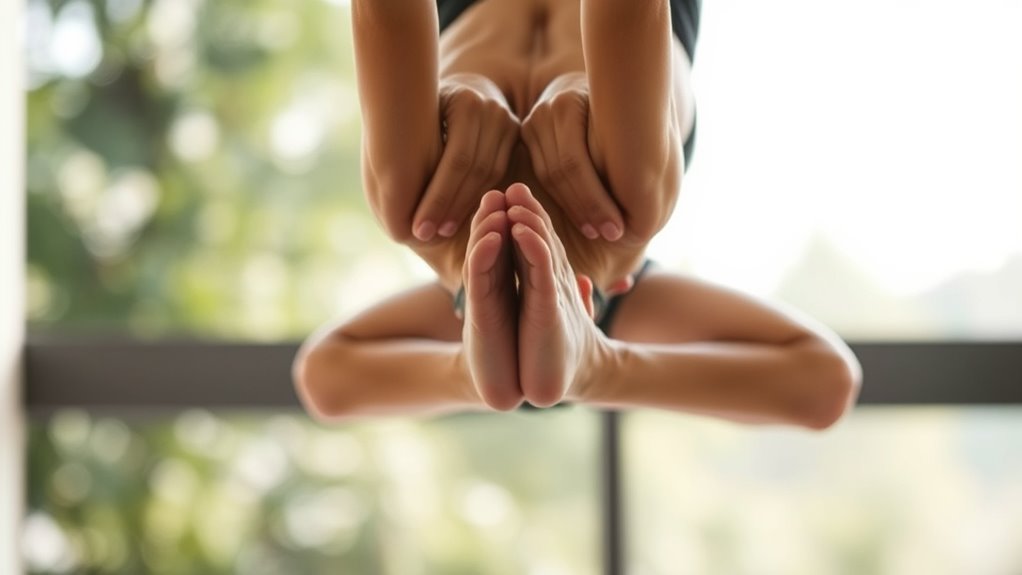

Float holds help you build strength without weights by engaging your core, shoulders, and legs in sustained positions. They improve muscle endurance, stability, and proprioception, which enhances your balance and coordination. Steady breathing during holds keeps you relaxed and prevents early fatigue, boosting both mental clarity and physical resilience. As you continue exploring, you’ll discover how this simple yet effective method can transform your strength training and everyday movement control.
Key Takeaways
- Float holds enhance muscle endurance and core stability without the need for weights.
- They improve breath control and mental focus during sustained, controlled positions.
- These exercises boost proprioception and body awareness, leading to better balance and coordination.
- Regular practice promotes functional strength, resilience, and injury prevention.
- Technology can augment float hold training, further improving stability and overall muscular control.

Have you ever struggled to keep your place in a book or on a page? That feeling of losing focus or tiring easily can be frustrating, but it also highlights the importance of building core strength and stability. One effective way to do this without weights is through float holds. These exercises are simple, yet powerful, helping you develop muscle endurance and breath control—two key elements for overall strength and resilience. When you hold your body in a floating position, you challenge your muscles to maintain tension over time, which directly increases muscle endurance. As you work to keep your body steady, your muscles learn to sustain effort, making everyday tasks feel easier and less tiring.
Float holds require you to engage your core, shoulders, and legs, often while floating in water or holding a position that mimics floating. This engagement isn’t just about brute strength but also about controlled, sustained effort. To maximize muscle endurance, you need to hold these positions for progressively longer periods. Over time, your muscles adapt by becoming more resistant to fatigue, which means you’ll be able to hold your positions longer and with greater ease. This process builds resilience in your muscles, improving your overall stamina for physical activities.
Engage core and limbs in sustained holds to build muscle endurance and resilience over time.
Breath control plays a crucial role here. As you hold your float positions, it’s essential to maintain steady, controlled breathing. Deep, rhythmic breaths help supply your muscles with oxygen, preventing premature fatigue and keeping your mind focused. Learning to breathe calmly while holding challenging positions trains your body to stay relaxed under tension, which is beneficial not only during exercise but also in everyday life situations where stress or effort might cause you to hold your breath or breathe shallowly. Developing this kind of breath control enhances your ability to stay calm and composed, especially during physically demanding activities or stressful moments.
Practicing float holds regularly can also improve your proprioception—your sense of body position in space. When you’re floating and trying to maintain stability, your brain constantly adjusts muscle activation to keep you balanced. This increased awareness leads to better coordination and control, which are essential for injury prevention and functional movement. Interestingly, recent AI discoveries have shown that training methods like float holds can be augmented with technology to further enhance proprioception and stability. As you become more comfortable with these exercises, you’ll notice improvements in posture, balance, and overall strength without ever needing to lift weights.
Frequently Asked Questions
How Long Should I Hold Each Float Hold for Optimal Results?
You should aim to hold each float for about 20 to 30 seconds initially, following basic duration guidelines. As you progress, gradually increase your hold time by 5 to 10 seconds, depending on your comfort level. Progression tips include listening to your body and focusing on controlled breathing. Over time, this will help you build strength effectively without risking injury, ensuring steady improvement in your float hold practice.
Can Float Holds Help Improve Overall Athletic Performance?
You might think float holds won’t boost your athletic performance, but they can considerably improve core stability and muscular endurance. By challenging your muscles in a low-impact way, you build resilience and control, translating to better balance, coordination, and power in your sport. Incorporate float holds into your routine, and you’ll notice enhanced strength and stamina, giving you that competitive edge you’ve been aiming for.
Are Float Holds Suitable for Beginners or Those With Injuries?
Float holds can be suitable for beginners or those with injuries if you use proper modifications. They promote injury recovery and strengthen muscles without stressing joints. As a beginner, start with shorter holds and support from a wall or chair. Always listen to your body, and consult a healthcare professional if you’re recovering from an injury. With gradual progress and beginner modifications, float holds can be a safe and effective addition to your routine.
How Often Should I Incorporate Float Holds Into My Workout Routine?
Think of your workout journey as tending a garden—consistency is key. You should incorporate float holds 2-3 times a week, allowing your strength to blossom. Use progress tracking to see how your hold times improve, and view float holds as valuable equipment alternatives that complement weights or other routines. This balance guarantees steady growth without overexertion, keeping your strength garden thriving.
What Are the Common Mistakes to Avoid During Float Holds?
You should avoid common mistakes like neglecting proper progression techniques and overusing equipment alternatives. Focus on gradually increasing hold duration and intensity instead of rushing. Don’t rely solely on equipment alternatives; incorporate bodyweight techniques to enhance strength. Maintain proper form, engage your core, and listen to your body to prevent strain or injury. Consistently challenge yourself with safe progressions to maximize benefits without risking setbacks.
Conclusion
By incorporating float holds into your routine, you build strength without the need for weights, proving that sometimes, simplicity is the ultimate sophistication. Remember, even in this modern age, the basics remain powerful—think of it as channeling your inner ancient warrior, strong and resilient. Keep practicing, stay patient, and you’ll find that your body’s true potential is revealed through these timeless principles. After all, as the old saying goes, “Strength lies in stillness.”